
TL;DR

Get garden gear delivered free with Prime
- Fast, free delivery on millions of items
- Prime Video, Amazon Music and more included
- Member-only deals all year
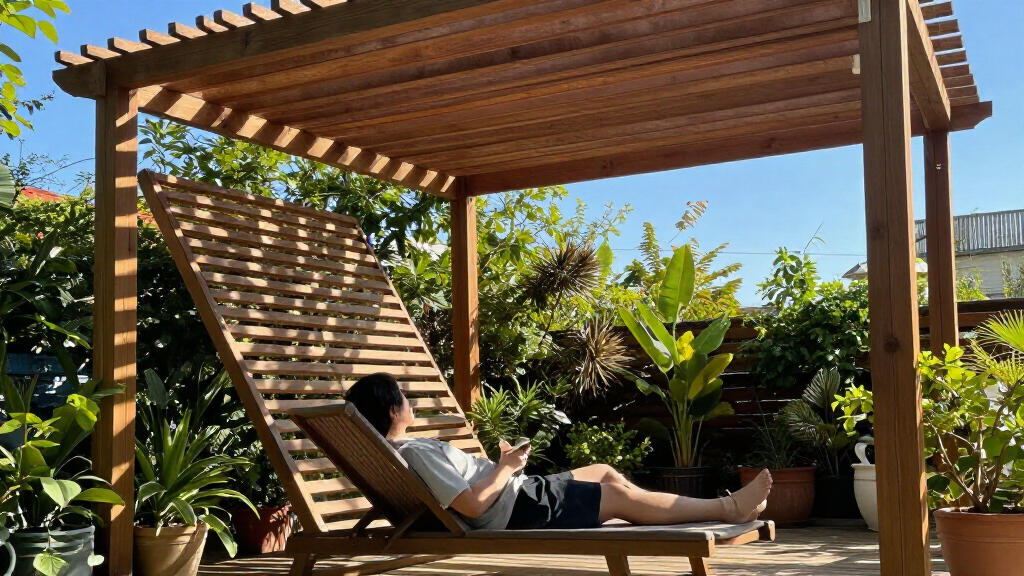
In Phoenix, designing a pergola for afternoon shade means considering the sun’s low angle late in the day. Adjust slat orientation, spacing, and tilt to block the sun effectively without sacrificing airflow or light. Modeling shadows on specific dates makes all the difference.
Phoenix’s blazing summer sun presents a tough challenge for outdoor living spaces. The heat and glare hit hardest in the late afternoon, when the sun dips low in the west. A well-designed pergola can turn that harsh light into a comfortable, inviting space.
But it’s not just about throwing up some slats and calling it a day. The secret lies in the details: how you space those slats, the angle you set them at, and how they align with the sun’s path. Get these right, and your patio becomes a cool oasis even on the hottest summer afternoons.
Think of your pergola as a pair of sunglasses for your patio. The goal? Block enough sunlight to keep things cool, without shutting out the breeze or making the space feel closed in. This article walks you through the nuts and bolts—specific measurements, angles, and practical tips—so you can design a pergola that works with Phoenix’s unique sun angles.
Orient your pergola so that slats run north–south for better western afternoon shade.
Set fixed slat angles between 20°–30° for blocking low summer sun, adjusting seasonally if possible.
Use modeling on key dates to fine-tune spacing, tilt, and height—avoid guesswork in desert heat.
Layer external protections like fins or screens to handle the low western sun near sunset.
Consider adjustable louvers for flexible seasonal control, especially in a climate with intense summer heat and mild winters.
Pergola Slat Spacing and Angle for Phoenix Afternoon Shade
Treat the pergola like sunglasses for the patio: interrupt low western rays while preserving airflow, daylight, and an open view. The winning geometry combines orientation, overlap, height, and western-edge protection.
Make western rays cross the slats
A conventional open pergola may shade noon beautifully and still fail during the hottest part of the day. Direction matters because sunlight traveling along a gap can penetrate much farther than sunlight crossing multiple slats.
North–south members
Western afternoon rays cross the slat pattern, creating repeated opportunities for each member to interrupt direct sun.
Follow the real azimuth
A southwest-facing patio may perform better with a slight northwest–southeast alignment. A modest rotation can improve shade without sacrificing morning light.
Map nearby blockers
Buildings, roof overhangs, walls, trees, and terrain can change the useful direction. Design for the sunlight that actually reaches the patio.
The late-day angle collapses fast
By 5 p.m. solar time, the summer sun is roughly half as high as it was at 3 p.m. Spring and fall afternoons are lower still, so a roof tuned only for midsummer noon leaves major comfort gaps.
Approximate summer afternoon altitude
Solar time is not identical to clock time. Arizona does not observe daylight saving time, but longitude and the equation of time still shift solar noon.
Spacing only makes sense as a ratio
A stated gap is incomplete without the slat width, depth, tilt, roof height, and target solar direction. Closer spacing produces more uniform shade; wider spacing preserves more breeze, sky, and daylight.
| Configuration | Afternoon shade | Airflow | Daylight | Seasonal control | Best use |
|---|---|---|---|---|---|
| Flat, wide gaps | Limited at low angles | High | High | Low | Visual openness where western exposure is already blocked |
| Flat, narrow gaps | Moderate | Moderate | Moderate to low | Low | Simple construction with improved midday coverage |
| Deep fixed louvers | Moderate | Moderate | Low | Reliable shade when target dates and angles are known | |
| Adjustable louvers | Adjustable | Adjustable | High | Summer protection with access to winter sun and ventilation |
Conceptual starting point: pair a 3-inch slat with roughly a 1.5-inch clear gap. For deep members, a depth equal to the clear gap can strongly obstruct solar profile angles below about 45°. Verify both ideas with project-specific modeling.
Tune the entire shade system
Slats do not work in isolation. Roof geometry, occupied height, patio depth, and seasonal priorities determine where a shadow lands—and whether it covers the people using the space.
Define the comfort window
Choose the specific months and hours when the patio must be protected. A summer-only target differs from year-round afternoon use.
Measure the full section
Include louver width, depth, clear gap, tilt, roof height, patio depth, and distance from the western edge.
Test occupied planes
Review shadows at chair, table, and standing-person height. Floor shade alone does not prove that faces and bodies are protected.
Model representative dates
Check the summer solstice, equinoxes, and hot shoulder-season afternoons. Compare at least several louver angles and gap ratios.
Pergola height: openness versus solar reach
Higher roofs feel spacious, but low-angle sunlight travels farther beneath them before reaching the occupied area.
The roof cannot solve sunset alone
As the sun drops, rays can pass beneath the roof plane entirely. A layered western edge catches glare before it reaches seating, paving, furniture, and walls that would otherwise store and reradiate heat.
A simple shade beam that reduces the open sightline beneath the roof.
Closely spaced members block oblique sun while preserving partial views and airflow.
Deploy only during critical hours and retract for views, access, or winter warmth.
Trees, vines, or a separate trellis add filtered seasonal shade outside the roof line.
From sun path to patio comfort
Model first. Build second.
The best fixed geometry is specific to the site. A seasonal shadow study exposes gaps that a generic spacing rule cannot predict.
The measurements shown are informed starting points, not universal construction specifications. Final geometry should reflect the site survey, structural requirements, local codes, material properties, drainage needs, and a date-specific solar study.
Why Pergola Orientation Matters for Phoenix’s Sun
The first step? Make sure your pergola is oriented to block the western afternoon sun. In Phoenix, the sun’s position shifts from nearly overhead at noon to a low 25° angle by 5 p.m. during summer. A north–south orientation often works best to intercept those low, hot rays coming in from the west.
Imagine your patio faces southwest. Running your slats along a north–south axis means the sun’s rays cross the gaps rather than sneak through. If your patio is oriented differently, tweak the slat direction accordingly—sometimes a slight tilt or offset can improve shade without sacrificing ventilation.
For example, a homeowner with a southwest-facing patio found that rotating their pergola’s slats 10° northwest improved western shade during late afternoon, without blocking the morning sun or airflow. It’s all about matching the real exposure.
Popular right now

LG 85-inch QNED75B Mini LED Smart TV Bundle with HDMI and CPS Protection Plan

De'Longhi Stilosa Compact Manual Espresso Machine with Milk Frother

eufy E25 Robot Vacuum and Mop Combo with HydroJet Roller Mop
As an affiliate, we earn on qualifying purchases.
How to Choose the Right Slat Angle for Phoenix’s Low Sun
Angles are the secret sauce. Fixed louvers should be set so that they visually overlap the sun’s low afternoon rays during peak hours—say, between 3 and 6 p.m. in summer. This overlap ensures the low, hot sun is blocked before it hits your seating area.
For instance, if the sun’s at 25° altitude at 5 p.m., tilt your slats to a similar angle. Usually, an angle between 20° and 30° works well, but test different settings against a shadow model. Remember: the goal isn’t just blocking the overhead sun but also the low, sweeping rays that sneak in at sunset.
If you want flexibility, adjustable louvers are worth considering. They let you rotate slats seasonally—open for winter sunlight, tilt for summer shade. A simple test: hold a stick or level at different angles, and see which overlaps the sun during your critical hours.
Spacing Slats: How Close Is Close Enough?
Pergola slat spacing isn’t just about aesthetics — it determines how much sun gets through and how much breeze you enjoy. Closer spacing blocks more sunlight but can make your space feel closed and cut down on airflow. Wider gaps let in more light and air but might not block enough heat.
But why does this matter so much? Well, the right spacing directly influences the quality of your outdoor comfort. Too narrow, and you risk creating a stifling, overheated microclimate with poor ventilation. Too wide, and your space might be too exposed to the sun’s intense rays, defeating the purpose of shading. The tradeoff requires understanding the balance between effective shade and airflow.
For Phoenix, a common rule is that the gap should be about half the slat width when viewed from the side at the target sun angle. For example, if your slats are 3 inches wide, aim for about 1.5 inches of gap. But this is just a starting point.
However, the real importance of spacing lies in how it influences the quality of shade and airflow. Narrow gaps create a more uniform shade, reducing hot spots and preventing direct sun penetration, which is crucial during peak summer hours. Conversely, wider gaps can allow more breeze, enhancing comfort but risking more sun exposure. Balancing these tradeoffs depends on your specific goals—whether prioritizing maximum shade or maximum ventilation. Modeling shadows during key dates helps you see how different spacing configurations affect sun penetration, enabling you to customize the design for optimal comfort in the desert heat.
How Tall Should Your Pergola Be for Phoenix’s Heat?
The height of your pergola influences how sunlight travels underneath. Taller structures feel more open but can let in more low-angle afternoon sun. For Phoenix, a height of around 8 to 10 feet often hits the sweet spot—space enough for airflow but not so tall that low sun sneaks underneath.
A practical tip? Check the shadow cast at chair height and standing height during late afternoon. If the shadow covers your seating area, consider lowering the pergola or adding additional western-side protection.
For example, a homeowner with an 8-foot pergola found that adjusting the slat angle and adding a western fascia reduced late-afternoon glare without feeling cramped. The key is to evaluate shadows at human height—not just on the ground.
Adding Western Edge Protection: Beyond the Roof
Roof slats alone often can’t block the intense late-afternoon rays from the west. External measures make a big difference. Think of a lowered fascia, vertical fins, exterior shades, or even a desert-adapted tree close to the patio. These elements catch or block low sun before it hits your pergola roof.
Why does this matter? Because external protections provide a critical layer of defense against the low, sweeping rays that can otherwise penetrate through slats or around the edges. They help you fine-tune your outdoor shade strategy, especially during those late hours when the sun’s angle is most challenging. Without these external barriers, your pergola might only offer partial relief, leaving your space vulnerable to glare and heat. Incorporating layered protections ensures you can enjoy outdoor comfort well into the late afternoon and early evening, effectively reducing heat gain and glare.
For example, a patio with a west-facing wall added a series of vertical louvers just outside the pergola. During late summer, those fins cut off nearly 90% of the sunset glare. It’s a layered approach—overhead slats combined with external barriers provide the best protection.
Don’t forget that external screens or deciduous trees also help ventilate and provide seasonal shade. Combining these with your pergola design creates a cooler, more comfortable outdoor space.
Frequently Asked Questions
What is the best slat direction for afternoon shade in Phoenix?
Generally, slats running north–south work best for blocking late-afternoon western sun. This orientation causes the low sun’s rays to cross the slats rather than slip through the gaps. Adjust based on your patio’s exact azimuth and nearby obstructions for the best fit.What is the ideal spacing between pergola slats?
There’s no one-size-fits-all measure. A good starting point is half the slat width—if your slats are 3 inches wide, aim for about 1.5 inches of gap. Use shadow modeling during summer and shoulder seasons to verify effectiveness for blocking low-angle rays.What angle should fixed louvers use?
Aim for an angle that visually overlaps the low afternoon sun at around 25°, typically between 20° and 30°. Testing different angles with shadow models helps find the best setting, balancing summer shade with winter sunlight and ventilation.Are angled slats better than flat slats?
Yes, especially for low-angle afternoon sun. Angled or deep members block western sightlines more effectively than flat slats, which mainly provide overhead shade. Combining both can optimize comfort throughout the season.Will a pergola roof block the 5 p.m. sun?
Often not entirely. By that time, the sun’s low rays can slip underneath the roof’s western edge. Additional external protections like fins, screens, or nearby trees are usually needed for full late-afternoon relief.Conclusion
Your pergola isn’t just a roof—it’s a tool for creating seasonally comfortable outdoor spaces in Phoenix. Precise slat spacing, smart angles, and layered western protections turn harsh afternoon glare into a shaded oasis. Think of it as sculpting light and shadow—your best shield against the desert’s relentless heat.
Design with intention, model carefully, and layer your defenses. Your patio will thank you with cooler afternoons, better ventilation, and more outdoor enjoyment. Now, go build that perfect Phoenix pergola—shade, style, and comfort all in one.