The best flower seeds for gardens depend on whether you want a broad pollinator display, a focused burst of color, or blooms with a practical use. My best overall pick is Freebird Wildflower Seeds for Bees & Butterflies, a 22-variety mix aimed at pollinator gardens; Gaea’s Blessing California Giants Zinnias stand out for gardeners who prefer a single, colorful flower, while Eden Brothers All Perennial Wildflower Mix suits those seeking longer-lived planting. The main tradeoffs are variety versus a more predictable display, annual color versus perennial return, and bulk coverage versus a smaller, more focused packet. Seed counts and mix sizes do not guarantee the same garden results, since climate, soil, and sowing conditions matter. Read on for the full breakdown and help matching a seed choice to your space and goals.

Get garden gear delivered free — and shop member deals
- Fast, free delivery on millions of items
- Access to Prime Big Deal Days deals on October 6–7
- Prime Video, Amazon Music and more included
Complete the kit


Key Takeaways
- Broad mixes and single-flower packets serve different goals: Freebird’s 22-variety mix targets pollinators, while the California Giants zinnia options offer a more consistent flower type and color display.
- Perennial mixes suit longer-term planting plans: Organo Republic’s 16-perennial mix and Eden Brothers’ 1-pound mix focus on perennial wildflowers rather than quick annual color.
- Large seed counts favor coverage, not guaranteed performance: HOME GROWN’s 90,000-plus seeds and Burpee’s 25,000-seed packs may cover more ground, but results still depend on site preparation and conditions.
- Special-purpose packets narrow the choice: Organo Republic’s edible flower mix and Home Grown’s lavender seeds are better fits for specific uses than a general-purpose pollinator blend.
- Some variety packs mix garden goals: Back to the Roots’ rescued-seed pack includes vegetables, herbs, and flowers, so it offers broader planting variety but less focus on flower-only results.




| flower seeds for garden | Seed count |
|---|---|
| Organo Republic 25 Edible Flow | 8,000+ listed in specifications |
| Freebird Wildflower Seeds for | 160,000+ |
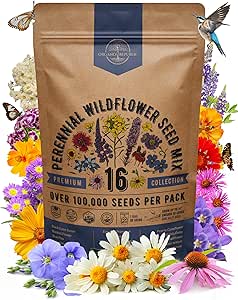
| Organo Republic 16 Perennial W | 25,000 |
| Zinnia Dahlia Seeds | 524 |
| HOME GROWN 24 Wildflower Varie | 90,000+ |
| Back to the Roots 100% Heirloo | — |
| Home Grown English Lavender Se | — |
| Back to The Roots Organic Flow | — |
| Seed Needs Flower Seeds Hummin | — |
| Burpee Wildflower 25,000 Bulk | 25,000 seeds |
| Gaea’s Blessing Zinnia Seeds | — |
| Burpee Wildflower 25,000 Bulk | 25,000 |
| Eden Brothers All Perennial Wi | — |
| Wildflower Seeds Butterfly and | 7,500+ |
| 250 California Giants Zinnia S | 250 |
More Details on Our Top Picks
Organo Republic 25 Edible Flower Seeds Variety Pack for Indoor and Outdoor Gardening
For gardeners who want flowers they can also bring to the table, this pack has a more specific purpose than the pollinator-focused Freebird Wildflower Seeds or HOME GROWN 24 Wildflower Variety Mix. Its listed varieties include nasturtium, pansy, lavender, chives, and hyssop, giving cooks a range of flowers and herbs to grow rather than a single showy bloom. The indoor-and-outdoor positioning and growing guides with QR instructions may help gardeners plan around different spaces, while the non-GMO, heirloom, non-hybrid seed profile suits those seeking traditional varieties. The tradeoff is that edible crops need appropriate growing conditions and careful identification before serving; the broad year-round planting claim does not guarantee blooms in every climate. Choose it for culinary range, not the simplest meadow-style sowing.
Pros:- Includes edible flower and herb varieties such as nasturtium, pansy, lavender, and chives
- Designed for indoor and outdoor planting
- Includes growing guides and QR instructions
- Heirloom, non-hybrid, GMO-free seed profile
Cons:- Different varieties may need different growing conditions, making one planting routine less practical
- A year-round planting window may not produce year-round blooms in many climates
- The listed seed count differs between the product description and specifications
Best for: Gardeners with containers or beds who want a varied selection of flowers and herbs for culinary use.
Not ideal for: Buyers focused mainly on a large outdoor pollinator meadow or one easy, uniform flower display.
- Listed varieties:Anise, hyssop, nasturtium, pansy, echinacea, lavender, chives, and more
- Seed count:8,000+ listed in specifications
- Planting locations:Indoor and outdoor
- Planting period:Year round, per product specifications
- USDA hardiness zones:2–11
- Expected plant height:12 inches
- Soil and moisture:Loam or potting mix; moderate watering
- Seed characteristics:GMO-free, heirloom, non-hybrid
Our verdict“Pick this pack if culinary variety matters more than a straightforward, broad-coverage wildflower planting.”
Freebird Wildflower Seeds for Bees & Butterflies – 22 Variety Mix – 4 oz
This is the strongest fit here for gardeners aiming to sow a sizeable, sunny area for pollinators. The 22-variety mix and listed count of more than 160,000 seeds offer wider coverage than Organo Republic’s 25,000-seed perennial mix, while the spring-to-fall bloom window supports a longer seasonal display. Freebird also names bees, butterflies, hummingbirds, and songbirds as intended visitors, making the goal clearer than a general ornamental mix. That scale comes with practical limits: it calls for full sun, well-drained soil, and regular watering, so it is a poor match for shaded or hands-off sites. Some varieties may take multiple seasons to establish, meaning buyers seeking an immediate, even carpet of flowers may prefer a faster, single-type option such as the Zinnia Dahlia Seeds.
Pros:- 22 varieties for a more diverse planting than a single-flower seed pack
- More than 160,000 seeds in a 4 oz bag for broad-area sowing
- Designed to attract bees, butterflies, hummingbirds, and songbirds
- Includes a planting guide
Cons:- Full sun requirement limits placement in shaded gardens
- Needs regular watering for best growth
- Some varieties may take multiple seasons to establish
Best for: Gardeners with a sunny, open bed or meadow area who want a diverse seed mix aimed at several pollinator groups.
Not ideal for: People sowing shaded plots or gardens where regular watering and patience for perennial establishment are difficult.
- Varieties:22
- Seed count:160,000+
- Weight:4 oz
- Planting period:Spring to early summer
- Blooming period:Spring to fall
- Sunlight:Full sun
- Expected plant height:30 inches
- USDA hardiness zones:3–9
- Soil and moisture:Well-drained garden soil; regular watering
Our verdict“Choose Freebird for a sunny, larger-scale pollinator planting, but skip it if your site is shaded or you want quick, uniform flowers.”
Organo Republic 16 Perennial Wildflower Seeds Mix for Indoor & Outdoors
Compared with Freebird’s full-sun mix, this Organo Republic blend is the more flexible choice for gardens with partial sun and for buyers who want perennial wildflowers rather than a large annual-and-perennial blend. It lists more than 23 varieties and 25,000 seeds, with blooms expected from spring to fall and a stated height of about 15 inches. That lower profile can suit modest beds where taller flowers might block a view, though it offers less height and seed volume than Freebird’s 30-inch, 160,000-plus-seed pack. The zone range is broad on paper, but climate and local conditions still affect establishment and bloom timing. This is a sensible biodiversity-focused mix for smaller or mixed-light spaces, not the best pick for filling a large sunny meadow quickly.
Pros:- More than 23 varieties for a diverse wildflower planting
- Partial-sun exposure offers flexibility beyond full-sun mixes
- Perennial mix can suit gardeners seeking recurring garden flowers
- Listed for indoor and outdoor planting
Cons:- 25,000 seeds provide less coverage than Freebird’s 160,000-plus seeds
- Expected height of 15 inches may be too low for a tall, meadow-like display
- Bloom timing and establishment can vary with climate
Best for: Gardeners with a smaller bed or partial-sun space who want a varied perennial mix that can support pollinators.
Not ideal for: Buyers planting a large full-sun meadow who want high seed volume and taller flowers.
- Varieties:Over 23
- Seed count:25,000
- Packet size:4 oz
- Planting season:Spring to fall
- Sunlight:Partial sun
- Blooming period:Spring to fall
- Expected plant height:15 inches
- USDA hardiness zones:1–10 and 12
- Soil and moisture:Loam or potting mix; moderate watering
Our verdict“Choose this mix for a varied, relatively low-growing perennial planting in partial sun rather than a high-volume meadow.”
Zinnia Dahlia Seeds, 524 Seeds – Bright Colors, Fast Germination
Where the wildflower mixes trade predictability for variety, this pack focuses on a clear result: colorful, double-flowered zinnias in a broad palette. The stated germination window of 5–14 days and flowering estimate of 8–10 weeks after planting make it easier to plan a seasonal display than a perennial mix such as Organo Republic’s 16-variety blend, whose timing depends more on local conditions. At 24–36 inches tall, these plants can bring height to a bed and provide stems for cutting; containers are also listed as a use. The compromise is less botanical diversity: this is a zinnia-focused choice, not a mixed habitat planting like Freebird. Full sun is required, and taller stems may need support in windy spots.
Pros:- 524 seeds with multiple listed bloom colors
- Stated germination time of 5–14 days
- Expected blooms 8–10 weeks after planting
- Suitable for garden beds, containers, and cut flowers
Cons:- Full sun requirement rules out many shaded sites
- Plants reaching 24–36 inches may need staking in windy locations
- A zinnia-focused pack offers less variety than the wildflower mixes
Best for: Beginner gardeners and flower arrangers who want a colorful, relatively quick-growing display in a sunny bed or container.
Not ideal for: Gardeners seeking a mixed-species perennial meadow or planting flowers in a mostly shaded area.
- Seed count:524
- Bloom colors:Red, pink, orange, white, lavender, purple, yellow, cherry red, scarlet, crimson, and plum
- Plant height:24–36 inches
- Plant width:12–18 inches
- Germination time:5–14 days
- Expected time to bloom:8–10 weeks after planting
- Sunlight:Full sun
- Zones:2–11
- Care and use:Low maintenance; indoor and outdoor use; pollinator friendly
Our verdict“Pick these zinnias for a planned, bright seasonal display and cutting stems, not for a diverse perennial pollinator meadow.”
HOME GROWN 24 Wildflower Variety Mix – 90,000+ Flower Seeds (3 oz)
HOME GROWN makes the most sense for gardeners who want a large mixed planting with less emphasis on frequent watering once established. It combines 24 perennial varieties with more than 90,000 seeds and lists natural drought tolerance, which gives it a different appeal from Freebird’s larger 160,000-plus seed count but regular-watering guidance. Its spring-to-fall bloom window and 2-foot expected height suit a cottage-style bed or pollinator area, while the planting guide may help beginners handle seasonal timing. The tradeoff is that this mix is listed for full sun and spring or fall planting, so it is less adaptable than Organo Republic’s indoor-and-outdoor edible pack. The provided data does not specify the individual flowers, making it harder to plan a precise color scheme or match particular species to a site.
Pros:- More than 90,000 seeds across 24 perennial varieties
- Drought tolerance is listed as a feature
- Spring-to-fall bloom period suits a long seasonal display
- Includes a growing guide and is described as beginner-friendly
Cons:- Full-sun exposure and outdoor space are needed for the intended planting
- Spring or fall timing requires planning around local conditions
- Individual varieties are not identified in the supplied product details
Best for: Gardeners establishing a sunny outdoor bed or meadow who want a high-count perennial mix with stated drought tolerance.
Not ideal for: Container growers, shade gardeners, or buyers who need a named list of flower species and a tightly planned color palette.
- Varieties:24 perennial varieties
- Seed count:90,000+
- Weight:3 oz
- Planting period:Spring or fall
- Blooming period:Spring to fall
- Sunlight:Full sun
- USDA hardiness zones:3–10
- Expected plant height:2 feet
- Seed characteristics:GMO-free, heirloom; described as drought tolerant
Our verdict“Choose HOME GROWN for a sunny, broad perennial planting where drought tolerance matters more than a precise species or color selection.”
Back to the Roots 100% Heirloom Rescued Seeds, Variety Pack, 30ct of Organic Veggies, Herbs & Flowers
This pack suits gardeners who value surprise and waste reduction as much as a particular flower palette. It contains 30 rescued surplus seeds spanning vegetables, herbs, and flowers, so it offers a broader garden mix than the flower-only Back to The Roots Organic Flowers Seeds Variety 5-pack. That variety can be appealing when you want to experiment, and the seeds are described as heirloom, organic, and non-GMO. The tradeoff is central to the product: the contents vary, and the listing does not specify flower types or how many flower seeds are included. I would choose it for an adaptable, mixed planting project, not for a planned border that needs known colors, bloom times, or quantities.
Pros:- Rescued surplus seeds support a waste-reducing gardening approach.
- Includes a mix of vegetables, herbs, and flowers for a varied planting project.
- Seeds are described as heirloom, organic, and non-GMO.
Cons:- The assortment can change with available surplus.
- The number and types of flower seeds are not specified.
- The mixed crop selection may not suit a flower-only garden plan.
Best for: Gardeners who enjoy planting a mixed edible-and-flower garden and are comfortable letting surplus availability determine the selection.
Not ideal for: Buyers planning a flower bed around specific species, colors, or planting quantities, since the surprise assortment does not identify its exact contents.
- Quantity:30 seeds
- Seed types:Vegetables, herbs, and flowers
- Seed characteristics:Heirloom, organic, and non-GMO
- Sourcing:Rescued surplus seeds
- Assortment:Surprise mix varies with available surplus
- Planting:Indoor or outdoor; described for year-round planting
Our verdict“Choose this pack if sustainability and an unpredictable mix matter more than selecting specific flowers.”
Home Grown English Lavender Seeds, 1,500+ Seeds, Lavandula angustifolia
For a garden built around one fragrant perennial, this lavender pack offers a clearer plan than the mixed wildflower options. It supplies 1,500+ English lavender seeds of Lavandula angustifolia ‘Vera’, with a listed height of about two feet and growing zones 4–9. That focus makes it more predictable in plant type than Seed Needs’ Hummingbird and Butterfly Mix, which trades species specificity for a broad pollinator planting. Lavender can suit borders, containers, and culinary or decorative uses, but seed starting calls for more patience: cold stratification is recommended for better germination. The listing also gives limited planting detail, so beginners seeking a ready-to-follow sowing plan may prefer a more fully described mix. Choose this for lavender specifically, not instant floral variety.
Pros:- Provides more than 1,500 seeds of a named English lavender variety.
- Listed as suitable for zones 4–9 and both indoor and outdoor growing.
- Lavender is described as drought-tolerant and useful for culinary, wellness, and decorative purposes.
- Online growing support is offered.
Cons:- Cold stratification is recommended for better germination.
- The product description provides limited detailed planting instructions.
- A single-species pack offers less visual variety than a wildflower mix.
Best for: Gardeners in zones 4–9 who want to raise a substantial number of fragrant English lavender plants and are willing to prepare seeds for germination.
Not ideal for: New seed starters who want detailed sowing instructions or shoppers seeking a varied bed of different flower species.
- Quantity:1,500+ seeds
- Plant:Lavandula angustifolia ‘Vera’
- Seed type:Heirloom, non-GMO
- Growing zones:4–9
- Expected height:About 2 feet
- Soil type:Loam
- Growing location:Indoor or outdoor
- Blooming period:Spring to fall
- Planting period:Spring to fall
Our verdict“Pick this if you want a focused lavender planting and can accommodate the extra seed-preparation step.”
Back to The Roots Organic Flowers Seeds Variety (5-Pack)
This is the more straightforward choice for someone who wants flower seeds rather than a mixed crop assortment. The five-pack is organic, non-GMO, and germination-tested, with indoor and outdoor use described for year-round planting. Compared with Back to the Roots’ Rescued Seeds Variety Pack, it keeps the focus on flowers instead of adding vegetables and herbs. That makes it a better match for a small gift or a first flower-growing experiment. The limitation is that the listing does not name the flowers, so it is difficult to plan for height, color, bloom timing, or garden conditions. Substitutions may also happen when seeds are unavailable. I would choose it for an easy-to-gift assortment, but not where a specific planting design matters.
Pros:- Flower-focused assortment avoids the vegetables and herbs in the Rescued Seeds pack.
- Seeds are described as organic and non-GMO.
- Germination-tested seeds offer a useful quality check.
- Attractive packaging suits gifting.
Cons:- The flower species are not identified in the product details.
- Substitutions may occur when varieties are unavailable.
- Limited plant information makes it hard to plan a specific garden layout.
Best for: Gift buyers and newer gardeners who want a compact, flower-focused assortment and do not need to choose particular species.
Not ideal for: Gardeners designing a coordinated border or choosing plants for specific sun, height, color, or bloom-time requirements.
- Pack size:5-pack
- Seed type:Flower seeds
- Organic:Yes
- GMO status:Non-GMO
- Germination:Germination-tested
- Growing location:Indoor or outdoor
- Planting availability:Described for year-round planting
Our verdict“Choose this as a giftable flower-seed sampler if you are comfortable with an unspecified mix.”
Seed Needs Flower Seeds Hummingbird and Butterfly Mix 1 Ounce Bulk Pack
Seed Needs makes the most sense when the goal is a mixed outdoor planting for pollinators, rather than a set of named flowers. The one-ounce pack is listed as containing about 15,000 seeds, with annual and perennial varieties intended to attract butterflies, hummingbirds, and other pollinators. Its stated height is 36 inches, so it suits a sunny space where taller, informal growth is welcome. Compared with Burpee’s 25,000-seed, 18-variety mix, this pack has a smaller stated seed count and no specified variety count or coverage area; its appeal is a simpler bulk format, not a documented planting map. Full sun and daily watering are listed, and perennial establishment may take more than one season. Skip it for shaded or low-water sites.
Pros:- Mix is designed to attract butterflies, hummingbirds, and other pollinators.
- Includes both annual and perennial flower varieties.
- One-ounce bulk pack is listed at about 15,000 seeds.
- Listed for a broad range of USDA hardiness zones.
Cons:- Requires full sun and daily watering according to the listed care details.
- No variety count or coverage area is provided.
- Perennial portions may need multiple seasons to establish fully.
Best for: Gardeners with a sunny outdoor patch who want a pollinator-oriented mix and can water regularly while plants establish.
Not ideal for: Gardeners with shaded beds, limited watering capacity, or a need for named species and a clearly stated coverage area.
- Quantity:About 15,000 seeds
- Pack weight:1 ounce
- Plant type:Wildflowers; annual and perennial mix
- Expected height:36 inches
- Soil type:Average
- Moisture needs:Water daily
- Sunlight:Full sun
- Planting and bloom periods:Plant in spring; blooms summer to fall
- Hardiness zones:USDA zones 1–10
Our verdict“Choose this for a sunny, regularly watered pollinator patch when a named species list is not a priority.”
Burpee Wildflower 25,000 Bulk Seed Mix – 18 Varieties of Non-GMO Flower Seeds for Hummingbirds and Butterflies
Burpee is the strongest fit here for covering a substantial sunny area: the mix lists 25,000 seeds, 18 flower varieties, and coverage up to 1,000 square feet. Those specifics make planning easier than with Seed Needs’ Hummingbird and Butterfly Mix, which gives a seed count but no stated variety count or coverage. The mix combines annuals and perennials and is intended to bloom across spring, summer, and fall, giving a larger bed a longer seasonal display than a single-species planting such as the English lavender pack. The tradeoff is that the generous coverage target depends on suitable soil and sun, and the description does not name the varieties. It suits broad, informal pollinator areas better than tightly designed beds or small containers.
Pros:- Lists 18 flower varieties for a diverse wildflower planting.
- Provides a stated coverage target of up to 1,000 square feet.
- Annual and perennial flowers are intended to bloom from spring through fall.
- Non-GMO mix is designed to attract hummingbirds and butterflies.
Cons:- Needs a sunny area and suitable soil for best results.
- The individual flower varieties are not listed in the supplied product details.
- The large coverage format may be more seed than a small garden needs.
Best for: Gardeners sowing a large, sunny pollinator bed who want a stated coverage area and a mix of annual and perennial flowers.
Not ideal for: Small-space gardeners or anyone who needs named species, a particular color scheme, or reliable performance in shade.
- Seed count:25,000 seeds
- Varieties:18 flower types
- Coverage:Up to 1,000 sq ft
- Seed type:Non-GMO
- Flower mix:Annual and perennial flowers
- Bloom seasons:Spring, summer, and fall
- Sun exposure:Sun-loving
- Pollinator focus:Hummingbirds and butterflies
Our verdict“Pick Burpee for a large, sunny pollinator garden where coverage and seasonal variety matter more than choosing individual species.”
Gaea’s Blessing Zinnia Seeds – California Giants Seed Mix, Non-GMO, Heirloom, 91% Germination
For gardeners who want a focused display of tall, colorful flowers, Gaea’s Blessing California Giants is the more specific choice than a mixed wildflower packet. The stated 91% germination rate gives buyers a useful planning detail, while the heirloom, non-GMO seed mix is suited to sunny beds and cutting gardens. Plants can reach about 48 inches, so they bring height and long-lasting summer-to-fall color, but they need room and full sun to perform well. Compared with the 250-seed California Giants packet, this listing does not specify packet quantity or coverage, making it harder to plan a bed precisely. I’d choose it for its germination information and straightforward zinnia focus, but skip it if you need a clearly measured seed quantity or flowers for shade.
Pros:- States a 91% germination rate, useful for estimating sowing needs.
- Heirloom, non-GMO zinnia seed mix.
- Plants may reach 48 inches for height in sunny beds and cutting gardens.
- Described as producing long-lasting, vibrant blooms from summer to fall.
Cons:- Packet size and seed count are not specified.
- Full sun is required for best growth.
- Drought tolerance is not detailed.
Best for: Sunny-garden growers who want tall California Giant zinnias and value a stated germination rate when planning sowing.
Not ideal for: Gardeners with shaded beds or anyone who needs a listed seed count and coverage area before buying.
- Plant species:Zinnia elegans
- Seed mix:California Giants
- Germination rate:91%
- Seed traits:Heirloom, non-GMO
- Planting season:Spring to fall
- Expected bloom period:Summer to fall
- Sunlight:Full sun
- Expected plant height:48 inches
- Moisture needs:Moderate watering
Our verdict“Choose this zinnia mix for sunny beds when its stated germination rate matters more than having a clearly listed packet size.”
Burpee Wildflower 25,000 Bulk Seed Pack – 18 Varieties Non-GMO Pollinator Garden Mix
Burpee’s 25,000-seed mix ranks well for buyers planting a broad area: its listed coverage reaches up to 1,000 square feet, far beyond the 100-square-foot coverage stated for the Butterfly and Hummingbird 1-ounce packet. Eighteen perennial varieties and a spring-to-fall bloom window offer a wider, longer-lasting garden plan than the single-species Gaea’s Blessing zinnias. The tradeoff is that a large mixed planting is less predictable: germination depends on conditions, some flowers may take time to establish, and the listing calls for a sunny site. This is a practical pick for open ground and pollinator habitat, not a quick, tightly controlled border. I’d pass if I wanted one uniform flower type or needed blooms established on a short schedule.
Pros:- 25,000 seeds are listed for coverage of up to 1,000 square feet.
- Contains 18 perennial flower varieties.
- Designed to attract bees and butterflies.
- Non-GMO mix can provide blooms from spring to fall.
Cons:- Some varieties may take time to establish.
- Germination varies with growing conditions.
- Sunny conditions are recommended for best growth.
Best for: Gardeners with a sunny, relatively large area who want a perennial wildflower planting for bees and butterflies.
Not ideal for: Small-space gardeners, shade gardeners, or buyers seeking a uniform display that blooms quickly and predictably.
- Seed count:25,000
- Varieties:18
- Coverage:Up to 1,000 sq ft
- Seed type:Perennial, non-GMO
- Planting time:After danger of heavy frost
- Suitable soil:Most soil types
- Intended pollinators:Bees and butterflies
Our verdict“Pick this bulk mix for a sunny, expansive pollinator planting, but choose a smaller packet if you need precise coverage for a compact bed.”
Eden Brothers All Perennial Wildflower Mixed Seeds for Planting, 1 lb
Where Burpee’s 25,000-seed pack leads with stated large-area coverage, Eden Brothers’ one-pound mix stands out for its 19 named perennial species and a stated hardiness range of zones 3–10. That combination suits gardeners building a varied, recurring flower bed rather than filling a measured stretch of ground with a bulk mix. The listed flowers include familiar choices such as Shasta daisy, purple coneflower, and black-eyed Susan, with blooms expected through summer and fall. It is still a full-sun planting with moderate watering needs, and some perennials can take time to establish; it is not the pick for instant, evenly timed color. Compared with the annual-and-perennial 23-species packet, this mix is more explicitly perennial, but it gives no square-foot coverage figure.
Pros:- Includes 19 perennial wildflower species, with several named in the product details.
- Listed for USDA hardiness zones 3–10.
- Designed to attract bees, butterflies, and hummingbirds.
- Summer-to-fall bloom period supports seasonal garden color.
Cons:- No square-foot coverage is specified.
- Full sun and moderate watering are listed growing needs.
- Some perennial species may take time to establish.
Best for: Gardeners in USDA zones 3–10 who want a varied, perennial wildflower bed and can wait for plants to establish.
Not ideal for: Buyers who need an exact coverage estimate, have a shaded site, or want a fast, uniform first-season display.
- Seed weight:1 lb
- Species included:19 perennial species
- USDA hardiness zones:3–10
- Expected bloom period:Summer to fall
- Sunlight:Full sun
- Listed plant height:25 inches
- Soil type:Sandy soil
- Moisture needs:Moderate watering
- Planting period:Spring
Our verdict“Choose this mix for a diverse perennial bed across a broad hardiness range if you can plan without a stated coverage figure.”
Wildflower Seeds Butterfly and Hummingbird Mix – 1 Ounce Packet with 7,500+ Seeds
For a modest garden patch, this 1-ounce packet is easier to size than Burpee’s bulk mix: it lists 7,500+ seeds for 100 square feet, giving buyers a defined area rather than an up-to-1,000-square-foot ceiling. Its 23 open-pollinated annual and perennial species are aimed at attracting butterflies, hummingbirds, bees, and ladybugs, so it offers a broader wildlife focus than the dedicated California Giants zinnias. The mixed species also mean results can vary with site conditions; the listing does not provide a hardiness range, bloom schedule, or individual species list. I’d favor it for a sunny, outdoor pollinator patch where variety matters, but choose Eden Brothers if a perennial-only mix and zone guidance are higher priorities.
Pros:- Lists 7,500+ seeds and coverage of 100 square feet.
- Includes 23 open-pollinated annual and perennial species.
- Designed to attract butterflies, hummingbirds, bees, and ladybugs.
- Planting instructions are included.
Cons:- Germination and results depend on outdoor growing conditions.
- The product details do not name the included species.
- No hardiness range or specific bloom period is listed.
Best for: Gardeners planting a defined 100-square-foot outdoor area who want a varied mix aimed at several kinds of pollinators.
Not ideal for: Buyers who need a perennial-only selection, named species, hardiness-zone guidance, or a mix suited to indoor growing.
- Packet size:1 ounce
- Seed count:7,500+
- Coverage:100 sq ft
- Species:23 open-pollinated species
- Seed types:Annual and perennial
- Pollinators attracted:Butterflies, hummingbirds, bees, and ladybugs
- Intended use:Outdoor garden
Our verdict“Choose this packet for a clearly sized, mixed pollinator patch, and look elsewhere if you need named varieties or perennial-only planting.”
250 California Giants Zinnia Seeds for Planting – Heirloom Non-GMO USA Grown Premium Flower Seeds – Mix of Red, Orange, Yellow, White, Pink, and Purple Flowers – Attracts Butterflies
Unlike the Gaea’s Blessing California Giants listing, this packet specifies 250 seeds, six flower colors, and an estimated 50–175 square feet of coverage. Those details make it easier to plan a defined zinnia bed or cut-flower patch, while the 36–48-inch plants bring height to sunny borders and may attract butterflies. The listed 8–12-week bloom timing and 70–80°F germination temperature also help set expectations, though warm soil and proper spacing are needed. This is a more transparent planning choice than Gaea’s Blessing, which states a 91% germination rate but not packet size. Neither zinnia option offers the species variety of the wildflower mixes, so I’d skip this if your priority is a broad pollinator meadow rather than a colorful, focused planting.
Pros:- Lists 250 seeds and estimated coverage of 50–175 square feet.
- Includes red, orange, yellow, white, pink, and purple flowers.
- Plants are listed at 36–48 inches, fitting tall borders and cutting beds.
- Waterproof packet and planting guidance are included.
Cons:- Coverage varies with weather and care.
- Warm soil and proper spacing are needed for best results.
- A single-species zinnia mix offers less variety than the wildflower packets.
Best for: Gardeners who want a measured, multicolor zinnia planting for sunny borders or cut flowers and value a listed seed count.
Not ideal for: Gardeners seeking a perennial wildflower mix, shade-tolerant flowers, or a fixed coverage guarantee independent of spacing and weather.
- Seed count:250
- Flower colors:Red, orange, yellow, white, pink, and purple
- Plant height:36–48 inches
- Bloom timing:8–12 weeks
- Germination temperature:70–80°F
- Coverage:50–175 sq ft
- Seed traits:Heirloom, non-GMO, USA-grown
- Packet:Waterproof, with planting guidance
Our verdict“Choose this packet for a planned, multicolor zinnia bed with clear seed-count information, not for a diverse perennial pollinator garden.”
How We Picked
I compared the 15 options by the job each seed pack is built to do: provide a broad flower display, attract pollinators, deliver a single-variety planting, or support a specific use such as edible blooms. I also weighed the information available about mix breadth, seed quantity, annual or perennial focus, and whether a packet is narrow enough for a beginner to plan around. Those distinctions affect garden coverage, repeat planting, and how predictable the finished bed may be.
The ranking favors products with a clear purpose and useful flexibility for a garden, while making room for specialized picks that serve a smaller audience. Broad mixes rank well when they combine a defined pollinator goal with multiple varieties; focused zinnia and lavender seeds rise for gardeners seeking a particular flower. Large seed counts alone do not decide placement, and I treat stated germination claims or seed quantities as product details rather than a promise of results in every garden.
Factors to Consider When Choosing Best Flower Seeds For Gardens
Before choosing a packet, match the seeds to your site and the kind of garden you want to maintain. The right mix is not always the one with the most varieties or the largest stated seed count; the tradeoff is whether it fits your climate, space, timing, and desired level of control.
Choose Annual, Perennial, or a Mix
Annuals typically suit gardeners seeking color within a single growing season, while perennials are intended to return across seasons once established. A mixed wildflower packet may combine different growth habits, so check the packet details instead of assuming every flower will behave the same way. Perennials can take longer to establish, and a first-season display may not match the fullness of an annual planting. A common mistake is buying a perennial mix for instant coverage without allowing time for establishment. If you want a dependable seasonal refresh, favor annuals; if you can plan around a longer timeline, look for a clearly labeled perennial blend.
Match the Mix to Your Garden Conditions
Sun exposure, soil, drainage, and local climate can matter more than the size of a seed packet. A flower mix suited to one region or planting site may perform differently in shade, heavy soil, or a short growing season. Check the listed growing requirements and compare them with the actual bed, not the ideal conditions you hope to create. For a difficult spot, choosing flowers with compatible needs is usually safer than scattering a broad mix without checking its contents. If you are unsure, start with a small area and note which plants establish well before sowing the whole garden.
Decide How Much Coverage You Can Manage
Seed count is not the same as planted area: recommended sowing density and seed size affect how far a packet goes. Large bulk packs can suit open beds, meadow-style plantings, or gardeners prepared to sow a wide area, but they may be excessive for a small border or container. Over-sowing can crowd seedlings and make thinning harder, while too little seed can leave bare patches. Look for coverage guidance on the package and measure the intended planting area before choosing a bulk quantity. For a compact garden, a smaller packet with a clear flower focus may be easier to use well.
Balance Variety Against a Predictable Display
Wildflower mixes offer variety, which can create a changing display and support a range of pollinators, but the final mix of blooms may be less uniform. Single-flower packets, such as zinnias or lavender, give you more control over the dominant look and planting plan. A broad mix can also make it harder to know which species need different care or bloom at different times. Avoid buying solely by the number of varieties; check whether the flowers suit your purpose and space. Choose a mix for a naturalistic, varied bed, or a focused packet when color, form, or a specific use matters most.
Check the Purpose and Packet Details
Pollinator-friendly, edible, and general flower mixes are not interchangeable. Edible flower seeds are intended for a different garden goal than a hummingbird-and-butterfly blend, and a mixed vegetable, herb, and flower pack may devote only part of its contents to flowers. Read the variety list, sowing directions, and any notes about intended use before purchasing. Do not assume that a flower is edible just because it is included in a gardening assortment; verify species identification and safe-use guidance separately. When a garden has one clear purpose, a specialized packet can make planning simpler than a multipurpose collection.
Plan for Sowing and Ongoing Care
Seed choice is only part of the work: preparation, watering during establishment, and weed control affect how a planting develops. Some gardeners prefer direct sowing into a prepared bed, while others may need to start seeds in containers depending on the flower and local growing conditions. Check each packet’s timing and depth instructions rather than applying one method to every variety in a mixed packet. A frequent mistake is scattering seeds into an unprepared area and expecting them to outcompete existing weeds. Pay more for a specialized or larger pack only when its contents and quantity match a realistic planting plan.
Frequently Asked Questions
Should I choose a wildflower mix or a packet of one flower?
Choose a wildflower mix if you want several kinds of blooms and a less uniform planting, especially for a pollinator-focused bed. A single-flower packet, such as one of the California Giants zinnia options, is a better fit when you want a more consistent look or an easier planting plan. Mixed seeds can vary in height, bloom timing, and growing needs, so the result may be less predictable. Check the variety list and planting guidance before deciding. Your available space and preferred garden style matter as much as the packet’s variety count.
Are perennial wildflower seeds a better choice than annual seeds?
Perennial seeds make more sense when you want a planting designed to return over multiple seasons and can allow time for establishment. Annual seeds are often a better fit for a strong seasonal display or for filling a bed you plan to replant. Perennials are not automatically lower effort: young plants still need suitable conditions and care, and their first-season display may be modest. Check the product details for whether a mix is perennial, annual, or a combination. Choose based on your timeline and willingness to maintain the planting, not on the label alone.
How much seed do I need for a small flower bed?
Start with the coverage directions on the packet and the measured area of your bed; seed counts alone do not tell you how much ground a product will cover. Bulk packs such as the HOME GROWN or Burpee options may be more than a small border needs. Sowing too densely can crowd seedlings, while spreading seeds too thinly can leave gaps. If the packet does not clearly state coverage, a smaller quantity is often easier to manage for a first planting. You can expand the bed after seeing how the seeds perform in your conditions.
Can I plant a pollinator mix in a shady garden?
Do not assume a pollinator mix will thrive in shade just because it is labeled for bees or butterflies. The individual flowers still have light and soil requirements, and many garden flowers need substantial sun to bloom well. Check the listed growing conditions for the mix and compare them with the hours of direct light your site receives. For a partly shaded bed, look for seeds whose stated needs match that exposure rather than relying on a broad mix without checking its contents. A small trial planting can help reveal whether the site suits the blend.
Is a mixed seed pack with vegetables and herbs a good choice if I mainly want flowers?
A mixed pack such as Back to the Roots’ rescued-seed assortment can be useful if you want to grow several kinds of plants, but it is less focused on a flower-only display. Check how many varieties are flowers and whether the packet provides enough detail to plan their placement and care. If blooms are your main goal, a dedicated flower mix or single-flower packet is easier to compare and allocate to a bed. The mixed pack is a stronger fit for gardeners who enjoy experimenting with vegetables, herbs, and flowers together. Match the assortment to your actual planting priorities rather than treating every seed in the pack as a flower seed.
Conclusion
For the strongest all-around fit, I’d start with Freebird Wildflower Seeds for Bees & Butterflies: its 22-variety pollinator focus gives it a clear purpose without limiting the garden to one flower. For a value-minded broad planting, compare the large HOME GROWN and Burpee bulk mixes against your bed size and choose the pack whose variety details best match your site; bulk quantity is only useful when you can sow it. For a more specialized or premium-style choice, Eden Brothers All Perennial Wildflower Mix is the pick for gardeners willing to plan for a longer-lived planting. Beginners may find Gaea’s Blessing California Giants Zinnias easier to plan around than a complex wildflower mix because the planting has one main flower type. Choose Organo Republic’s edible flower mix for edible-bloom gardening, or Home Grown English Lavender when lavender is the specific goal. Match the packet to your space, growing conditions, and preferred level of variety before planting.
Fall Picks
fall essentials
As an affiliate, we earn on qualifying purchases.