TL;DR

Get garden gear delivered free with Prime
- Fast, free delivery on millions of items
- Prime Video, Amazon Music and more included
- Member-only deals all year
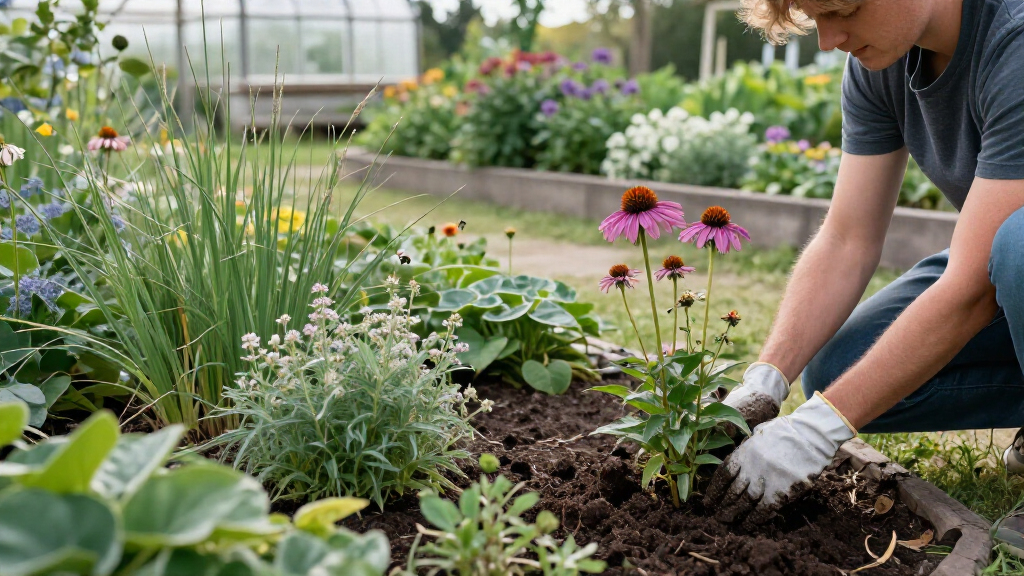
Breeders and plant introducers are bringing forward native perennial selections that pair recognizable garden traits with practical production qualities, including disease resistance, manageable growth and efficient propagation. The report highlights cultivars such as Rudbeckia ‘American Gold Rush,’ Andropogon ‘Blackhawks’ and Vernonia ‘Summer’s End’; performance claims come from the breeders and introducers cited, and are not presented as independent trial results.
Plant breeders and introducers are bringing new native perennial selections to market with traits aimed at both garden appeal and commercial production, according to a Greenhouse Grower report. The featured plants are selected for qualities such as disease resistance, manageable growth, distinctive foliage and later-season flowers—factors that can affect whether a plant is practical to grow, ship and sell.
The report describes grower concerns that can limit the commercial success of a plant even when it performs well in a garden. Propagation, disease pressure, finishing time and container presentation all influence production. Brent Horvath, president of Intrinsic Perennial Gardens, bred Rudbeckia ‘American Gold Rush’ as an alternative after Septoria leaf spot became severe on ‘Goldsturm’ and, he said, prevented him from finishing that cultivar for sale. Horvath describes ‘American Gold Rush’ as disease resistant, with a rounded habit that is easier to propagate, grow and sell.
Other selections address similar production or landscape considerations. Rudbeckia fulgida ‘Dahlonega’ Mega Millions was selected after one plant remained clean in a planting affected by Septoria; Plants Nouveau co-owner Angela Treadwell-Palmer says it reaches about 30 inches, stays relatively contained and flowers abundantly. Horvath selected Monarda bradburiana ‘Midnight Oil’ for disease resistance and its foliage, which emerges chocolate-purple before maturing to deep green. At Walters Gardens, new plant development director Hans Hansen says breeders screen several genera, including Monarda, Phlox and Helenium, for powdery mildew.
Introductions also emphasize visual traits and saleable form. Andropogon gerardii ‘Blackhawks’, named the 2026 Perennial Plant of the Year by the Perennial Plant Association, grows about 5 to 6 feet and develops nearly black foliage, according to the report. Horvath says its moderate vigor helped him build stock within two years, first by division and later through tissue culture. Walters Gardens’ Baptisia ‘Golden Anniversary’ combines golden foliage with violet-blue flowers and reaches about 30 to 36 inches; the report says growers starting with Grade #1 bare root can finish it in roughly eight to 12 weeks.
Traits That Help Plants Reach Market
The introductions show why native plant selection is not only a question of ecological identity or flower color. Production reliability can determine availability: disease pressure may make a familiar cultivar difficult to finish, while a plant’s habit can affect propagation, shipping and how it looks in a retail container. Those considerations matter to growers managing space and labor, and to garden centers deciding which plants can be displayed and explained to shoppers.
Distinctive features may also give retailers a clear way to introduce customers to native plants. Treadwell-Palmer points to Scutellaria ‘Bumblebee Blues,’ a naturally occurring cross between S. ovata and S. serrata, with cobalt-blue flowers and an 18-to-24-inch habit. She recommends displaying it alongside other skullcaps so shoppers can compare plants. Such presentation can make a selection’s differences easier to see, though the report does not provide sales figures or evidence that any featured cultivar has increased retail demand.
native perennial disease resistant plants
As an affiliate, we earn on qualifying purchases.
As an affiliate, we earn on qualifying purchases.
Balancing Garden and Greenhouse Needs
The report describes a market in which interest in pollinator support and wildlife habitat is bringing a wider range of native species and selections into retail. But breeders must balance traits that gardeners notice with the requirements of commercial growing. A plant that is too compact, for example, may be harder to propagate if it does not provide enough cuttings, Treadwell-Palmer says.
Retail and shipping needs also shape selection. Hansen says growers have shown interest in perennials around 3 to 4 feet tall, while Treadwell-Palmer favors plants that look proportional and flower in a one-gallon container but can grow larger in the landscape. The report also notes that May bloomers often reach garden centers during busy spring traffic, while Vernonia ‘Summer’s End’ offers deep-purple flowers in September. Its upright, vase-shaped plants reach about 3½ feet; Treadwell-Palmer says it produces little seed compared with New York ironweed, making it easier to manage in smaller gardens.
“If we don’t have a good reason for introducing it, then why introduce it?”
— Angela Treadwell-Palmer, founder and co-owner of Plants Nouveau
drought tolerant perennial plants for garden
As an affiliate, we earn on qualifying purchases.
As an affiliate, we earn on qualifying purchases.
Trial Results and Market Uptake
The report relays selection and performance descriptions from breeders and plant introducers. It does not provide independent, comparative trial data, detailed testing conditions, or long-term results across different regions and growing systems. Disease resistance, finish times and ease of propagation may vary with conditions; the source does not quantify those differences.
It is also unclear how widely each introduction is available, what it costs, or whether retailers and consumers are buying it at higher rates than established alternatives. The report offers no sales, survival or pollinator-use measurements. Its descriptions should be understood as attributed accounts of the selections, not proof that every grower will see the same results.
As an affiliate, we earn on qualifying purchases.
Availability and Evaluation Ahead
The report does not announce a single launch date or a next industry milestone. Growers and retailers considering the featured plants will need to check current availability with the relevant introducers and assess them under their own production and landscape conditions. Further growing trials and retail experience would help establish how consistently the reported disease, finish-time and habit traits hold across locations.
For shoppers, the next step is likely to be seeing more native selections presented with clear comparisons of size, bloom timing and foliage. Whether that approach expands demand remains unknown; the source describes the opportunity but supplies no market forecast or sales data.
perennial plant propagation supplies
As an affiliate, we earn on qualifying purchases.
As an affiliate, we earn on qualifying purchases.
Key Questions
What is the news about native perennials?
A Greenhouse Grower report describes breeders and plant introducers selecting native perennials for a mix of garden appeal and commercial performance, including disease resistance, manageable habits and distinctive foliage or flowers.
Which plants are highlighted?
Examples include Rudbeckia ‘American Gold Rush’ and ‘Dahlonega’ Mega Millions, Monarda bradburiana ‘Midnight Oil,’ Andropogon gerardii ‘Blackhawks,’ Baptisia ‘Golden Anniversary,’ Vernonia ‘Summer’s End’ and Scutellaria ‘Bumblebee Blues.’
Are the performance claims independently verified?
The source attributes the descriptions to breeders and plant introducers. It does not include independent comparative trials or data showing how the plants perform across different growing regions and conditions.
Why do production traits matter for native plants?
Disease pressure, propagation, finishing time, plant size and container presentation can affect whether a perennial can be grown efficiently and sold in retail settings, as well as how it performs in a garden.
Source: rss
Halloween Picks
halloween
As an affiliate, we earn on qualifying purchases.