TL;DR

Get garden gear delivered free with Prime
- Fast, free delivery on millions of items
- Prime Video, Amazon Music and more included
- Member-only deals all year
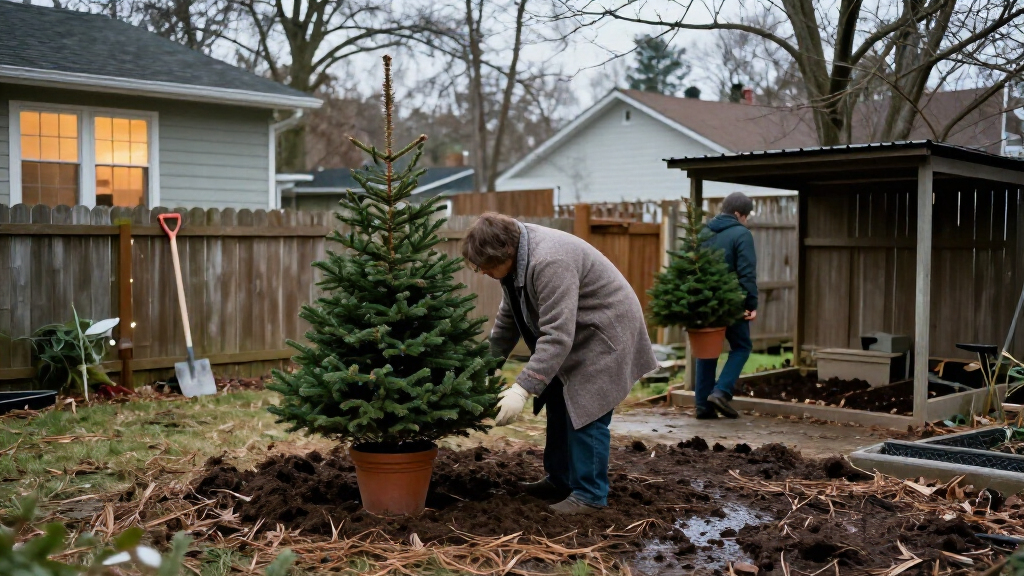
A living Christmas tree is also a future landscape tree, so buyers should confirm its species, mature size, local suitability and planting location before purchase. For dormant hardy trees, indoor display may need to be limited to just a few days, and winter planting or protected holding requires a specific care plan.
Planet Natural’s report advises shoppers to settle the tree’s outdoor destination and indoor schedule before buying a living Christmas tree. The guidance matters because a potted or root-balled tree is intended to remain alive after the holiday, and its species, mature size, climate needs and time indoors can determine whether it survives and fits the yard.
Buyers should ask for the tree’s botanical name and cultivar, whether it was grown in its container or dug from a field, and what outdoor climate it can tolerate. The report cautions that “living” can describe different plants: a hardy landscape conifer may be suitable for later planting, while a small tabletop tree may be intended mainly as seasonal decor. Norfolk Island pine, for example, is tropical and is not suited to a cold-winter yard.
The planned site should be judged by the tree’s mature height and width, not its current pot size. Buyers are urged to check light, drainage, soil and exposure, as well as clearance from buildings and overhead utilities. Underground utility locations should be confirmed before digging. If there is no appropriate permanent site, the report says shoppers should not assume they will find one after Christmas.
Indoor time also needs advance planning. For a dormant, hardy tree in a cold-winter climate, Illinois Extension recommends four to five days indoors, according to the report. Other regional guidance may differ, so buyers should ask the supplier for advice specific to the species, tree condition and local climate. The household’s display dates need to fit that limit; a tree wanted indoors from early December through New Year’s Day may not be compatible with it.
The Yard Must Fit the Tree
The decision affects more than holiday decor: it commits the buyer to planting and caring for a tree after the display ends. A poor match between the tree and its site can create lasting problems, including inadequate space as the tree grows, unsuitable climate conditions or difficulty establishing it after winter. Checking mature dimensions and local suitability beforehand can prevent a short-term purchase from becoming a long-term landscaping mistake.
The schedule is part of that fit. A household that cannot keep indoor time brief, or that plans to travel after the holiday, may not be able to provide the conditions a dormant tree needs. The report frames an outdoor display or a different indoor arrangement as alternatives when the household’s routine and the tree’s requirements do not align. Those are practical options, not evidence that every living tree will fail indoors.
Handling also deserves attention: a moist root ball can be substantially heavy. Shoppers should confirm the tree’s total dimensions and weight, arrange a suitable vehicle, and find out whether delivery or lifting help is available. The source report identifies these checks as part of buying; it does not give a standard weight or transport requirement for all trees.
Popular right now

Dyson PencilVac Fluffycones Cordless Hard Floor Vacuum

Vitamix Propel Series 510 Professional-Grade Blender, Black

Samsung 65-Inch QN70FA Neo QLED 4K Smart TV with 8-Foot WireLogic Ruby Ultra High Speed HDMI Cable (2025)
As an affiliate, we earn on qualifying purchases.
Different Trees, Different Needs
The term “living Christmas tree” does not identify one standard product. Some are container-grown conifers; others are field-dug trees sold with a balled-and-burlapped root system. A container-grown tree and a recently dug tree may differ in handling and planting needs, while a small plant’s appearance does not establish that it is a permanent dwarf. The report recommends verifying the cultivar and consulting a reliable regional source or nursery about mature size and climate fit.
Cold- and mild-winter regions pose different planning questions. In places where soil freezes, buyers are advised to check whether the ground is workable, prepare a planting location in advance where appropriate, and make a protected holding plan if immediate planting is not possible. A temporary holding place must protect the root ball from severe exposure and drying without leaving it saturated. In mild-winter areas, workable soil alone does not make a species suitable: summer heat, local soil and climate requirements still matter. The report cites University of Florida guidance favoring native or adapted choices and cautioning that local sale does not prove landscape suitability.
For either climate, the period indoors is a brief part of a longer sequence. Buyers should ask how to manage the move back outdoors and what establishment watering will be needed after planting. A garage or shed should not be assumed suitable just by its name; actual temperatures and conditions matter.
Local Advice Still Matters
The guidance does not establish one indoor time limit or planting method for every living Christmas tree. Species, cultivar, dormancy, local climate and tree condition can change what is appropriate, and the report notes that regional recommendations differ. It does not identify a particular tree or yard, so buyers need advice from a nursery or regional extension service familiar with their conditions.
The report also gives no universal mature dimensions, root-ball weight, transport method or holding temperature. Those details must be confirmed for the individual tree. Whether winter planting is feasible depends on local ground conditions, and a holding plan depends on access to a suitable protected place and someone able to monitor moisture and temperature. The source offers planning cautions rather than a guarantee that a tree will survive after planting.
Check Before You Purchase
Before paying, ask the seller for the botanical name, cultivar, growing or digging history, recommended climate, mature dimensions and indoor-display guidance. Then compare those details with a specific site in the yard, checking light, drainage, clearance and underground utilities. Confirm how the tree will be transported and whether the root ball can be managed safely.
For cold-winter areas, ask whether planting can happen while the ground is workable or arrange a suitable protected holding plan before the holiday. For mild-winter areas, verify that the species suits local summer conditions as well as winter temperatures. Finally, set the display dates around the recommended indoor limit and agree who will care for the tree if the household travels. If these arrangements do not fit, the report suggests choosing an outdoor display or another indoor option rather than buying first and deciding later.
Key Questions
How long can a living Christmas tree stay indoors?
It depends on the tree and local conditions. The report says Illinois Extension recommends four to five days for a dormant hardy tree in a cold-winter climate, while other regional guidance may differ. Ask the supplier for advice specific to the species and tree.
Is a small potted conifer suitable for planting in my yard?
Not necessarily. Confirm its botanical name, cultivar and climate suitability, then check its mature size. Some small trees are intended as seasonal decor, and some are large-growing species in small containers.
Can I plant the tree after Christmas if the ground is frozen?
Do not assume the ground will be workable. Check local conditions before buying and arrange a protected holding plan with the nursery if planting must wait. The root ball needs protection from severe exposure and drying, but should not remain saturated.
Does a tree sold locally suit my garden?
Not automatically. Local availability does not prove that a tree fits the site or regional climate. Ask a local nursery or regional extension service about the species’ climate, soil and mature-size requirements.
What should I check about transporting a living tree?
Ask for the tree’s overall dimensions and weight, including its root ball, and confirm that your vehicle can carry it safely. A moist root ball can be much heavier than expected; ask whether delivery or lifting help is available.
Source: planetnatural.com