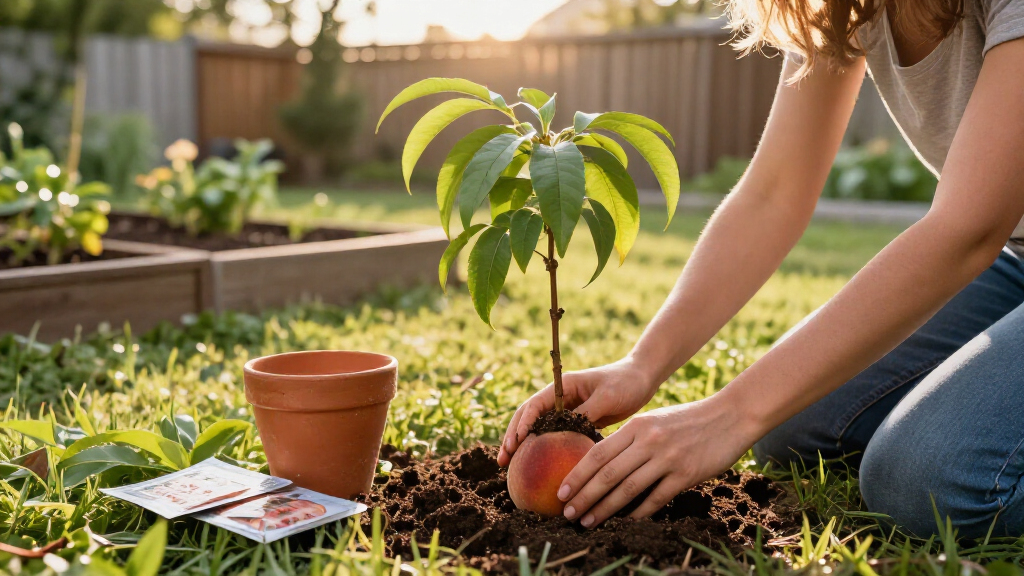
The best peach tree growing kits depend on whether you want to start from seed or plant a live tree with a head start. My best overall pick is the Red Haven Peach Tree, a live, self-pollinating option that balances a useful fruiting profile with home-orchard appeal. For small spaces, the Bonanza Patio Peach Tree is a standout compact choice, while the Belle of Georgia offers a white-peach option for gardeners prioritizing cold hardiness. The main tradeoffs are patience versus convenience, mature size versus container suitability, and whether the tree fits your local climate. Read on for the full comparison and guidance on choosing the right starting point.

Get garden gear delivered free with Prime
- Fast, free delivery on millions of items
- Prime Video, Amazon Music and more included
- Member-only deals all year
Complete the kit


Key Takeaways
- Live trees provide a head start: Most of this lineup is made up of potted or young live trees, while the seed options require more patience and offer less certainty about the eventual fruit.
- Red Haven stands out as the balanced pick: Its self-pollinating description makes it a practical choice for gardeners who have room for one peach tree.
- Patio varieties solve a space problem: The two Bonanza listings are designed for compact growing, but a dwarf habit does not remove the need for sun, pruning, and suitable winter care.
- Variety and climate matter as much as pot size: Belle of Georgia and Contender are presented as cold-hardy choices, while buyers should still check local chill-hour and hardiness needs before ordering.
- Seeds and live plants serve different goals: Seed bundles cost less commitment in space and can be fun to grow, but a named live cultivar is a clearer route when fruit type and harvest expectations matter.


| peach tree growing kit | Sunlight | Pot size | USDA hardiness zones |
|---|---|---|---|
| Peach Seeds for Planting | Full sun | — | — |
| Bonsai Fruit Tree Seeds Bundle | — | — | — |
| Donut Peach Fruit Tree | Full sun | 1 gallon | 5–9 |
| Young Peach Tree Live Plant | Full sun | 1 gallon | 3–9 |
| Peach Tree ‘Belle of Georgia’ | Full sun | 5 gallon | 5–8 |
| Bonanza Patio Peach Tree | Full sun | 7 gallons | 5–9 |
| Red Haven Peach Tree | — | 5 gallons | 5–8 |
| Golden Red Dwarf Peach Tree Se | — | Half-gallon | — |
| Contender Peach Tree | Full sun | — | 4–8 |
| Belle of Georgia Peach Tree | Full sun | — | — |
| Bonanza Patio Peach Tree | — | 5 gal | 5–9 |
| Peach Tree ‘Contender’ | — | 5 gallon | 4–8 |
| Perfect Plants Flordaking Peac | Full sun | — | — |
More Details on Our Top Picks
Peach Seeds for Planting – 3 Pcs Peach Tree Seeds for Home Garden, Fruit Tree Seeds for Backyard Orchard, Growing Instructions Included
Three peach seeds and step-by-step instructions make this the most approachable starting point for gardeners who want to grow a tree from seed rather than receive a nursery plant. The listed high germination rate may help, but seed-grown peaches still take years to mature, and fruit characteristics can vary. Compared with the Donut Peach Fruit Tree, which arrives as a live tree with a named fruit type, this pack asks for more patience and offers less certainty about the eventual harvest. Its small count suits a trial in a raised bed or indoor seed-starting setup, not a large orchard. I’d choose it for the growing process and the low-commitment start; buyers focused on earlier fruit should choose a live tree instead.
Pros:- Includes step-by-step planting instructions for home seed-starting.
- Three seeds provide a small, manageable trial.
- Can be started indoors or planted in a garden or raised bed.
- Listed as having a high germination rate.
Cons:- Only three seeds are included, limiting the scale of a planting.
- Seed-grown trees can take several years to bear fruit.
- Does not offer the established growth or named fruit type of a live tree such as the Donut Peach.
Best for: New gardeners who want to learn seed-starting with a few peach seeds and can wait several years for a possible harvest.
Not ideal for: Buyers seeking an established tree, predictable fruit traits, or enough seeds to plant a larger orchard.
- Seed count:3
- Brand:Wily Fox
- Sunlight:Full sun
- Germination:Listed as high
- Planting guidance:Step-by-step growing instructions included
- Suggested uses:Backyard garden, raised bed, or indoor seed-starting
Our verdict“Choose this pack if you value the seed-growing process and can wait; pick a live peach tree for a more direct path to an established planting.”
Bonsai Fruit Tree Seeds Bundle, 40 Seeds: Papaya, Peach, Cherry, and Banana
Forty seeds across four fruit types make this a variety experiment rather than a focused peach-tree kit: only 10 seeds are peach, alongside papaya, cherry, and banana. That mix suits gardeners who want to try several container-growing projects, but it gives less peach-specific guidance than Wily Fox’s three-seed pack with planting instructions. The listing does not specify germination rates or provide planting instructions, so buyers may need to research each variety separately. Its bonsai framing also differs from the backyard-orchard emphasis of the Belle of Georgia live tree; this is better for experimenting with seeds in pots than for choosing a known peach cultivar and planning a fruit harvest. Patience is part of the deal, and the peach portion is modest.
Pros:- Includes 10 peach seeds alongside three other fruit varieties.
- Forty seeds give growers several chances to experiment.
- Intended for containers, patios, gardens, and greenhouses.
- Can be grown indoors or outdoors, depending on conditions.
Cons:- Only one quarter of the bundle is peach seed.
- The listing does not specify planting instructions or germination rates.
- Growing peach trees from seed requires patience compared with buying a live tree such as Belle of Georgia.
Best for: Container gardeners who want to experiment with peach, papaya, cherry, and banana seeds and are comfortable finding growing guidance independently.
Not ideal for: Buyers focused on growing a peach orchard or who want a named peach variety, clear instructions, or an established tree.
- Total seed count:40
- Seed count by variety:10 each
- Varieties:Papaya, peach, cherry, and banana
- Brand:CZ Grain
- Intended growing settings:Containers, gardens, patios, greenhouses, or bonsai pots
- Indoor/outdoor use:Indoor or outdoor
Our verdict“Pick this bundle for multi-fruit container experiments, not when your main goal is a clearly guided peach-tree planting.”
Donut Peach Fruit Tree, 1 Gallon
A live, self-pollinating Donut (Saturn) peach tree offers a more direct route to a known fruit type than either seed pack in this group. Its distinctive flat peaches are described as extra-sweet and low-acid, while self-pollination means a second peach tree is not required for fruit set. Compared with the Belle of Georgia in a 5-gallon pot, this one arrives in a smaller 1-gallon container and is suited to growers who want the Donut peach type rather than large white-fleshed fruit. The tradeoff is ongoing care: it needs full sun, regular watering, annual pruning, and 300–400 chill hours for strong production. Its stated 12–15-foot mature canopy also needs more room than a compact patio tree.
Pros:- Self-pollinating, so a second tree is not needed for fruit set.
- Produces distinctive flat, sweet, low-acid Donut peaches.
- Suitable for USDA hardiness zones 5–9.
- A 1-gallon live tree avoids the long seed-starting stage.
Cons:- Needs 300–400 chill hours for optimal fruit production.
- Requires regular watering and annual pruning.
- Matures to a 12–15-foot canopy and cannot ship to California, Arizona, Alaska, or Hawaii.
Best for: Home orchard growers in USDA zones 5–9 who want a named, self-pollinating peach and have space for a 12–15-foot tree.
Not ideal for: Gardeners without room for a full-sized canopy, without enough winter chill, or in California, Arizona, Alaska, or Hawaii, where shipping is restricted.
- Plant type:Donut (Saturn) peach tree
- Pot size:1 gallon
- USDA hardiness zones:5–9
- Sunlight:Full sun
- Expected mature height:Up to 15 feet; stated mature canopy range is 12–15 feet
- Soil:Loam, well-drained
- Water needs:Regular watering
- Chill requirement:300–400 chill hours for optimal fruit production
- Pollination:Self-pollinating
Our verdict“Choose this live Donut peach for a named, self-pollinating variety if your climate and garden can support its chill needs and mature size.”
Young Peach Tree Live Plant, 20–26 Inches Tall, 1-Gallon Pot
A 20–26-inch live tree in a 1-gallon pot gives buyers a planted starter without the wait and uncertainty of growing from seed. Its listed mature height of 6 feet sets it apart from the Donut Peach, which can reach 12–15 feet, making this a more manageable choice for a smaller garden. The listing describes it as drought tolerant, but that should not be read as permission to neglect watering: it also calls for regular watering during establishment and moderate moisture. Its broad USDA zone range of 3–9 may appeal to growers in colder regions, though the product data does not name a fruit cultivar or specify a harvest schedule. Compared with the 5-gallon Belle of Georgia, it arrives smaller and offers less variety-specific detail.
Pros:- Arrives as a live plant in a 1-gallon pot, rather than as seeds.
- Listed mature height of 6 feet suggests a smaller footprint than the Donut Peach.
- Listed for USDA hardiness zones 3–9.
- Described as drought tolerant once established.
Cons:- Does not ship to California.
- Requires full sun, well-drained soil, and watering during establishment.
- The listing does not identify a specific peach cultivar or provide a fruiting timeline.
Best for: Gardeners wanting a live, smaller-scale peach starter and a listed mature height of 6 feet, especially those who prefer a plant over seeds.
Not ideal for: Buyers who want a named peach variety, a larger nursery-grown specimen, or shipping to California.
- Plant type:Peach tree
- Plant height:20–26 inches
- Pot size:1 gallon
- Expected mature height:6 feet
- USDA hardiness zones:3–9
- Sunlight:Full sun
- Soil:Well-drained soil
- Water needs:Moderate watering; regular watering during establishment
- Shipping restriction:Does not ship to California
Our verdict“Choose this starter if a smaller listed mature size matters more than a named cultivar or the larger planting size of the Belle of Georgia.”
Peach Tree ‘Belle of Georgia’ – 5-Gallon Pot – Live Fruit-Bearing, Cold-Hardy, Sweet & Juicy White Peaches for Home Orchards, Gardens & Edible Landscapes
The 5-gallon Belle of Georgia is the most substantial live-tree option in this batch, with a named variety known for sweet white-fleshed peaches and fragrant pink spring blossoms. It is a stronger fit for buyers who want a defined fruit type and a larger nursery-pot start than the 1-gallon Donut Peach or the 20–26-inch young tree. Its self-pollinating habit and stated high yields suit home orchards, while the option to grow it in the ground or a large container adds flexibility. The tradeoff is a narrower climate range: it is listed for USDA zones 5–8, unlike the Donut Peach’s zones 5–9. Full sun and regular watering, especially during fruit development, remain necessary.
Pros:- Named Belle of Georgia variety produces sweet, white-fleshed peaches.
- Self-pollinating, so a second peach tree is not required for fruit set.
- 5-gallon pot provides a larger nursery start than the 1-gallon options in this batch.
- Can be grown in the ground or in a large container.
Cons:- Listed for USDA zones 5–8, a narrower range than the Donut Peach’s zones 5–9.
- Needs full sun and regular watering, especially while fruit develops.
- A 5-gallon tree and its eventual growth require more space than a seed-starting project.
Best for: Home orchard growers in USDA zones 5–8 who want a named white-peach variety, a larger 5-gallon nursery start, and self-pollination.
Not ideal for: Gardeners outside zones 5–8, those unable to provide full sun and regular water, or buyers seeking the smaller footprint of a compact patio peach.
- Variety:Belle of Georgia
- Pot size:5 gallon
- USDA hardiness zones:5–8
- Fruit:Sweet white-fleshed peaches
- Pollination:Self-pollinating
- Sunlight:Full sun
- Soil:Well-draining loam
- Water needs:Moderate; regular watering, especially during fruit development
- Bloom period:Spring to summer
Our verdict“Choose Belle of Georgia if you want a named white-peach tree in a larger nursery pot and your climate falls within zones 5–8.”
Bonanza Patio Peach Tree, 7-Gallon Nursery Pot
The Bonanza is the clearest fit here for growers who want a peach tree without giving a large part of the yard to it. At a mature height of about 4–5 feet, it is far more manageable for a patio or compact garden than the Red Haven, which can reach 25 feet. Its 7-gallon pot also gives buyers a larger starting container than the half-gallon Golden Red seedling, though it still needs outdoor space, full sun, and regular watering. Sweet fruit and pink-and-orange foliage give it appeal beyond harvest, and its flowers can attract pollinators. The tradeoff is that this is not a low-care indoor plant: it needs suitable drainage and consistent attention to watering, and its compact form is the priority over orchard-scale production.
Pros:- Compact 4–5-foot mature height suits patios and small gardens.
- Produces sweet peaches while adding pink and orange foliage color.
- Attracts pollinators during its spring bloom.
- Ships in a 7-gallon nursery pot.
Cons:- Needs full sun and regular watering.
- Requires well-drained loam, so poorly draining planting sites need correction.
- Its compact size is less suited to buyers prioritizing a large orchard harvest.
Best for: Patio gardeners and small-yard growers who want a compact peach tree with ornamental foliage as well as fruit.
Not ideal for: Growers seeking a full-sized orchard tree or a plant that can tolerate shade and infrequent watering.
- Plant type:Fruit tree
- Mature height:4–5 feet
- USDA hardiness zones:5–9
- Pot size:7 gallons
- Sunlight:Full sun
- Soil:Loam
- Watering:Regular
- Expected bloom:Spring
Our verdict“Choose Bonanza if limited outdoor space matters more than the larger-tree potential of Red Haven.”
Red Haven Peach Tree, Freestone, Heavy-Bearing, Self-Pollinating, Deciduous, 5 gal Nursery Pot
Red Haven suits growers who have room for a substantial tree and want fruit for more than occasional snacking. Its heavy-bearing, self-pollinating habit can support a useful harvest without requiring a second peach tree, while the freestone peaches are practical for canning and freezing. Compared with the compact Bonanza Patio Peach, this is an orchard-scale choice: it may reach 25 feet and needs space, pruning, and a climate that supplies 800–900 chill hours. That chill requirement rules it out for many warm-region gardens, even though its listed hardiness range is zones 5–8. The 5-gallon pot is a smaller start than Bonanza’s 7-gallon container, but the main decision is whether your site can support its eventual size and winter needs.
Pros:- Heavy-bearing variety suited to fresh eating and preserving.
- Self-pollinating, so a second peach tree is not required for pollination.
- Freestone fruit is convenient for canning and freezing.
- Described as disease resistant and easy to maintain in suitable conditions.
Cons:- Needs 800–900 chill hours, limiting suitability in mild-winter climates.
- Can reach 25 feet and needs considerable room.
- Shipping is restricted to California, Arizona, Alaska, and Hawaii.
Best for: Home orchard growers in zones 5–8 with ample space, cold winters, and plans to eat, can, or freeze a sizable peach crop.
Not ideal for: Warm-region gardeners, small-yard owners, or buyers who cannot accommodate a tree reaching up to 25 feet.
- Pot size:5 gallons
- Mature height:Up to 25 feet
- USDA hardiness zones:5–8
- Chill hours required:800–900
- Pollination:Self-pollinating
- Fruit type:Freestone peach
- Soil:Well-drained sandy loam
- Harvest time:Late July
Our verdict“Pick Red Haven over compact Bonanza when you have orchard space, adequate winter chill, and want fruit suited to preserving.”
Golden Red Dwarf Peach Tree Seedling, 6–9 Inches Tall, Half-Gallon Pot
This Golden Red is the smallest, most early-stage option in this group: it arrives as a 6–9-inch seedling, not a near-ready fruiting tree. That makes it a fit for gardeners who enjoy raising a young plant and can give it time to establish. Its dwarf habit and half-gallon pot make it easier to start in a container or small garden than Red Haven, which can reach 25 feet, but the tradeoff is less immediate progress toward a mature tree. It needs full sun, well-drained soil, regular watering, and seasonal pruning; the listing does not provide a hardiness zone or fruiting timeline, so buyers have less guidance for matching it to their climate and expectations. It also does not ship to California.
Pros:- Dwarf form is suited to small spaces, patios, and raised beds.
- Can be transplanted into a container, garden, or small orchard.
- Ships in a half-gallon pot and is ready for transplanting.
- Small starting size gives growers flexibility in choosing its eventual growing site.
Cons:- Arrives only 6–9 inches tall and is not a mature fruiting tree.
- Requires regular watering and seasonal pruning as it develops.
- Does not ship to California, and no hardiness zone is provided.
Best for: Patient gardeners who want to nurture a dwarf peach seedling in a container, raised bed, or small garden.
Not ideal for: Buyers who want a larger established sapling, a stated hardiness range, or clear expectations for when fruiting may begin.
- Plant type:Dwarf peach tree seedling
- Variety:Golden Red
- Shipped height:Approximately 6–9 inches
- Pot size:Half-gallon
- Unit count:1
- Growing conditions:Full sun and well-drained soil
- Watering and pruning:Regular watering and seasonal pruning
- Shipping restriction:Does not ship to California
Our verdict“Choose Golden Red if you value a dwarf starting point and can wait for a seedling to develop, rather than buying a larger tree like Red Haven.”
Contender Peach Tree – Live Plant (1–2 ft tall) – DAS Farms
Contender’s strongest advantage is its stated USDA zones 4–8, extending into colder territory than the zone 5–8 Red Haven and Belle of Georgia. It ships as a 1–2-foot dormant sapling in a gallon pot, giving buyers a more established start than the tiny Golden Red seedling without the bulk of a large nursery tree. The variety is self-pollinating and attracts pollinators, while a 30-day transplant guarantee offers some reassurance during planting. This is still a young tree, though, and the listed mature height of about 10 feet calls for a permanent in-ground site: the product is described as unsuitable for transfer into another container. Regular watering, full sun, and well-drained loam remain part of the job.
Pros:- Listed for USDA zones 4–8, including colder areas than Red Haven’s zone range.
- Self-pollinating variety does not require a second peach tree.
- Ships as a 1–2-foot sapling in a gallon pot.
- Includes a 30-day transplant guarantee when planting instructions are followed.
Cons:- Must be planted in the ground and is not suited to transfer into another container.
- Small sapling will need time to grow toward its roughly 10-foot mature height.
- Needs full sun, regular watering, and well-drained loam.
Best for: Gardeners in zones 4–8 who want a cold-hardy, self-pollinating sapling for a permanent in-ground planting site.
Not ideal for: Container growers or buyers who want a larger, fruit-bearing tree at delivery rather than a young dormant sapling.
- Shipped size:1–2 feet tall
- Pot:Gallon pot
- USDA hardiness zones:4–8
- Expected mature height:10 feet
- Pollination:Self-pollinating
- Sunlight:Full sun
- Soil:Loam; well-drained
- Transplant guarantee:30 days when planting instructions are followed
Our verdict“Choose Contender over the warmer-zone-limited Red Haven if your priority is a young, self-pollinating tree rated for zone 4 and you have a permanent garden site.”
Belle of Georgia Peach Tree, 1 gal Nursery Pot
Belle of Georgia is the processing-minded pick: its sweet, white-fleshed peaches are described as well suited to canning, and its self-pollinating habit means one tree can set fruit without a pollination partner. At 1–2 feet tall in a 1-gallon pot, it starts smaller than Red Haven’s 5-gallon nursery tree, so buyers should expect more establishment time. It also grows much larger than patio-focused Bonanza, reaching 15–20 feet, and needs about 850 chill hours. That makes it a better match for temperate gardens with winter chill and room to grow than for warm climates or tight patios. Full sun, regular watering, and well-draining soil are part of its care routine.
Pros:- Self-pollinating, so it can be planted as a single peach tree.
- Sweet white-fleshed fruit is suited to canning.
- Listed for USDA zones 5–8.
- Can be planted from spring through fall according to the product data.
Cons:- Requires about 850 chill hours, which limits suitability in warm regions.
- Mature height of 15–20 feet makes it unsuitable for most patios and small spaces.
- One-gallon starting pot and 1–2-foot current height mean it needs time to establish.
Best for: Temperate-climate gardeners with room for a medium-to-large tree who want self-pollinating peaches suited to canning.
Not ideal for: Warm-winter growers who cannot supply roughly 850 chill hours, or patio gardeners seeking a compact tree like Bonanza.
- Botanical name:Prunus persica
- Container size:1-gallon nursery pot
- Current height:1–2 feet
- Mature height:15–20 feet
- USDA growing zones:5–8
- Chill hours required:850
- Pollination:Self-pollinating
- Sunlight:Full sun
Our verdict“Choose Belle of Georgia over compact Bonanza if you have winter chill and garden space, with canning-quality white peaches as your goal.”
Bonanza Patio Peach Tree – Compact, Fruit-Bearing, Deciduous, 5‑gal Nursery Pot
The Bonanza Patio Peach is the space-saving choice here: it reaches just 4–5 feet, making it easier to fit on a patio or in a small garden than the 12–15-foot Flordaking. It arrives in a 5-gallon nursery pot and is described as a fruit-bearing tree, so buyers start with a live plant rather than seeds or a tiny seedling. Its pink-orange foliage adds ornamental color alongside the harvest. The tradeoff is scale: gardeners seeking a larger backyard tree or more room for growth may prefer the Contender, which is suited to home orchards and colder zones. This Bonanza also needs full sun and regular watering, and shipping is restricted in California, Arizona, Alaska, and Hawaii.
Pros:- Compact 4–5-foot mature height suits patios and small gardens.
- Fruit-bearing tree offers a homegrown peach crop in limited space.
- Pink-orange foliage adds ornamental interest.
- Listed for USDA zones 5–9.
Cons:- Small mature size may not suit buyers seeking a larger tree.
- Requires full sun and regular watering.
- Cannot be shipped to California, Arizona, Alaska, or Hawaii.
Best for: Patio and urban gardeners who want a live, fruit-bearing peach tree that stays around 4–5 feet tall.
Not ideal for: Gardeners who want a larger orchard tree, or buyers in California, Arizona, Alaska, or Hawaii where shipping is restricted.
- USDA hardiness zones:5–9
- Mature height:4–5 ft
- Pot size:5 gal
- Weight:15 lbs
- Soil type:Loam
- Water needs:Regular watering
- Sunlight exposure:Full sun
- Planting period:Spring to fall
- Attracts pollinators:Yes
Our verdict“Choose this Bonanza for a compact, ornamental peach tree in a sunny small-space garden, but skip it if you want a larger tree or live in a restricted shipping state.”
Peach Tree ‘Contender’ – 5‑Gallon Pot – Live Fruit‑Bearing, Cold‑Hardy Yellow Peaches for Home Orchards and Gardens
For gardeners in colder regions, Contender’s USDA zone 4–8 range gives it an advantage over the Bonanza Patio Peach, which is listed for zones 5–9. This live tree comes in a 5-gallon pot and produces large, sweet yellow peaches with orange-red skin; pink spring blossoms also bring pollinators to the garden. That combination makes it a stronger fit for a backyard orchard or edible landscape than the compact Bonanza, which is aimed at tight spaces. Contender is not the easiest pick for a hands-off planting, though: it needs full sun, well-draining loam, steady watering while fruiting, and annual pruning may be needed to maintain shape and production. Buyers with limited sun or little room for upkeep should look elsewhere.
Pros:- USDA zones 4–8 reach colder areas than the Bonanza Patio Peach’s listed range.
- Produces large, sweet yellow peaches suitable for fresh eating or cooking.
- Pink spring blossoms attract pollinators.
- 5-gallon container is a substantial live-plant starting point.
Cons:- Needs consistent watering during fruiting.
- Requires full sun and well-draining soil, limiting suitable planting sites.
- Annual pruning may be needed to support shape and productivity.
Best for: Home-orchard growers in USDA zones 4–8 who want a cold-hardy live tree with yellow fruit and can provide sun, water, and pruning.
Not ideal for: Patio gardeners seeking a verified dwarf mature size, or growers without a sunny spot and time for seasonal care.
- Pot size:5 gallon
- USDA hardiness zones:4–8
- Sunlight exposure:Full sun
- Soil type:Loam
- Water needs:Moderate watering
- Bloom period:Spring to summer
- Fruit color:Yellow with orange-red skin
- Flower color:Pink
- Material features:Live plant, nursery pot, potting soil
Our verdict“Pick Contender if cold hardiness and yellow peaches matter more than compact size and you can provide regular care.”
Perfect Plants Flordaking Peach Tree, 4-5 ft, Live Plant
Flordaking is the warm-climate specialist in this group. Its 350 chill-hour requirement and mid-May ripening suit growers whose winters may not provide the colder conditions associated with varieties such as Contender. The tree is self-fertile, so a second peach tree is not required for pollination—a practical advantage for a single-tree garden. Its 4–5-foot purchase height gives it a substantial start, but unlike the Bonanza Patio Peach, it is not a patio-scale dwarf: mature height and spread are both listed at 12–15 feet. That means buyers need room to plant and maintain a full-sized tree. It also calls for full sun and regular watering, and its zone 6–9 range makes it a poor match for colder climates.
Pros:- Low 350-chill-hour requirement suits warm-winter growing conditions.
- Self-fertile, so a second pollinator tree is not required.
- Mid-May fruit ripening offers an early-season harvest.
- Light pink spring blooms and green foliage add ornamental appeal.
Cons:- USDA zones 6–9 exclude colder-growing areas.
- Matures at 12–15 feet tall and wide, requiring substantial space.
- Needs full sun and regular watering.
Best for: Growers in USDA zones 6–9 with mild winters who want a self-fertile peach tree and can accommodate a 12–15-foot canopy.
Not ideal for: Cold-climate gardeners or patio growers who need a tree that stays near the Bonanza Patio Peach’s 4–5-foot mature height.
- Botanical name:Prunus persica ‘Flordaking’
- Growing zones:6–9
- Chill hours required:350
- Mature height:12–15 ft
- Mature width:12–15 ft
- Plant size at purchase:4–5 ft
- Fruit ripening:Mid-May
- Sunlight:Full sun
- Water needs:Regular watering
Our verdict“Choose Flordaking for a sunny, mild-winter garden with room for a self-fertile full-sized tree, not for a compact patio planting.”
How We Picked
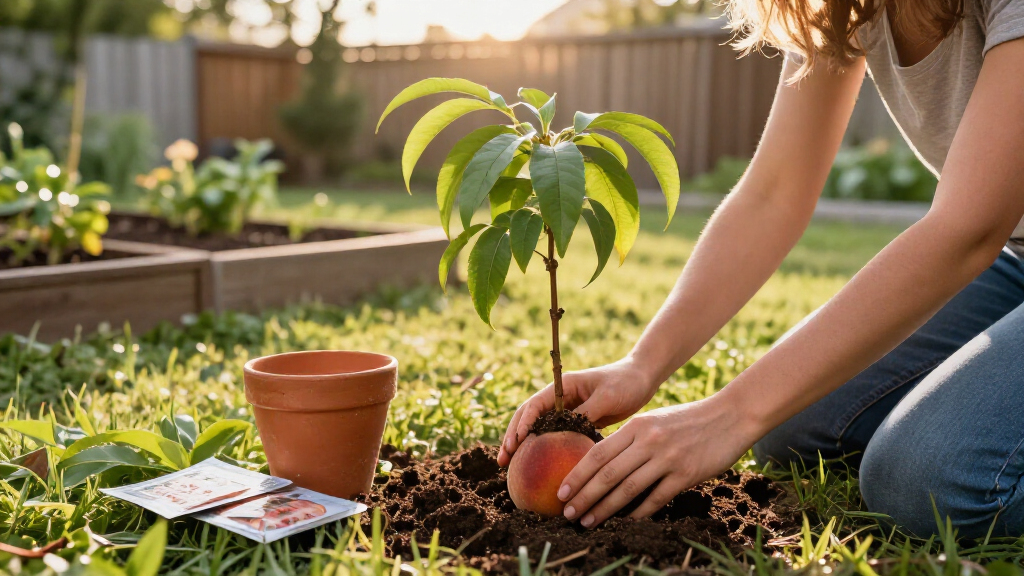
I compared these 13 options by how directly they help a home gardener establish a peach tree, looking at whether each listing is a seed product or a live plant, the stated pot or plant size, named cultivar traits, and clues about intended growing space. I also weighed practical details that affect the effort after arrival: whether the tree is described as self-pollinating, compact, cold-hardy, or suitable for home orchards. These features matter because a kit that fits a patio or a local winter can be more useful than a larger plant that does not match the site.
The ranking favors live, named trees with more decision-useful information over seed bundles, since they offer a clearer path to a particular fruiting variety. Red Haven takes the lead for its self-pollinating description and home-orchard fit; Bonanza ranks highly for limited-space growers, and Belle of Georgia and Contender earn attention for their stated cold-hardiness. Smaller seedlings and generic seed options rank lower because they require more patience or leave more uncertainty. Listings with different pot sizes or formats are treated as distinct choices, but buyers should confirm the exact cultivar, shipping size, and care requirements before ordering.
Factors to Consider When Choosing Best Peach Tree Growing Kits
Peach tree listings can look similar while representing very different starting points. Before choosing, decide how soon you want a tree established, how much space you can give it, and whether your climate can support the cultivar. These factors can prevent common mismatches that no pot size or growing instructions can fix.
Choose Seeds or a Live Tree Based on Your Goal
Seeds make sense when the process of raising a tree is part of the fun and you can wait years before expecting fruit. A seed-grown peach may not match the named fruit of the parent, so it is a poor shortcut for shoppers seeking a specific flavor or harvest window. A live named cultivar costs more commitment in planting space and care right away, but gives you a more defined starting point. Beginners who mainly want to learn propagation can start with seeds; gardeners focused on fruit production should lean toward a live tree. Avoid treating a seed packet as equivalent to a ready-to-plant orchard tree.
Match Chill Needs and Hardiness to Your Area
Peach trees need suitable winter chill to flower and fruit well, and a cold-hardy label alone does not tell you whether a cultivar fits your exact region. Check the tree’s stated chill-hour range alongside local extension guidance and your site’s winter lows. A sheltered urban garden can behave differently from an exposed rural yard, even within the same broad zone. If those details are missing from a listing, ask the seller before buying rather than guessing from the variety name. Choosing for climate first can save years of poor growth or disappointing fruit set.
Plan for Mature Size, Not Just the Delivered Pot
A one-gallon or half-gallon pot describes the tree at shipping, not the space it will need as it grows. Look up the cultivar’s mature height and spread, then leave room for sunlight, airflow, pruning, and harvest access. Patio varieties can suit containers or tighter yards, but compact growth still needs regular watering and thoughtful pruning. A larger nursery pot can give a more established start, yet it may be harder to move and does not guarantee a smaller wait for fruit. Measure the planting spot before selecting a tree.
Check Pollination and Fruit Expectations
Many peach cultivars can set fruit without a second peach tree, but confirm the specific variety’s pollination needs rather than assuming. If a listing calls a tree self-pollinating, that can make a single-tree garden more practical; it does not guarantee a harvest without suitable weather and care. Also compare white- and yellow-fleshed fruit preferences, freestone descriptions, and likely harvest timing when those traits matter to your household. A fruit tree is a long-term planting, so choose the harvest you want rather than buying by name alone. Keep nearby pollinator activity and bloom conditions in mind as well.
Treat Container Growing as a Care Commitment
Growing a peach tree in a pot can make a compact cultivar workable on a patio, but containers dry out faster than garden soil and can expose roots to temperature swings. You may need to water more often, refresh or replace potting medium, and move or insulate the container during harsh weather. A large enough pot and drainage holes matter more than a decorative container. Garden planting usually gives roots more room, while container growing offers mobility and easier control over placement. Choose the format you can maintain through every season, not only the planting day.
Read the Shipping Details Before Ordering
Live plant listings may describe height, pot volume, or a general size range, and those figures are not interchangeable. Confirm whether the tree ships dormant, how it is packed, and what condition or size the seller promises at dispatch. Check the planting window for your region so a delicate young tree does not arrive during extreme heat or hard frost. Seed products have different concerns: confirm the number and type of seeds and whether germination instructions are included. Clear shipping details help set realistic expectations and make it easier to prepare the planting site.
Frequently Asked Questions
Will a peach tree grown from seed produce the same fruit as the parent tree?
Not reliably. Peach seedlings can differ from the fruit that produced the seed, so a seed kit does not promise the named cultivar’s flavor, texture, or harvest period. Seed starting is best for experimentation or for gardeners who value growing a tree from scratch more than predictable fruit. If a particular type of peach is the priority, choose a live tree sold under that cultivar name. Even then, climate and growing conditions affect the eventual crop.
Can I grow a peach tree if I only have a patio or balcony?
A compact patio variety is a more suitable starting point than a standard orchard tree, but first check the cultivar’s mature size and container guidance. Your space also needs several hours of direct sun, room for a stable pot, and access to water. Container trees often need more frequent watering and closer attention to winter root protection than trees planted in the ground. Confirm that your building rules and local climate allow outdoor fruit-tree growing. If sunlight is limited, a peach tree may struggle regardless of its dwarf label.
Do I need to buy two peach trees to get fruit?
Many peach varieties are self-fertile, so one tree can often set fruit without a second peach nearby. Check the specific cultivar listing or ask the seller, since pollination details should not be assumed from the product category. A second compatible tree may help in some garden conditions, but it also means more space, pruning, and care. Fruit set still depends on factors such as bloom-time weather, tree health, and suitable winter chill. For a small yard, verified self-pollination is a useful selection filter.
Is a larger nursery pot always the better buy?
No. A larger pot can indicate a more established plant, but it does not by itself confirm stronger roots, better health, or faster fruiting. The cultivar, plant condition, shipping care, and fit with your climate matter just as much. A smaller tree may be easier to handle and can establish well when planted at the right time with suitable care. Compare the stated height and pot volume, then check what the seller says about the shipped plant rather than relying on container size alone.
Which matters more: cold hardiness or the peach variety I want?
Climate fit should come first because a tree that cannot meet local winter and chill requirements may fail to flower or fruit consistently. Once you find cultivars suited to your area, compare the fruit traits, tree size, and harvest use that matter to you. A cold-hardy description is helpful but not a substitute for checking local guidance and the cultivar’s chill needs. If your area has mild winters, a variety selected only for severe cold may not be the right match. Ask a local nursery or extension service when seller information is incomplete.
Conclusion
For most home gardeners who want a named live tree, I would start with the Red Haven Peach Tree as the best overall pick, especially when a single-tree planting is the goal. The Bonanza Patio Peach Tree is my choice for compact spaces, while the Belle of Georgia and Contender listings suit shoppers comparing stated cold-hardy options. For a more established, larger-format tree, consider the 5-gallon Belle of Georgia or Contender, after checking site and climate fit. The best beginner route is a live tree with clear cultivar and care details; choose seeds instead if the growing process matters more than predictable fruit. Match the tree to your winter conditions and available space before placing an order.