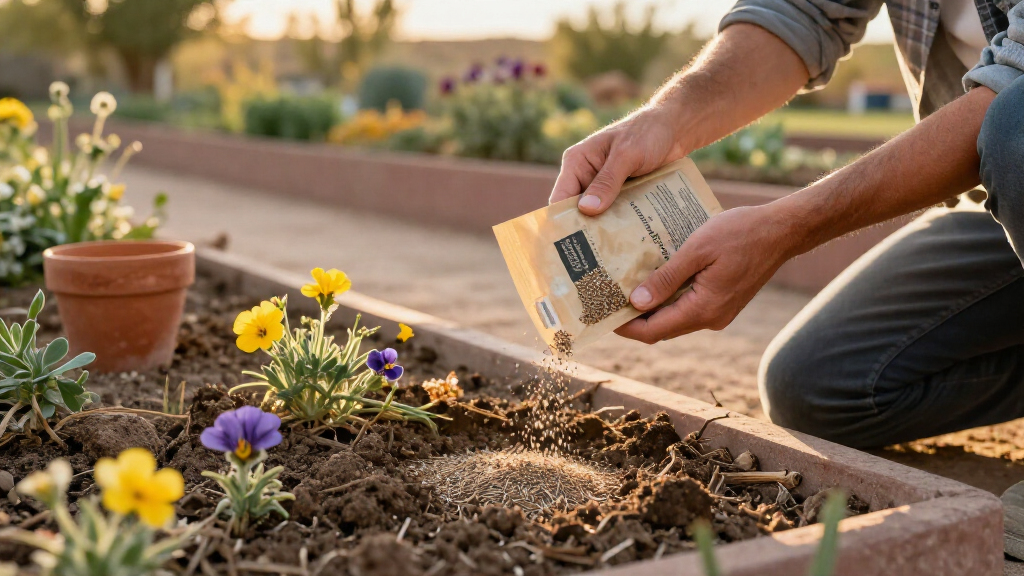

Native desert wildflower seed mixes vary in regional fit, species count, and the area a packet can cover, so the right choice depends on your location and planting goals. I rank Eden Brothers Native Southwest Wildflower Seed Mix as best overall for its Southwest focus and 16 varieties. Mountain Valley Seed Company Southwestern Wildflower Seed Mix stands out for buyers who want a larger 1/4-pound quantity, while Arizona Wildflower Seed Mix gives Arizona gardeners a stated coverage area to plan around. The main tradeoff is choosing between a mix tailored to a particular region and a larger or broader blend that may be less precisely matched to your site. Read on for the full comparison, selection criteria, and advice on choosing a mix for your growing conditions.

Get garden gear delivered free with Prime
- Fast, free delivery on millions of items
- Prime Video, Amazon Music and more included
- Member-only deals all year
Complete the kit


Key Takeaways
- Regional fit separates the leading options: Southwest and Arizona-specific blends give local gardeners a clearer starting point than mixes described only as drought-tolerant or dryland.
- Seed quantity and coverage answer different questions: the Mountain Valley and Outsidepride mixes come in 1/4-pound quantities, while the Arizona mix states a 300-square-foot coverage area.
- Species count is not a substitute for local suitability: Eden Brothers’ Southwest mix lists 16 varieties and its Western Xeriscape mix also lists 16, but buyers should still check whether the intended region matches their site.
- The California Native mix serves a distinct audience: its 30,000-seed count may appeal to California gardeners, but a seed count alone does not establish coverage or suitability for other desert regions.
- Mix names signal different priorities: drought-tolerant and dryland blends foreground dry conditions, while regional names offer a more specific geographic cue; neither label replaces checking the species list.
| Eden Brothers Native Southwest Wildflower Seed Mix, 1 oz, 16 Varieties |  | Best Overall Southwest Mix | Brand: Eden Brothers | Weight: 1 oz | Varieties: 16 | VIEW LATEST PRICE | See Our Full Breakdown |
| Southwest Regional Wildflower Seed Mix, 1 Ounce |  | Best for Broad Coverage | Brand: Sweet Yards | Packet weight: 1 ounce | Seed quantity: Over 15,000 | VIEW LATEST PRICE | See Our Full Breakdown |
| California Native Wildflower Seed Mix, 30,000 Seeds |  | Best for California Cool-Season Sowing | Minimum seed count: 30,000 | Weight: 1.12 ounces | Named varieties: California bluebells, coastal tidytips, sky lupine, mountain garland, California poppy | VIEW LATEST PRICE | See Our Full Breakdown |
| Drought-Tolerant Wildflower Seed Mix, 1 Ounce, 21 Species |  | Best for Adaptable Soil Conditions | Brand: Sweet Yards | Seed weight: 1 ounce | Seed quantity: Over 7,500 | VIEW LATEST PRICE | See Our Full Breakdown |
| Eden Brothers Native Western Xeriscape Wildflower Seed Mix, 1 oz, 16 Varieties |  | Best for Low-Water Western Gardens | Brand: Eden Brothers | Seed weight: 1 oz | Varieties: 16 | VIEW LATEST PRICE | See Our Full Breakdown |
| Outsidepride Dryland Wildflower Seed Mix, 1/4 lb |  | Best for Dryland Planting | Seed weight: 4 ounces (1/4 lb) | Seed mix: 50% annuals and 50% biennials/perennials | Planting period and depth: Spring; about 1/4 inch deep | VIEW LATEST PRICE | See Our Full Breakdown |
| Mountain Valley Seed Company Southwestern Wildflower Seed Mix, 1/4 lb, 15 Varieties |  | Best for Variety | Seed weight: 1/4 lb | Seed count: 160,000+ seeds | Varieties: 15 annual and perennial varieties | VIEW LATEST PRICE | See Our Full Breakdown |
| Arizona Wildflower Seed Mix, 30,000+ Seeds for 300 Sq. Ft. |  | Best for Arizona Gardens | Seed count: 30,000+ | Coverage: Up to 300 square feet | Varieties: 14 annual and perennial wildflower varieties | VIEW LATEST PRICE | See Our Full Breakdown |
| native desert wildflower seed mixe | Brand | Varieties | Seed weight |
|---|---|---|---|
| Eden Brothers Native Southwest | Eden Brothers | 16 | — |
| Southwest Regional Wildflower | Sweet Yards | — | — |
| California Native Wildflower S | — | — | — |
| Drought-Tolerant Wildflower Se | Sweet Yards | — | 1 ounce |
| Eden Brothers Native Western X | Eden Brothers | 16 | 1 oz |
| Outsidepride Dryland Wildflowe | — | — | 4 ounces (1/4 lb) |
| Mountain Valley Seed Company S | — | 15 annual and perennial varieties | 1/4 lb |
| Arizona Wildflower Seed Mix | — | 14 annual and perennial wildflower varieties | — |
More Details on Our Top Picks
Eden Brothers Native Southwest Wildflower Seed Mix, 1 oz, 16 Varieties
For a clearly defined Southwest planting, I’d put this mix ahead of the Sweet Yards Southwest Regional option because it names 16 native varieties, including California poppy, desert marigold, and penstemon. That gives buyers a better sense of the flowers they’re choosing, while the 50/50 annual-perennial blend pairs potential first-season color with plants that can return over time. Its drought-tolerant, full-sun profile suits hot, exposed beds, and the flowers may provide nectar for pollinators. The tradeoff is the small 1-ounce packet, which offers no stated coverage area, so it’s less straightforward to plan for a large meadow. Full sun is also a firm fit, and the minimal-water approach applies only after establishment.
Pros:- Lists 16 Southwest-native varieties, including California poppy, desert marigold, and penstemon.
- Equal annual and perennial proportions balance early color with longer-term planting potential.
- Drought-tolerant flowers suit hot, dry conditions once established.
- Pure seed blend contains no fillers.
Cons:- No coverage area is specified for the 1-ounce packet.
- Designed for full-sun sites, limiting its fit for partly shaded gardens.
- Minimal watering is suggested only after plants are established.
Best for: Southwest gardeners who want named native flowers, a mix of annuals and perennials, and a modest area to seed.
Not ideal for: Buyers planning a large meadow who need a stated coverage figure, or gardeners with shade or a preference for minimal watering from sowing onward.
- Brand:Eden Brothers
- Weight:1 oz
- Varieties:16
- Seed blend:50% annual, 50% perennial
- Seed purity:100% pure seed; no fillers
- Sunlight:Full sun
- USDA hardiness zones:3–10
- Planting seasons:Fall or spring
Our verdict“Choose this mix for a sunny Southwest bed when named native varieties and a balanced annual-perennial blend matter more than a stated coverage area.”
Southwest Regional Wildflower Seed Mix, 1 Ounce
Coverage is the clearest advantage here: the 1-ounce pouch is listed for approximately 250 square feet, more than the 100-square-foot coverage stated for Sweet Yards’ 21-species Drought-Tolerant mix. That makes this a practical candidate for filling a larger xeriscape, meadow, or naturalized patch without buying several small packets. The resealable pouch and included planting instructions also suit gardeners who may sow in stages. The main compromise is limited variety detail: unlike the Eden Brothers Native Southwest mix, this product description doesn’t identify individual flowers or specify how many species are included. Buyers seeking a carefully verified native species list may want clearer sourcing and composition before choosing it. Its regional focus is also narrow, so it’s less suitable outside arid Southwest conditions.
Pros:- One ounce is listed to cover approximately 250 square feet.
- Designed for drought-tolerant growing in hot, arid Southwest conditions.
- Resealable zipper pouch can help keep unused seed contained.
- Planting instructions are included, with uses listed for xeriscaping, meadows, and naturalized areas.
Cons:- Individual flower varieties and the total variety count are not provided.
- Its regional focus limits suitability for gardens outside the arid Southwest.
- The product data does not state a bloom season or expected plant height.
Best for: Southwest homeowners seeding a larger xeriscape or naturalized area who value stated coverage and a resealable packet.
Not ideal for: Gardeners who need named species or a documented variety count, or those planting outside arid Southwest conditions.
- Brand:Sweet Yards
- Packet weight:1 ounce
- Seed quantity:Over 15,000
- Approximate coverage:250 square feet
- Mix:Southwest Regional Mix
- Growing conditions:Drought-tolerant; suited to arid Southwest conditions
- Packaging:Reusable zipper pouch
- Included:Planting instructions
Our verdict“Pick this for broad Southwest coverage when area per packet matters more than having a published list of native flower species.”
California Native Wildflower Seed Mix, 30,000 Seeds
This is the most season-specific pick in the group: it focuses on California-native cool-season annuals and is meant to be broadcast before rain from fall through early spring. Named flowers—including California bluebells, coastal tidytips, sky lupine, mountain garland, and California poppy—make its composition easier to evaluate than the Sweet Yards Southwest Regional mix, which doesn’t list its individual varieties. The stated 30,000-seed minimum also gives buyers a useful count, though it does not translate into a published coverage area. Compared with Eden Brothers Native Southwest, this mix is more tightly tied to California and seasonal rainfall, rather than offering a balanced annual-perennial blend. It’s a poor match for gardeners seeking a perennial display or a planting schedule independent of rain.
Pros:- Names five California-native flower varieties.
- At least 30,000 seeds are included, according to the product data.
- Non-GMO, heirloom, open-pollinated, untreated, and germination-tested seeds.
- Growing instructions support straightforward outdoor broadcasting.
Cons:- Cool-season annuals rely on a fall-to-early-spring sowing window and planting before rain.
- Full-sun conditions are specified, limiting placement options.
- No coverage area is provided despite the stated seed count.
Best for: California gardeners able to sow outdoors before seasonal rain who want named native annuals and a stated minimum seed count.
Not ideal for: Gardeners outside its California focus, those wanting perennial flowers, or buyers who need a published square-foot coverage figure.
- Minimum seed count:30,000
- Weight:1.12 ounces
- Named varieties:California bluebells, coastal tidytips, sky lupine, mountain garland, California poppy
- Plant type:California-native cool-season annual wildflowers
- Planting method:Broadcast outdoors before rain
- Expected bloom period:Winter to spring
- Sunlight:Full sun
- Seed characteristics:Non-GMO, heirloom, open-pollinated, untreated, germination-tested
Our verdict“Choose this for a sunny California site where fall-to-spring rain can support a named mix of native annuals.”
Drought-Tolerant Wildflower Seed Mix, 1 Ounce, 21 Species
Soil flexibility sets this mix apart from Eden Brothers Native Western Xeriscape, which specifies well-drained soil. Sweet Yards lists its 21-species blend as adaptable to most soil types, making it a more forgiving choice when a gardener’s ground conditions are less specialized. The packet covers about 100 square feet, and its spring-to-fall bloom period offers a broad seasonal window for color. That wider fit comes with a watering tradeoff: moderate watering is recommended, so this is not the strongest choice for a planting plan built around minimal irrigation. It also lists summer as the planting period, a narrower instruction than the fall-or-spring windows given for the two Eden Brothers mixes. Compared with the Southwest Regional mix, it provides a species count but less stated coverage.
Pros:- Includes 21 wildflower species.
- Listed coverage is approximately 100 square feet.
- Adaptable to most soil types, unlike mixes specifying well-drained soil.
- Reusable zipper packet includes planting instructions.
Cons:- Moderate watering is recommended, making it less suited to minimal-irrigation plans.
- Full-sun exposure is required.
- Summer is the stated planting period, offering less seasonal flexibility than the Eden Brothers mixes.
Best for: Gardeners with varied soil conditions who want a 21-species mix for a defined patch of roughly 100 square feet.
Not ideal for: Xeriscape gardeners seeking minimal watering, or buyers who need the broadest stated coverage per packet.
- Brand:Sweet Yards
- Seed weight:1 ounce
- Seed quantity:Over 7,500
- Species:21
- Approximate coverage:100 square feet
- Bloom period:Spring to fall
- Planting period:Summer
- Soil and moisture:Adaptable to most soils; moderate watering
Our verdict“Choose this when soil adaptability and a 21-species blend matter more than low-water care or coverage beyond about 100 square feet.”
Eden Brothers Native Western Xeriscape Wildflower Seed Mix, 1 oz, 16 Varieties
For a Western xeriscape, this is the more specifically framed Eden Brothers option. Its 16 drought-tolerant native varieties include California poppy, arroyo lupine, and Palmer penstemon, and the blend is described as annual, perennial, and biennial rather than the fixed 50/50 annual-perennial split in the Native Southwest mix. That broader life-cycle mix may appeal to gardeners seeking varied bloom behavior, while the listed spring-through-fall bloom period gives a useful seasonal expectation. Well-drained soil is a real requirement, though, and minimal water applies only after establishment. Compared with Sweet Yards’ Southwest Regional mix, this product provides named flowers but no stated coverage area or seed count. It makes more sense for a well-prepared Western bed than for a large area where packet coverage is the main concern.
Pros:- Lists 16 drought-tolerant Western native varieties, including arroyo lupine and Palmer penstemon.
- Includes annual, perennial, and biennial seed types.
- Pure seed blend contains no inert fillers.
- Designed to attract bees, butterflies, and hummingbirds.
Cons:- Well-drained soil and full sun limit suitable planting sites.
- Minimal-water care is appropriate only after establishment.
- No coverage area or seed count is specified.
Best for: Western gardeners creating a sunny, well-drained xeriscape who want named native flowers and pollinator appeal.
Not ideal for: Buyers with heavy or poorly drained soil, gardeners needing a coverage estimate, or anyone expecting minimal irrigation immediately after sowing.
- Brand:Eden Brothers
- Seed weight:1 oz
- Varieties:16
- Seed types:Annual, perennial, and biennial
- Sunlight:Full sun
- Soil:Well-drained
- USDA hardiness zones:3–10
- Bloom period:Spring through fall
Our verdict“Choose this for a sunny, well-drained Western xeriscape when native variety details matter more than a stated packet coverage area.”
Outsidepride Dryland Wildflower Seed Mix, 1/4 lb
Outsidepride’s 50/50 annual and biennial/perennial blend suits gardeners who want seasonal color in a dry setting without choosing an annual-only mix. The annual share can provide earlier color, while the longer-lived portion may return in later seasons. Its dryland focus sets it apart from Mountain Valley Seed Company Southwestern Wildflower Seed Mix, which lists 15 varieties but calls for moderate watering. Outsidepride still needs consistent moisture until germination, so “dryland” does not mean sow-and-forget. I also see a meaningful uncertainty in the plant-height information: one spec lists 2 feet, while the description gives 36–48 inches. Choose this 4-ounce option for a modest planting where reduced watering after establishment matters more than a precise height forecast.
Pros:- Combines annuals with biennials and perennials for first-season color and potential later blooms.
- Selected for dry, arid conditions, with little to no watering listed after establishment.
- Can attract bees, butterflies, and birds.
- Can be broadcast or drilled, with flexible seeding rates for different coverage.
Cons:- Soil needs to stay moist until germination, despite the dryland focus.
- Plant-height details conflict: the specs say 2 feet, while the description says 36–48 inches.
Best for: Gardeners establishing a small, sunny dryland bed who want a mix of annual color and potential repeat blooms.
Not ideal for: Buyers who need reliable height planning or cannot keep seedbeds moist through germination.
- Seed weight:4 ounces (1/4 lb)
- Seed mix:50% annuals and 50% biennials/perennials
- Planting period and depth:Spring; about 1/4 inch deep
- Expected bloom period:Spring to fall
- Sun exposure:Full sun; description also mentions shaded areas
- Soil and moisture:Loam; keep moist until germination, little to no watering after establishment
- Expected plant height:Conflicting information: 2 feet in specs; 36–48 inches in description
- Special features:Drought tolerant, attracts pollinators, GMO free
Our verdict“Choose Outsidepride for a small dryland planting with mixed bloom life spans, but skip it if germination watering or predictable mature height is a problem.”
Mountain Valley Seed Company Southwestern Wildflower Seed Mix, 1/4 lb, 15 Varieties
Fifteen named varieties make this the lineup’s clearest choice for gardeners who want a broad Southwestern palette, including California poppy, Texas bluebonnet, Mexican hat, and arroyo lupine. The stated 160,000-plus seeds and coverage of about 125 square feet per ounce give buyers a useful planning benchmark. Compared with the more specifically dryland-positioned Outsidepride mix, this one asks for moderate watering, so it is a weaker fit for a bed where minimizing water is the main goal. Spring sowing also requires patience: germination is listed at 10–30 days, and seeds sown in fall remain dormant until spring. Full sun is the stated setting, which narrows its fit for partly shaded yards.
Pros:- Includes 15 annual and perennial varieties, with several Southwestern species named.
- Lists more than 160,000 seeds and approximate coverage of 125 square feet per ounce.
- Non-GMO seed intended for outdoor, full-sun planting.
- Resealable, hand-illustrated package supports storage between sowing sessions.
Cons:- Calls for moderate watering, making it less suited to strict xeriscaping than Outsidepride Dryland Wildflower Seed Mix.
- Spring germination may take 10–30 days.
- Full sun is specified, limiting its fit for shaded or partly shaded sites.
Best for: Southwestern gardeners with a full-sun planting area who want many named annual and perennial varieties and can provide moderate water.
Not ideal for: Low-water gardeners or people planting in partial shade who need a mix specifically suited to those conditions.
- Seed weight:1/4 lb
- Seed count:160,000+ seeds
- Varieties:15 annual and perennial varieties
- Approximate coverage:125 square feet per ounce
- Sun exposure and water:Full sun; moderate watering
- Sowing time:Direct sow after the last frost; fall sowing remains dormant until spring
- Spring germination:Typically 10–30 days
- Included varieties:Includes California poppy, Texas bluebonnet, Mexican hat, arroyo lupine, and 11 other listed varieties
- Seed composition and package:Non-GMO; resealable, hand-illustrated package
Our verdict“Pick Mountain Valley for a varied, full-sun Southwestern display if you can water through establishment and accept a wait for germination.”
Arizona Wildflower Seed Mix, 30,000+ Seeds for 300 Sq. Ft.
Arizona-specific timing guidance gives this mix a practical advantage for gardeners working across the state’s elevation and winter differences: sow in fall in low-desert or mild-winter areas, or in spring after frost at higher elevations. Its 14 annual and perennial varieties include California poppy, Indian blanket, and arroyo lupine, with more than 30,000 seeds listed for up to 300 square feet. That coverage is a bigger stated area than Mountain Valley’s roughly 125 square feet per ounce, though the products report coverage differently. Many varieties tolerate heat and dry conditions once established, but this is not a low-effort germination mix: the bed needs consistent moisture for 4–6 weeks. Moderate watering is also listed, so I would not choose it for a site that cannot be irrigated during establishment.
Pros:- Includes 14 annual and perennial varieties selected for Arizona gardens.
- Lists more than 30,000 seeds and coverage up to 300 square feet.
- Provides different sowing windows for low-desert and higher-elevation conditions.
- Many varieties tolerate hot, dry conditions after establishment and attract pollinators.
Cons:- Requires consistent moisture for 4–6 weeks during germination.
- Planting time depends on elevation and winter conditions, so one statewide schedule will not fit every garden.
- Moderate watering is listed, despite drought tolerance after establishment.
Best for: Arizona gardeners who can match sowing time to elevation and keep a broad, sunny seedbed moist during germination.
Not ideal for: Gardeners seeking a minimal-watering start or anyone who cannot adjust planting time for local frost and winter conditions.
- Seed count:30,000+
- Coverage:Up to 300 square feet
- Varieties:14 annual and perennial wildflower varieties
- Sun exposure and soil:Full sun; sandy soil
- Planting period:Fall in low-desert or mild-winter areas; spring after frost at higher elevations
- Expected bloom period:Spring to fall
- Germination care:Keep consistently moist for 4–6 weeks
- Mature watering:Water 2–3 times weekly or up to 1/2 inch per week if rainfall is inadequate
- Seed features:Non-GMO; no fillers or coatings; attracts pollinators
Our verdict“Choose this mix for a sizeable Arizona planting if you can follow elevation-specific sowing guidance and maintain moisture through germination.”
How We Picked
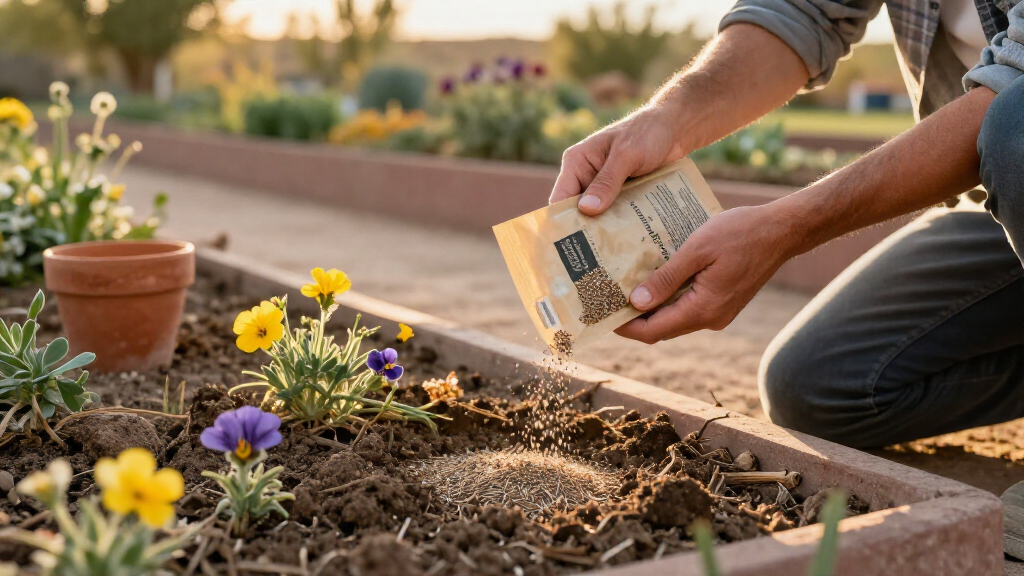
I compared the eight mixes on the details that can help a buyer match seed to a real site: geographic focus, stated species diversity, package quantity, and coverage information. Regional labels matter because a mix intended for the Southwest, Arizona, or California may be a more relevant starting point than a broadly described dryland mix. I also distinguished a seed count from a weight or coverage claim; those measurements are not interchangeable, and a larger-looking number does not automatically mean a better fit.
The ranking favors products with a clear match between their stated regional focus and a buyer’s planting goal, followed by useful information about variety and quantity. Eden Brothers Native Southwest leads as a broadly useful Southwest-focused option; larger-format mixes rank well for buyers prioritizing quantity, while Arizona and California blends are stronger choices for gardeners in those specific areas. Names and package details alone cannot confirm that every listed species is native to a particular property, so I treat local species verification as part of the purchase decision rather than assuming every mix fits every desert garden.
| native desert wildflower seed mixe | Brand |
|---|---|
| Eden Brothers Native Southwest | Eden Brothers |
| Southwest Regional Wildflower | Sweet Yards |
| California Native Wildflower S | — |
| Drought-Tolerant Wildflower Se | Sweet Yards |
| Eden Brothers Native Western X | Eden Brothers |
| Outsidepride Dryland Wildflowe | — |
| Mountain Valley Seed Company S | — |
| Arizona Wildflower Seed Mix | — |
Factors to Consider When Choosing Native Desert Wildflower Seed Mixes
Choosing among native desert wildflower seed mixes takes more than matching a packet name to a climate. I would start with the planting site and the species list, then compare how the product describes quantity and coverage. These checks help avoid a common mismatch: buying a mix that sounds suitable for “the Southwest” but is not suited to your particular location or garden conditions.
Match the Mix to Your Specific Region
“Desert” covers a wide range of elevations, rainfall patterns, and seasonal temperatures, so a regional label is a useful first filter, not proof of a perfect match. Check the listed species against your state or local native-plant resources before buying, especially if you are outside the area named on the packet. A Southwest blend may be a reasonable starting point across several nearby states, while an Arizona or California mix makes a more specific geographic claim. Avoid assuming that a Western or dryland label means every species is native where you live. If the seller does not provide a species list, ask for it or choose a product with more transparent contents. That extra check matters most when native status is a firm requirement rather than a preference.
Read Species Counts Alongside Species Names
A higher number of varieties can suggest a broader mix, but it does not tell you which plants are included, how much of each seed is present, or whether the blend suits your site. Compare the actual species names and look for information about annuals, perennials, and expected bloom seasons. A mix with fewer varieties may better serve a focused regional planting than a larger blend with less relevant species. If you want flowers across a longer season, check that the listed plants bloom at different times rather than relying on the variety count alone. Also look for clear guidance on whether the mix contains grasses or other non-flowering plants. The species list is more useful for judging ecological fit than a headline number.
Translate Package Quantity Into Planting Area
Seed count, ounces, pounds, and square-foot coverage describe different things, so do not compare them as though they were equivalent. A stated coverage figure is easiest to use for planning, but it depends on the recommended sowing rate and the desired density. Weight can help you compare package size within similar products, though seeds of different species vary in size and weight. A packet listing tens of thousands of seeds may still leave questions about how much ground it covers. Measure the prepared planting area and check the seller’s seeding instructions before deciding how much to buy. When coverage is not stated, leave room in your plan for uncertainty rather than assuming the package will cover a particular area.
Check Whether the Site Is Ready for Seed
Even a well-matched native mix can struggle if seed is scattered over dense weeds, thick mulch, or compacted soil. Desert wildflower seeds often need good seed-to-soil contact, and the right planting window varies by local rainfall and temperature patterns. Find instructions for clearing the site, sowing depth, and whether seed should be watered in; small seeds are often harmed by being buried too deeply. A low-water planting still may need establishment watering, so confirm the guidance before sowing. If you cannot prepare the ground or water during establishment, a large seed package may not be the best first purchase. Planning site preparation first can matter more than adding more seed.
Choose Between Regional Specificity and Larger Quantities
A larger package can make sense for broad areas, repeat sowing, or a community planting, but quantity does not make a blend more locally appropriate. A smaller regional mix may be the safer choice when you are trialing a new garden bed or still checking which species thrive on your property. For a large project, compare the total area, the recommended sowing rate, and the cost per planted area where that information is available, without relying on package weight alone. Buyers who value a clearly identified regional blend may accept a smaller quantity; buyers prioritizing coverage may prefer a larger-format product after checking its species. Do not buy extra seed solely to compensate for poor site preparation or uncertain germination. Match the package to both the project size and the confidence you have in the mix.
Frequently Asked Questions
How can I tell whether a desert wildflower mix is truly native to my area?
Start with the full species list rather than the product title, since labels such as “Southwest” can cover a broad area. Check each plant against a state, county, or regional native-plant database, paying attention to the specific ecoregion where you garden. A species can be native to one part of a state but poorly suited to another. If the seller does not name the species, contact them before purchase or choose a mix with clearer contents. This check is especially useful if you are planting for habitat value or need to avoid non-native species.
Should I choose an Arizona or California mix if my garden is in another desert state?
Not automatically: neighboring regions can share conditions without sharing the same native plant range. Use a state-specific mix as a candidate, then confirm that its species are appropriate for your location and elevation. A Southwest-labeled blend may be a better starting point for some nearby areas, but that label also needs verification. Compare species lists rather than relying on the broad geographic wording alone. If local suitability is uncertain, seek advice from a native-plant society, extension service, or local restoration group before sowing.
Is a stated coverage area more useful than a seed count?
For planning a bed, a stated coverage area is usually easier to apply than a raw seed count, provided you understand the seller’s recommended sowing rate. Seed count does not reveal how large the seeds are, how many species are represented, or how densely the seller expects them to be spread. Coverage figures can also vary with preparation and the look you want, so treat them as a planning estimate rather than a guarantee. Measure your site and compare that area with the package instructions. If a listing gives only a count or weight, look for a separate sowing-rate guide before deciding how many packages to buy.
Do drought-tolerant seeds need watering after planting?
Drought tolerance generally describes how established plants handle dry conditions; it does not mean seeds can germinate without suitable moisture. Follow the product’s sowing directions and local planting guidance, since watering needs depend on the species and season. Many sites benefit from planting around a reliable rainfall period, while some may need supplemental water during establishment. Avoid assuming that a desert-adapted label means no watering at any stage. If you cannot provide water when needed, time planting carefully and favor guidance based on your local climate.
Can I combine two different wildflower mixes to cover a larger area?
You can, but check both species lists first so you do not introduce plants that are unsuitable for your region or unintentionally skew the blend toward one species. Combining packages also makes it harder to follow a single recommended sowing rate, particularly when one product gives coverage and the other lists only weight or seed count. For a large site, calculate the amount of each mix from its own instructions rather than treating the packages as interchangeable. Keep track of where each blend is sown if you want to compare results later. When local nativity is the priority, one verified regional mix may be a safer choice than combining products with different geographic scopes.
Conclusion
For most buyers seeking a Southwest-focused starting point, I recommend Eden Brothers Native Southwest Wildflower Seed Mix as the best overall pick, while its 16 listed varieties give buyers a clear diversity detail to compare. For best value by quantity, look first at the 1/4-pound Mountain Valley or Outsidepride Dryland mixes, then verify species and coverage instructions before choosing. For a premium-style regional choice, Eden Brothers Native Western Xeriscape suits gardeners who want a named Western xeriscape blend, though the label still calls for local species checks. Beginners may find the Arizona Wildflower Seed Mix easier to plan around because it states coverage for 300 square feet; California gardeners should compare the California Native Wildflower Seed Mix against their local species needs. Choose the mix whose regional scope, contents, and planting directions match your site—not simply the package with the largest number.