
TL;DR

Get garden gear delivered free with Prime
- Fast, free delivery on millions of items
- Prime Video, Amazon Music and more included
- Member-only deals all year
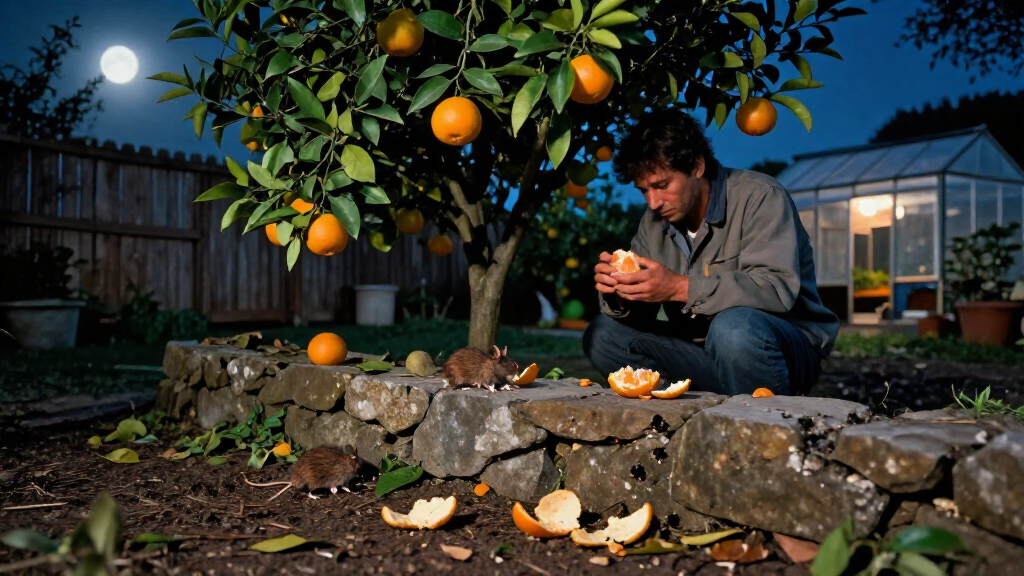
Roof rats are agile climbers that often eat citrus in the tree and travel along branches, fences, roofs, and utility lines. Pack rats are woodrats that tend to stay near the ground and build stick-and-debris nests, though both rodents can eat citrus and damage signs overlap. Check the whole pattern, remove fallen fruit and nearby cover, and ask a local extension office or licensed pest professional when identification remains uncertain.
One orange disappears from your tree, then another turns into a hollow rind dangling in the afternoon heat. Where you find the damage can tell you more than the bite marks alone.
Roof rats climb through citrus canopies and along connected structures, while pack rats tend to travel near the ground and gather sticks and other material around sheltered nests. Both can eat citrus, and their signs can overlap, so this guide helps you read the whole yard before you act.
You’ll learn which clues matter, how to check your tree and nearby cover safely, and which practical changes can make your property less inviting. In a hot desert yard, fallen fruit can ferment quickly and dense shade can shelter wildlife, so small cleanup habits matter.
Fruit eaten while still hanging in the canopy, alongside branches or structures that connect to it, is consistent with roof rat activity.
A stick-and-debris nest and feeding near ground-level cover suggest pack rats, but neither sign proves the species.
Roof rats are also called black rats or fruit rats; pack rats are woodrats in the genus Neotoma.
Pick up fallen citrus, prune routes that touch buildings, reduce nearby clutter, and store pet food securely.
Photograph the fruit, routes, and nest; ask a local extension office or licensed pest professional when the pattern remains unclear.
FIELD GUIDE · CITRUS & RODENTS
Roof Rats vs Pack Rats: Who’s Raiding Your Citrus?
Hollow oranges and missing fruit can leave a trail. Read the height, travel routes, and nearby shelter to understand which visitor may be feeding—and what to check next.
01 / QUICK READ
Two rodents. Different routes.
Roof rats are also called black rats or fruit rats. Pack rats are woodrats. Both can eat citrus, so treat these patterns as clues rather than a guaranteed identification.
Follow the connections
Look above ground along branches, fences, roofs, pergolas, and utility lines. Fruit eaten while still in the tree fits canopy feeding.
Inspect nearby cover
Check the ground near brush, rocks, woodpiles, sheds, and sheltered spaces. A stick-and-debris nest can be suggestive of a woodrat.
Keep other visitors in mind
Both rodents can damage citrus. Birds and other wildlife can too, and more than one animal may visit the same yard.
02 / COMPARE THE SIGNS
Read the scene, not just the rind.
Use several clues together. Droppings alone are difficult to identify reliably, and a nearby nest does not prove which animal fed in the tree.
| What you notice | Roof rat clue | Pack rat clue |
|---|---|---|
| Travel | Branches, fences, roofs, utility lines, and other raised connections | Ground, brush, rocks, woodpiles, sheds, and sheltered spaces |
| Fruit | Chewing or partly eaten fruit in the tree may fit canopy feeding | Fruit may be eaten near a sheltered nest or carried away |
| Nesting | Check elevated travel areas and rooflines for signs | A stick-and-debris pile near shelter can be suggestive |
| Other evidence | Tracks or droppings near elevated routes may add context | Trails or droppings near a nest may add context |
Think in combinations: a hollow orange high in the canopy beside a fence-connected branch fits a climbing route. Fruit near a sheltered debris pile suggests a ground-level pattern. Either scene still needs more than one clue.
03 / SAFE INSPECTION
Build a useful picture before you act.
Observe in daylight, record where fresh damage appears, and make simple habitat changes while you assess the pattern.
Look up
From the ground, check attached fruit and branches that touch roofs, fences, or other elevated routes.
Look around
Scan shrubs, rocks, sheds, and woodpiles for sheltered spaces or a stick-and-debris pile.
Photograph
Capture the whole fruit, its damage, nearby routes, and any nest or ground cover. Avoid handling droppings or nests.
Track repeats
For several days, note where fruit hung or fell and whether fresh damage returns in the canopy or near cover.
04 / PRACTICAL RESPONSE
Make food and access harder to find.
Start with cleanup and habitat changes. These steps can make the yard less inviting, though they may not solve an established infestation or every route into a tree.
Pick up fallen citrus
Remove dropped fruit promptly so it does not keep attracting visitors.
Prune touching branches
Reduce connections between the canopy and buildings or other structures.
Reduce nearby cover
Clear clutter and dense shelter near structures while keeping local wildlife in mind.
Secure attractants
Store pet food and other food sources securely, including overnight.
If activity persists: share your photos and observations with a local cooperative extension office or licensed pest professional. Follow local rules and product labels for any control; keep traps away from children, pets, and wildlife, and avoid disturbing nests or droppings.
Start with where the citrus is disappearing
Roof rats vs pack rats are easiest to tell apart by the setting around the damage: fruit eaten in the canopy and an elevated route suggest a roof rat, while feeding near ground cover and a debris nest suggests a pack rat. Treat those patterns as clues, not a final identification, because more than one animal may visit a citrus tree.
Walk around the tree in daylight and look up before you look under it. Check whether a branch brushes the house, fence, pergola, or utility line, and note whether fruit has been chewed while still attached. A roof rat can use those connections as a travel lane, slipping from a fence to a branch and into the canopy like a shadow along the wall.
Then check the ground around the trunk, shrubs, rocks, sheds, and woodpiles. If damaged fruit keeps turning up near a sheltered pile of sticks and debris, pack rat activity becomes more plausible. For instance, a grower who finds hollowed oranges high on the west side beside a fence has a different pattern to investigate than someone finding gnawed fruit beside a brush pile.
Keep a simple record for several days: photograph the fruit, mark where it hung or fell, and note nearby routes and shelter. One chewed orange is a poor detective; a repeated pattern is much more useful. Several rodent species live in some regions, and birds or other wildlife can also damage fruit, so don’t base your conclusion on a single bite or dropping.
Popular right now

iRobot Roomba Max 715 Pet Robot Vacuum with AutoEmpty Dock

Samsung 42-Inch S90H OLED 4K Smart TV Bundle

Ninja Foodi 10-Quart DualZone 6-in-1 Air Fryer, Black, DZ302
As an affiliate, we earn on qualifying purchases.
Compare climbing routes, nests, and fruit damage
Roof rats vs pack rats differ most clearly in how they move and where they leave signs: roof rats use elevated routes, while pack rats are more associated with ground-level cover and collected nesting material. The comparison below gives you a starting point, but it cannot identify a rodent with certainty on its own.
| What you notice | Roof rat clue | Pack rat clue |
|---|---|---|
| Travel | Branches, fences, roofs, utility lines, and other raised connections | Ground, brush, rocks, woodpiles, sheds, and sheltered spaces |
| Fruit | Chewing or partly eaten fruit in the tree may fit canopy feeding | Fruit may be eaten near a sheltered nest or carried away |
| Nesting | Check elevated travel areas and rooflines for signs | A stick-and-debris pile near a sheltered area can be suggestive |
| Other evidence | Droppings or tracks near elevated routes may add context | Trails and droppings near a nest may add context |
These rodents refer to different kinds of animals: roof rats are true rats in the genus Rattus, while pack rats are woodrats in the genus Neotoma. Roof rats are also called black rats or fruit rats. Pack rats are also called woodrats, and their habit of gathering objects can give away a nest more readily than a quick glance at fruit.
For example, a debris pile under a citrus tree could catch your eye, but it does not prove the animal eating fruit above is a pack rat. You might have one rodent nesting near the ground and another climbing a fence. Use photos of the fruit, nest, droppings, and nearby routes together; droppings alone are difficult to identify reliably. A local cooperative extension office can help assess the likely species using the full set of clues.
Read hollowed oranges without blaming the wrong animal
Partly eaten or hollowed citrus can fit rodent feeding, but the rind alone rarely tells you which species was responsible. Roof rats may eat fruit while it remains on the tree, leaving hollowed or partly eaten fruit in the canopy; pack rats can eat citrus too, often near ground-level shelter or after fruit falls. The location matters because it hints at how the animal reached its food, while the rind mostly tells you that something fed there.
Look at height, nearby routes, and where the rest of the fruit ends up. If a grapefruit is still hanging two meters above the ground with its pulp eaten out, and a branch touches the roof, that combination fits a climbing animal better than a visitor that stays near the ground. If oranges vanish from a patch beside rocks and you see a stick pile under an overhang, investigate pack rats or another ground-dwelling animal. In either case, a route that connects food to shelter can explain repeated visits; removing that connection may help even before you know the exact species.
Birds and other wildlife can also damage citrus, so inspect the scene rather than assuming every missing orange means a rat. Take a clear photo of the whole fruit, the bite area, and the branch or ground below it. Note whether the rind has fresh marks and whether the fruit was attached or already fallen; those details help an extension office or pest professional assess the pattern and avoid recommending a control aimed at the wrong animal.
One practical example: after a windy night, a split orange below the tree might simply have fallen and attracted scavengers. Sweep up the fallen fruit, then check again after a quiet night. If fresh damage appears repeatedly in the canopy, investigate the connecting branches and structures. If it appears near sheltered debris on the ground, focus your inspection there. This short observation period can separate an isolated fall from a recurring access problem, while cleanup prevents fallen fruit from continuing to attract visitors.
Make your citrus yard harder to reach and less inviting
Remove easy food and access first: pick up fallen citrus, prune branches that touch buildings, reduce dense cover near structures, and secure pet food and other attractants. These changes can make a yard less appealing, though they may not remove an established infestation or solve every route into a tree. Think of them as reducing the rewards and shortcuts available; if activity persists, that tells you to investigate other shelter or entry points instead of assuming the cleanup failed.
Think about the way a rodent would travel through your yard. A branch touching the eaves can turn a citrus tree into a bridge; a fence that meets a low limb can do the same. Pruning such connections may interrupt an elevated route, but excessive pruning can stress a citrus tree or expose its trunk to harsh sun. Prune with the tree’s health and local conditions in mind, and avoid stripping it bare during extreme heat. In a Phoenix yard, for instance, a gardener might remove a single branch touching the patio roof while keeping enough healthy canopy to shade the trunk through summer.
Ground cleanup matters too. Clear loose debris and reduce dense cover near buildings, but check what you are removing before disturbing a nest. A pile of sticks may belong to wildlife, and an occupied nest should not be handled casually. The practical balance is to remove routine shelter and food where safe, while leaving a suspected active nest alone until you know what animal is using it and what local rules apply. Pick up fallen fruit regularly, especially during harvest, when sweet, split oranges can sit in the heat and draw animals close.
Make the changes one area at a time and keep watching. A simple log—date, damaged fruit location, and nearby route—shows whether activity shifts after you prune or clean up. If damage stops in the canopy but begins near a brush pile, the animal may be using another route or the original source may have been misidentified. That record helps you adjust the next step and gives a local expert clearer evidence than a guess made from one afternoon’s inspection.
Use a safe, step-by-step inspection before setting traps
Start with observation and habitat changes, then seek local advice before choosing a trap or other control. Rodents can carry parasites or pathogens, and a cornered animal may bite, so don’t handle a rodent, droppings, or nesting material with bare hands. The order matters: identifying routes and removing attractants can reduce visits without introducing a trap that may catch the wrong animal or be reached by a pet.
- Photograph the evidence. Take pictures of damaged fruit, the whole tree, nearby routes, and any nest from a safe distance. Include enough surroundings to show whether the fruit was high or low and what shelter was nearby.
- Map the likely path. Note branches, fences, rooflines, utility lines, brush, rocks, and sheds near the damage. A connected path helps explain access; a nest or dropping without a route is weaker evidence.
- Remove routine attractants. Pick up fallen fruit, secure pet food, and reduce clutter near structures where practical. These steps lower the food and shelter available while you observe whether fresh damage continues.
- Check local guidance. Contact your university cooperative extension or agricultural department for region-specific identification and lawful control options. Methods that are permitted or effective can vary with location and species.
- Get professional help when the problem persists. A licensed pest professional can assess entry points and suggest site-specific control, especially if the animal is entering a building or the nest is hard to reach safely.
If a professional recommends a trap, place it only where children, pets, and wildlife cannot reach it, and follow all local rules and product directions. For any pesticide or rodenticide, use it only as the label allows, including the listed site and target pest, and wear the protective equipment the label specifies. Traps and pesticides can create risks for non-target animals if placed carelessly, so matching the method to the identified pest and location matters. A familiar household remedy is not a substitute for labeled use or for removing food and shelter.
For instance, if your dog noses around the citrus tree and you find an active nest beside its path, skip casual handling or exposed traps. Photograph the area and ask a licensed professional or local extension office what to do next. Keep children and pets away from droppings and nesting material until you have safe, location-appropriate cleanup guidance. This preserves useful evidence and reduces the chance of contact while you decide on a suitable response.
Know when a local expert can save you guesswork
Ask a local expert when fruit damage keeps returning, an animal enters a home or outbuilding, a nest sits in a hazardous spot, or you cannot confidently identify the visitor. A local cooperative extension office or licensed pest professional can weigh the species and site conditions together rather than relying on a generic pest tip. That distinction matters because a method suited to a climbing rat may do little for a ground-level visitor, and an unsafe or unlawful approach can affect pets and wildlife.
Desert yards vary. The rodents present, the fruiting season, available water and food, nearby construction, and surrounding habitat can all affect activity. A recommendation that fits one Arizona neighborhood may not fit a different region or property. Local guidance can also clarify which control methods are lawful and appropriate where you live, and whether the timing or habitat around your home changes the best response.
Bring useful evidence: dated photos, the height and location of damaged fruit, a sketch of routes, and the position of any debris nest. Say whether the damage appeared overnight, whether fallen fruit was present, and what you have already pruned or cleaned up. For example, “Three oranges were eaten in the canopy beside a roof-connected branch over four nights” gives an expert more to work with than “Something is in my tree.” The sequence also helps show whether changes to food or access affected the pattern.
Species names and recommendations can vary by location, and signs overlap. Avoid making a risky call from droppings alone or disturbing a nest to get a better look. With a clear record and local advice, you can choose a response that matches your yard, protects children and pets, and takes the heat and fruiting season into account. If the evidence remains uncertain, a cautious habitat change and continued monitoring are more useful than escalating to a control that may target the wrong visitor.
Frequently Asked Questions
How can I tell whether a roof rat or pack rat ate my oranges?
Start with where the fruit was damaged and what routes or shelter sit nearby. Canopy fruit and elevated routes fit roof rat activity, while feeding near a debris nest or ground cover points more toward pack rats. These are clues, not proof; photograph the full pattern and ask a local extension office if you are unsure.
Do roof rats climb citrus trees?
Yes. Roof rats are agile climbers and can travel along branches, fences, roofs, and utility lines to reach citrus. A branch touching a structure can provide an easy connection into the canopy.
Do pack rats eat citrus?
They can eat fruit, including citrus, depending on the species and local food supply. Pack rats, also called woodrats, are known for collecting nesting material and objects, so a stick-and-debris nest near ground-level feeding can offer another clue.
Why is my orange hollowed out or partly eaten?
Rodents may eat the pulp while leaving part of the rind, and roof rats can feed while fruit remains in the tree. Birds and other wildlife can also damage fruit, so check its height, nearby routes, and signs on the ground before deciding what did it.
Are pack rats and roof rats the same animal?
No. Roof rats are true rats in the genus Rattus; pack rats are woodrats in the genus Neotoma. They are both rodents, but their travel and nesting habits differ.
Are pack rats dangerous to handle?
Like other wild rodents, pack rats may bite if cornered and can carry parasites or pathogens. Do not handle the animal or its nest, and avoid disturbing droppings or nesting material without appropriate precautions and local public-health guidance.
What should I do first to protect citrus from rodents?
Pick up fallen fruit, prune branches that touch buildings, reduce nearby clutter and dense cover, and store pet food securely. These steps can make the yard less inviting, but an established problem may need local identification and professional help.
Conclusion
When citrus goes missing, look at the whole route: fruit in the canopy beside a roof or fence points toward a climber, while feeding near ground cover and a debris nest points more toward a pack rat. Neither clue is a verdict, so record the pattern before you choose a response.
Pick up fallen fruit, trim safe connections to buildings, and keep children and pets clear of nests and droppings. Your best first move is simple: read the yard like a trail map, one sun-warmed orange at a time.