TL;DR
Play games included with Prime
Start a Prime free trial and play with Amazon Luna on your devices.
Start playingAs an affiliate, we earn on qualifying purchases.
Straw bale gardening in the desert is doable and can deliver high yields, but it often demands more water upfront. Proper watering, shading, and conditioning make it a practical choice rather than a water drain, especially with recent innovations in water management.
If you’ve ever tried gardening in the desert, you know how tricky it can be to grow anything without draining your water reserves. Straw bale gardening offers a space-efficient and soil-friendly alternative, but does it really save water or just drain your supplies faster? That’s what we’re here to explore.
In this guide, you’ll learn whether straw bale gardening in the desert is a promising method or just a water hog waiting to happen. We’ll look at practical tips, recent innovations, and real-world examples to help you decide if this approach fits your garden goals and water budget.
Proper conditioning and shading reduce water needs and prevent bale overheating.
Drip irrigation and mulching are essential to make straw bale gardening water-efficient in the desert.
Select heat-tolerant crops like tomatoes, peppers, and herbs for best results.
Bales decompose faster in hot, dry climates—plan to replace them annually or biannually.
Using organic, chemical-free straw and compost teas keeps the garden eco-friendly and productive.
What Is Straw Bale Gardening, Anyway? It’s Simpler Than You Think
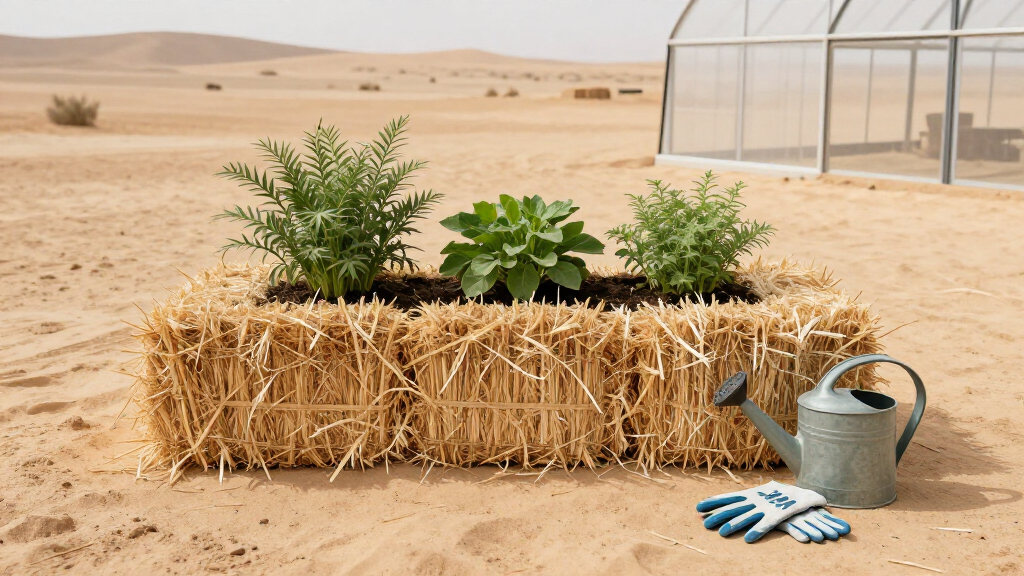
Straw bale gardening is exactly what it sounds like: using bales of straw as a planting medium. Instead of digging into native soil, you condition the straw to create a nutrient-rich environment for your plants. It’s like building a mini, portable soil bed that can go almost anywhere.
Imagine placing a bale in a sunny corner or on concrete—then watching your tomatoes, herbs, or peppers flourish. That’s the power of straw bale gardening: flexibility combined with a soil-like environment, perfect for tough desert soils or rocky patches.
In desert conditions, straw bales act as a barrier against poor native soil, trapping moisture, and directing water straight to your roots. Plus, they help reduce soil-borne pests and diseases, making them a popular choice in high-heat, low-water zones.
As an affiliate, we earn on qualifying purchases.
Can Straw Bale Gardens Really Save Water in the Desert? The Truth Revealed
Yes, straw bale gardens can be water-efficient — but only if you manage them right. The key is in how you water and prepare the bales. When conditioned properly, bales hold moisture close to your plants, reducing runoff and evaporation. This means less water wasted on unnecessary runoff or drying out quickly.
However, the initial conditioning process is critical: during this phase, the bales absorb a large amount of water as they decompose and break down, which can seem wasteful if not managed properly. The tradeoff here is that this upfront water investment is necessary to create a stable, moisture-retentive environment that ultimately reduces water needs during the growing season.
In hot desert climates, consistent watering becomes essential — especially during peak summer. Using drip irrigation or soaker hoses helps deliver water directly to the bales, minimizing wastage and evaporation. Mulching around the bales further conserves moisture and moderates temperature fluctuations, which is especially important in arid environments where heat can quickly dry out exposed soil and plant roots.
For example, a gardener in Arizona used drip lines and shaded her bales with shade cloth. She found her watering needs dropped by nearly 30%, and her plants thrived without wasting precious water. The implication is that, with proper management, straw bale gardening can be a sustainable, water-conscious method—if you accept the initial effort and water input to condition the bales properly.
Bottom line: Properly managed, straw bale gardening doesn’t have to be water-hungry. It’s about smart watering, shading, and conditioning that allows you to maximize water efficiency while still achieving high yields.
drip irrigation system for vegetable garden
As an affiliate, we earn on qualifying purchases.
As an affiliate, we earn on qualifying purchases.
How to Condition a Straw Bale for Desert Gardening — Step by Step
- Select your bales: Choose straw bales free of mold, weeds, or chemicals. Look for bright yellow or golden color without dark spots.
- Place in a shaded spot: Set the bales in a partly shaded area during the conditioning phase to prevent overheating and reduce stress on the bale as it begins to decompose.
- Add water and fertilizer: Water the bales thoroughly and sprinkle organic fertilizers or compost teas over the surface. Focus on the top 12 inches, as this promotes even breakdown and nutrient availability.
- Moisten daily: Keep the bales damp, not soggy, by watering lightly each day. Continue this process for 10-14 days, adding fertilizer every few days to support microbial activity and bale breakdown.
- Test for readiness: Poke the bale; if it feels warm and smells earthy, it indicates microbial activity and decomposition are active, meaning it’s ready for planting.
- Plant your crops: Insert seedlings or direct seed into the conditioned bales, watering as needed. Keep an eye on moisture levels, especially during hot days.
Tip: In desert heat, shade the bales in the afternoon or use a shade cloth during conditioning to prevent dehydration and stress, ensuring the bale remains in optimal condition for planting.
As an affiliate, we earn on qualifying purchases.
Water Wisely in Desert Bales: Tips to Keep Plants Happy Without Wasting
- Use drip irrigation: Place drippers or soaker hoses directly in the bale for efficient delivery, reducing runoff and evaporation—crucial in dry environments.
- Water early or late: Avoid the hottest part of the day to reduce evaporation and allow plants to absorb water more effectively.
- Apply mulch: Cover around the bale with straw or organic mulch to further reduce evaporation, maintain consistent soil moisture, and moderate temperature swings.
- Check moisture levels: Use a simple finger test or moisture meter regularly to prevent overwatering, which can lead to runoff or root rot, especially in compacted or poorly drained bales.
- Shade during peak heat: Use shade cloths or small windbreaks to keep bales cooler during the hottest hours, reducing water loss and stress on plants.
Imagine watering at dawn, with dew still on the plants, and shading the bales during the afternoon. This combination minimizes water waste and creates a more stable, moisture-rich environment for your plants.
garden shading net for hot climates
As an affiliate, we earn on qualifying purchases.
As an affiliate, we earn on qualifying purchases.
Plants That Shine in Straw Bale Gardens — Desert-Ready Choices
Some plants just love the challenge of straw bale gardens in the desert. Think heat-tolerant, water-wise crops that produce big yields with less fuss.
Here are your top picks:
| Plant | Why It Works |
|---|---|
| Tomatoes | Thrive in warm weather, especially when supported with shade and consistent watering. Their deep roots and adaptability make them a reliable choice, but they require careful watering management to prevent stress from heat and drought. |
| Peppers | Hot and dry conditions suit peppers, and their productivity benefits from a controlled environment like a bale, which can help moderate soil moisture and temperature. |
| Herbs (basil, oregano, thyme) | Require less water once established, and the bale helps keep roots warm in chilly mornings. Their compact growth habit makes them ideal for small spaces, but overwatering can lead to root rot, so monitor moisture carefully. |
| Beans | Fast-growing and drought-tolerant, they’re perfect for quick harvests. They also fix nitrogen in the soil, improving conditions for other crops, but their success depends on consistent moisture during flowering. |
| Leafy greens (lettuce, Swiss chard) | Grow quickly and can be harvested multiple times, provided you keep the soil moist. In desert heat, frequent watering and shading are essential to prevent bolting and maintain quality. |
Imagine fresh tomatoes bursting with flavor, right in your backyard — even in the desert heat. Choosing the right plants and managing water carefully can turn a challenging environment into a productive oasis.
The Real Cost and Effort of Straw Bale Gardening in the Desert
Straw bale gardening isn’t free or effortless, but it’s manageable. Bales usually cost between $8 and $15 each, lasting one to two seasons. Conditioning takes about two weeks, during which you’ll need to monitor and maintain consistent moisture and nutrient levels. Initial water use during setup can be high, but this is a one-time investment to establish a healthy, productive environment.
In desert heat, bales decompose faster—often in just one season—so plan for annual replacements. This is a tradeoff: while the upfront costs and effort are higher, the high yields, reduced soil preparation, and pest resistance can offset these inputs, especially in small, arid spaces.
By employing smart watering techniques—like drip lines, mulching, and shading—you can keep water use reasonable and avoid waste. Remember, in the desert, daily watering during the hottest months is not optional but necessary to sustain your crops and maintain bale integrity.
For example, a gardener in New Mexico found that her bales lasted only one season but produced enough greens and herbs to significantly reduce her grocery bills. She used organic compost teas to boost growth and kept her watering efficient with mulch. This example illustrates that, despite the costs, the productivity gains can be substantial when managed correctly.
Can You Really Make Straw Bale Gardening Eco-Friendly in the Desert?
Absolutely. Use organic straw, avoid chemicals, and supplement with compost teas and organic fertilizers. These practices keep your garden healthy and your water use sustainable. Organic inputs promote microbial activity that helps break down the bale naturally, extending its lifespan and reducing waste.
Adding organic amendments like compost or natural fertilizers not only nourishes your plants but also stabilizes the bale’s structure, preventing rapid decomposition. Mulching around the bale conserves moisture, reduces evaporation, and moderates temperature swings, all of which are vital in arid environments. This integrated approach minimizes environmental impact and promotes a resilient, eco-friendly garden.
Just remember—protect yourself when handling straw. Wear gloves and a mask if you’re sensitive to dust or mold. Avoid chemically treated straw, which can harm beneficial soil microbes and pollute water resources. Instead, source organic straw from reputable suppliers committed to sustainable practices.
In the end, eco-friendly straw bale gardening in the desert is about harmonizing with nature—using natural inputs, conserving water, and creating a healthy environment for your plants and the planet.
Frequently Asked Questions
Is straw bale gardening suitable for extremely arid desert conditions?
Yes, it can be, especially if you implement shading, drip irrigation, and proper conditioning. It’s all about managing water and heat effectively to keep your plants happy.Does straw bale gardening use more water than traditional methods in the desert?
Initially, yes, during conditioning, but with efficient watering techniques like drip lines and mulching, you can minimize waste and often match or reduce water use compared to traditional beds.How long do straw bales last in desert conditions?
Typically one to two seasons. Hot, dry climates accelerate decomposition, so plan to replace bales annually or biannually for best results.What are the best plants for straw bale gardening in the desert?
Heat-tolerant crops like tomatoes, peppers, herbs, beans, and fast-growing greens tend to perform well, especially with some shade and regular watering.How can I avoid water waste while still growing successfully in straw bales?
Use drip irrigation, water early or late in the day, mulch around the bales, and monitor moisture levels regularly to prevent overwatering.Conclusion
Straw bale gardening in the desert isn’t just a gimmick—it’s a practical, space-saving way to grow fresh food. With smart watering, shading, and proper conditioning, you can turn a pile of straw into a thriving oasis. It’s about working with your environment, not fighting it.
So, next time you’re planning a garden, consider the humble straw bale. It might be your best bet for high yields with less water waste in the blistering desert heat.
NFL season / tailgating Picks
team gear
As an affiliate, we earn on qualifying purchases.