
TL;DR

Get garden gear delivered free with Prime
- Fast, free delivery on millions of items
- Prime Video, Amazon Music and more included
- Member-only deals all year
Hair-like growths between a Christmas cactus’s stem segments are aerial roots, which the plant can produce in response to environmental stress. The roots are not enough to identify a single cause: gardeners should check watering, light, temperature, nutrients and possible physical damage.
Hair-like growths between the flattened stem segments of a Christmas cactus are aerial roots, according to a Gardener’s Path report. Their appearance can be a response to environmental stress—such as unsuitable light, temperature or watering—so the roots are a cue to inspect the plant, not proof of one specific problem.
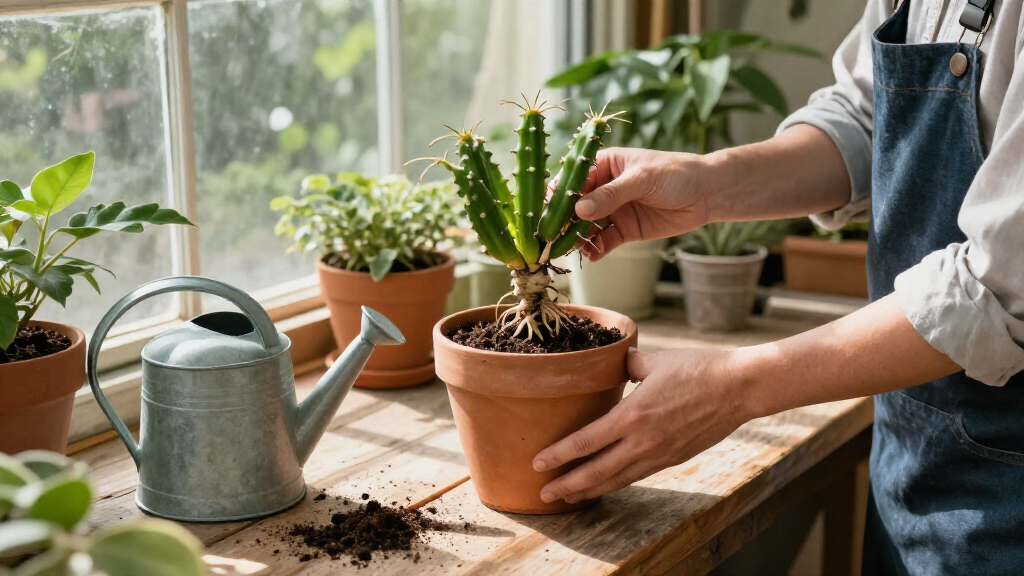
Christmas cactus is a common name for cultivated Schlumbergera species and varieties, tropical epiphytes that grow on trees or rocks in their natural habitat. Their aerial roots emerge above the growing medium from stem tissue. In nature, aerial roots can help plants gain support or take in moisture, nutrients or oxygen; indoors, their appearance may reflect a change in growing conditions or a plant’s attempt to meet a need.
The report lists several possible stressors: too little or too much light, temperatures that are unsuitable or fluctuate, overwatering, underwatering, a lack of nutrients and physical trauma. Because those causes can produce similar visible growth, aerial roots alone do not diagnose the underlying issue. A gardener should look for other signs, including wilted or curling segments, yellowing, soggy soil or damaged tissue.
For watering, the report advises waiting until the top one to two inches of potting medium feel dry, using a loose, well-draining mix and a pot with a drainage hole. It gives 70 to 80°F as a suitable indoor temperature range for cultivation and says consistent indirect light is needed during the growing season. These are general care recommendations; the right response depends on what is actually happening to the individual plant.
A Warning Sign, Not a Diagnosis
For plant owners, the practical point is that aerial roots can prompt a useful check before a minor care problem worsens. Oversaturated soil, for example, can interfere with the below-ground roots’ ability to take up water and nutrients and may be associated with rot. On the other hand, dry, curling segments may point toward insufficient water. Treating every plant with aerial roots the same way could miss that distinction.
The report’s guidance is to evaluate the plant’s conditions rather than remove the growths or make an immediate drastic change based on appearance alone. Check drainage, soil moisture, light and temperature, and consider whether the plant has recently been disturbed. Addressing the likely stressor may help, but the source does not claim that aerial roots always indicate a serious problem or that one particular remedy will resolve them.
Popular right now

Vitamix Propel Series 510 Professional-Grade Blender, Black

Samsung 65-Inch QN70FA Neo QLED 4K Smart TV with 8-Foot WireLogic Ruby Ultra High Speed HDMI Cable (2025)

Samsung 50-inch QN70H Neo QLED 4K Smart TV with Austere 2.5 m 8K HDMI Cable
As an affiliate, we earn on qualifying purchases.
How Epiphytic Cacti Use Roots
Unlike many familiar houseplants, Christmas cacti are epiphytes: in the wild, they use trees and rocks for support rather than growing as ordinary soil-rooted plants. They draw resources from rainwater and organic matter around them. Aerial roots are therefore consistent with their natural growth habit, but the Gardener’s Path report distinguishes that broader capacity from the growth appearing as a response to indoor conditions.
Care also varies over the plant’s yearly cycle. The report describes consistent indirect sunlight during active growth and notes that flowering can be encouraged by simulating winter conditions. It gives 50 to 55°F as a temperature range for simulated dormancy to support bud formation. Those conditions differ from the stated 70-to-80°F cultivation range, so temperature advice should be understood in relation to the plant’s stage and flowering routine.
The Roots Do Not Name the Cause
The source does not provide a way to determine the cause from the roots’ appearance alone. It lists several potential stressors, but a plant’s watering history, soil condition, location, temperature and recent handling would be needed to assess which may apply. The supplied report excerpt also ends during its discussion of nutrient deficiency, so it does not provide the full detail of that section or the remaining guidance on every listed stressor.
It is also unclear whether any particular plant in question has root rot, a nutrient shortage or another condition. Aerial roots are an observation, not a confirmed diagnosis. The source does not give a single expected recovery time or guarantee that changing care will make the growths disappear.
Check Conditions Before Changing Care
Gardeners who spot aerial roots can begin by checking whether the pot drains freely and whether the top one to two inches of mix are dry, then review light, temperature and recent changes to the plant’s setting. If the plant is visibly declining, the report describes removing rotten material and repotting in fresh, lightly moist medium as a possible response to oversaturation, while warning that repotting adds short-term stress. The appropriate step depends on the plant’s condition; the next sign to watch is whether its segments remain firm or continue to yellow, curl or soften.
Key Questions
What are the hair-like growths on a Christmas cactus?
They are aerial roots, which grow above ground from the plant’s stem tissue. Their presence can be a response to growing conditions, but does not identify one cause by itself.
Do aerial roots mean my Christmas cactus is dying?
Not necessarily. The report treats them as a possible sign of environmental stress, not proof that the plant is dying. Check for other symptoms such as soft or yellowing segments and persistently wet soil.
How often should I water a Christmas cactus?
The report recommends watering when the top one to two inches of potting medium feel dry, then allowing excess water to drain. Frequency will depend on the plant and its growing conditions.
Should I cut off the aerial roots?
The supplied report does not recommend cutting them off as a general fix. Since the roots may reflect a care issue, first inspect watering, drainage, light and temperature rather than assuming removal will address the cause.
What temperature does a Christmas cactus need?
The report gives 70 to 80°F for indoor cultivation and 50 to 55°F for simulated dormancy to encourage bud formation. These ranges refer to different stages of care.
Source: gardenerspath.com