TL;DR

Get garden gear delivered free — and shop member deals
- Fast, free delivery on millions of items
- Access to Prime Big Deal Days deals on October 6–7
- Prime Video, Amazon Music and more included
A Gardening Know How report says fallen leaves do not always need to be removed: finely chopped leaves can be mulched into established turf, while thick, wet mats can damage grass. Michigan State University research cited in the report found no adverse effect from mulching up to six inches of oak and maple leaves into established Kentucky bluegrass.
Fallen leaves do not always have to be raked off a lawn, according to a Gardening Know How report that cites university research on mulching. The report says finely chopped leaves can be worked into established grass, while a thick, wet layer left intact can block light and hold moisture that may damage turf.
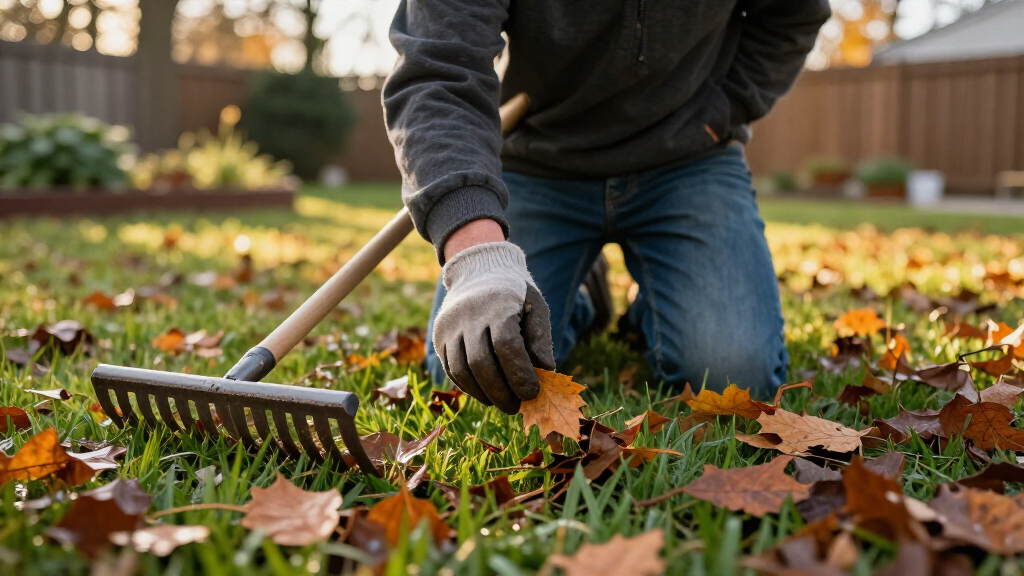
The report describes mulch-mowing as an alternative to collecting and hauling leaves away: run a regular mower over dry leaves until they are reduced to small fragments. The fragments can settle between grass blades and break down in the soil. The report attributes their decomposition to earthworms and soil microbes, which process the organic material over time.
It cites Michigan State University turf research conducted after Michigan restricted yard waste in municipal landfills in the 1990s. Researchers found that up to six inches of oak and maple leaves could be mulched into established Kentucky bluegrass without adverse effects on turf health or density. The finding applies to the tested conditions and grass type; it does not establish that every lawn can safely take the same volume of leaves.
The report also cites University of Connecticut Extension information that mulching a two-inch layer of fall leaves can return about 3.4 pounds of nitrogen per 1,000 square feet over a season, along with potassium. It says leaf material has less nitrogen than grass clippings and should not be treated as a replacement for a complete lawn fertility program.
When Mulching Can Replace Raking
For homeowners, the research challenges a routine cleanup rule that can require repeated raking, bagging and disposal. Leaving leaves in place after chopping them finely may return organic matter and nutrients to the lawn, according to the report, while reducing the need to haul that material away.
The distinction matters because the potential harm described is tied to leaves forming a dense, wet cover. A whole leaf can lie across grass like a shingle, limiting airflow and holding water; small fragments are more likely to fall between blades. The report says this can reduce the risk associated with an intact mat, but it does not claim that mulching guarantees healthy turf or replaces other lawn care.
The Evidence Behind Leaf Cleanup
The familiar warning has a factual basis: the report says heavy, wet leaf mats can shade dormant grass and trap moisture around plant crowns during cold months. It cites University of Maryland Extension advice to clear heavy mats. Prolonged damp, dark conditions can favor cool-season fungal diseases, including gray snow mold and pink snow mold, which the report says can affect turf at temperatures just above freezing.
The report also addresses concerns that oak leaves might make soil too acidic. It cites Michigan State University soil testing in 1998, which found no discernible change in soil pH after decades of oak-leaf mulching into turf, alongside an increase in organic matter. That result concerns the soils and practices studied; gardeners with specific soil concerns can use a soil test to check their own lawn.
““Particle size matters far more than the sheer presence of leaves.””
— Gardening Know How report
Limits of the Lawn Trials
The supplied report does not give the full study methods, locations, number of trial sites or year-by-year results for the Michigan State University field trials. It also does not show that the six-inch finding applies to all grass species, lawn conditions or leaf types. The report’s nutrient estimate is tied to a two-inch layer and a stated area and season; it does not establish the amount of nutrients a particular lawn will absorb.
It remains a practical judgment how much leaf material a given lawn can handle before fragments accumulate into a mat. The report advises clearing heavy, wet layers, but the supplied material does not specify a universal depth or threshold for every lawn.
Check Leaf Cover This Fall
Gardeners can assess whether leaves are dry and sparse enough to mulch or have built up into a thick, wet cover. The report recommends using a mower to chop leaves into manageable fragments and clearing heavy mats that remain on the grass. The next step is seasonal: observe how the lawn responds and adjust cleanup if leaves continue to cover the turf.
For homeowners concerned about soil acidity or fertility, the report points to soil testing as a way to check conditions before making changes. It does not identify a new trial or follow-up announcement; the guidance presented rests on the university research and extension information it cites.
Key Questions
Do fallen leaves always kill grass?
No. The Gardening Know How report says finely chopped leaves can be mulched into established turf. A thick, wet layer left intact can shade grass and hold moisture, creating conditions that may damage it.
How should leaves be mulched into a lawn?
The report recommends running a regular mower over dry leaves until they are reduced to small fragments that can settle between the grass blades. It does not give a universal number of mower passes.
What did the Michigan State University research find?
The report says researchers found that up to six inches of oak and maple leaves could be mulched into established Kentucky bluegrass without adverse effects on turf health or density. The finding is specific to the tested grass and conditions.
Can mulched oak leaves make lawn soil too acidic?
Michigan State University soil testing cited by the report found no discernible soil pH shift after decades of oak-leaf mulching into turf, while organic matter increased. A soil test can check conditions in an individual lawn.
Should leaves replace lawn fertilizer?
No. The report says leaf residue has less nitrogen than grass clippings and should not replace a complete lawn fertility program. Its nutrient estimate is about 3.4 pounds of nitrogen per 1,000 square feet for a two-inch layer over a season.
Source: rss
Fall yard work Picks
leaf blowers
As an affiliate, we earn on qualifying purchases.