The best citrus tree care products depend on whether your main need is steady feeding, simple application, or pest control. I’d name GrowScripts Citrus Tree Fertilizer Kit best overall for its coordinated, one-year feeding approach; Espoma Citrus-Tone stands out for gardeners seeking an organic granular fertilizer, while Bonide Neem Oil Spray is a ready-to-use option for targeted plant care. The main tradeoffs are convenience versus control, and broad-purpose treatments versus products suited to a particular tree or problem. A fertilizer cannot replace pest management, and a spray is not a feeding plan. Read on for the full comparison and help matching each product to your citrus tree.

Get garden gear delivered free with Prime
- Fast, free delivery on millions of items
- Prime Video, Amazon Music and more included
- Member-only deals all year
Complete the kit


Key Takeaways
- GrowScripts Citrus Tree Fertilizer Kit leads this roundup for shoppers who want a coordinated feeding routine rather than a single fertilizer format.
- Espoma Citrus-Tone is the organic granular choice, while Jobe’s Organics spikes favor a less scattered application; the format affects how much control you have over placement and dose.
- The lineup includes several spike options, but pack size and formulation differ, so choose by tree count and label directions rather than assuming the products are interchangeable.
- Bonide Neem Oil Spray is ready to use, while BioAdvanced concentrates and combination sprays suit different treatment preferences; pest products should be selected for the identified problem and used as labeled.
- Potted-tree owners have a dedicated GrowScripts small-tree kit and liquid fertilizers, while larger garden trees may be easier to feed with granular products or spikes.




| citrus tree care product | Brand | Form |
|---|---|---|
| Jobe’s Fruit and Citrus Fertil | Jobe’s | — |
| GrowScripts Citrus Tree Fertil | GrowScripts | — |
| Espoma Organic Citrus-Tone 5-2 | Espoma | — |
| Jobe’s Organics Fruit & Citrus | Jobe’s Organics | Spikes |
| Bonide Captain Jack’s Neem Oil | Bonide | Liquid |
| BioAdvanced Fruit & Citrus Tre | — | Liquid concentrate |
| GrowScripts Citrus Fertilizer | GrowScripts | — |
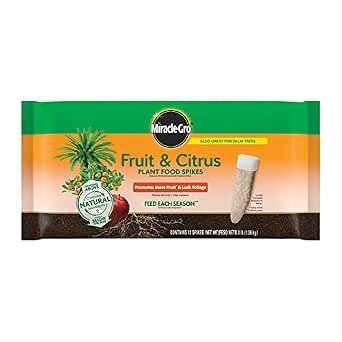
| Miracle-Gro Fruit & Citrus Pla | Miracle-Gro | — |
| Gardenera Organic Citrus Tree | Gardenera | Liquid concentrate |
| Jobe’s Fruit and Citrus Fertil | Jobe’s Organics | — |
| Jobe’s Organics Fruit & Citrus | — | Granules |
| BioAdvanced 3-in-1 Fruit | BioAdvanced | Liquid |
| Farmer’s Secret Citrus Tree Bo | Farmer’s Secret | Liquid |
| Miracle-Gro Shake ’N Feed Citr | Miracle-Gro | Granules |
| Liquid Lemon and Citrus Tree F | TPS Nutrients | Liquid |
More Details on Our Top Picks
Jobe’s Fruit and Citrus Fertilizer Spikes, 15 Count
Jobe’s 15-count spikes suit gardeners who want a straightforward feeding routine for fruit, citrus, or nut trees planted in the ground. The 9-12-12 slow-release formula is placed around the dripline, so nutrients reach the area where active roots can take them up rather than being left on the surface. Compared with Jobe’s Organics container spikes, this pack is meant for broader outdoor tree use, not specifically for pots or organic gardening. The spike format also avoids measuring and mixing, though distributing spikes around a larger tree takes some placement effort. Its seasonal guidance favors early spring and late fall, so it is less adaptable for someone seeking frequent, flexible feeding. I’d choose it for established trees when simple, targeted application matters more than a multi-part nutrition program.
Pros:- Slow-release spikes deliver nutrients below the surface near active roots.
- Pre-portioned format avoids mixing and measuring fertilizer.
- Formulated for fruit, citrus, and nut trees.
- Application around the dripline targets the tree’s active root area.
Cons:- Recommended timing centers on early spring and late fall rather than frequent, adjustable feeding.
- Spikes are less practical to distribute evenly around very large or densely planted trees.
- The tree-specific formula is not a general-purpose fertilizer.
Best for: Gardeners feeding established in-ground citrus, fruit, or nut trees who prefer pre-portioned fertilizer placed near the dripline.
Not ideal for: Container-tree owners or gardeners seeking an organic-listed product, frequent feeding, or a fertilizer for many unrelated plants.
- Brand:Jobe’s
- Product type:Fertilizer spikes
- Count:15
- NPK ratio:9-12-12
- Suitable for:Fruit, citrus, and nut trees
- Application location:Around the tree’s dripline
- Recommended application:Early spring and late fall
Our verdict“Choose these spikes for a simple, targeted feeding routine on established outdoor fruit or citrus trees, but not for container care or organic-only gardening.”
GrowScripts Citrus Tree Fertilizer Kit, 3-in-1, One-Year Supply
GrowScripts’ 3-in-1 kit is the most tailored nutrition option here for citrus keepers who want more than a basic fertilizer. It pairs 18-6-12 controlled-release granules with liquid micronutrients and a calcium supplement, addressing several parts of a feeding routine in one package. The included calendar can help a newer grower keep seasonal tasks organized, while the granules are designed to feed for up to 12 months. Compared with Espoma Citrus-Tone, which offers ready-to-spread organic granules with added calcium, GrowScripts adds separate liquid treatments but requires more steps. Coverage also differs: the granules cover up to 78 square feet, while each liquid component covers up to 312 square feet. I’d pick it for citrus-specific care, not for gardeners who want one quick application and no follow-up tasks.
Pros:- Combines controlled-release fertilizer, liquid micronutrients, and a calcium supplement.
- Granules are designed to feed for up to 12 months.
- Included application calendar helps organize seasonal care.
- Targets lemon, orange, lime, grapefruit, and other citrus trees.
Cons:- The granule portion covers up to 78 square feet, less than the liquid components.
- Using the full kit involves more steps than spreading a single granular fertilizer.
- Designed specifically for citrus rather than a wider range of garden plants.
Best for: Citrus growers who want a planned feeding program with fertilizer, micronutrients, calcium, and a seasonal application calendar.
Not ideal for: Gardeners seeking a simple single-product routine, broad-use fertilizer, or a kit whose granules cover a large area.
- Brand:GrowScripts
- Model:CIK15
- NPK ratio:18-6-12
- Included components:Controlled-release fertilizer granules, liquid micronutrients, calcium supplement
- Granule coverage:Up to 78 sq ft
- Liquid component coverage:Up to 312 sq ft each
- Feeding duration:Up to 12 months
- Application method:Broadcast
- Target plants:Lemon, orange, lime, grapefruit, and other citrus trees
Our verdict“Pick GrowScripts if you want a multi-part, citrus-specific nutrition plan; choose Espoma Citrus-Tone instead for a simpler organic granular application.”
Espoma Organic Citrus-Tone 5-2-6 Natural & Organic Fertilizer (4 lb. Bag)
Espoma Citrus-Tone is a strong fit for gardeners who want a ready-to-spread fertilizer approved for organic gardening. Its 5-2-6 analysis includes 5% calcium, and the granules need no mixing, making application less involved than the separate liquid treatments in GrowScripts’ 3-in-1 kit. The tradeoff is that Citrus-Tone is a single granular product, not a bundled program with dedicated micronutrient and calcium liquids. Its stated audience spans citrus, fruit, nut, and avocado trees, so it is less narrowly citrus-specific than GrowScripts but remains tree-focused rather than general-purpose. Seasonal application timing matters, with late winter, spring, and fall identified for best results. I’d choose this for organic-minded growers who value straightforward spreading; skip it if you want an all-in-one kit or a feeding plan that does not rely on seasonal applications.
Pros:- Approved for organic gardening and made without sludges or fillers.
- Ready-to-use granules require no mixing.
- Includes 5% calcium alongside a 5-2-6 fertilizer analysis.
- Suitable for citrus, fruit, nut, and avocado trees.
Cons:- Requires seasonal applications for best results.
- Does not include the separate liquid micronutrients offered in the GrowScripts kit.
- Its stated use is limited to particular tree types rather than general garden plants.
Best for: Organic-minded gardeners who want a no-mix granular fertilizer for citrus, fruit, nut, or avocado trees.
Not ideal for: Citrus growers looking for separate micronutrient treatments, a year-long bundled program, or a general fertilizer for mixed garden beds.
- Brand:Espoma
- Model number:CT4
- Item weight:4 lb
- Fertilizer analysis:5-2-6
- Calcium content:5%
- Item form:Granules
- Application method:Spread evenly over tree area
- Mixing required:No
- Target trees:Citrus, fruit, nut, and avocado
Our verdict“Choose Citrus-Tone for simple organic granular feeding across several tree types, but select GrowScripts if your citrus care needs separate liquid supplements.”
Jobe’s Organics Fruit & Citrus Tree Fertilizer Spikes, 3-5-5, 6 Spikes per Pack (3-Pack)
Jobe’s Organics spikes are the most container-focused fertilizer in this group, with pre-measured portions intended for fruit and citrus trees grown in pots. Their 3-5-5 formula and time-release format make feeding less messy than spreading granules, while the Biozome blend is described as supporting soil quality and nutrient absorption. The OMRI listing also distinguishes this option from Jobe’s standard 15-count spikes, which are intended for fruit, citrus, and nut trees but do not carry the same stated organic status. Compared with Espoma Citrus-Tone, these spikes trade broad spreading flexibility for a tidy, root-directed format. Their pot-specific positioning is also a limitation: gardeners with large in-ground trees may find spikes harder to distribute than granular fertilizer. I’d choose them for container care where organic gardening and convenience are priorities.
Pros:- OMRI listed for organic gardening.
- Pre-measured spikes reduce measuring, mess, and fertilizer waste.
- Time-release format places nutrients at the roots.
- Biozome blend is described as supporting soil quality and nutrient absorption.
Cons:- Stated use is limited to container fruit and citrus trees.
- Spikes can be less convenient to distribute than granules across a wide root area.
- The 3-5-5 analysis differs from the higher-nitrogen GrowScripts citrus kit.
Best for: Organic gardeners feeding potted citrus or fruit trees who want pre-measured, time-release portions with minimal mess.
Not ideal for: Owners of large in-ground trees or gardeners who prefer to spread fertilizer evenly across a broad root zone.
- Brand:Jobe’s Organics
- Fertilizer analysis:3-5-5
- Form:Spikes
- Quantity per package:6 spikes
- Number of packs:3
- Use:Container fruit and citrus trees
- Organic certification:OMRI listed
Our verdict“Choose these spikes for tidy organic feeding of potted citrus, but use a granular or broader-use option for large outdoor trees.”
Bonide Captain Jack’s Neem Oil Spray for Plants, 32 oz Ready-to-Use
Bonide Captain Jack’s Neem Oil Spray fills a different role from the fertilizers in this roundup: it addresses pest and fungal problems rather than supplying routine tree nutrition. The ready-to-use 32-ounce spray avoids dilution, and its neem-based formula is labeled as a fungicide, insecticide, and miticide for issues including spider mites and aphids. That makes it a useful companion to feeding products such as Espoma Citrus-Tone, not a substitute for them. The product is approved for organic gardening and can be used up until harvest day, but coverage is hands-on: affected foliage needs thorough treatment, with repeat applications every 7–14 days for continued protection. I’d select it when a citrus tree has a pest or disease concern and you want a ready-mixed spray. Skip it if your goal is fertilizer or a low-maintenance preventive routine.
Pros:- Combines fungicide, insecticide, and miticide uses.
- Ready-to-use trigger spray requires no mixing.
- Neem-derived formula is approved for organic gardening.
- Labeled for use up until the day of harvest.
Cons:- Requires reapplication every 7–14 days for continued protection.
- Effective application calls for complete coverage of affected plants.
- Does not provide fertilizer or replace routine citrus nutrition.
Best for: Citrus growers responding to aphids, spider mites, or fungal concerns who want a ready-to-use neem spray for indoor or outdoor plants.
Not ideal for: Gardeners seeking fertilizer, a one-time treatment, or a low-effort application that does not require thorough foliage coverage and repeat spraying.
- Brand:Bonide
- Product name:Captain Jack’s Neem Oil Spray
- Volume:32 fl oz
- Form:Liquid
- Active ingredient:Clarified Hydrophobic Extract of Neem Oil
- Model number:0226
- Application format:Ready-to-use trigger spray
- Labeled uses:Fungicide, insecticide, and miticide
Our verdict“Choose Captain Jack’s for hands-on pest and disease treatment, and pair it with a fertilizer such as Espoma Citrus-Tone for nutritional care.”
BioAdvanced Fruit & Citrus Tree Insect Control Concentrate, 32 fl oz
For citrus growers who need insect control rather than another feeding product, BioAdvanced’s diluted, soil-applied concentrate fills a different role from the fertilizers in this lineup. It controls listed pests on fruit trees and several other edible crops, and the product data states protection can last up to two months. Because it is poured at the plant base, it avoids routine leaf spraying—a useful distinction from products such as BioAdvanced 3-in-1 Fruit, Citrus & Nut Tree Spray. The tradeoff is that this is a pesticide, not a general citrus-care solution: it does not provide fertilizer, and use is limited to once per year according to label timing. It is also unavailable in several listed states, so local availability and label directions matter before choosing it.
Pros:- Applied as a diluted pour at the plant base, with no spray application required.
- One bottle covers up to nine fruit trees or 640 square feet of vegetables.
- Protection from new infestations lasts up to two months, according to the product data.
- Labeled for use on fruit trees, vegetables, herbs, and berries.
Cons:- Application is limited to once per year and must follow labeled timing.
- Not for sale in California, Colorado, Connecticut, Massachusetts, Maryland, Maine, New Jersey, Rhode Island, Vermont, or Washington.
- Controls pests rather than supplying nutrition, so it cannot replace a citrus fertilizer.
Best for: Citrus and fruit-tree growers dealing with listed insect pests who prefer a base application over spraying foliage.
Not ideal for: Gardeners seeking fertilizer or a broader routine-care product, and buyers in states where this product is not for sale.
- Form:Liquid concentrate
- Volume:32 fluid ounces
- Active ingredient:Imidacloprid 0.235%
- Coverage:Up to 9 fruit trees or 640 square feet of vegetables
- Protection duration:Up to 2 months
- Application:Mix with water and pour at the plant base
- Application limit:Once per year according to label timings
- EPA registration number:92564-46
Our verdict“Choose this concentrate for labeled pest control without foliage spraying, but skip it if you need nutrition or cannot use it in your state.”
GrowScripts Citrus Fertilizer Kit for Small Potted Trees
GrowScripts’ three-part kit is the most tailored choice here for a young or compact citrus tree in a pot up to 3 gallons. Its NPK granules are paired with trace elements and calcium concentrate, giving small-tree owners more than the basic feeding approach of Gardenera Organic Citrus Tree Liquid Fertilizer Concentrate. The included application calendar also lays out soil and foliar applications, which may help buyers who want a routine rather than having to devise one themselves. That extra coverage brings extra steps: the liquid portions require foliar spraying, but a sprayer is not included. The small-format liquids can also run out with repeated use. Compared with the broader-use fertilizer spikes, this kit is better suited to small containers, not established trees in larger pots or in-ground plantings.
Pros:- Sized for small container-grown citrus rather than requiring a large bulk fertilizer supply.
- Combines NPK granules, trace elements, and calcium concentrate.
- Application calendar provides guidance for soil feeding and foliar spraying.
- Offers both root-zone and foliar application methods.
Cons:- Limited to trees in pots up to 3 gallons.
- A sprayer is not included for foliar applications.
- The small quantities of liquid concentrates may need frequent replacement for ongoing use.
Best for: New citrus growers tending lemon, lime, or orange trees in containers of up to 3 gallons who want a guided multi-part feeding routine.
Not ideal for: Owners of larger potted or in-ground citrus trees, or anyone who wants a simple feed without foliar spraying or separate equipment.
- Brand:GrowScripts
- Model number:CIK4
- NPK ratio:18-6-12
- Target plant size:Pots up to 3 gallons
- Application methods:Soil application and foliar spray
- NPK fertilizer:2 oz
- Trace elements:8 mL
- Calcium concentrate:8 mL
- Included guidance:Application calendar
Our verdict“Pick this kit for a small potted citrus tree and a guided, multi-part routine; choose a simpler fertilizer for larger trees or fewer application steps.”
Miracle-Gro Fruit & Citrus Plant Food Spikes, 12 Count, 3 lb
These 12 fruit-and-citrus fertilizer spikes suit growers who would rather place nutrients near the roots than mix a liquid feed. Their 10-15-15 formula is applied at the dripline in early spring and mid-fall, a straightforward schedule compared with GrowScripts Citrus Fertilizer Kit for Small Potted Trees, which adds liquid concentrates and foliar feeding. The pack is listed to cover 12 trees with a 4-foot dripline, though the correct number per tree still depends on label directions. Spikes are less convenient if the soil is hard or compacted, since they need to be driven in; soft soil makes placement easier. This is a better fit for outdoor trees than indoor potted citrus, and its twice-yearly schedule offers less flexibility than a liquid fertilizer applied during watering.
Pros:- Delivers fertilizer directly into the soil around the tree’s dripline.
- Two planned application windows make the routine relatively simple.
- Formulated for fruit, citrus, and palm trees.
- Listed coverage is 12 trees with a 4-foot dripline.
Cons:- Spikes can be difficult to insert into hard or compacted soil.
- The number of spikes needed depends on label directions and tree size.
- The twice-yearly schedule is less adjustable than a liquid feed such as Gardenera’s concentrate.
Best for: Growers with outdoor fruit or citrus trees who want scheduled root-zone feeding without mixing fertilizer into water.
Not ideal for: Indoor citrus owners, gardeners with hard or compacted soil, or anyone who prefers to adjust feeding with frequent liquid applications.
- Brand:Miracle-Gro
- Count:12 spikes
- Weight:3 lb
- NPK ratio:10-15-15
- Suitable plants:Fruit, citrus, and palm trees
- Application schedule:Early spring and mid-fall
- Application method:Drive spikes into soil around the tree’s dripline
- Spacing:At least 3 feet apart
- Coverage:12 trees with a 4-foot dripline
Our verdict“Choose these spikes for low-mixing, seasonal feeding of outdoor trees if your soil is soft enough for placement.”
Gardenera Organic Citrus Tree Liquid Fertilizer Concentrate, 3-1-2, 8 fl oz
Gardenera’s 3-1-2 liquid concentrate is a straightforward option for indoor citrus owners who already water regularly and want to add feeding to that routine. The directions call for 1 teaspoon per gallon of water, so the concentrate can be measured into a watering can rather than placed into soil as a spike. That makes it more adaptable to container care than Miracle-Gro Fruit & Citrus Plant Food Spikes, which are driven into the ground around a tree’s dripline. Its narrow focus is also a limitation: the listed target plants are citrus trees, and the product data does not specify a multi-part feeding system like the GrowScripts kit. The 8-ounce bottle is a modest supply, and dilution adds a step each time you feed. It is described as 100% organic in the supplied product information.
Pros:- Formulated specifically for citrus trees, including indoor plants.
- Concentrated formula includes a stated mixing ratio.
- Applied during watering, avoiding the soil insertion required by fertilizer spikes.
- Described as 100% organic in the product information.
Cons:- Must be diluted before application.
- The stated target use is limited to citrus trees.
- An 8-ounce bottle may be less convenient for growers feeding many trees over time.
Best for: Indoor citrus owners who want a concentrated, citrus-focused fertilizer to mix into regular watering.
Not ideal for: Gardeners wanting a ready-to-use product, a fertilizer for several plant types, or a multi-part kit with a feeding calendar.
- Brand:Gardenera
- Formula:3-1-2 NPK
- Form:Liquid concentrate
- Target plants:Citrus trees
- Mixing ratio:1 teaspoon per gallon of water
- Application method:Mix with water and apply during watering
- Volume:8 fluid ounces
- Items included:1
Our verdict“Choose Gardenera for measured, water-in feeding of indoor citrus; pick spikes or a larger system if you want less mixing or broader coverage.”
Jobe’s Fruit and Citrus Fertilizer Spikes, 9 Count
Jobe’s 9-count spikes are a practical fit for growers feeding fruit, citrus, or nut trees at the dripline without mixing a liquid product. The 8-11-11 slow-release formula is placed in the soil near active roots, making this a different approach from Gardenera’s water-mixed concentrate and GrowScripts’ soil-and-foliar kit. The product calls for early spring and late fall application, with additional use during the growing season as needed; that gives more timing flexibility than Miracle-Gro’s stated early-spring and mid-fall schedule. The tradeoff is hands-on placement: each tree requires spikes inserted into its soil, which can be awkward where the ground is compacted or roots are dense. Its listed target plants extend beyond citrus, but this is still a feeding product, not pest control.
Pros:- Slow-release spikes place nutrients below the soil surface near active roots.
- Designed for fruit, citrus, and nut trees.
- Seasonal schedule includes early spring and late fall, with use as needed during the growing season.
- Avoids mixing and the potential runoff associated with surface-applied feeding.
Cons:- Requires inserting spikes around each tree’s dripline.
- Seasonal application still requires returning to the trees for repeat placement.
- Less suited to container or indoor citrus than a liquid feed such as Gardenera’s concentrate.
Best for: Owners of fruit, citrus, or nut trees who prefer slow-release root-zone feeding and can place spikes around each tree.
Not ideal for: Indoor citrus growers, people with hard-to-work soil, or anyone seeking pest control or a fertilizer applied through watering.
- Brand:Jobe’s Organics
- Product type:Fertilizer spikes
- Count:9
- NPK ratio:8-11-11
- Target plants:Fruit, citrus, and nut trees
- Application method:Insert into soil around the tree’s dripline
- Recommended application:Early spring and late fall, or as needed during the growing season
- Item weight:3.68 ounces
Our verdict“Pick Jobe’s spikes for seasonal, low-mixing feeding of outdoor citrus and other trees if you are comfortable placing them in the soil.”
Jobe’s Organics Fruit & Citrus Granular Fertilizer, 4 lb
For citrus growers who want an organic granular fertilizer, this Jobe’s blend pairs a 3-5-5 NPK ratio with an OMRI listing for organic gardening. Its granules are spread around the plant base, making routine feeding more straightforward than measuring and diluting a liquid such as Farmer’s Secret Citrus Tree Booster. The tradeoff is timing: this formula calls for repeat applications every 4–8 weeks or as needed during the growing season, rather than the longer interval of Miracle-Gro Shake ’N Feed Citrus, Avocado & Mango, which feeds for up to three months. I’d choose it for gardeners who prefer an organic-listed product and don’t mind keeping a regular feeding schedule. It is less suited to anyone seeking a low-maintenance, infrequent application routine.
Pros:- Formulated for fruit and citrus plants and trees
- OMRI listed for organic gardening
- Granules are easy to measure and spread around the plant base
- No synthetic chemicals, according to the provided product information
Cons:- Requires repeat applications every 4–8 weeks or as needed during the growing season
- Granules need to be distributed around the plant base rather than added directly through watering
Best for: Citrus and fruit-tree gardeners who prefer OMRI-listed granular fertilizer and can follow a recurring seasonal feeding schedule
Not ideal for: Growers who want fewer applications or prefer a liquid feed that can be mixed into watering
- Weight:4 pounds
- Form:Granules
- NPK ratio:3-5-5
- Target plants:Fruit and citrus plants and trees
- Application method:Spread evenly around the base
- Application frequency:Every 4–8 weeks or as needed during the growing season
- Organic certification:OMRI listed
Our verdict“Choose this Jobe’s formula if you want an OMRI-listed granular feed and are comfortable reapplying it through the growing season.”
BioAdvanced 3-in-1 Fruit, Citrus & Nut Tree Spray, 32 oz
This is the lineup’s treatment-focused pick, not a fertilizer: its ready-to-spray liquid controls listed insects, mites, and plant diseases on a range of fruit and garden plants. That makes it a different kind of citrus-care tool from Jobe’s Organics Fruit & Citrus Granular Fertilizer, which feeds trees but does not serve as a pest or disease treatment. The spray targets listed problems such as aphids, caterpillars, black spot, powdery mildew, and rust, and the product information says it can be used up to the day before harvest when directed. Its broad scope is convenient when several listed issues affect a planting, but it does not cover every pest or disease. I’d skip it for routine nutrition or for a problem not named on the label; careful label-directed use is part of the tradeoff.
Pros:- Ready-to-spray liquid avoids mixing a concentrate
- Targets listed insects, mites, and plant diseases
- Suitable for fruit and nut trees, vegetables, and vine plants
- Can be applied up to the day before harvest when used as directed
Cons:- Controls only the pests and diseases listed for the product
- Requires careful use according to label directions
- Does not provide the feeding role of a fertilizer such as Jobe’s Organics Fruit & Citrus Granular Fertilizer
Best for: Citrus and mixed-garden growers seeking one ready-to-spray product for listed insect, mite, and disease problems
Not ideal for: Buyers seeking a citrus fertilizer or treatment for pests and diseases not listed on the product label
- Brand:BioAdvanced
- Volume:32 oz
- Form:Liquid
- Item weight:2.2 pounds
- Target species:Insects
- Target issues:Listed insects, mites, and plant diseases
- EPA registration number:67702-17-92564
- Model number:820164B
Our verdict“Choose this spray when you need ready-to-use control for listed citrus pests and diseases, not a feeding product.”
Farmer’s Secret Citrus Tree Booster Fertilizer, Concentrated Liquid, 8 fl oz
Farmer’s Secret suits growers who want a concentrated liquid for different citrus setups, from outdoor trees to indoor and container plants. The one-teaspoon-per-gallon mix stretches a small bottle into diluted feed, while the directions offer a lighter or less frequent dose for indoor and container trees. That flexibility contrasts with Jobe’s Organics Fruit & Citrus Granular Fertilizer, which is spread around the base and follows a recurring seasonal schedule. It also covers avocado trees, giving it a wider stated plant range than the citrus-focused Liquid Lemon and Citrus Tree Fertilizer. The catch is that liquid feeding involves measuring and mixing, and dosage varies with tree maturity and growing setup. I’d favor this option when tailored dosing matters more than grab-and-spread convenience.
Pros:- Concentrated formula uses one teaspoon per gallon of water
- Formulated for lemons, limes, and oranges
- Suitable for outdoor, indoor, and container trees
- Also suitable for avocado trees
Cons:- Must be diluted before use
- Recommended dose varies with tree maturity and growing setup
- Weekly outdoor application can involve more frequent mixing than Miracle-Gro Shake ’N Feed
Best for: Citrus owners with indoor, outdoor, or container trees who want a concentrated liquid and adjustable feeding directions
Not ideal for: Gardeners who want a ready-to-use product or would rather spread granules than measure and dilute fertilizer
- Brand:Farmer’s Secret
- Form:Liquid
- Size:8 fluid ounces
- Item weight:11.2 ounces
- Mixing ratio:1 teaspoon per gallon of water (1:128)
- Target plants:Citrus trees, including lemons, limes, and oranges; also suitable for avocado trees
- Use:Outdoor, indoor, and container trees
- Application schedule:Weekly; half dose or every other week for indoor or container trees
Our verdict“Choose Farmer’s Secret if you want a concentrated citrus feed with dosing options for indoor and container trees.”
Miracle-Gro Shake ’N Feed Citrus, Avocado & Mango Plant Food, 4.5 lb
Among these feeding options, Miracle-Gro stands out for its longer interval between applications: the granules feed for up to three months, with reapplication every three months. That cadence is less hands-on than Jobe’s Organics Fruit & Citrus Granular Fertilizer, which calls for applications every 4–8 weeks, and avoids the regular measuring and mixing required by Farmer’s Secret Citrus Tree Booster. The formula also includes potassium, magnesium, sulfur, and iron, and it can be used in beds or indoor and outdoor containers. The tradeoff is the setup: gardeners need to work granules into the top 1–3 inches of soil and keep them away from trunks and foliage. I’d pick it for someone who values a longer feeding interval, but not for anyone who wants to apply fertilizer through routine watering.
Pros:- Feeds plants for up to three months
- Includes potassium, magnesium, sulfur, and iron
- Suitable for in-ground plants and indoor or outdoor containers
- Covers citrus, avocado, and mango plants
Cons:- Granules must be worked into the top 1–3 inches of soil
- Application requires care to keep product away from trunks and foliage
- The granular method is less suited to growers who prefer liquid fertilizer mixed with watering
Best for: Citrus, avocado, or mango growers who want a granular feed for beds or containers with a three-month reapplication schedule
Not ideal for: Gardeners who prefer liquid feeding or do not want to work granules into the soil while keeping them off trunks and foliage
- Brand:Miracle-Gro
- Weight:4.5 pounds
- Unit count:72 ounces
- Form:Granules
- Suitable plants:Citrus, avocado, and mango
- Suitable locations:In-ground beds and indoor or outdoor containers
- Feeding duration:Up to 3 months
- Reapplication frequency:Every 3 months
- Micronutrients:Potassium, magnesium, sulfur, and iron
Our verdict“Choose Miracle-Gro if a three-month feeding interval and use across beds or containers matter more than simple liquid application.”
Liquid Lemon and Citrus Tree Fertilizer, 8 fl oz
This liquid feed is especially well matched to lemon and smaller citrus trees, including Meyer and dwarf varieties. Its 1:200 dilution ratio and three application methods—watering can, hose-end sprayer, or leaf mist—give growers options for fitting feeding into their routine. Compared with Farmer’s Secret Citrus Tree Booster, which also serves avocado trees and gives separate guidance for indoor and container dosing, this product is more specifically framed around lemon and citrus care. Its stated use across in-ground and potted plants helps bridge small patios and established garden trees. The main drawback is that it still requires dilution; it is not a ready-to-use feed. I’d choose it when application flexibility and a citrus-specific focus matter more than broader plant coverage or granular, longer-interval feeding.
Pros:- Formulated for lemon and other citrus trees
- Suitable for in-ground and potted citrus, including Meyer and dwarf varieties
- Can be applied with a watering can, hose-end sprayer, or as a leaf mist
- Supports root, leaf, and fruit development according to the product description
Cons:- Requires dilution at a 1:200 mixing ratio
- Its stated target is citrus rather than the broader citrus-and-avocado range of Farmer’s Secret Citrus Tree Booster
- Liquid application requires mixing rather than the longer-interval granular approach of Miracle-Gro Shake ’N Feed
Best for: Growers of lemon, Meyer, or dwarf citrus trees who want to choose between watering-can, hose-end, and leaf-mist application
Not ideal for: Buyers who want a ready-to-use fertilizer, a granular feed, or a product also specified for avocado trees
- Brand:TPS Nutrients
- Form:Liquid
- Size:8 fluid ounces
- Item weight:8 ounces
- Target species:Lemon trees
- Application methods:Watering can, hose-end sprayer, or leaf misting
- Mixing ratio:1:200
- Suitable plants:In-ground and potted citrus, including Meyer and dwarf varieties
- Country of origin:USA
Our verdict“Choose this fertilizer for lemon and dwarf citrus trees when flexible liquid application matters more than ready-to-use convenience.”
How We Picked
I compared these 15 products by the job they are designed to do: feed citrus trees, support a pot-specific routine, or address pest and disease concerns. For fertilizers, I weighed format, stated nutrient information, application convenience, and whether the product appears suited to a broad range of citrus setups or a more specific one. For sprays and insect control, I considered ready-to-use versus concentrate formats and the value of matching treatment to the problem on the tree.
The ranking favors options that make a clear, useful choice for a defined buyer rather than products that simply repeat another format. That puts a multi-part feeding kit first for all-around routine building, with organic granular food and ready-to-use pest care as distinct standouts. Pack size, concentration, and application method still matter: a product lower on the list may be a better fit for a small potted tree or a specific pest concern. I treat label directions and plant suitability as deciding factors, not optional details.
| citrus tree care product | Form |
|---|---|
| Jobe’s Fruit and Citrus Fertil | — |
| GrowScripts Citrus Tree Fertil | — |
| Espoma Organic Citrus-Tone 5-2 | — |
| Jobe’s Organics Fruit & Citrus | Spikes |
| Bonide Captain Jack’s Neem Oil | Liquid |
| BioAdvanced Fruit & Citrus Tre | Liquid concentrate |
| GrowScripts Citrus Fertilizer | — |
| Miracle-Gro Fruit & Citrus Pla | — |
| Gardenera Organic Citrus Tree | Liquid concentrate |
| Jobe’s Fruit and Citrus Fertil | — |
| Jobe’s Organics Fruit & Citrus | Granules |
| BioAdvanced 3-in-1 Fruit | Liquid |
| Farmer’s Secret Citrus Tree Bo | Liquid |
| Miracle-Gro Shake ’N Feed Citr | Granules |
| Liquid Lemon and Citrus Tree F | Liquid |
Factors to Consider When Choosing Best Citrus Tree Care Products
Before choosing a product, I’d identify what the tree needs and how it grows. Citrus care products are not interchangeable: fertilizer supports nutrition, while sprays and insect controls address particular plant-health problems. These broader checks can prevent buying a product that is convenient but poorly matched to your tree.
Match the Product to the Problem
Start by separating feeding needs from pest or disease concerns. A fertilizer will not resolve an insect problem, and a pesticide is not a substitute for routine nutrition. Look closely at leaves, stems, and fruit, then identify the issue before selecting a treatment. If symptoms are unclear, check growing conditions such as watering, light, and drainage as well, since stress can resemble a nutrient or pest problem. Buying a broad treatment without confirming the target can add unnecessary work and expose the tree to products it does not need.
Choose a Feeding Format You Can Apply Correctly
Granules, spikes, and liquids ask for different routines. Granular products let you spread food around the root zone, while spikes offer a contained placement approach and liquids can be measured and mixed for application. Convenience matters only if the format suits the pot or planting area and you can follow the label dose. A common mistake is treating all spike products as the same because their names sound similar; formulations and pack counts can vary. If you have several trees, compare the application schedule and coverage instructions before picking a format.
Account for Pots, Soil, and Tree Size
A citrus tree in a container has less soil volume than one planted in the ground, so feeding decisions need to follow the product’s directions for container use. Small pots can make overapplication easier, and runoff can carry excess nutrients away. For a garden-grown tree, the root zone may extend beyond the trunk area, so placement instructions matter more than simply putting food beside the trunk. Check whether a product is specifically presented for small potted trees or has directions that fit your setup. Do not assume a general citrus label automatically covers every pot size or planting condition.
Compare Concentration and Ready-to-Use Convenience
Ready-to-use sprays reduce mixing steps, while concentrates require measuring and preparation but may suit buyers treating multiple plants. Liquid fertilizers also differ in concentration, so bottle size alone does not tell you how many applications it provides. Read the mixing ratio and coverage directions before comparing formats. A concentrate is a poor fit if you cannot measure it accurately or store it according to its label. Conversely, a ready-to-use bottle may be less practical for a large collection if its coverage is limited.
Treat Organic and Synthetic Labels as One Part of the Decision
Product claims and ingredient approach can help narrow choices, but they do not replace checking how and where a product may be used. Organic fertilizers such as Citrus-Tone or Jobe’s Organics offer a different choice from other feeding products, yet application rate and timing still matter. For insect treatments, read the label for the target pest, plant use, and any precautions around people, pets, pollinators, or harvest. Avoid applying multiple products at once just because they address different concerns; overlapping treatments can complicate care. Choose the formulation that fits your preferences and routine, then follow its specific instructions.
Pay for a Routine Only If You Need the Extra Steps
A kit can simplify planning by grouping products into a stated care routine, but it may include components you do not need if your tree has one narrow issue. A single fertilizer or targeted spray can be the cleaner choice for a buyer who already has a feeding schedule. Before buying a bundle, check what each part does, how often it is applied, and whether the instructions suit your citrus variety and growing conditions. For a first-time owner, a clear routine can reduce guesswork; for an experienced grower, separate products may offer more control. The best value is the option that fits your actual care plan, not the one with the most components.
Frequently Asked Questions
Can I use a citrus fertilizer and pest spray at the same time?
Do not assume two products can be combined or applied on the same day. Check both labels for timing, plant restrictions, and any instructions against mixing or overlapping applications. If a tree is stressed, applying several treatments at once can make it harder to identify the cause of a worsening condition. I’d address the clearest problem first, then follow the label schedule for the other product. When instructions conflict or the tree is bearing fruit, contact the manufacturer or a local horticulture resource for guidance.
Are fertilizer spikes a good choice for a citrus tree in a pot?
They may be convenient, but the product label must specifically support your tree’s container size and use. A pot has a smaller root area than garden soil, which can make placement and dose especially important. Do not use a spike simply because it is easy to insert; follow the spacing and quantity instructions exactly. Liquid or granular options may offer more control for some containers, though they also require careful measuring or spreading. Choose based on the pot, directions, and feeding routine rather than format alone.
Should I choose an organic fertilizer or a synthetic one for citrus?
That choice depends on your gardening preferences and the product’s directions, not a blanket claim that one type fits every tree. Organic options in this roundup include Citrus-Tone and Jobe’s Organics products, while other picks offer different formulations and application styles. Compare the stated nutrient information, dose, and frequency, then consider whether the format works with your soil or container. Organic does not mean it can be applied without care, and any fertilizer can be misused. Follow the label and adjust your routine to the tree’s actual growing conditions.
How do I choose between a ready-to-use spray and a concentrate?
A ready-to-use product avoids mixing and measuring, which can be helpful when treating one or a few plants. A concentrate requires preparation but may suit a larger treatment area or a gardener who prefers to control batch size. Compare the label’s target pests, application instructions, coverage, and precautions before deciding. Concentrates are not automatically more convenient, since inaccurate measuring can lead to incorrect application. Pick the option you can use safely and consistently for the problem you have identified.
Do I need a citrus care kit, or can I buy fertilizer and treatments separately?
A kit makes sense if its components match the care routine you want and its instructions are easy to follow. It may be unnecessary if your tree only needs feeding or you are looking for a treatment for one confirmed pest issue. Buying products separately gives you more choice over format and timing, but requires you to coordinate labels and avoid overlapping applications. Check exactly what the kit includes and whether each part is suitable for your tree’s size and growing setup. For a new citrus owner, a clear kit can reduce planning; experienced growers may prefer a narrower purchase.
Conclusion
For a single, organized feeding approach, I’d choose GrowScripts Citrus Tree Fertilizer Kit as the best overall pick. Jobe’s Fruit and Citrus Fertilizer Spikes are a practical value-oriented option for buyers who prefer a contained feeding format, while GrowScripts Small Potted Tree Kit is the better match for container growers seeking a more tailored routine. Beginners can start with a clear kit or a straightforward ready-to-use product, provided its label matches their tree and goal. For organic granular feeding, choose Espoma Citrus-Tone; for ready-to-use pest care, consider Bonide Neem Oil Spray, and compare BioAdvanced options when a different treatment format fits the identified issue. My final rule: pick one product for the problem you can name, then follow its directions rather than layering care products by default.