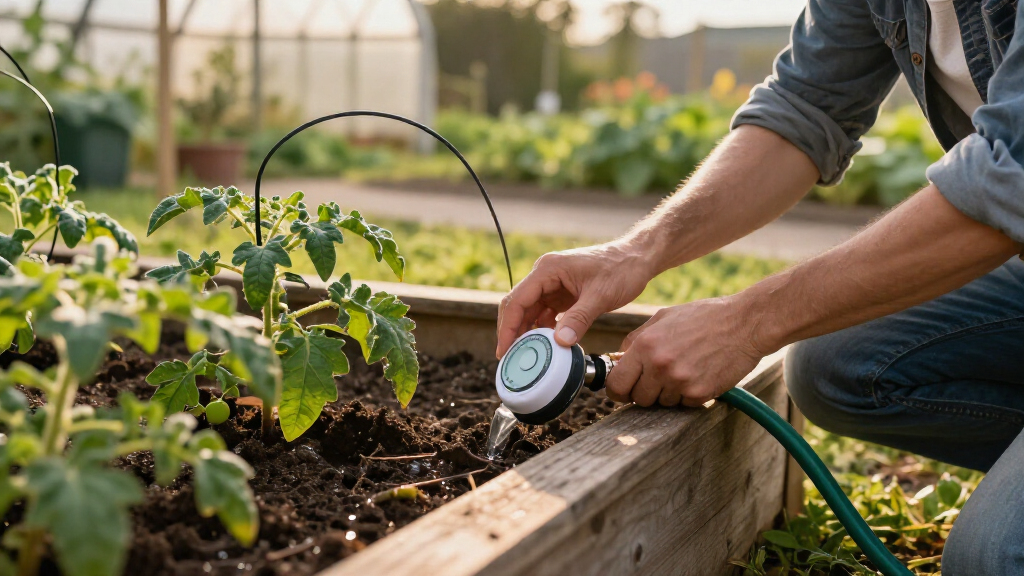
Programmable drip irrigation timers can automate watering from a garden hose, but the right choice depends on how many separate areas you need to control and how much setup you want. I’d put the Orbit B-hyve XD 4-Port first for its four independently controlled outlets and smart scheduling, while the Orbit 62061 is a simpler single-outlet choice and the RAINPOINT 2-Zone suits gardens that need two schedules. The main tradeoffs are one zone versus multiple zones, straightforward controls versus app-connected features, and hose-end convenience versus a wired controller for a larger system. A brass connection may also appeal to buyers prioritizing a sturdier inlet, while it does not replace checking hose and fitting compatibility. Read on for the full comparison, selection criteria, and advice on matching a timer to your irrigation layout.

Get garden gear delivered free — and shop member deals
- Fast, free delivery on millions of items
- Access to Prime Big Deal Days deals on October 6–7
- Prime Video, Amazon Music and more included
Complete the kit


Key Takeaways
- Outlet count is the clearest dividing line: the roundup ranges from single-outlet hose timers to two-zone models, a four-port smart timer, and a four-station indoor/outdoor controller.
- The B-hyve XD is the standout for multi-area hose watering: its four ports and smart controls target a different setup from the basic one-outlet Orbit 62061.
- Two-zone options offer a practical middle ground: the Insoma, MOES, Orbit 58910, and RAINPOINT two-outlet models can separate watering schedules without stepping up to four outlets.
- Brass connection details recur across several picks: Insoma and QUOBAS offer brass-inlet variants, but buyers still need to check the full fitting arrangement and installation needs.
- A four-station controller is not interchangeable with a hose timer: Orbit’s swing-panel model is aimed at a controller-based irrigation setup, while most other picks attach at a hose connection.
| Insoma Programmable Garden Hose Water Timer, 1 Outlet |  | Best for Flexible Scheduling | Model: SGW05 | Outlets: 1 | Watering modes: Automatic, manual, rain delay | VIEW LATEST PRICE | See Our Full Breakdown |
| Insoma Water Timer for Outdoor Garden Hose with Brass Inlet |  | Best Single-Zone Pick for Sediment-Prone Water | Model number: SGW05-TT-JU | Inlet: Brass | Water pressure capacity: Up to 116 psi | VIEW LATEST PRICE | See Our Full Breakdown |
| Insoma Two-Zone Water Timer with Brass Inlet and Outlet |  | Best for Two Distinct Drip Schedules | Model: SGW07M-TT-03-CA | Zones: 2 independent zones; can run separately or simultaneously | Inlet and outlet: Brass | VIEW LATEST PRICE | See Our Full Breakdown |
| MOES Two-Zone Sprinkler Timer with Brass Inlet and Outlet |  | Best for Straightforward Two-Zone Setup | Model: SGW06 | Zones: 2 independently programmable zones | Inlet and outlet material: Brass | VIEW LATEST PRICE | See Our Full Breakdown |
| Orbit Programmable Digital Hose Watering Timer, Single Outlet, Model 62061 |  | Best for Simple, Familiar Controls | Model: 62061 | Outlets: 1 | Power: Battery-powered | VIEW LATEST PRICE | See Our Full Breakdown |
| QUOBAS Brass Sprinkler Timer – Programmable Water Hose Timer for Garden Hose |  | Best Brass Construction | Material: Brass | Thread size: 3/4 inch | Maximum pressure: 120 PSI | VIEW LATEST PRICE | See Our Full Breakdown |
| Orbit Programmable Digital Hose Watering Timer, 2 Outlet – 58910 |  | Best for Two Simultaneous Watering Lines | Model: 58910Z | Outlets: 2 | Display: LCD screen | VIEW LATEST PRICE | See Our Full Breakdown |
| RAINPOINT Programmable Outdoor Sprinkler Timer |  | Best for Simple Controls and Battery Safeguard | Model: 105-LW-24 | Material: Plastic | Maximum working pressure: 180 PSI | VIEW LATEST PRICE | See Our Full Breakdown |
| RAINPOINT 2-Zone Garden Hose Water Timer |  | Best for Independently Scheduled Zones | Model: TCRP205NH-Z | Zones: 2, independently programmable | Watering duration: 1 minute–3 hours 59 minutes | VIEW LATEST PRICE | See Our Full Breakdown |
| RAINPOINT Programmable Sprinkler Timer for Garden Hose, 1 Outlet |  | Best for a Single-Zone Routine | Model: ITV105NH | Outlets: 1 | Watering duration: 1 minute–3 hours 59 minutes | VIEW LATEST PRICE | See Our Full Breakdown |
| Insoma Programmable Garden Hose Sprinkler Timer with Brass Inlet and Outlet, 1 Outlet |  | Best Single-Outlet Pick for Flexible Scheduling | Model: ISM-SGW05-TT-A | Outlets: 1 | Watering frequency: Every 1 minute to 23 hours 59 minutes, or every 1–7 days | VIEW LATEST PRICE | See Our Full Breakdown |
| Orbit B-hyve XD 4-Port Smart Hose Watering Timer | 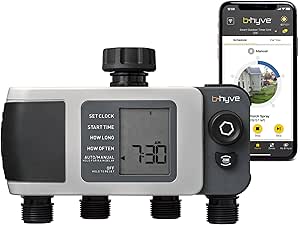 | Best for Multi-Zone Smart Scheduling | Model: 24634 | Timer type: Smart hose watering timer | Outlets: 4 independently programmable | VIEW LATEST PRICE | See Our Full Breakdown |
| Orbit 4-Station Indoor/Outdoor Swing Panel Sprinkler Timer |  | Best for Fixed, Wired Irrigation Zones | Model: 57894 | Timer type: Swing-panel sprinkler system timer | Stations: 4 | VIEW LATEST PRICE | See Our Full Breakdown |
| RAINPOINT Programmable Sprinkler Hose Timer with Brass Inlet and Outlet |  | Best for Simple Rain Delays and Manual Runs | Inlet and outlet: Brass | Maximum pressure: 116 psi | Scheduled watering duration: 1 minute to 3 hours 59 minutes | VIEW LATEST PRICE | See Our Full Breakdown |
| Orbit 62067 Programmable Digital Hose Watering Timer – 2 Pack |  | Best for Matching Two Separate Hose Lines | Model: 62067 | Number of timers: 2 | Outlets per timer: 1 | VIEW LATEST PRICE | See Our Full Breakdown |
| programmable drip irrigation timer | Model | Rain delay | Power |
|---|---|---|---|
| Insoma Programmable Garden Hos | SGW05 | 1–7 days | 2 AA alkaline batteries, not included; stated battery life over 6 months |
| Insoma Water Timer for Outdoor | — | 1–7 days | 2 AA alkaline batteries, not included; stated battery life over 6 months |
| Insoma Two-Zone Water Timer wi | SGW07M-TT-03-CA | 1–15 days | AA alkaline batteries; stated battery life 180 days |
| MOES Two-Zone Sprinkler Timer | SGW06 | — | AA alkaline batteries |
| Orbit Programmable Digital Hos | 62061 | 24, 48, or 72 hours | Battery-powered |
| QUOBAS Brass Sprinkler Timer | — | 24, 48, or 72 hours | 2 AA alkaline batteries, not included |
| Orbit Programmable Digital Hos | 58910Z | 24–72 hours | Battery powered |
| RAINPOINT Programmable Outdoor | 105-LW-24 | 24, 48, or 72 hours | — |
| RAINPOINT 2-Zone Garden Hose W | TCRP205NH-Z | 24, 48, or 72 hours | — |
| RAINPOINT Programmable Sprinkl | ITV105NH | 24, 48, or 72 hours | 2 AA alkaline batteries, not included |
| Insoma Programmable Garden Hos | ISM-SGW05-TT-A | 1–7 days | Two 1.5 V AA alkaline batteries; not included |
| Orbit B-hyve XD 4-Port Smart H | 24634 | — | — |
| Orbit 4-Station Indoor/Outdoor | 57894 | — | — |
| RAINPOINT Programmable Sprinkl | — | 24, 48, or 72 hours | — |
| Orbit 62067 Programmable Digit | 62067 | 24–72 hours | Battery-powered |
More Details on Our Top Picks
Insoma Programmable Garden Hose Water Timer, 1 Outlet
The Insoma SGW05 is a practical pick for gardeners who want fine control over one hose-fed drip line without adding app setup. Its schedule can repeat at intervals from one minute to nearly 24 hours or every one to seven days, and watering duration has the same broad range. That flexibility exceeds the Orbit 62061’s more limited, specified rain-delay choices, while the Insoma also adds a 1–7-day rain delay and child lock. The tradeoff is a plastic body and single outlet, so it suits one bed or container group rather than separate watering circuits. A large LCD and included fittings simplify setup, but you’ll need to supply two AA batteries. Choose it for adaptable schedules; skip it if you need brass connections or two zones.
Pros:- Broad scheduling intervals and watering durations suit varied drip setups.
- Rain delay can pause watering for one to seven days.
- Large LCD and child lock make local programming easier to manage.
- Includes a reducing bushing, thread seal tape, and quick connector.
Cons:- Controls only one outlet, so it cannot independently schedule separate beds.
- Plastic construction is less suited to buyers seeking brass connections.
- Two AA alkaline batteries are not included.
Best for: Gardeners running one drip line who want frequent, adjustable scheduling and a multi-day rain pause without app controls.
Not ideal for: Buyers with two watering zones or a preference for brass hose connections; this model has one plastic-bodied outlet.
- Model:SGW05
- Outlets:1
- Watering modes:Automatic, manual, rain delay
- Watering frequency:1 minute to 23 hours 59 minutes, or every 1–7 days
- Watering duration:1 minute to 23 hours 59 minutes
- Rain delay:1–7 days
- Operating pressure:7.25–116 psi
- Power:2 AA alkaline batteries, not included; stated battery life over 6 months
- Construction:Plastic; IP55 waterproof design
Our verdict“Choose the Insoma SGW05 if one drip line needs highly adjustable schedules and a longer rain pause, but look at a two-zone timer for separate beds.”
Insoma Water Timer for Outdoor Garden Hose with Brass Inlet
This Insoma keeps the simple, one-outlet format of the Insoma SGW05 but adds two features that matter when hose water carries grit: a brass inlet and a built-in metal filter. The filter is intended to help keep sediment from reaching a drip system, while brass offers a more robust faucet connection than the SGW05’s plastic construction. Its automatic, manual, and rain-delay modes remain straightforward, with a large LCD and child lock for on-device control. The compromise is that it still runs only one outlet, and its dial-and-button programming may take more attention than a smart controller. As with the other battery-powered Insoma timers here, AA batteries are not included. This is the better single-zone choice over the basic SGW05 when inlet durability and filtration matter more than adding a second zone.
Pros:- Brass inlet offers a sturdier faucet connection than the plastic Insoma SGW05.
- Built-in metal filter is designed to limit sediment entering the irrigation line.
- Automatic, manual, and rain-delay modes cover common watering needs.
- Large LCD and child lock support clear, local operation.
Cons:- One outlet cannot run separate beds on distinct schedules.
- Dial-and-button programming may feel less direct than app-controlled options.
- Requires two AA alkaline batteries, which are not included.
Best for: Gardeners using one drip line on a faucet where sediment is a concern and who prefer a brass inlet over a plastic connection.
Not ideal for: People who need independently timed zones or app-based programming; this is a single-outlet timer with physical controls.
- Model number:SGW05-TT-JU
- Inlet:Brass
- Water pressure capacity:Up to 116 psi
- Watering modes:Automatic, manual, rain delay
- Watering frequency:1 minute to 23 hours 59 minutes, or every 1–7 days
- Watering duration:1 minute to 23 hours 59 minutes
- Rain delay:1–7 days
- Power:2 AA alkaline batteries, not included; stated battery life over 6 months
- Other features:Built-in metal filter, IP55 waterproof housing, large LCD, child lock
Our verdict“Pick this Insoma over the plastic SGW05 when a brass inlet and sediment filter matter, but choose a two-zone model if one faucet must serve separate schedules.”
Insoma Two-Zone Water Timer with Brass Inlet and Outlet
When one faucet needs to feed two beds with different watering needs, the Insoma SGW07M offers a meaningful step up from the single-outlet SGW05: its two zones operate independently or simultaneously. That can separate a frequently watered container line from a less demanding garden bed without adding another faucet timer. Brass inlet and outlets, a metal filter, and IPX5-rated housing make it the more durable, feature-rich Insoma option in this group. Scheduling covers intervals from every one to 23 hours or every one to 15 days, with a rain delay of up to 15 days. The limit is a 360-minute maximum duration per setting, shorter than the unusually broad duration range listed for the single-zone SGW05. It also needs AA batteries and is heavier than a basic single-outlet timer.
Pros:- Two independent zones can run separately or simultaneously.
- Brass inlet and outlets provide durable hose connections.
- Metal filter and IPX5-rated housing suit outdoor use.
- Rain delay can be set for up to 15 days.
Cons:- Watering duration tops out at 360 minutes per setting.
- Requires AA alkaline batteries.
- Its two-zone build is more than a single-line setup needs.
Best for: Gardeners with two beds or drip circuits that need separate schedules from one faucet, especially where brass connections and filtration are priorities.
Not ideal for: Users who need watering sessions longer than six hours per setting or only need a lightweight, single-line timer.
- Model:SGW07M-TT-03-CA
- Zones:2 independent zones; can run separately or simultaneously
- Inlet and outlet:Brass
- Watering duration:1–360 minutes
- Watering frequency:Every 1–23 hours or every 1–15 days
- Rain delay:1–15 days
- Maximum pressure:116 psi
- Power:AA alkaline batteries; stated battery life 180 days
- Housing:IPX5-rated; dimensions 5.2 × 5.2 × 2.5 in
Our verdict“Choose the Insoma SGW07M when one faucet must control two distinct drip schedules; the single-zone SGW05 is a simpler fit for one line or longer individual watering sessions.”
MOES Two-Zone Sprinkler Timer with Brass Inlet and Outlet
The MOES SGW06 is aimed at gardeners who want two separately programmed hose outlets without the more detailed scheduling ranges listed for the Insoma SGW07M. Its independent zones, LCD, rain delay, and manual watering cover the core tasks for a lawn and a drip-fed bed sharing one faucet. Brass inlet and outlets also give it a more durable connection profile than the single-outlet plastic Insoma SGW05. MOES specifies a standard 3/4-inch faucet connection, which keeps installation familiar, though the listed dimensions of 1 × 1 × 1 inch look unusually small and are worth verifying before purchase. Compared with the two-zone Insoma, the MOES listing gives less detail on frequency, duration, and rain-delay ranges, making it harder to judge programming flexibility. AA batteries are also required.
Pros:- Two independently programmable zones can serve different watering areas.
- Brass inlet and outlets are designed for durability and leak resistance.
- Rain delay, manual watering, and an LCD are included.
- Connects to standard 3/4-inch faucets without special tools.
Cons:- Published schedule frequency and watering-duration ranges are not specified.
- Listed dimensions of 1 × 1 × 1 inch provide little dependable sizing guidance.
- Requires AA alkaline batteries.
Best for: Gardeners who need two independently programmed hose zones, standard 3/4-inch faucet compatibility, and basic LCD controls.
Not ideal for: Buyers who need clearly specified schedule ranges or want detailed sizing information; the listing provides limited programming and dimension data.
- Model:SGW06
- Zones:2 independently programmable zones
- Inlet and outlet material:Brass
- Other materials:Polycarbonate
- Faucet compatibility:Standard 3/4-inch faucets
- Features:Rain delay, manual watering, LCD screen
- Settings:4
- Power:AA alkaline batteries
- Warranty support:2 years
Our verdict“Choose the MOES SGW06 for a basic two-zone setup with brass connections, but favor the Insoma SGW07M if clearly stated scheduling ranges are a priority.”
Orbit Programmable Digital Hose Watering Timer, Single Outlet, Model 62061
The Orbit 62061 suits buyers who want a single hose outlet and uncomplicated digital scheduling rather than the broader adjustment options of the Insoma SGW05. Its LCD and simple controls cover watering time, duration, and frequency, while the 24-, 48-, or 72-hour rain delay offers a clear pause choice when weather changes. Orbit also lists a six-year limited warranty, a point of distinction beside the Insoma models, whose supplied product details specify battery life but no warranty term. The tradeoff is a narrower stated rain-delay range and a single outlet, so it will not separate two drip lines or pause watering for several days like the Insoma SGW07M. Battery power keeps it independent of a nearby outlet, but batteries are required. This is the straightforward pick for one line and familiar controls, not for advanced multi-zone irrigation.
Pros:- LCD and simple controls support straightforward schedule setup.
- Rain delay offers clear 24-, 48-, or 72-hour choices.
- Six-year limited warranty is specified.
- Water-resistant design is intended for outdoor use.
Cons:- Single outlet cannot control separate drip lines independently.
- Rain-delay choices are less flexible than the Insoma timers’ multi-day ranges.
- Requires batteries.
Best for: Gardeners who want a single-line timer with a clear LCD, basic schedule controls, and a defined warranty term.
Not ideal for: Buyers managing multiple drip circuits or seeking a rain delay longer than 72 hours; this model has one outlet and three listed pause options.
- Model:62061
- Outlets:1
- Power:Battery-powered
- Display:LCD screen
- Controls:Schedule watering time, duration, and frequency
- Rain delay:24, 48, or 72 hours
- Design:Water-resistant
- Warranty:6-year limited warranty
Our verdict“Pick the Orbit 62061 for a straightforward single-outlet timer with a specified warranty, but choose an Insoma model for longer rain delays or two-zone control.”
QUOBAS Brass Sprinkler Timer – Programmable Water Hose Timer for Garden Hose
The QUOBAS WT11 is the pick here for buyers who put a brass body and high-pressure capacity ahead of multi-zone control. Its 120 PSI rating and 3/4-inch thread suit a sturdy hose connection, while the LCD supports run times from 1 to 240 minutes and schedules from hourly to weekly. That longer maximum run time gives it more latitude than the single-outlet RAINPOINT ITV105NH, which tops out at 3 hours 59 minutes for scheduled watering. The tradeoff is that QUOBAS uses fixed interval choices, rather than offering a more tailored schedule, and it controls only one outlet. Rain delay, IPX5 protection, and the clear display make it practical outdoors, but buyers must supply two AA batteries.
Pros:- Brass construction and a 120 PSI maximum pressure rating
- Programming duration extends from 1 to 240 minutes
- Rain delay offers 24-, 48-, and 72-hour options
- Large LCD and IPX5-rated outdoor protection
Cons:- Two AA batteries are required and not included
- Interval options are limited to fixed hourly or daily ranges
- Single-outlet design cannot run separate zones independently
Best for: Gardeners who want a brass hose timer for a single line, especially where a durable connection and watering sessions longer than four hours matter.
Not ideal for: Buyers who need independent schedules for multiple zones or more precise scheduling than fixed hourly and daily intervals.
- Material:Brass
- Thread size:3/4 inch
- Maximum pressure:120 PSI
- Watering duration:1–240 minutes
- Interval settings:Every 1–12 hours or 1–7 days
- Rain delay:24, 48, or 72 hours
- Power:2 AA alkaline batteries, not included
- Water resistance:IPX5
Our verdict“Choose the QUOBAS if brass construction and long single-zone run times matter more than multi-zone scheduling.”
Orbit Programmable Digital Hose Watering Timer, 2 Outlet – 58910
The Orbit 58910 earns its place for buyers who need two hose outlets from one faucet and want a familiar digital timer rather than app-based control. Its dual-outlet layout can feed two watering lines, giving it a clear capacity advantage over the single-outlet QUOBAS WT11 and RAINPOINT ITV105NH. The LCD, customizable scheduling, and 24- to 72-hour rain delay cover the core needs of an automated hose setup without adding smart-home complexity. The product details do not specify each outlet’s scheduling limits, so I would not choose it over the RAINPOINT TCRP205NH-Z when independently programmable zone schedules are the priority. It is also battery-powered and lacks Wi-Fi, which means on-site adjustments and periodic battery changes remain part of ownership.
Pros:- Two outlets support watering from a single faucet
- LCD display makes schedule settings visible
- Built-in rain delay offers 24–72-hour pauses
- Six-year limited warranty is specified
Cons:- Battery-powered operation requires periodic battery replacement
- No Wi-Fi or remote-control capability
- Available details do not state specific run-time or interval limits
Best for: Gardeners using one faucet to supply two watering lines who want a straightforward digital timer with rain-delay control.
Not ideal for: Buyers who need verified independent schedules for each zone, remote access, or a clearly specified watering-duration range.
- Model:58910Z
- Outlets:2
- Display:LCD screen
- Power:Battery powered
- Rain delay:24–72 hours
- Construction:Water-resistant design
- Warranty:6-year limited warranty
Our verdict“Pick the Orbit 58910 when two outlets are the main need and app control is not part of your plan.”
RAINPOINT Programmable Outdoor Sprinkler Timer
This RAINPOINT model is a straightforward choice for gardeners who value a large display and a low-battery shutoff more than broad schedule customization. The timer supports rain delays and manual watering from 1 minute to 8 hours, so it can handle both a paused automatic routine and a one-off hose run. Its valve closes automatically when the battery runs low, a useful safeguard against a timer staying open after power fades. Compared with the RAINPOINT ITV105NH, however, the listed details give this model only two settings and do not spell out its programmed duration or frequency range. The plastic housing also lacks the brass construction of the QUOBAS WT11. Its inlet filter and weather-resistant housing add practical protection, but this is best for a basic single-line setup rather than a buyer seeking detailed programming data.
Pros:- Large LCD shows schedules and battery status
- Manual watering runs from 1 minute to 8 hours
- Automatic valve closure when battery power is low
- Inlet filter and weather-resistant housing
Cons:- Plastic construction rather than brass
- Programming duration and frequency limits are not specified in the supplied details
- Battery replacement is needed when power runs low
Best for: Home gardeners who want an easy-to-read hose timer with manual watering and automatic valve closure when batteries run low.
Not ideal for: Buyers who need clearly specified programmable run times and intervals, brass construction, or independent control of multiple zones.
- Model:105-LW-24
- Material:Plastic
- Maximum working pressure:180 PSI
- Rain delay:24, 48, or 72 hours
- Manual watering duration:1 minute–8 hours
- Number of settings:2
- Weight:8.8 ounces
- Low-battery behavior:Valve closes automatically
Our verdict“Choose this RAINPOINT for visible controls and low-battery valve protection, but not for the most clearly documented scheduling range.”
RAINPOINT 2-Zone Garden Hose Water Timer
For a hose-fed garden with meaningfully different watering needs, the RAINPOINT TCRP205NH-Z is the strongest fit in this group: it offers two independently programmable zones, rather than merely providing two outlets. Each schedule can run from 1 minute to 3 hours 59 minutes and repeat hourly or as often as every seven days. That makes it more flexible for separating, say, containers from a garden bed than the Orbit 58910, whose supplied details confirm two outlets but do not specify independent schedules. The tradeoff is a plastic body and a 3/4-inch connection requirement; worn or rusty faucet threads may complicate installation. Its IP65-rated display, low-battery warning, automatic valve closure, and rain-delay options strengthen the practical case, though buyers with only one watering line may find the extra zone control unnecessary.
Pros:- Independent programming for two zones
- Run times range from 1 minute to 3 hours 59 minutes
- Schedules can repeat hourly or every 1–7 days
- IP65 display, low-battery warning, and automatic valve closure
Cons:- Plastic construction
- Requires a compatible 3/4-inch connection; rusty or worn fittings may cause problems
- Two-zone controls may be unnecessary for a single-line garden
Best for: Gardeners with two hose-fed areas that need different watering schedules, such as containers and established beds.
Not ideal for: Buyers who need brass fittings, have a worn or incompatible faucet connection, or only need one simple watering schedule.
- Model:TCRP205NH-Z
- Zones:2, independently programmable
- Watering duration:1 minute–3 hours 59 minutes
- Watering frequency:Every 1–12 hours or 1–7 days
- Rain delay:24, 48, or 72 hours
- Display:2.5-inch LED, IP65-rated
- Connection size:3/4 inch
- Material:Plastic
Our verdict“Choose the TCRP205NH-Z when two garden areas need separate schedules and your faucet has a sound 3/4-inch connection.”
RAINPOINT Programmable Sprinkler Timer for Garden Hose, 1 Outlet
The RAINPOINT ITV105NH is a well-defined single-outlet option for buyers who want to set a regular schedule without managing multiple zones. It allows 1-minute to 3-hour-59-minute programmed runs, with intervals from hourly to every seven days, plus a manual mode that can run for up to eight hours without interrupting the programmed schedule. That separation between manual watering and the routine is more clearly documented here than for the Orbit 58910, while the QUOBAS WT11 is the better match for buyers who want a brass body and runs as long as four hours. RAINPOINT’s plastic construction and small 0.75-inch screen keep the design focused, but its one outlet limits expansion. Two AA batteries are not included, and the listed warranty is one year.
Pros:- Programmable runs from 1 minute to 3 hours 59 minutes
- Intervals range from hourly to every 1–7 days
- Manual watering does not interrupt the programmed schedule
- Rain delay pauses and resumes the schedule
Cons:- Single outlet cannot control a second zone
- Two AA batteries are required and not included
- Small 0.75-inch screen and plastic construction
Best for: Gardeners automating one hose-fed bed or lawn area who want specified schedules and occasional manual watering.
Not ideal for: Buyers who want two independently controlled lines, brass construction, or a larger display.
- Model:ITV105NH
- Outlets:1
- Watering duration:1 minute–3 hours 59 minutes
- Watering frequency:Every 1–12 hours or 1–7 days
- Manual watering duration:1 minute–8 hours
- Rain delay:24, 48, or 72 hours
- Power:2 AA alkaline batteries, not included
- Warranty:1 year
Our verdict“Choose the ITV105NH for a clearly specified, single-line schedule with manual watering kept separate from the routine.”
Insoma Programmable Garden Hose Sprinkler Timer with Brass Inlet and Outlet, 1 Outlet
I’d choose the Insoma ISM-SGW05-TT-A when one drip line needs a broad range of scheduling options without app control. Its frequency can be set from every minute up to every 23 hours and 59 minutes, or by days, while run time reaches the same upper limit. That flexibility exceeds the more limited schedule details provided for the RAINPOINT Programmable Sprinkler Hose Timer, though the RAINPOINT specifies a maximum pressure and defined 24-, 48-, or 72-hour rain delays.
Brass inlet and outlet fittings plus a built-in filter suit hose connections where debris is a concern. Automatic, manual, and rain-delay modes, a large LCD, and child lock make local control straightforward. The tradeoffs are a single outlet, AA batteries that aren’t included, and a minimum operating pressure of 7.25 psi; I’d skip it for low-pressure systems or multiple independently watered zones.
Pros:- Brass inlet and outlet fittings with a built-in sediment filter
- Broad watering frequency and duration ranges for adapting schedules
- Automatic, manual, and rain-delay modes
- Large LCD and child lock support on-device operation
Cons:- Controls only one outlet, unlike the four-zone Orbit B-hyve XD
- Requires two AA batteries, which are not included
- Requires at least 7.25 psi of water pressure
Best for: Gardeners with one drip-irrigation line who want highly adjustable schedules, local controls, and brass hose fittings.
Not ideal for: Growers managing multiple zones or using a low-pressure water source below 7.25 psi; it has one outlet and a stated minimum pressure requirement.
- Model:ISM-SGW05-TT-A
- Outlets:1
- Watering frequency:Every 1 minute to 23 hours 59 minutes, or every 1–7 days
- Watering duration:1 minute to 23 hours 59 minutes
- Rain delay:1–7 days
- Water pressure range:7.25–116 psi
- Power:Two 1.5 V AA alkaline batteries; not included
- Included adapter:3/4-inch male NPT to 1/2-inch female NPT reducing hex bushing
Our verdict“Choose this Insoma for one hose-fed drip line needing unusually flexible timing, but pick a multi-outlet timer for separate zones.”
Orbit B-hyve XD 4-Port Smart Hose Watering Timer
For a hose-fed setup with several independently watered areas, I rank the Orbit B-hyve XD above the single-outlet Insoma and RAINPOINT timers because its four programmable outlets can run separate schedules. That can simplify watering a vegetable bed, containers, and lawn zones from one timer rather than splitting the system among several devices.
Bluetooth app control adds scheduling convenience, while WeatherSense adjusts watering around local conditions to help avoid unnecessary runs. The distinction from the Orbit 57894 swing-panel timer is the control approach: the B-hyve is app-based and hose-connected, while the 57894 is a wired four-station controller with local programming. The main compromise is that Bluetooth is described for nearby use, not remote control from anywhere. It also suits buyers comfortable managing schedules by smartphone, rather than those who want a simple display-first timer.
Pros:- Four independently programmable outlets can serve distinct watering zones
- Bluetooth smartphone control supports schedule changes nearby
- WeatherSense adjusts watering based on local conditions
- Two-year limited warranty for private use
Cons:- Bluetooth control is described for nearby use, limiting off-site access
- App-based control may not suit buyers who prefer a simple on-device interface
- The stated warranty applies to private use
Best for: Gardeners with up to four hose-fed drip zones who want independent app-managed schedules and weather-responsive adjustments.
Not ideal for: Buyers seeking remote control from outside Bluetooth range, a simple standalone interface, or a wired controller for standard 24 VAC valves.
- Model:24634
- Timer type:Smart hose watering timer
- Outlets:4 independently programmable
- Connectivity:Bluetooth
- Control:Smartphone app
- Weather adjustment:WeatherSense
- Warranty:Two-year limited warranty for private use
Our verdict“Pick the B-hyve XD when four hose-fed zones and nearby smartphone scheduling matter more than remote access or wired valve control.”
Orbit 4-Station Indoor/Outdoor Swing Panel Sprinkler Timer
I’d place the Orbit 57894 on the list for established irrigation systems using standard 24 VAC valves, not as a direct substitute for a faucet-mounted hose timer. Its four stations, cycle-soak windows, and rain-skip delay give a homeowner more structured control of fixed zones than the single-outlet Insoma or RAINPOINT hose timers can provide. The swing panel is designed for local programming, and the locking cabinet supports indoor or outdoor mounting.
Compared with the Orbit B-hyve XD, this model favors a wired installation and physical controls over Bluetooth and app scheduling. That makes it a better fit where a controller can stay mounted near the irrigation equipment, but a weaker choice for someone who wants to adjust drip schedules from a phone. It also requires manual key operation to lock or unlock the cabinet, and the product data does not specify wireless or smartphone integration.
Pros:- Controls up to four separate irrigation zones
- Cycle-soak windows and rain-skip delay support tailored watering
- Locking cabinet is suited to indoor or outdoor mounting
- Swing-panel interface supports local programming
Cons:- No wireless or smartphone integration for remote schedule changes
- Requires compatible standard 24 VAC irrigation valves
- Cabinet lock uses a key that must be operated manually
Best for: Homeowners with up to four fixed irrigation zones and standard 24 VAC valves who want a mounted, locally programmed controller.
Not ideal for: Gardeners seeking a quick faucet-mounted timer, smartphone scheduling, or wireless control of hose-fed drip lines.
- Model:57894
- Timer type:Swing-panel sprinkler system timer
- Stations:4
- Installation:Indoor or outdoor
- Valve compatibility:Standard 24 VAC irrigation valves
- Programming features:Cycle-soak windows and rain-skip delay
- Cabinet:Locking cabinet with two keys
- Warranty:6-year parts
Our verdict“Choose the Orbit 57894 for a fixed four-zone system with 24 VAC valves, not for a hose-connected timer with app control.”
RAINPOINT Programmable Sprinkler Hose Timer with Brass Inlet and Outlet
The RAINPOINT Programmable Sprinkler Hose Timer is a good match for a single drip line when the useful distinction is a clearly defined rain delay rather than an expansive programming range. Its delay options are 24, 48, or 72 hours, and manual watering can run up to eight hours—handy when a gardener wants a one-off soak without changing the scheduled program. By comparison, the Insoma timer offers rain delay from one to seven days and a much longer stated scheduled duration, so it gives more timing flexibility.
RAINPOINT counters with brass fittings, a metal filter, and UV-resistant, weatherproof housing, plus an LCD for local setup. The schedule supports intervals from every one to 12 hours or every one to seven days, but scheduled watering duration tops out at 3 hours 59 minutes. Programming is required to set schedules, and its single outlet will not independently manage multiple zones.
Pros:- Brass inlet and outlet with a metal filter
- Weatherproof, UV-resistant housing for outdoor placement
- Defined 24-, 48-, and 72-hour rain-delay choices
- Manual watering runs up to eight hours
Cons:- Scheduled watering duration is limited to 3 hours 59 minutes
- Requires programming before scheduled watering can begin
- Single outlet does not support separate zone schedules
Best for: Gardeners with one outdoor drip line who want brass fittings, a metal filter, and straightforward 24-, 48-, or 72-hour rain delays.
Not ideal for: Users who need very long scheduled watering runs, flexible rain-delay intervals, app control, or multiple independently managed zones.
- Inlet and outlet:Brass
- Maximum pressure:116 psi
- Scheduled watering duration:1 minute to 3 hours 59 minutes
- Scheduled watering frequency:Every 1–12 hours or every 1–7 days
- Manual watering duration:1 minute to 8 hours
- Rain delay:24, 48, or 72 hours
- Display:LCD
- Dimensions:4.5 × 4.5 × 2.5 inches
Our verdict“Choose this RAINPOINT for one outdoor line and simple rain-delay choices, but select the Insoma if longer scheduled runs are a priority.”
Orbit 62067 Programmable Digital Hose Watering Timer – 2 Pack
This two-pack of Orbit 62067 timers makes the most sense when a gardener needs to automate two separate hose-fed lines, such as a drip bed and a container area, without needing independent outlets from a single unit. Each timer controls one outlet, so the pair offers more placement flexibility than the Insoma single-outlet timer while avoiding the four-outlet, app-managed setup of the Orbit B-hyve XD.
Each unit provides a programmable start time, duration, and frequency, with a large LCD and rain delay up to 72 hours. Water-resistant construction suits outdoor use, though the supplied details do not give exact schedule intervals or run-time limits. These are battery-powered, so upkeep includes replacing batteries, and schedules are not consolidated across the two devices. Buyers needing four zones or weather-responsive smartphone scheduling should look to the B-hyve instead.
Pros:- Two timers can automate separate hose lines in different locations
- Programmable start time, duration, and watering frequency
- Large LCD supports local schedule setup
- Rain delay pauses watering for up to 72 hours
Cons:- Each timer controls only one outlet, so the two lines use separate devices
- Battery power requires periodic battery replacement
- Provided product data does not state schedule interval or duration ranges
Best for: Gardeners automating two separate hose-fed drip lines who prefer simple digital controls over app-managed, multi-outlet equipment.
Not ideal for: Buyers who need several independently controlled zones from one device, weather-responsive app scheduling, or detailed published schedule limits.
- Model:62067
- Number of timers:2
- Outlets per timer:1
- Programming:Start time, watering duration, and frequency
- Rain delay:24–72 hours
- Display:Large LCD
- Construction:Water-resistant for outdoor use
- Power:Battery-powered
Our verdict“Choose the two-pack to automate two separate hose lines simply; pick the Orbit B-hyve XD for consolidated four-zone and app-based control.”
How We Picked
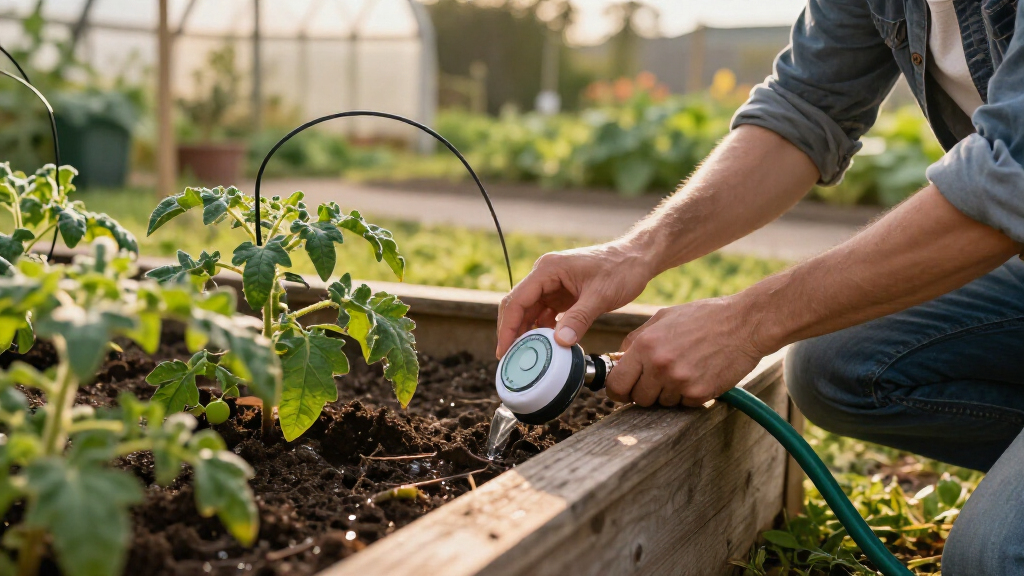
I compared these programmable drip irrigation timers around the decisions that change how well a timer fits a real watering setup: outlet or station count, independent scheduling, control style, connection format, and the likely complexity of installation. A single-outlet model can be the better fit for one bed or container group; adding zones only helps when the garden has separate areas with different watering needs. Smart features matter most when remote access or more flexible control is useful, not simply because an app is available.
The ranking favors useful control without unnecessary complexity, while recognizing that the best choice varies by setup. I placed multi-zone and smart options higher when their added control could support more distinct watering areas, then weighed simpler single-outlet models for ease of use and focused jobs. Connection materials and product format help distinguish close alternatives, but they do not prove durability or compatibility on their own. Since model details can vary, I’d confirm the current instructions, supported fittings, and operating requirements before purchase.
Factors to Consider When Choosing Programmable Drip Irrigation Timers
Before choosing a timer, I’d start with the irrigation layout rather than the number of features on the box. A hose-end controller and a multi-station sprinkler controller solve different installation problems, even when both offer programmable schedules. These checks can help avoid buying extra capacity you will not use—or a timer that cannot serve the way your garden is divided.
Match Zones to Watering Needs, Not Garden Size
Count the areas that need to run on different schedules, not just the beds or pots in your yard. A sunny vegetable bed and a shaded container grouping may need separate run times even if they are close together. If all emitters can share one schedule, a single outlet keeps the setup simpler. A two-zone timer is a sensible step up when two groups need separate control. Avoid buying extra outlets on the assumption that they improve watering by themselves; each zone still needs a suitable hose or irrigation branch and a workable layout.
Check Whether You Need a Hose Timer or Station Controller
Most models in this roundup attach to a garden hose, making them a natural fit for hose-fed drip lines and small garden areas. The Orbit four-station swing-panel controller is a different type of product, intended for a controller-based irrigation system rather than simply adding automation at a hose bib. Before buying, trace where water enters the system and confirm the timer’s connection style fits that point. A station controller may call for compatible valves and wiring, so it can involve more installation than a hose-end unit. Choosing by the word “timer” alone can lead to a product that does not connect to your existing equipment.
Decide How Much Programming Complexity Helps
Simple controls can be easier to set up when you only need a recurring schedule for one garden area. More advanced programming or app access may help if you manage several zones, adjust schedules often, or want controls away from the timer. Extra settings also mean more setup steps and another interface to learn. Think through who will change the schedule and how often before choosing smart features. If a fixed routine meets your needs, paying attention to clear controls and dependable hose connections may matter more than remote access.
Treat Brass as One Connection Detail, Not a Whole-System Guarantee
Several picks call out brass inlets or outlets, which can be a useful distinction when comparing connection designs. Still, the material at one fitting does not describe every part of the timer or guarantee a leak-free installation. Check whether the product’s inlet and outlet match your hose, adapters, and downstream drip tubing. Use suitable washers and avoid forcing mismatched threads, since a poor fit can create leaks regardless of the timer’s features. If you are comparing brass and non-brass models, weigh connection configuration and instructions alongside material claims.
Plan for Flow, Pressure, and Your Drip Components
A timer controls when water runs; it does not automatically make a hose supply suitable for every drip system. Emitters, filters, pressure regulators, and tubing may each have requirements that the timer cannot meet on its own. Check the needs of your drip components and the timer’s stated operating limits before connecting the system. A frequent mistake is to buy by outlet count and overlook whether the water supply and accessories can support the intended layout. If a setup includes multiple branches, confirm that each branch gets the pressure and flow it needs rather than assuming the timer will balance them.
Choose Capacity You Can Maintain
Every added zone can make a garden more flexible, but it also adds another schedule and connection to check. Group plants with similar watering needs where practical, then choose enough outlets to separate the groups that genuinely differ. A two-zone model may be easier to manage than a four-port option for a small garden, while a larger layout can benefit from more independent control. Leave room in your decision for seasonal changes, battery or power needs, and access to the timer for adjustments. The best capacity is the one you can set, inspect, and revise as your plants change.
Frequently Asked Questions
Can I connect a hose-end timer directly to drip irrigation tubing?
Often, a hose-end timer can control a drip setup, but it may not connect directly to the tubing without additional fittings. Check the timer outlet, tubing size, and the connector requirements of your filter, pressure regulator, and drip lines. Those parts are separate from the timer and may be needed for a compatible system. Confirm that the timer’s operating specifications suit the components you plan to use. A dry-fit check before installation can help reveal mismatched threads or adapters.
Is a two-zone timer worth choosing over a single-outlet model?
A two-zone timer is useful when two groups need different watering days or run times, such as a sunny bed and a shaded planting area. It is not automatically a better choice if every line can use one schedule. Separate zones can reduce the need to compromise between plants with different needs, but they also add connections and programming. I’d map the garden’s watering groups first, then decide whether one or two schedules solve a real problem. If the groups are not meaningfully different, the simpler single-outlet format may be easier to manage.
Should I choose a smart timer or a standard programmable model?
A smart timer makes more sense if you expect to adjust schedules remotely or value app-based control across several watering areas. A standard programmable model can be a better fit when you want a recurring routine and prefer to set it directly on the device. Smart features do not remove the need to check connections, power requirements, and the irrigation system itself. Consider who will manage the timer and whether they are comfortable using its app or interface. If remote control would rarely be used, a simpler timer may cover the job with fewer setup steps.
Can an indoor/outdoor four-station controller replace a hose-end timer?
Not necessarily: these products serve different installation formats. A hose-end timer attaches at a hose connection, while a multi-station controller may depend on compatible valves and system wiring. The Orbit swing-panel controller in this roundup is intended for a controller-based irrigation setup, so it should not be treated as a direct substitute without checking the existing equipment. Identify where the water is controlled and what valves or connections are already installed. If your system is built around a garden hose, a hose-end model is usually the more direct type to compare.
What should I verify before leaving a programmable timer to water unattended?
Run the system while you are present before relying on an unattended schedule. Check each outlet for leaks, confirm that every zone reaches the intended plants, and make sure the programmed start times and run durations are correct. Verify any battery or power requirements and inspect the irrigation components for clogs or loose fittings. A timer can follow its schedule while a disconnected tube or blocked emitter still prevents proper watering. Recheck the setup after changing lines or schedules, especially when the system serves several zones.
Conclusion
For the strongest blend of capacity and control, I’d choose the Orbit B-hyve XD 4-Port as the best overall option for a hose-fed garden with several areas to schedule. The Orbit 62061 is my best value-style pick for a straightforward single-outlet setup, while the Orbit four-station swing-panel controller is the premium-format choice for buyers who already have a compatible controller-based system. Beginners with one watering group should start with a simple single-outlet model such as the Orbit 62061; those who want two distinct schedules can compare the Insoma, MOES, Orbit 58910, and RAINPOINT two-zone options. For shoppers focused on brass connections, compare the Insoma brass variants and QUOBAS by their exact inlet and outlet configuration. Match the timer to the water connection and number of schedules you actually need, rather than choosing the model with the most outlets by default.
Fall Picks
fall essentials
As an affiliate, we earn on qualifying purchases.