
TL;DR

Get garden gear delivered free with Prime
- Fast, free delivery on millions of items
- Prime Video, Amazon Music and more included
- Member-only deals all year
Basins and swales are simple earthworks that slow, spread, and sink stormwater, helping you turn monsoon runoff into a resource. Proper design and maintenance prevent erosion, mosquito problems, and property damage while supporting healthy landscapes.
When heavy rains hit your yard during monsoon season, it often feels like a flood rather than a blessing. But what if you could turn that rushing water into something useful? Basins and swales are low-cost, effective earthworks that slow runoff, spread it across your landscape, and sink it into the soil. They transform destructive torrents into nourishing flows for your plants and soil.
In this guide, you’ll learn how to shape your yard with these simple features. You’ll discover how to design them to handle heavy rains, prevent erosion, and even improve groundwater recharge—all without fancy equipment or complicated engineering. It’s about making your yard work with the rain, not against it.
Design basins and swales based on real water flow patterns, not guesses.
Always include a wide overflow spillway to handle major storms safely.
Build shallow, broad features for stability, safety, and ease of maintenance.
Use native plants suited to wet-dry cycles to stabilize soil and absorb runoff.
Regular inspection and maintenance extend the life and performance of earthworks.
Basins and Swales: Shaping a Yard to Catch Monsoon Runoff
Simple earthworks can slow, spread, and sink stormwater before it becomes an erosive torrent. The result is more water for plants, less runoff leaving the property, and a landscape designed to work with intense rain.
Potential stormwater infiltration from a well-designed system under suitable site conditions.
Recommended maximum side-slope ratio: three horizontal units for every one vertical unit.
“Catch the rain where it falls, then give every excess drop a safe place to go.”
Four forms, one connected system
A basin stores water temporarily. A swale moves it gently. A berm holds it on the downhill side. A protected overflow releases more water than the system can safely store.
Basin
A shallow, broad depression that pauses runoff and gives water time to infiltrate near trees, shrubs, and planting beds.
Swale
A wide channel, commonly built on contour, that distributes runoff without allowing it to gather speed like a drainage ditch.
Berm
A low ridge made with excavated soil, carefully compacted to retain water or redirect it toward a safe infiltration area.
Overflow
A wide, level, armored outlet positioned below the berm crest so extreme storms cannot cause an uncontrolled washout.
Follow every drop from source to safe exit
A resilient design is a sequence, not an isolated hole. Each stage reduces water speed and prepares the flow for the next stage.
Catchment
Roof, patio, driveway, or uphill landscape gathers rainfall.
Energy break
Stone, gravel, or dense plants slow concentrated inflow.
Upper basin
Water spreads across a level bottom and begins to infiltrate.
Spillway
Excess water crosses a wide, erosion-resistant overflow.
Next safe zone
A lower basin, stable drainage route, or approved outlet receives it.
The rules that prevent failure
Observe the yard during a safe storm. Mark entry points, pooling, erosion, exits, easements, utilities, and nearby properties before choosing where an earthwork belongs.
Use real flow patterns
Plan from what water actually does. A dry-yard guess can place storage in the wrong location or miss a damaging flow path.
Keep structures dry
Maintain positive drainage away from foundations, retaining walls, septic systems, equipment, and neighboring property.
Build on contour
A level feature distributes water. A sloping feature can concentrate flow, behave like a ditch, and accelerate erosion.
Stay shallow and broad
Gentle forms are more stable, safer around people and pets, easier to plant, and simpler to maintain.
Design overflow first
The spillway must be wide, level, lower than vulnerable berm sections, armored, and aimed toward a safe receiver.
Slow concentrated inflow
Use stone, gravel, vegetation, or a level spreader below downspouts, pipes, driveways, and curb openings.
Rain becomes volume quickly
Storage is only one part of capacity. The system must also infiltrate, distribute, and safely pass water when a monsoon storm exceeds its design volume.
Estimate the water arriving
Hard surfaces shed more water than planted soil. Confirm units carefully, allow a safety margin, and use local rainfall and drainage guidance for final design.
Match the shape to the ground
An infiltration test helps reveal whether water disappears in hours or remains for days. Conditions can change substantially across a single property.
| Soil condition | Typical behavior | Design response | Primary caution |
|---|---|---|---|
| ~Sandy | Often infiltrates quickly | Use vegetation and protected entry points | Loose particles may scour or collapse |
| ~Clay | Stores water near the surface | Favor larger, shallower storage areas | Long ponding and slippery slopes |
| !Compacted | May shed water despite a dry surface | Test first and improve soil where appropriate | Unexpected overflow during intense rain |
| !Caliche-rich | Restrictive layers slow deep infiltration | Distribute water across linked shallow basins | Excavation may expose harder barriers |
| !Expansive clay | Swells and shrinks with moisture | Use extra caution and professional guidance | Keep stored water well away from foundations |
From storm observation to first test
Small, linked features often distribute risk better than one deep depression. Work carefully, preserve required drainage, and verify local rules before construction.
Watch a safe storm
Identify inflow, pooling, erosion, low points, and the route water currently takes off the property.
Check constraints
Locate utilities, easements, structures, septic components, property boundaries, and required drainage routes.
Mark the contour
Use stakes and a laser, builder’s, water, or A-frame level to establish a level footprint.
Excavate broadly
Keep the bottom level and the sides gentle. Avoid creating a narrow, steep-sided trench.
Build the berm
Place excavated soil on the downhill side and compact it in stable layers.
Cut the spillway
Set it below the berm crest, make it wide and level, then armor it against erosion.
Plant immediately
Install native grasses, groundcovers, shrubs, and trees suited to repeated wet-dry cycles.
Test and observe
Use controlled water, then inspect the first storms and repair scour, settlement, or unsafe overflow quickly.
Roots turn earthworks into living infrastructure
Plants stabilize soil, slow water, absorb moisture, and help prevent bare-ground erosion. Choose native species adapted to local heat, drought, and temporary inundation.
Build resilience into every zone
Plant from wetter center to drier edge
Temporary wet zone: moisture-tolerant grasses, rushes, sedges, and yerba mansa where locally suitable.
Transition zone: dense groundcovers, native grasses, and flowering plants such as desert marigold.
Drier zone: drought-tolerant shrubs and trees with stabilizing roots.
Inspect after every major storm
Maintenance is simple but essential. Prompt repairs prevent small erosion channels, sediment deposits, and weak vegetation from becoming system failures.
Remove debris that diverts runoff or concentrates flow.
Replace displaced stone and restore dense vegetation.
Fill rills, slow the inflow, and replant exposed soil.
Remove buildup when it noticeably reduces storage or blocks flow.
Investigate persistent standing water and restore infiltration.
The goal is managed infiltration, not trapped water
A well-designed basin or swale may infiltrate a large share of stormwater under favorable conditions, but it does not eliminate flood risk. Never block natural or legally required drainage, and seek qualified local guidance when structures, steep slopes, expansive soils, or major flows are involved.
What Are Basins and Swales—and Why Should You Care?
Basins and swales are your yard’s rainwater management heroes. A basin is a shallow, wide depression that temporarily holds water, giving it a chance to soak into the ground. A swale is a broad, gently sloped channel that guides water along desired paths, spreading it out and slowing it down.
Imagine a small, flat bowl at the base of your garden—when a storm hits, it catches the water, letting it seep into the soil instead of rushing downhill. Or picture a grassy, gently sloped ditch that directs runoff away from your foundation and into a planting bed. Both features reduce erosion, decrease runoff speed, and keep your yard healthy during monsoon storms.
In practice, you might build a shallow basin behind your shed to capture roof runoff or shape a swale along the property’s contour to divert water from the driveway. These earthworks work together as a system—water flows from one basin to the next, gradually infiltrating rather than rushing away.
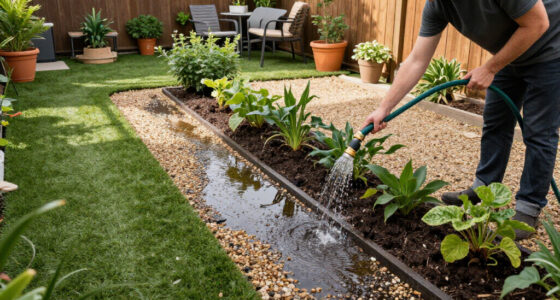
garden basin for stormwater management
As an affiliate, we earn on qualifying purchases.
As an affiliate, we earn on qualifying purchases.
How Do You Design a Basin or Swale That Won’t Fail?
Designing a basin or swale that lasts through monsoon storms starts with careful observation. Watch your yard during a rain. Notice where water naturally flows, pools, or causes erosion. Use this real-world info to plan your earthworks—guesswork won’t cut it here.
Key principles include:
- Keep water away from foundations: slopes should direct runoff away from your house, not against it.
- Build on contour: level features spread water evenly, preventing deep erosion or pooling.
- Make earthworks shallow and broad: gentle slopes are safer, easier to maintain, and less noticeable.
- Always include overflow: a spillway prevents overtopping, which can cause erosion or damage.
- Use erosion-resistant materials: armor spillways with stones or dense vegetation to prevent washouts.
- Size for your storms: calculate expected runoff, and design for the worst storms you face.
For example, if your backyard gets 2 inches of rain in a typical storm, your basin should be sized to hold at least that volume, plus extra for safety. The overflow route must be wide enough to carry excess water without flooding or erosion.
As an affiliate, we earn on qualifying purchases.
Step-by-Step: Building a Simple, Effective Basin or Swale
- Identify existing water flow paths during a storm. Mark low points, runoff entry, and exit routes.
- Check for underground utilities and property easements. Call local services before digging.
- Mark your basin or swale on the ground with stakes or spray paint, following contour lines.
- Dig the earthwork, keeping the bottom level and the sides broad and gentle—no steeper than 3:1 slope.
- Form a berm on the downhill edge, using excavated soil, and compact it well.
- Create an overflow spillway, armored with stones or dense vegetation, positioned below the berm’s crest.
- Plant native grasses, shrubs, or groundcovers suited to the wetting and drying cycles of your site.
- Test the system with a controlled water flow—use a garden hose or buckets—then adjust as needed.
- Inspect during the first storms and make quick repairs if any erosion or overflow issues appear.
For example, a homeowner in Tucson built a shallow swale along her driveway. After a heavy rain, she saw water spread evenly across her yard, preventing erosion and keeping her plants happy during dry months.
As an affiliate, we earn on qualifying purchases.
Choosing the Right Plants to Support Your Earthworks
Plant selection is key to making basins and swales work effectively. Native plants that tolerate both dry spells and temporary flooding are your best allies. They stabilize soil, absorb excess water, and thrive with little extra care.
In basin bottoms, opt for moisture-loving natives like rushes or sedges. Along slopes and berms, choose drought-tolerant groundcovers, grasses, and shrubs. Incorporate trees that provide shade and root stability—species like desert willows or mesquites are excellent.
Mulch generously to prevent erosion and keep soil moist. Avoid floating mulch that could block overflow pathways. Remember: healthy plants are your best defense against washouts and mosquito breeding.
For example, a homeowner in Phoenix planted yerba mansa and desert marigold in her basin, creating a lush, green patch that absorbs runoff and attracts beneficial insects.
As an affiliate, we earn on qualifying purchases.
How Big Should Your Basin or Swale Be? Calculating Capacity
Estimating the right size depends on how much water you expect during storms. Use this simple formula: Runoff volume = rainfall depth × catchment area × runoff coefficient. For example, 1 inch of rain on 1,000 sq ft produces about 623 gallons—enough to fill a large bathtub.
In practical terms, if your roof catches 600 sq ft of runoff, and you get 2 inches of rain, your roof alone produces over 1,200 gallons of water. Your basin must be big enough to hold or safely pass that volume.
In monsoon regions, linking several small basins often works better than one large depression. This distributes water, reduces erosion risk, and improves infiltration.
Always leave room for overflow—if a storm exceeds your basin’s capacity, excess water needs a safe route to prevent flooding or damage.
Construction Tips for Long-Lasting, Safe Earthworks
Construction quality determines how well your basins and swales hold up over time. Always check for underground utilities first—call before you dig. Mark your plans carefully with contour lines, and verify elevations with a level or laser tool.
Dig slowly and keep the basin bottom level. Make the sides broad and gentle—no steeper than 3:1 slope—to prevent collapse or erosion. Use native soil to form berms, compacted well for stability.
Create a spillway wide enough to carry the largest expected storm. Armor it with stones or dense vegetation, and avoid placing it where runoff might damage structures or neighboring properties.
Plant native vegetation immediately after construction. Mulch to suppress weeds and reduce erosion. Test the system with a hose or buckets of water, then make adjustments if water spills over where it shouldn’t.
For example, a gardener in New Mexico built a shallow basin with a stone-lined spillway. After a monsoon, it absorbed runoff smoothly, with no signs of erosion or standing water.
Maintaining Your Earthworks — Keep Them Working Year After Year
Maintenance is simple but essential. Before each monsoon, inspect for erosion, sediment buildup, or damaged spillways. After storms, check for scoured areas, berm breaches, or clogged overflow paths.
Remove sediment and debris from basins and spillways. If plants are overgrown, prune or thin them to keep water flowing freely. Replant or add mulch as needed to stabilize soil.
Watch for standing water that lingers longer than a few days—this might mean drainage issues or compacted soil. Adjust or repair accordingly to keep mosquitoes at bay and prevent erosion.
In a backyard in Colorado, a homeowner found that regular checks kept her basin functioning well, even after intense spring storms. She cleaned out debris and added mulch, prolonging the earthwork’s lifespan.
Legal and Safety Checks Before Digging In
Always call your local utility locator before digging—this prevents accidents and costly repairs. Check with your city or county for permits, drainage regulations, and water harvesting rules. Respect existing easements, floodways, and natural drainage paths.
Don’t redirect runoff onto neighbors’ property or public infrastructure without permission. If you’re on a slope or near septic systems or groundwater, consult a professional to avoid unintended consequences.
Be cautious about infiltration in contaminated soils or areas with pollutants, and avoid creating standing water that could breed mosquitoes or cause hazards.
For example, a homeowner in Arizona had to revise her plans after discovering an underground utility line. Her careful pre-planning saved her time and money.
New Trends and Smart Ideas in Rainwater Management
Today’s landscape design treats basins and swales as part of a larger green infrastructure network. Linked systems, native vegetation, and rain tanks work together to manage runoff while cooling urban areas and supporting wildlife.
Municipal rebates and incentives make water harvesting more affordable. Soil restoration, deep-rooted plants, and soil amendments improve infiltration—even in compacted urban yards.
Monitoring tools like rain gauges and soil moisture sensors help fine-tune your system. Combining earthworks with rain tanks captures cleaner roof water, while basins handle landscape runoff, creating a comprehensive water-harvesting setup.
In practice, a community in California installed a series of linked basins and rain tanks, reducing stormwater runoff by 70% and watering public parks without extra irrigation costs.
Your Questions About Basins and Swales — Answered
Will a basin attract mosquitoes? Usually no if it drains within a few days. Standing water longer than that invites mosquitoes. Proper design with quick drainage prevents breeding.
How deep should they be? Most residential basins are shallow—around 6 to 18 inches deep—big enough to hold stormwater but safe for people and pets.
Can I redirect roof runoff into a basin? Yes, but ensure the inlet is protected from erosion, and the basin has enough capacity with a proper overflow route.
What plants work best? Native grasses, sedges, and drought-tolerant shrubs that handle both wet and dry conditions thrive in these settings.
Will a basin recharge groundwater? It can, but only if the soil and geology allow. Most water stays in the root zone or evaporates—full recharge depends on local conditions.
How often should I check my earthworks? Before and after storms, and at least once a year to catch early erosion or sediment buildup.
Conclusion
When you shape your yard with basins and swales, you turn monsoon chaos into a quiet, nourishing flow. These earthworks aren’t just for drainage—they’re tools for resilience and beauty in a water-wise landscape. Think of them as your yard’s own rain-catchers, working tirelessly to keep your soil healthy and your property safe.
Next time the clouds gather, remember: with a little planning and care, you can make every storm a chance to feed your landscape, not flood your plans. Your yard can become a haven that works with the rain instead of fighting it.
Fall Picks
fall essentials
As an affiliate, we earn on qualifying purchases.