TL;DR

Get garden gear delivered free with Prime
- Fast, free delivery on millions of items
- Prime Video, Amazon Music and more included
- Member-only deals all year
Protect figs as they begin to soften, before birds learn that your tree is a dependable food stop. Use breathable individual fruit bags or taut mesh on a frame, inspect barriers often, and pick ripe figs promptly; reflective scare devices can help briefly when you move them around.
Start protecting figs as they soften or change color, before birds form a feeding routine.
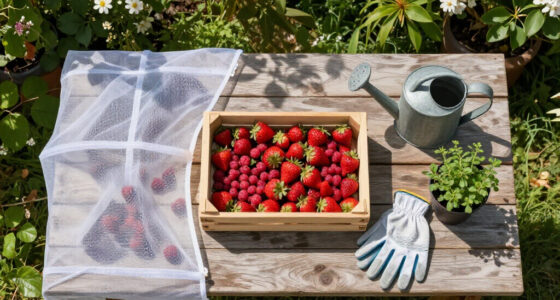
Use securely fastened breathable bags for a few branches, or taut mesh over a rigid frame for a larger area.
Inspect coverings often for loose folds, gaps, trapped wildlife, mold, and fruit pressing against mesh.
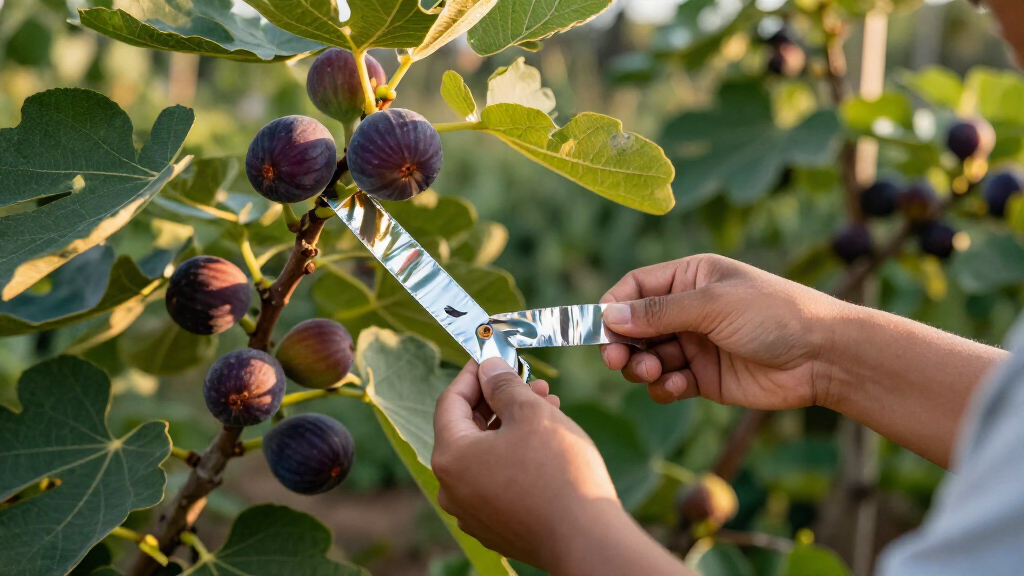
Rotate reflective tape or moving streamers for brief help; don’t rely on a stationary scare device all season.
Pick ripe figs promptly and remove fallen or damaged fruit so the tree offers fewer easy meals.
Keep Birds Off Ripening Figs—Without Trapping Them
Protect figs as they begin to soften, before birds learn your tree is a dependable food stop. Use breathable fruit bags or taut mesh on a frame, inspect barriers often, and pick ripe figs promptly.
Start before the first peck
Watch the fruit as it enlarges. Put protection in place when figs begin changing color or yield slightly to gentle touch. In hot weather, ripening can move quickly; a bird that finds one sweet fig may return to inspect the rest.
Protect at first signs of ripening
Do not wait for visible damage. Once birds get a reliable food reward, they may keep checking the tree.
Check and pick regularly
Inspect reachable branches each morning as fruit nears ripeness. Harvest ready figs without delay; figs generally do not ripen well after picking.
Remove easy food signals
Collect fallen, split, or pecked fruit beneath the canopy so the garden offers fewer easy meals.
Choose a barrier that fits the tree
Fruit on a few reachable branches is often easiest to protect with individual sleeves. A broad canopy may call for taut mesh over a rigid frame. In either case, leave space for airflow and fruit growth.
| Approach | Works well when | Watch for |
|---|---|---|
| Breathable bags or sleeves | Fruit is concentrated on a few reachable branches | Loose closures, tight contact, or poor airflow |
| Taut mesh on a frame | You need to cover a larger section of the tree | Gaps, sagging edges, or wildlife caught inside |
| Moving visual deterrents | You want a short-term extra layer | Birds may get used to predictable, stationary objects |
Set up mesh so birds stay outside
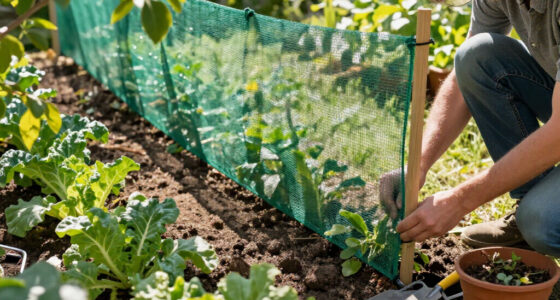
Loose, draped netting can create loops and pockets where birds become entangled. Stretch larger mesh taut over a rigid frame, secure every edge, and inspect the setup often. For individual bags, fasten each opening firmly while leaving room for airflow and growth.
Choose a small area
Cover a fruiting branch or framed section instead of spreading slack netting across the canopy.
Secure the barrier
Anchor edges and close openings so wind cannot lift mesh or let birds slip inside.
Inspect frequently
Look for gaps, snags, loose ties, trapped wildlife, fruit touching mesh, and signs of mold.
Remove after harvest
Take coverings down when picking ends and store them out of the sun for next season.
Use visual deterrents as a brief assist
Reflective tape, moving streamers, and decoys may interrupt a feeding routine for a while. Birds can become accustomed to stationary objects, so move them often and pair them with a physical barrier and regular picking.
Change position
Move reflective tape or a decoy to another side of the tree every day or two.
Watch the birds
If birds keep landing, shift effort toward exclusion and timely harvest instead of adding more fixed objects.
Keep fruit inaccessible
A moving deterrent can buy time while you pick figs or install a secure sleeve on the ripest cluster.
Your quick safety check
Fine mesh can reduce airflow and hold moisture against fruit. Choose breathable material, avoid tight wrapping, and check more often after wind or irrigation—especially in desert heat.
Protect figs before birds make your tree a daily stop
Keeping birds off ripening figs starts before the fruit becomes soft and inviting. Watch the figs as they enlarge, then put your chosen barrier in place when they begin changing color or yielding slightly to a gentle touch. In a desert yard, check more often during hot weather: ripening can move quickly, and a bird that finds one sweet fig may return to inspect the rest. A simple routine beats a frantic response. For example, if your tree has a few branches near a patio, inspect those branches every morning as the fruit approaches ripeness. You can spot a change in color, a split skin, or the first peck before the whole crop draws a crowd. The most important aspects are timing and consistency: protect fruit before it becomes attractive, then pick ripe figs promptly.Frequent picking also limits the reward. Figs generally do not ripen well after harvest, so leave them on the tree until they are ripe, then collect them without delay. A fallen fig can be a bright, fragrant signal on the ground. Remove damaged fruit, too, rather than letting it advertise an easy meal.Start protection at the first signs of ripening. Once birds get a reliable food reward, they may keep checking the tree even after you add a deterrent.
Popular right now

Dyson Ball Animal 3 Corded Upright Vacuum

Roborock Q7 M5+ Robot Vacuum and Mop

Samsung 42-Inch S90H OLED 4K Smart TV Bundle
As an affiliate, we earn on qualifying purchases.
Choose a barrier that fits your fig tree
Individual bags or sleeves are often the simplest way to protect figs when fruit grows on a few accessible branches. Choose breathable mesh with openings small enough to block the birds in your yard, fasten it so a bird cannot slip inside, and leave enough room for the figs to grow. A bag that hugs fruit tightly can rub the skin or hold moisture against it. For a small example, say your young tree has three fruiting branches within reach. Covering those branches with secure sleeves may take less time than building a full enclosure, and you can still reach in to harvest. If figs fill a broad canopy, a rigid frame with taut mesh may cover more fruit with fewer separate bags. The right choice depends on tree size, where the fruit sits, and how often you can inspect it.| Approach | Works well when | Watch for |
|---|---|---|
| Individual bags or sleeves | Fruit is concentrated on a few reachable branches | Loose closures, tight contact, or poor airflow |
| Taut mesh on a frame | You need to cover a larger section of the tree | Gaps, sagging edges, and wildlife caught inside |
| Visual deterrents | You want a short-term extra layer | Birds may get used to predictable, stationary objects |
Set up mesh so birds stay outside
A safe barrier keeps birds away from the fruit without creating loose loops or pockets where they can get caught. If you use a larger covering, stretch it taut over a rigid frame, secure every edge, and check for gaps where birds could enter. For individual bags, fasten the opening firmly around the branch while leaving room for fruit growth and airflow. Imagine a gardener who drapes netting over a fig tree and goes inside for the weekend. A corner loosens in the wind, and a bird can flutter into the folds while trying to reach a fig. A taut frame changes the setup: the mesh stays away from fruit and does not hang in long, slack folds. The difference comes from installation and upkeep, not merely from the word “netting.”- Choose the smallest practical area to cover, such as a fruiting branch or a framed section of canopy.
- Install breathable mesh securely. Close openings and anchor the edges so wind cannot lift them.
- Inspect the barrier often for loose sections, gaps, snags, trapped wildlife, fruit touching the mesh, or signs of mold.
- Remove the covering after harvest. Store it out of the sun so it stays ready for next season.