TL;DR
Ground squirrels are common in desert gardens and can cause significant damage through digging and feeding. The best approach combines underground fencing, habitat modification, and humane deterrents for long-lasting protection.
Ever had ground squirrels turn your desert garden into a maze of tunnels and uprooted plants? It’s a common battle in arid landscapes where these tiny diggers thrive. But here’s the good news: you don’t need to resort to harsh chemicals or traps. Instead, understanding their habits and applying the right barriers can keep them at bay—humanely and effectively.
This guide is your practical neighbor in the desert, showing you how to protect your plants with simple, water-wise solutions rooted in real-world experience. Whether you’re new to gardening in the desert or a seasoned pro, these tips will help you build barriers that actually hold ground squirrels out.
Combine underground fencing with above-ground barriers for best results.
Bury fencing 6-12 inches deep and extend at least 2-3 feet high to prevent burrowing and jumping.
Remove attractants like fallen seeds and dense brush to make your garden less inviting.
Use humane deterrents like reflective tape, motion-activated noise devices, and scent plants.
Chemical repellents are less reliable and can pose risks; physical fencing is the most effective long-term solution.
Ground Squirrels in the Desert Garden: Barriers That Hold
Digging stops where good design begins. Combine buried hardware cloth, a tall above-ground fence, habitat changes, and humane deterrents to protect plants without harming the desert wildlife around them.
Build below the soil line first
A fence that only rises upward leaves the most obvious route open. Ground squirrels tunnel under weak edges, exploit gaps, and work around shallow material. The dependable barrier is continuous, tight, and buried.
Choose tight hardware cloth
Use durable ¼-inch mesh that resists gnawing and closes off small burrow openings.
Dig a continuous trench
Bury the lower edge 6–12 inches deep, with no shallow breaks at corners or gates.
Raise the upper defense
Extend the barrier 2–3 feet above grade and fasten it firmly to sturdy stakes.
Close every gap
Anchor the base, overlap seams, reinforce access points, and repair new openings quickly.
Physical barriers win the long game
Chemical products may lose effectiveness as squirrels adapt, while visual and auditory devices require repositioning. A properly installed fence remains the garden’s dependable backbone.
| Method | Burrow control | Longevity | Wildlife fit | Maintenance | Verdict |
|---|---|---|---|---|---|
| Buried hardware cloth | ✓Strong | Long term | Humane | Inspect seams | Foundation |
| Habitat modification | ~Indirect | Ongoing | Excellent | Routine cleanup | Essential layer |
| Motion deterrents | ~Limited | Variable | Non-lethal | Move and reset | Useful support |
| Scent plants | ~Limited | Seasonal | Garden-friendly | Plant care | Supplement only |
| Chemical repellents | ×Weak | Short term | Potential concerns | Frequent reapplication | Avoid reliance |
Integration compounds protection
The content’s reported finding places combined fencing and habitat adjustment at roughly 70% greater success than fencing alone. The index visualizes that relative comparison, not a universal field guarantee.
Make the garden harder to enter—and less rewarding
Ground squirrels seek food, cover, and workable soil. Remove those advantages and the fence faces less pressure. These low-water, non-lethal measures strengthen the perimeter without trying to erase wildlife from the landscape.
Remove easy meals
Collect fallen fruit and seed, clean planting areas, and place birdfeeders where spilled food cannot become a daily invitation.
Open hiding zones
Reduce dense weeds, brush piles, and protected corners near beds. Favor visible, well-spaced, water-wise planting.
Plant aromatic edges
Lavender, garlic, and mint can add scent disruption. Treat them as supporting cues, not replacements for fencing.
Create movement and glare
Reflective tape, rotating markers, or scare-eye devices can interrupt comfortable feeding when moved regularly.
Trigger sudden sound
Motion-activated devices may discourage repeat visits. Position carefully so the tool does not become background noise.
Inspect after disturbance
Check gates, corners, seams, and the soil line after storms, landscape work, or any sign of fresh digging.
Less food and shelter
Movement, sound, and scent
Two to three feet high
Six to twelve inches deep
Protection that keeps holding
The barrier that holds is a system
Ground squirrels aerate soil and feed native predators, yet their tunnels can undermine roots, seedlings, paths, and irrigation zones. Effective exclusion protects the garden while respecting that ecological role.
What is the most effective approach?
A buried hardware-cloth fence paired with a 2–3-foot above-ground barrier, habitat cleanup, and regular inspection.
Can deterrents work humanely?
Yes. Reflective devices, motion-triggered sound, aromatic plants, and attractant removal can discourage visits without injury.
Why not depend on chemical repellents?
They can be short-lived, require repeat use, lose impact as animals adapt, and may create concerns around pets or children.
How often should the fence be checked?
Inspect regularly and immediately after fresh digging, storms, gate use, irrigation repairs, or other soil disturbance.
Why Ground Squirrels Are More Than Just Garden Pests
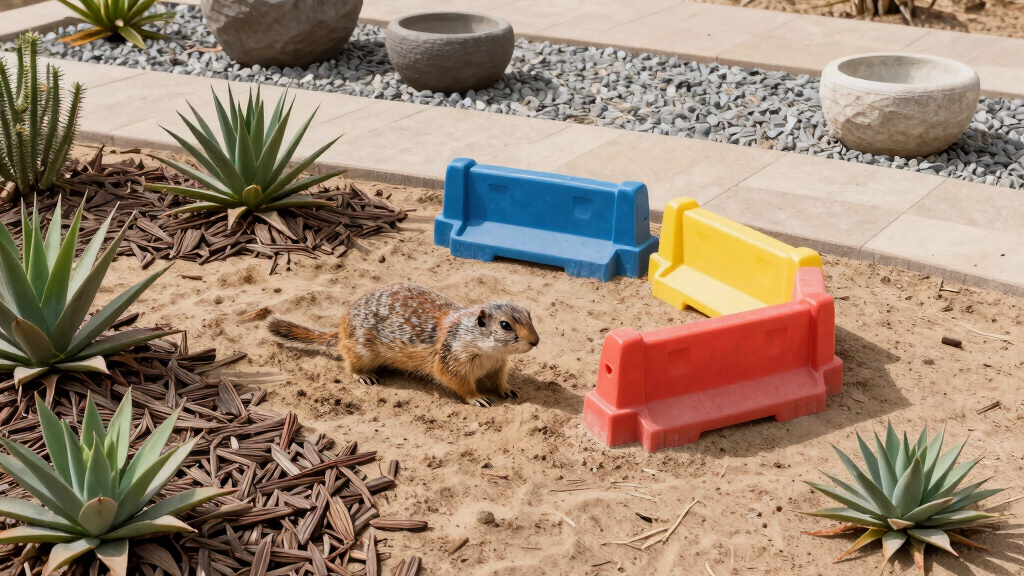
Ground squirrels are native desert inhabitants, part of the ecosystem’s fabric. They aerate soil and serve as prey for hawks and coyotes. But when they move into your garden, their burrowing can undermine plant roots, damage delicate seedlings, and create hazards like unstable ground.
Imagine planting a row of young desert marigolds, only to find a network of tunnels beneath. Their constant digging loosens soil and leaves your garden vulnerable to erosion. Understanding their role helps you see both sides—these critters are part of the desert, but in your garden, they can become a real problem.
Effective barriers respect their place in the ecosystem while safeguarding your plants. That’s where physical fencing and habitat tweaks come into play.
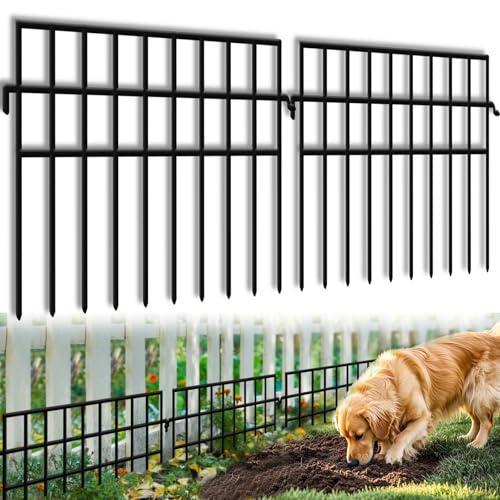
45.33ft(L) X 13in(H) Animal Barrier Fence No Dig, 32 Panels Rabbit Fences for Garden, Dog Digging Ground Defense Border Small Metal Fencing Under Barriers Blocker, Flower Bed, Patio
- Extended Length: 45.33ft total coverage with 32 panels
- No Dig Design: 13-inch high fence with underground support
- Durable Material: High-quality, rust-resistant metal construction
As an affiliate, we earn on qualifying purchases.
As an affiliate, we earn on qualifying purchases.
How to Build Barriers That Actually Stop Digging
Ground squirrels are experts at tunneling under fences if the barrier isn’t secure. The most effective method? Combine a sturdy, underground fence with a higher above-ground barrier.
Here’s a step-by-step:
- Use hardware cloth with 1/4-inch mesh. It’s tough enough to resist gnawing and small enough to block burrow entrances.
- Bury the fencing 6 to 12 inches underground. This depth is crucial because it directly impacts the squirrel’s ability to access the roots of your plants by digging underneath. If the fencing isn’t deep enough, squirrels can simply tunnel beneath it, rendering the barrier ineffective. The deeper the fencing, the more difficult and time-consuming it becomes for squirrels to find a way around or under it, significantly reducing their chances of infiltration.
- Extend the fence at least 2-3 feet high above ground. Squirrels can leap, but a tall barrier helps keep them out.
- Secure the fencing firmly to the ground and stakes to prevent gaps.
- Check regularly for new burrow entrances or gaps and repair immediately.
For example, a gardener in Arizona recently installed a 3-foot-high, buried hardware cloth fence around her vegetable patch. Six months later, not a single squirrel tunnel appeared inside her protected zone.
Remember: a combination of underground and above-ground fencing is the gold standard. Single-layer fences rarely hold for long.

laapee 48in x 100ft Hardware Cloth 1/2 inch Chicken Wire Fencing Mesh
- Industrial-Grade Galvanized Coating: Triple-coated for rust and UV resistance
- Precise Dimensions: 48x100ft roll with 1/2 inch grid
- Versatile Applications: Suitable for fencing, garden beds, and crafts
As an affiliate, we earn on qualifying purchases.
As an affiliate, we earn on qualifying purchases.
Habitat Hacks: Make Your Garden Less Attractive to Squirrels
Ground squirrels love easy snacks and cozy spots. Removing attractants and changing your garden’s landscape makes it less appealing.
Try these simple habitat tweaks:
- Remove fallen seeds, fruit, and accessible birdfeeders that invite them in.
- Plant natural deterrents like lavender, garlic, or mint. Their strong scent confuses or repels squirrels.
- Limit brush piles or dense weeds where they might hide or nest.
- Install visual or auditory repellents—like reflective tape or motion-activated noise devices.
One gardener replaced her lush hedge with spiky desert shrubs, which made her yard less inviting for burrowing and foraging. Her garden thrived with fewer squirrel visitors.
Small habitat changes go a long way in making your space less attractive without harming local wildlife.

Cat Repellent Outdoor Solar Animal Repeller Motion Activated Deer Repellent Device Humane Dog Racoon Squirrel Deterrent for Garden Yard Farm Waterproof (4, Green)
- Solar Powered: Operates 24/7 with built-in solar panels
- Ultrasound Deterrent: Releases harmless ultrasound waves to repel animals
- Night Visibility: Flashing white light for nighttime deterrence
As an affiliate, we earn on qualifying purchases.
As an affiliate, we earn on qualifying purchases.
Humane Deterrents That Keep Squirrels Away Without Harm
Humane deterrents are your best bet for keeping ground squirrels at bay. These methods don’t hurt but make your garden less appealing.
Here are some effective options:
- Visual deterrents: Scare-eye balloons or reflective tape that glint in the sun.
- Auditory deterrents: Motion-activated noise devices that emit bird distress calls or sudden sounds.
- Plant-based repellents: Sprinkle chili powder or install scented plants like mint and lavender.
For instance, a gardener in Nevada used reflective CDs hung from garden stakes. The spinning reflections kept squirrels away without disturbing other wildlife.
Most humane methods require regular maintenance but keep your garden friendly to all desert creatures.

RAINFLOW Garden Insect Netting Pest Barrier – Mesh Netting for Raised Beds
- Reliable Pest Barrier: Protects against insects, birds, and animals
- Durable Material: UV resistant, tear resistant, lasts 3-5 years
- Breathable Design: Allows sunlight, water, and air passage
As an affiliate, we earn on qualifying purchases.
As an affiliate, we earn on qualifying purchases.
Why Fencing Is Usually Better Than Chemical Repellents
Ground squirrels are wary of unfamiliar smells and tastes, making chemical repellents generally ineffective. Plus, chemicals can pose risks to pets and children.
Fencing offers a physical barrier that squirrels can’t ignore. It’s reliable, long-lasting, and environmentally friendly.
Research indicates that chemical repellents only work in the short term and lose effectiveness as squirrels get used to them. Physical barriers, especially those buried underground, are a smarter investment for a water-wise desert garden.
For example, a homeowner using chemical sprays found their squirrels returned within weeks. Switching to a sturdy fence cut their visits by over 80%.
Bottom line: fencing is the most dependable, safe, and eco-friendly method to keep ground squirrels out.
How Deep and Tall Should Fences Be to Stop Burrowing and Jumping?
Fences need to be tall enough to stop jumping and buried deep enough to stop burrowing. The magic numbers? 2-3 feet high and 6-12 inches deep.
For example, a gardener in California built a 3-foot-high fence with the bottom buried 8 inches. It stopped squirrels from digging underneath and leaping over the top.
Make sure the fence is sturdy, with no gaps or loose spots. Regularly inspect for new burrow entrances or gaps and reinforce immediately.
Remember: squirrels are persistent, but a well-built, deep fence can hold them out for years.
It’s important to understand why these dimensions matter: a fence that’s too short or not buried deep enough leaves gaps for determined squirrels to exploit. A deep, tall fence acts as a physical barrier that exploits their limitations—jumping and digging—making it a formidable obstacle. The tradeoff is that deeper fencing requires more effort and materials but pays off by significantly reducing intrusion, preserving your water-wise garden, and minimizing maintenance over time.
Frequently Asked Questions
What is the most effective way to keep ground squirrels out of my desert garden?
The best approach combines a buried, hardware cloth fence at least 6 inches underground with a 2-3 foot-high above-ground barrier. Regular maintenance and habitat management are key to keeping squirrels out long-term.
Are there humane ways to deter ground squirrels?
Yes, humane methods include visual deterrents like reflective tape, auditory devices that activate with motion, and planting scent plants such as mint and lavender. Removing attractants also helps make your garden less inviting.
Can I use chemical repellents safely in a desert garden?
Generally, chemical repellents aren’t very effective long-term and may pose risks to pets and children. Physical fences and habitat adjustments are safer and more reliable options.
How deep should fencing be to prevent burrowing?
Fencing should be buried at least 6-12 inches deep, depending on soil type, to block burrow entrances effectively. Regular inspections help catch new openings early.
Are ground squirrels beneficial or harmful?
They’re beneficial for soil aeration and are part of the desert food chain, but they can become pests by damaging plants and creating unstable ground. Balance their role with your garden needs.
Conclusion
Protecting your desert garden from ground squirrels isn’t about fighting nature—it’s about working with it. Durable, well-placed barriers combined with habitat tweaks can keep these tiny tunnelers out without harming them. Think of it as building a fortress that respects the desert’s ecosystem while guarding your plants.
Remember: a sturdy fence isn’t just a barrier; it’s a peace of mind. With a little effort, you can enjoy a lush, squirrel-free garden that’s water-wise and wildlife-friendly. Your desert oasis awaits—secure it wisely.