
TL;DR

Get garden gear delivered free with Prime
- Fast, free delivery on millions of items
- Prime Video, Amazon Music and more included
- Member-only deals all year
Leaf-cutter bees create neat semicircles in rose leaves, which is mostly cosmetic damage. They are valuable pollinators that support garden health. Letting them be benefits both your roses and local biodiversity.
Leaf-cutter bees cut neat, circular pieces from rose leaves, but this rarely harms mature, healthy plants.
Their activity is a sign of biodiversity and helps pollinate many garden plants, including your roses.
Avoid using broad-spectrum insecticides; they can harm these beneficial bees more than the pests.
Supporting native plants and nesting sites encourages healthy leaf-cutter bee populations.
Temporary protection, like fine netting, is best for vulnerable or newly planted roses, not broad chemical sprays.
Leaf-Cutter Bees Notching Your Roses: Why to Let Them Be
A smooth semicircle missing from a rose leaf is usually not a crisis. It is building material for a solitary bee—and a small cosmetic trade for a healthier, more diverse garden.
Established, healthy roses normally keep growing, flowering, and photosynthesizing.
Neat circles or semicircles distinguish leaf cutting from ragged pest feeding.
Broad-spectrum insecticides can harm the pollinator more than the notches harm the rose.
A tidy notch tells a precise story
Leaf-cutter bees, primarily in the genus Megachile, cut quickly with their jaws, tuck the leaf piece beneath the body, and carry it to an existing cavity. They do not eat the cutting.
Clean geometry
Look for a smooth semicircle or nearly complete circle removed from the edge of a leaf.
Irregular damage
Ragged feeding, scraping, discoloration, or widespread tissue loss points to another cause.
From rose edge to nursery
Each female provisions her own nest. She uses overlapping leaf pieces to construct protected brood cells inside a narrow cavity.
Select
She chooses a flexible leaf, often rose, lilac, redbud, bougainvillea, or wisteria.
Cut
Her jaws create a neat curved section within seconds.
Carry
The leaf piece travels beneath her body to a nearby nesting cavity.
Build
Overlapping pieces form a small, thimble-shaped brood cell.
Provision
Pollen, nectar, and one egg are enclosed before the cell is sealed.
Small scar, substantial benefit
The ecological value of an active pollinator is far greater than the aesthetic cost of a few missing leaf sections. Those notches can be read as evidence of a functioning garden habitat.
Females are not aggressive and generally sting only if trapped, squeezed, or handled. Males cannot sting.
Protect only when vulnerability is real
Intervention may be reasonable for newly planted, unusually small, stressed, or exhibition-quality roses under repeated heavy cutting. Use the least disruptive option first.
| Response | Bee-safe | Best use | Garden effect |
|---|---|---|---|
| Observe and tolerate | ✓ Yes | Established, healthy roses | Preserves pollination and nesting activity |
| Water, mulch, and reduce plant stress | ✓ Yes | Young or stressed plants | Improves the rose’s natural resilience |
| Temporary fine netting | ~ With care | Short-term protection during heavy cutting | Use securely and remove when activity subsides |
| Broad-spectrum insecticide | ✗ No | Not recommended for cosmetic notching | Can kill bees and contaminate pollen or nectar |
| Remove an occupied nest | ✗ No | Avoid unless safety makes it essential | Interrupts developing offspring |
Plant successive blooms
Use native flowers such as desert marigold, sage, and buckwheat to provide nectar and pollen across the season.
Keep natural cavities
Leave some hollow stems and sound dead wood where they are safe and compatible with garden maintenance.
Manage bee hotels well
Choose smooth replaceable tubes, protect them from rain, rotate materials, and leave occupied tubes undisturbed.
A few perfect notches are not a failing rose. They are the architectural signature of a pollinator raising the next generation.
What exactly are leaf-cutter bees, and why do they cut rose leaves?
Leaf-cutter bees are solitary bees, mostly in the genus Megachile. Unlike honeybees, they don’t live in hives or make honey. Instead, each female builds her own nest, often in cavities like hollow stems, old beetle tunnels, or even drilled wooden blocks. She cuts smooth, nearly perfect circles from leaves—especially rose, lilac, or bougainvillea—to line her brood cells. These leaf pieces serve as building material, not food.
The activity is quick—usually just a few seconds per cut—and the bees carry the leaf segment beneath their body, flying straight to their nesting site. They prefer leaves with a certain texture—thick, flexible, and easy to cut—making roses an attractive choice because their leaves fit the bill. The cuts are often small, about 6–20 millimeters across, and perfectly round, which is a dead giveaway that a leaf-cutter bee has been at work.
As an affiliate, we earn on qualifying purchases.
How to spot leaf-cutter bee activity and tell it apart from pests
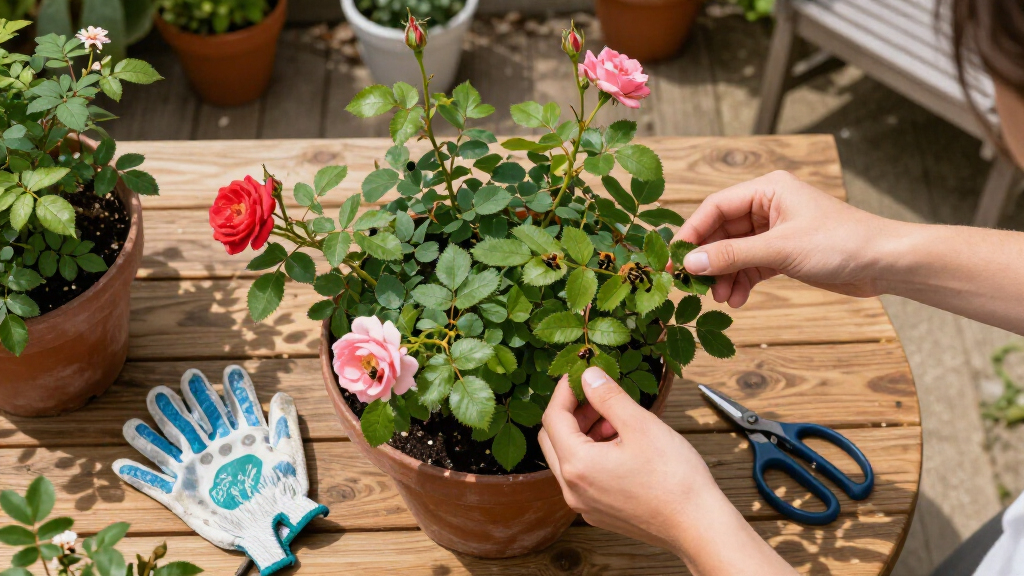
Recognizing leaf-cutter bee damage is straightforward once you know what to look for. The key sign is a clean, smooth semicircle or nearly complete circle cut from the leaf edge. The size varies, but typically it’s between 6 and 20 millimeters across. The cuts have neat, curved edges, unlike the jagged or ragged holes left by caterpillars or beetles.
If you see a bee gripping a leaf edge, quickly cutting with her jaws, and rolling the piece away, that’s your leaf-cutter bee in action. Other pests—like rose sawfly larvae or caterpillars—leave irregular holes, surface skeletonization, or chewed-up edges. And if the leaf shows surface scraping, slime trails, or browning, it’s probably not a bee.
In a typical garden scene, a bee might be seen hovering briefly while she cuts, then flying off with her tiny, neat leaf chunk. Catching her in the act is the best way to confirm activity. Remember, this activity is seasonal—mainly during warm months when nesting and brood-rearing happen.
beneficial pollinator garden tools
As an affiliate, we earn on qualifying purchases.
As an affiliate, we earn on qualifying purchases.
What leaf-cutter bees do with the leaves: The nesting process explained
Once a female locates a suitable cavity—be it a hollow stem, old insect tunnel, or even a drilled block—she lines it with overlapping leaf pieces, forming tiny, thimble-shaped cells. Each cell gets a ball of pollen mixed with nectar and a single egg. She then seals each cell with more leaf discs, creating a secure nursery for her developing larvae.
These larvae feed on the stored pollen and nectar, growing through several instars before pupating. They remain inside the nest over winter, emerging as adults the next season. The whole process is efficient—each bee can produce multiple offspring in a season, but she never excavates her own cavity like a carpenter bee. Instead, she reuses existing spaces or cavities she finds.
For gardeners, understanding this nesting behavior highlights how little impact leaf cutting has on mature, healthy roses. The activity is confined to small, discrete cavities, far from the plant’s main photosynthetic tissue.
As an affiliate, we earn on qualifying purchases.
Why letting leaf-cutter bees do their thing benefits your garden
Most gardeners worry about cosmetic damage, but the truth is, leaf-cutter bees are beneficial pollinators. Their activity supports the reproduction of countless wildflowers, fruits, vegetables, and ornamentals. Plus, because many bees forage within a limited radius—often just a few hundred meters—the bees cutting your roses are likely also pollinating other nearby plants.
Removing or spraying to stop the notching can actually do more harm than good. Broad-spectrum insecticides—especially those used casually—can kill these bees or contaminate the pollen and nectar they carry. That means fewer pollinators, less fruit and flower production, and a less vibrant garden.
In most cases, the tiny notches are simply a sign of a healthy, functioning ecosystem. The garden benefits when these pollinators are left to do their work—supporting plant diversity and resilience.
garden netting for rose protection
As an affiliate, we earn on qualifying purchases.
As an affiliate, we earn on qualifying purchases.
When and how to protect your roses without harming the bees
Protection is rarely needed but can be a good idea for newly planted or especially valuable roses under heavy, repeated attack. The simplest approach is to keep plants healthy—well-watered, mulched, and stress-free. A strong, vigorous plant can handle minor notching without issue.
If necessary, use fine insect netting to cover vulnerable plants temporarily—just make sure it’s secured without trapping bees or other beneficial insects. Remove the netting once the activity subsides. Avoid spraying insecticides or removing occupied nests. These actions can harm the bees and disrupt their nesting cycle.
For small, stressed, or young roses, a bit of extra protection during peak activity can prevent unnecessary damage. But, in most cases, patience and tolerance are your best tools.
Supporting leaf-cutter bees safely and naturally
Help these solitary bees by offering nesting sites and food sources. Plant a succession of native flowers—like desert marigold, sage, or buckwheat—that bloom throughout the season. Leave some dead stems or pieces of sound wood in the garden; they serve as natural nesting sites.
Bee hotels can help, but only if well-designed: use smooth, correctly sized, replaceable tubes, protect from rain, and place in sunny spots. Clean or rotate nesting materials annually, and leave occupied tubes undisturbed until the bees emerge.
Creating varied natural habitat—without over-relying on artificial structures—fosters a resilient pollinator community. The goal is a garden that sustains these bees year-round, with plenty of native plants and nesting options.
Recent trends and what they mean for your leaf-cutter bees
Recent conservation efforts highlight that protecting native solitary bees, like leaf-cutters, is vital for biodiversity. Be cautious with poorly maintained bee hotels—they can harbor parasites and diseases. Instead, focus on planting native flowers and maintaining natural nesting sites.
Use integrated pest management—reserving pesticides for confirmed pests—and avoid systemic insecticides that can contaminate pollen and nectar. These strategies help keep bees healthy and active in your garden.
More gardeners now see small cosmetic imperfections as signs of a thriving ecosystem. Managed leaf-cutter bees are increasingly recognized as valuable for pollination, especially in agricultural settings like alfalfa seed production.
Your questions answered: Leaf-cutter bees and roses
Are leaf-cutter bees killing my roses? Not likely. Their leaf removal is minimal and usually doesn’t harm mature, healthy roses. The plant can still flower and grow normally.
Do leaf-cutter bees eat rose leaves? No. They use the leaf pieces as building blocks for their nests. The larvae inside feed on stored pollen and nectar, not leaf tissue.
How can I tell their damage from caterpillar damage? Leaf-cutter bee cuts are neat, smooth, and semicircular, often starting at the leaf edge. Caterpillars leave irregular, ragged holes with chewed edges.
Will the cut portions grow back? No, but the plant can produce new leaves. The missing tissue doesn’t regrow, but it doesn’t threaten the plant’s health either.
Are leaf-cutter bees dangerous? Generally, no. Females can sting if handled roughly, but they are not aggressive and rarely sting unless threatened.
Frequently Asked Questions
Are leaf-cutter bees killing my roses?
Almost never. Their leaf-cutting is minor and usually doesn’t affect mature, healthy roses. They’re more friends than foes, supporting pollination without damaging the plant’s health.Do leaf-cutter bees eat rose leaves?
No. They collect leaf pieces solely for nest-building. Their larvae feed on stored pollen and nectar, not the leaves themselves.How can I tell their damage from caterpillar damage?
Leaf-cutter bee cuts are smooth, semicircular, and start at the edge. Caterpillars leave irregular, ragged holes with chewed edges—easy to spot once you know what to look for.Will the cut portions grow back?
No, but your rose will produce new leaves. The missing tissue won’t regrow, but it’s no threat to the plant’s overall health or flowering.Are leaf-cutter bees dangerous?
They are generally harmless. Females can sting if handled roughly, but they’re not aggressive and do so only when threatened.Conclusion
Seeing a neat semicircle missing from your rose leaf? That’s likely a leaf-cutter bee at work—doing more good than harm. Instead of removing or spraying, appreciate their role in your garden’s health. Letting these tiny pollinators thrive keeps your desert landscape vibrant, balanced, and full of life.Fall Picks
fall essentials
As an affiliate, we earn on qualifying purchases.