
TL;DR

Get garden gear delivered free with Prime
- Fast, free delivery on millions of items
- Prime Video, Amazon Music and more included
- Member-only deals all year
Snakes are part of desert life, but you can make your yard less appealing with habitat cleanup, natural repellents, and smart landscaping. Combining these steps keeps your family safe while respecting local wildlife.
Snakes in the yard can make even the most seasoned gardener nervous. But here’s the truth: most snakes are harmless and actually good for your desert ecosystem. Still, you want to keep them at bay—safely and humanely—especially if you have kids or pets.
In this guide, you’ll learn how to make your desert yard less appealing to snakes. From simple habitat tweaks to natural repellents, these tips help you coexist peacefully with your wild neighbors while keeping everyone safe.
Habitat modification—removing hiding spots and clearing debris—can cut snake visits by up to 80%.
Using gravel barriers and aromatic plants like lavender makes your yard less inviting.
Natural repellents like sulfur and cinnamon oil are safe and effective when applied correctly.
Fencing must be snake-proof—at least 18 inches high and buried 6 inches deep—to work.
Stay calm if you see a snake—keep your distance and call professionals for safe removal.
Snakes in the Garden: Making a Desert Yard Less Inviting, Safely
TL;DR: Remove shelter, reduce prey attractants, add well-built barriers and keep a calm response plan. A layered approach makes encounters less likely while respecting the snakes that help control desert rodents.
Reduction attributed to habitat modification in the supplied Gardener AZ claim.
A practical exposed strip around gardens, patios or play areas.
Use smooth, fine-mesh material with a slight outward angle.
Helps prevent access beneath an otherwise intact barrier.
Make shelter, food and access harder to find
Snakes seek cover, comfortable temperatures and prey—not conflict. Change those conditions first. The best yard plan removes several attractants at once and stays effective without harming wildlife.
Clear hiding places
Remove brush piles, stacked pots, loose boards and ground clutter. Store firewood off the ground and away from the house.
Open the sightlines
Trim shrubs above the soil, keep grass short and prevent dense growth from touching walls, sheds or walkways.
Reduce rodent rewards
Seal feed containers, collect fallen fruit, clean seed beneath bird feeders and address rodent activity humanely.
Create exposed zones
Use tidy gravel or flagstone borders around high-use spaces. Keep the strip open rather than filling it with décor or pots.
Close the small gaps
Inspect gates, vents, utility penetrations and wall bases. Repair openings where a snake could pass or shelter.
Inspect before reaching
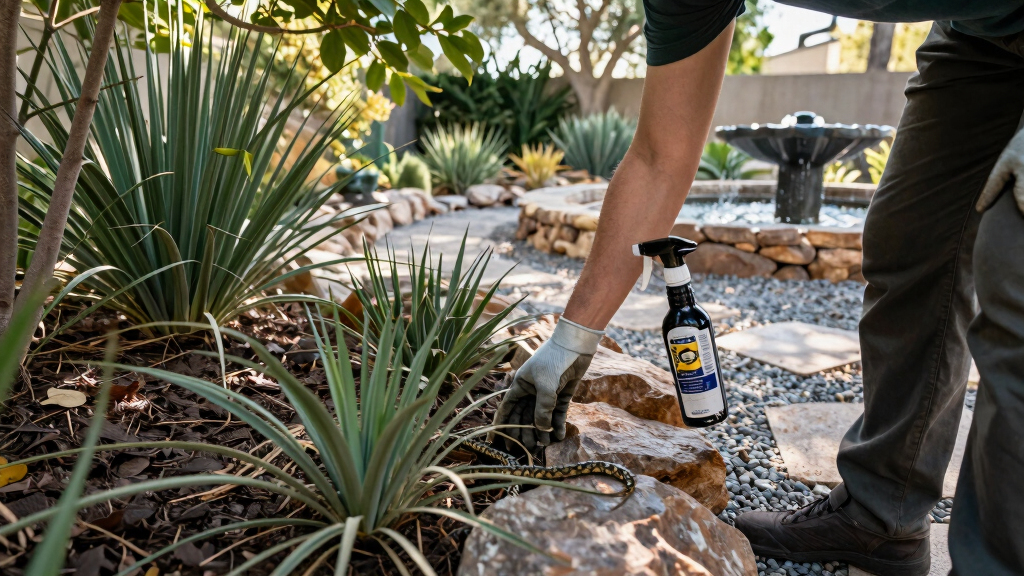
Use a light at night. Look before moving rocks, opening irrigation boxes or placing hands beneath stored objects.
One tidy-yard decision creates several layers of protection
Follow the chain from maintenance action to safer family behavior. Every link supports the next; no single product replaces the system.
Clear cover
Remove debris and dense refuges.
Reduce prey
Secure food and manage rodents.
Expose routes
Add open gravel and clear paths.
Block access
Install and maintain fine mesh.
Respond calmly
Keep distance and call an expert.
Reported reductions favor layered prevention
The supplied material includes one general estimate and two homeowner examples. Treat the examples as illustrations, not guaranteed outcomes: species, climate, neighboring habitat and maintenance all change results.
Encounter reduction claims
Relative percentages reported in the supplied source material.
Read carefully: these figures are not controlled-study guarantees. They reinforce a practical pattern: removing habitat and maintaining barriers together is more credible than relying on a standalone repellent.
Barrier anatomy
Fine mesh, a smooth surface, sealed gates and regular inspection all matter.
Angle the upper edge slightly outward and keep nearby plants trimmed away.
Bury the lower edge and repair erosion, gaps or damage promptly.
Choose controls by evidence, safety and upkeep
“Natural” does not automatically mean safe or effective. Odor products weather away, plant claims are inconsistent, and mothball chemicals should never be scattered around a yard.
| Method | Evidence | Family & wildlife safety | Upkeep | Best use |
|---|---|---|---|---|
| Habitat cleanup | Weekly or seasonal | Every desert yard | ||
| Fine-mesh fencing | Inspect gaps regularly | Play areas, patios, pet runs | ||
| Open gravel strip | Keep clear of clutter | Visible buffer zones | ||
| Lavender or rosemary | Normal plant care | Landscaping, not primary control | ||
| Sulfur or cinnamon oil | Frequent reapplication | Only as label-directed support | ||
| Naphthalene / mothballs | Do not scatter outdoors | Avoid | ||
| Commercial repellents | Weather-dependent | Secondary layer only |
Rule of thumb: prioritize physical and habitat changes. Never apply a pesticide or repellent in a way that conflicts with its label, and keep oils and powders away from children, pets, waterways and pollinator areas.
See a snake? Space is the safest first tool.
Most snakes avoid people and bite defensively when approached, trapped or handled. Do not depend on head shape, color or markings for a confident identification.
The calm-distance plan
Give the animal an open route away and prevent anyone from entering the area.
- Pause. Avoid sudden movement and do not corner the snake.
- Create space. Move people and animals away from the area.
- Let it leave. Most snakes move on when given time and an escape route.
- Call a professional. Do so if the snake is indoors, trapped, near a high-use space or possibly venomous.
What desert-yard households ask most
Use local guidance whenever possible: species, removal services and emergency procedures vary by region.
How can I tell whether a snake is venomous?
A rattle can indicate a rattlesnake, but no single feature is foolproof. Do not approach for identification. Photograph only from a safe distance with zoom, or contact a local expert.
Are most garden snakes dangerous?
Many desert-region snakes are non-venomous and help control rodents. Any snake may defend itself if handled, so distance remains appropriate regardless of species.
Do aromatic plants keep snakes away?
Lavender and rosemary can be attractive, low-water landscaping choices, but evidence for reliable snake repellency is limited. Use plants as part of an open, uncluttered design—not as a guarantee.
When should I call a removal professional?
Call when a snake is indoors, trapped, near children or pets, difficult to access, or possibly venomous. Trained removal is safer and more humane than handling it yourself.
The safest yard is designed, maintained and practiced.
Clean habitat + fewer prey attractants + intact barriers + a calm family response plan creates a humane, durable defense. Recheck the yard after storms, landscaping work and seasonal vegetation growth.
How to Spot a Snake and Tell If It’s Dangerous
First, know how to identify a snake. In desert regions, most are non-venomous, like gopher snakes or desert kingsnakes, which rarely bite. Venomous species—like rattlesnakes—are more cautious and often have distinctive markings, such as a rattle or a triangular head.
For example, a rattlesnake’s signature rattle warns you before it strikes. But even then, most bites happen when a snake feels cornered or threatened. Recognizing the difference can save you from unnecessary panic.
As an affiliate, we earn on qualifying purchases.
Habitat Changes That Keep Snakes Out of Your Yard
Snakes love hiding in tall grass, piles of rocks, wood, and dense shrubbery. The first step is to clear these attractants. Imagine a snake slipping under a pile of firewood—easy access and plenty of cover.
Maintaining your yard by trimming bushes, removing debris, and keeping grass short reduces the availability of these hiding spots, which are critical for snakes seeking shelter and warmth. Installing gravel or flagstone pathways creates a physical barrier that snakes tend to avoid crossing, as these surfaces are less inviting and more exposed, reducing the likelihood of hiding and ambush points. For example, a homeowner reduced snake visits by 70% after clearing a large brush pile and installing a gravel border around their garden. Habitat modification isn’t just about aesthetics; it directly impacts snake behavior by removing their preferred refuges, thus decreasing their presence and the risk of encounters. This approach emphasizes proactive prevention, which is often more effective and humane than reactive removal.
As an affiliate, we earn on qualifying purchases.
Smart Landscaping Tricks to Deter Snakes
Certain plants and yard features can make your space less inviting. Bright, aromatic plants like lavender or rosemary can deter snakes—plus, they smell great! Gravel beds, especially with sharp edges, act as physical barriers.
Adding a 2-foot wide gravel strip around your yard or garden is a simple, effective step. It’s like laying a thorny line that snakes prefer to avoid. Think of it as fencing for their feet.
For example, a desert homeowner installed gravel barriers and noticed significantly fewer snake sightings in the following season. The choice of plants and barriers influences snake movement patterns, making your yard less accessible and attractive. These landscaping tricks don’t just repel; they also create a less hospitable environment by disrupting the snake’s natural pathways and hiding spots, which can significantly reduce their presence and your risk of encounters. Understanding how snakes navigate and seek shelter allows you to design a yard that actively discourages their intrusion, offering a safer outdoor space for your family.
As an affiliate, we earn on qualifying purchases.
Natural and Safe Deterrents That Really Work
Natural repellents like sulfur, cinnamon oil, or naphthalene can help. Sprinkle sulfur or spread cinnamon oil around entry points or potential hiding spots. These smell bad to snakes but are harmless to humans and pets.
Be cautious—always wear gloves and a mask when applying, especially with powders or oils. Commercial repellents exist, but many are less effective or contain chemicals that might harm local wildlife. Using natural deterrents leverages the snake’s sensitivity to certain odors, which can disrupt their sense of smell and cause discomfort or avoidance. However, their effectiveness varies depending on application frequency, weather conditions, and snake species. Regularly reapplying these substances ensures a consistent deterrent effect, making your yard less attractive over time. While natural repellents are safe, they should be part of an integrated approach that includes habitat modification for best results.
It’s important to understand that natural repellents primarily work by exploiting the snake’s olfactory senses. Since snakes have a highly developed sense of smell, strong odors like sulfur or cinnamon oil can cause discomfort or confusion, prompting them to avoid treated areas. However, factors like rain, wind, and the size of the snake population can influence how effective these repellents are. They are most successful when used consistently and in combination with habitat management, creating a layered defense that is both safe and humane.
As an affiliate, we earn on qualifying purchases.
Fencing and Barriers That Keep Snakes Out
Fencing alone isn’t enough, but combined with habitat changes, it’s effective. Use fine-mesh, snake-proof fencing—at least 18 inches high with a slight outward bend. Bury it 6 inches underground to prevent snakes from slithering underneath.
For example, a homeowner added a snake-proof fence, combined with habitat cleanup, and saw a 90% drop in snake encounters. The effectiveness of fencing depends on proper installation and maintenance; even the best barriers can fail if gaps or openings develop. Regular inspection ensures that the barrier remains intact, preventing snakes from exploiting weak points. Additionally, choosing the right fencing material and design is critical—fine mesh prevents snakes from slipping through, while proper burying stops underground access. Combining fencing with habitat modifications creates a comprehensive defense, significantly reducing the chance of snake intrusion and providing peace of mind for your family.
What to Do If You Encounter a Snake
Stay calm. Most snakes want nothing to do with you. Keep your distance—at least 6 feet—and slowly back away. Do not try to catch or kill a snake; instead, call a professional if you’re unsure or if it’s in a tricky spot.
For example, a gardener found a rattlesnake behind their shed, kept their distance, and called pest control for removal. No bites, no fuss.
Respect the snake’s space; sudden movements can provoke defensive behavior, increasing the risk of bites. Remember, most snake encounters can be resolved safely by giving the animal space and calling trained professionals. Educating yourself on snake behavior helps reduce panic and promotes safe, humane solutions.
When to Call a Professional for Snake Removal
If a snake is in a hard-to-reach place, or if you’re unsure whether it’s venomous, call a professional. They have the right tools and training to remove it safely. Don’t risk injuries or bites trying to handle it yourself.
For example, a family called pest control after spotting a rattlesnake in their backyard pond. The pros safely relocated it, and the family felt relieved.
Remember: professional removal is safer and more humane.
Frequently Asked Questions
How can I tell if a snake is venomous?
Venomous snakes like rattlesnakes often have a triangular head, a rattle at the tail, and slit-like pupils. Non-venomous snakes tend to have round pupils and a more slender head shape. When in doubt, keep your distance and call a professional.
What’s the safest way to remove a snake from my yard?
Always keep a safe distance—at least 6 feet—and call pest control or animal control. Never try to handle or kill a snake yourself; it can be dangerous and is often illegal in many areas.
Are natural repellents effective long-term?
Yes, when used consistently. Sprinkling cinnamon oil or sulfur around key entry points discourages snakes. But remember, combining repellents with habitat changes is most effective.
What landscaping features attract or repel snakes?
Thick shrubbery, wood piles, and tall grass attract snakes. Conversely, gravel pathways, aromatic plants, and open, tidy yards repel them. Regular yard maintenance is your best defense.
When should I call a professional for snake removal?
If the snake is venomous, in a hard-to-reach spot, or if you’re unsure of its species, call professionals. They have the expertise to remove it safely and humanely.
Conclusion
Making your desert yard less inviting to snakes boils down to simple, consistent habitat tweaks and smart landscaping. Remember, most snakes are harmless and even helpful, but safety comes first. Keep your yard tidy, add natural barriers, and know how to respond if you encounter one.
Imagine your yard as a peaceful oasis—without unwelcome slithers. With these practical steps, you create a space that’s safe for your family and respectful of the desert’s wild rhythm.
Halloween Picks
halloween
As an affiliate, we earn on qualifying purchases.