
TL;DR

Get garden gear delivered free with Prime
- Fast, free delivery on millions of items
- Prime Video, Amazon Music and more included
- Member-only deals all year
Woodpeckers excavate saguaros and sometimes damage stucco, but federal and state laws protect these birds and plants. Nonlethal deterrence and proper procedures are key—killing or trapping can lead to serious legal penalties. Always check current regulations before acting.
Woodpeckers on Saguaros and Stucco: What the Law Lets You Do
Gila woodpeckers and gilded flickers are part of the desert’s rhythm—but their excavations in saguaros and stucco can cause real headaches. Federal and state laws protect both the birds and the cacti. This guide explains what’s permitted, what’s prohibited, and how to manage conflicts legally and ethically.
What the Law Says About Protecting Woodpeckers
Native woodpeckers—including Gila woodpeckers, gilded flickers, and ladder-backed woodpeckers—are protected by the Migratory Bird Treaty Act. It is generally illegal to kill, capture, possess, sell, or deliberately harm a protected bird, its eggs, or its young without authorization.
Lethal & Harmful Actions
Poisoning, trapping, shooting, or sealing birds and chicks inside a wall or cactus cavity can create serious legal liability—even on your own property.
Active Nests
Active nests must not be removed, blocked, or disturbed. A nest with eggs or dependent young is especially sensitive under federal law.
Nonlethal Deterrence
Humane deterrents are the safest legal approach—provided they don’t injure or entangle birds. Lethal control permits are rarely granted for routine property damage.
Key detail: contractors and pest-control companies don’t get an automatic exemption. Acting for a property owner doesn’t authorize trapping, poisoning, or sealing active nests without proper federal—and possibly state—authorization.
How Saguaros Are Protected by Law
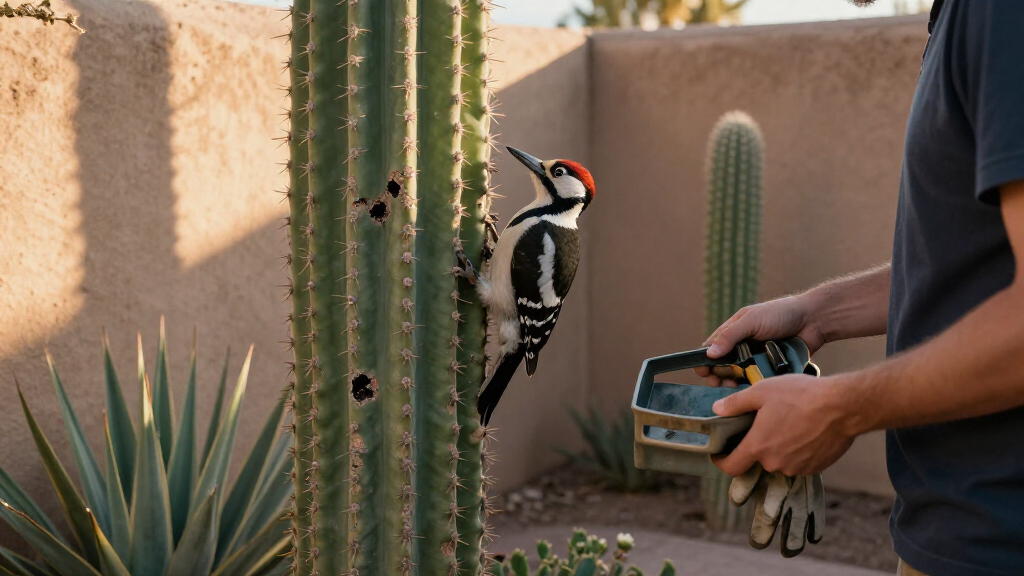
Woodpeckers excavate cavities in saguaros; the cactus forms a hardened “saguaro boot” around the wound. After the birds leave, owls, flycatchers, purple martins, and bats may move in. Arizona’s Native Plant Law regulates the removal, transport, and sale of protected native plants—including saguaros on private land.
Stucco Damage: Do’s and Don’ts
Woodpeckers strike buildings to nest, search for insects, store food, drum territorially, or investigate hollow-sounding synthetic stucco. Before sealing any hole, confirm it isn’t occupied—sealing an active nest can violate federal law.
Identify the Activity
Confirm whether it’s drumming, feeding, or cavity excavation. Watch from a distance: adults entering repeatedly, carrying insects, or begging calls inside signal an active nest.
Humane Deterrents
Use reflective tape, motion-activated devices, metal flashing, or mesh over problem areas. Repair insect infestations, water leaks, and hollow or loose siding that attract birds.
Schedule Repairs
Do major repairs in late summer or early fall, outside nesting season. Never use sticky substances, poisons, or traps—they injure birds and create legal trouble.
Before You Act: A Four-Step Legal Check
Follow this sequence before any removal, sealing, or repair near a woodpecker cavity in a saguaro or a wall.
Observe
Watch the cavity from a distance—never insert tools or cameras. Look for adults entering, insect-carrying, or begging calls.
Verify
Confirm the nest is inactive before sealing or repairing. If active, wait until young have fledged—usually by late summer.
Check Rules
Contact Arizona Department of Agriculture and your city/county about plant permits, notifications, and local ordinances.
Act Lawfully
Use nonlethal deterrence and properly timed repairs. For serious persistent damage, explore federal depredation permits.
TL;DR: Nonlethal deterrence and proper procedures are key. Killing or trapping protected woodpeckers—or removing saguaros without permits—can lead to serious penalties. Always check current regulations before acting.
What the Law Says About Protecting Woodpeckers in Arizona
Native woodpeckers, including Gila woodpeckers, gilded flickers, and ladder-backed woodpeckers, are protected by the federal Migratory Bird Treaty Act. That means it’s generally illegal to kill, trap, or even disturb them or their nests without special permission.
For example, if a woodpecker starts nesting in your stucco wall and the damage worries you, harming the bird or its eggs could land you in legal hot water. The law is clear: you can’t take lethal action unless you get a permit, which is rarely granted for routine property management.
One key detail: even contractors or pest-control companies don’t get an automatic exemption. They must follow the same rules as property owners, meaning no trapping, poisoning, or sealing active nests without proper authorization.
Understanding these protections is crucial because many property owners underestimate the importance of these laws. Ignorance can lead to accidental violations, which might result in fines or legal action. Recognizing that these birds are protected also underscores the importance of exploring humane and legal deterrent methods, emphasizing that coexistence is not only possible but preferable for ecological health and legal compliance.
As an affiliate, we earn on qualifying purchases.
How Saguaros and Native Plants Are Protected by Law
Saguaro cacti are not just iconic symbols of the desert—they’re also protected under Arizona’s Native Plant Law. This law controls how saguaros can be removed, transported, or sold. If you’re considering removing or damaging a saguaro, the first step is understanding that ownership alone doesn’t give you free rein.
For instance, if a saguaro with a woodpecker cavity is on your property, you might need permits or notify authorities before any removal. The law also recognizes that saguaros with active nests are more sensitive. Removing a dead saguaro is different from taking down a healthy, active one—each situation requires different handling.
Additionally, local city and county rules can impose further restrictions—so check with your local government before doing any work that might affect protected plants or wildlife habitats.
Understanding these protections matters because it influences how you can manage your property while respecting ecological and legal responsibilities. Removing a saguaro without proper permits can lead to hefty fines and environmental penalties, and inadvertently destroying a habitat can harm local biodiversity. Therefore, assessing the legal status of saguaros and any nests they harbor is essential before undertaking any removal or modification activities, fostering a responsible approach that balances property needs with conservation efforts.
As an affiliate, we earn on qualifying purchases.
What You Can Do About Stucco Damage Without Breaking the Law
Woodpeckers peck at stucco for various reasons: nesting, searching for insects, or drumming to mark territory. If your house has a cavity or damage, it’s tempting to seal it up fast. But before you do, make sure the cavity isn’t active or occupied—sealing an active nest can violate federal law.
Practical steps include:
- Confirm whether the activity is drumming or feeding. Listen for repetitive pecking or adult birds carrying insects.
- Repair insect infestations, water leaks, or loose siding that attract or support woodpecker activity.
- Use visual deterrents like reflective tape or motion-activated devices. Stationary plastic owls rarely work long-term and can be ignored.
- Install exclusion materials designed for bird-proofing, such as metal flashing or mesh over problem areas.
- Schedule repairs outside nesting seasons—usually late summer or early fall—when cavities are less likely to be active.
Never use sticky substances, poison, or traps—they can injure birds and lead to legal trouble. Remember: deterrents need regular maintenance and repositioning to stay effective. The goal is to protect your property while ensuring that you do not inadvertently harm protected birds or their nests, which could result in significant penalties. Using humane deterrents that are properly maintained and applied during appropriate seasons helps balance property preservation with legal compliance and bird welfare.
bird-friendly stucco repair products
As an affiliate, we earn on qualifying purchases.
As an affiliate, we earn on qualifying purchases.
As an affiliate, we earn on qualifying purchases.
Fall yard work Picks
leaf blowers
As an affiliate, we earn on qualifying purchases.