
TL;DR

Get garden gear delivered free with Prime
- Fast, free delivery on millions of items
- Prime Video, Amazon Music and more included
- Member-only deals all year
A Grow Organic article explains that shallots are edible allium bulbs, commonly classified as a group within the onion species, Allium cepa. They often grow in clusters and have a milder, slightly sweet flavor, though raw shallots can still taste pungent. Their size, flavor and cooking uses can help guide choices between shallots and onions.
Grow Organic’s shallot guide explains how the small allium bulbs differ from familiar bulb onions, including their tendency to grow in clusters and their often milder, slightly sweet flavor. The distinction can help home cooks choose ingredients for sauces, dressings and roasted dishes, while gardeners can use growth habits to select planting stock.
Most commonly grown shallots belong to Allium cepa, the same species as bulb onions, and are usually placed in the Aggregatum Group, which includes multiplying forms. The guide says this makes shallots onions in a botanical sense, though cooks and seed sellers commonly distinguish them by name because their size, growth and kitchen uses differ. Shallots are not a cross between onion and garlic. Their bulbs have fleshy layers, unlike garlic, which forms separate cloves.
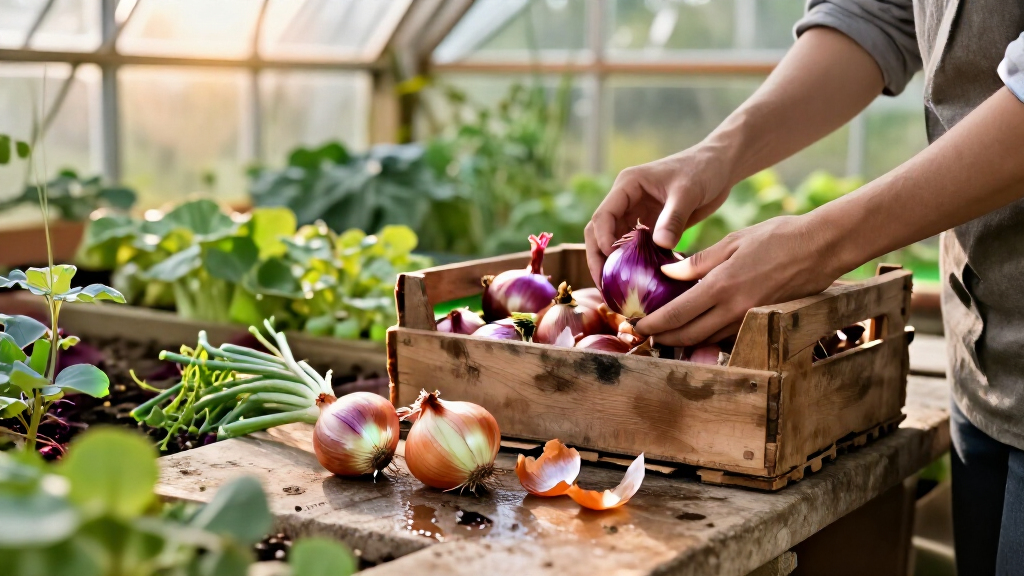
Shallot bulbs are generally smaller than bulb onions and may be rounded, pointed or elongated. Their papery skin can be copper, brown, reddish or gray, and the flesh is often pale, sometimes with purple tones. A bulb may have more than one section beneath its outer skin. Color alone is not a reliable identifier, the report cautions, because some red onions share similar hues.
The guide describes shallots as often sweet, aromatic and less forceful than many storage onions, with a mild hint of garlic. That does not mean they lack sharpness: raw shallots can have a pungent bite, while cooking tends to soften and sweeten them. Onion flavor also varies by variety and preparation, so a sweet onion may be gentler than a particular shallot.
Choosing Shallots for the Dish
For cooks, the practical difference is not a fixed rule that one allium is always better, but how its flavor and texture fit a recipe. The report suggests using finely minced shallot in salad dressings or gently cooking it in butter or oil for pan sauces. Larger pieces can be roasted until tender. These preparations take advantage of shallots’ often delicate taste without treating them as interchangeable with every onion.
When substituting, the source recommends measuring the chopped amount rather than relying on a one-bulb-for-one-bulb swap, since bulbs vary in size. Yellow onion can work in cooked dishes, but the final flavor may change. For a raw dish, a sharper onion may be more noticeable, so cooks can start with less and adjust. The report also notes that green onions, leeks and chives have distinct flavors and textures rather than serving as exact replacements.
For gardeners, the key distinction is growth habit: many shallot varieties produce several daughter bulbs from one planted bulb, while a standard bulb onion is usually grown to form one main bulb. That difference matters when choosing crops and planting stock, although conditions and variety affect results.
As an affiliate, we earn on qualifying purchases.
How Shallots Relate to Onions
Shallots and bulb onions are members of the allium group, alongside garlic, leeks and chives. The source’s botanical explanation places most cultivated shallots in Allium cepa Aggregatum Group, while common bulb onions are also Allium cepa. It separately notes that French gray shallots are generally classified as Allium oschaninii. The article does not provide further detail on how that classification is determined.
In the garden, the report advises planting shallots in full sun and well-drained soil. Spring planting suits many cold regions; fall planting may work where the variety and winter conditions allow. Individual bulbs commonly divide into daughter bulbs, and some varieties can be grown from true seed. Gardeners should check whether a listing offers planting bulbs or seed and follow local guidance for timing and depth.
For storage, the source recommends selecting firm bulbs with dry skins and keeping whole, cured shallots in a cool, dry place with airflow. Peeled or cut portions should be refrigerated. These are practical handling recommendations from the cited article, rather than findings from a separate study.
“Shallots are edible bulbs with papery skin and an onion-like taste.”
— Grow Organic, in its shallot guide
As an affiliate, we earn on qualifying purchases.
Where Flavor and Growth Vary
The source presents flavor and growth as typical patterns, not guarantees for every variety. Shallots can vary in shape and color, and onions range from mild to pungent depending on type, growing conditions and preparation. The guide does not identify specific varieties or provide measured flavor comparisons, so descriptions such as “milder” and “sweeter” are general, not a promise about each bulb.
It is also not clear from the supplied material which named varieties are best suited to particular climates, how deep or far apart to plant them, or when to harvest and cure them. Those details depend on local conditions and the selected variety; the source points readers to separate planting and growing instructions for more specific guidance.
As an affiliate, we earn on qualifying purchases.
Using the Guide in Kitchens and Gardens
For a recipe, choose based on the result you want: use shallots where a subtler onion-like flavor suits the dish, and adjust substitutions by chopped volume and taste. For planting, check the variety’s requirements and whether the product is sold as bulbs or true seed, then follow local recommendations for timing, spacing and depth. The supplied report does not announce a future event or update; its practical next step for readers is to consult detailed growing guidance for their region.
As an affiliate, we earn on qualifying purchases.
Key Questions
Are shallots onions?
Most cultivated shallots belong to Allium cepa, the same species as bulb onions, and are commonly placed in the Aggregatum Group. The report says French gray shallots are generally classified separately as Allium oschaninii.
Can shallots replace onions in a recipe?
Finely chopped onion can stand in for shallot in some dishes, and yellow onion can work in cooked recipes, but the flavor may change. Measure the chopped amount rather than swapping whole bulbs one for one, and start with less onion in raw dishes if its flavor is sharp.
Are shallots mild when eaten raw?
Not always. The guide describes shallots as often milder than many storage onions, but says raw shallots can still have a sharp, pungent bite. Cooking generally softens and sweetens their flavor.
How can I tell a shallot from an onion?
Shallots are typically smaller and may be rounded, teardrop-shaped or elongated, with copper, brown, reddish or gray skins. Many grow in clusters of bulbs, while a standard bulb onion usually forms one main bulb. Color by itself is not a reliable way to tell them apart.
How should whole shallots be stored?
Choose firm bulbs with dry skins. Store whole, cured shallots in a cool, dry place with airflow; refrigerate peeled or cut portions, according to the Grow Organic guide.
Source: rss
Fall Picks
fall essentials
As an affiliate, we earn on qualifying purchases.