TL;DR

Get garden gear delivered free — and shop member deals
- Fast, free delivery on millions of items
- Access to Prime Big Deal Days deals on October 6–7
- Prime Video, Amazon Music and more included
A Rural Sprout report argues gardeners can grow extra basil plants for their flowers rather than pinching every plant to maximize leaf production. The writer says flowering basil attracted bees and hover flies in a personal garden observation, but the report does not provide measured pollinator or crop-yield data.
A Rural Sprout gardening report recommends letting some basil plants flower instead of pinching all their flower buds, arguing that the blooms can attract pollinators to a vegetable garden. For tips on growing the herb in hot weather, see growing basil through a Phoenix summer. The advice offers a different use for the annual herb: keep some plants for leaf harvest and allow extra plants to flower, while recognizing that the report’s evidence is a gardener’s observation rather than a controlled study.
The report’s writer says an overgrown kitchen garden during a house move provided the impetus for the idea. The writer noticed basil covered in flowers and observed bumble bees, honey bees, hover flies and native bees visiting the plants. The report links that activity to basil’s place in the mint family, whose flowering plants the writer had also seen attracting pollinators.
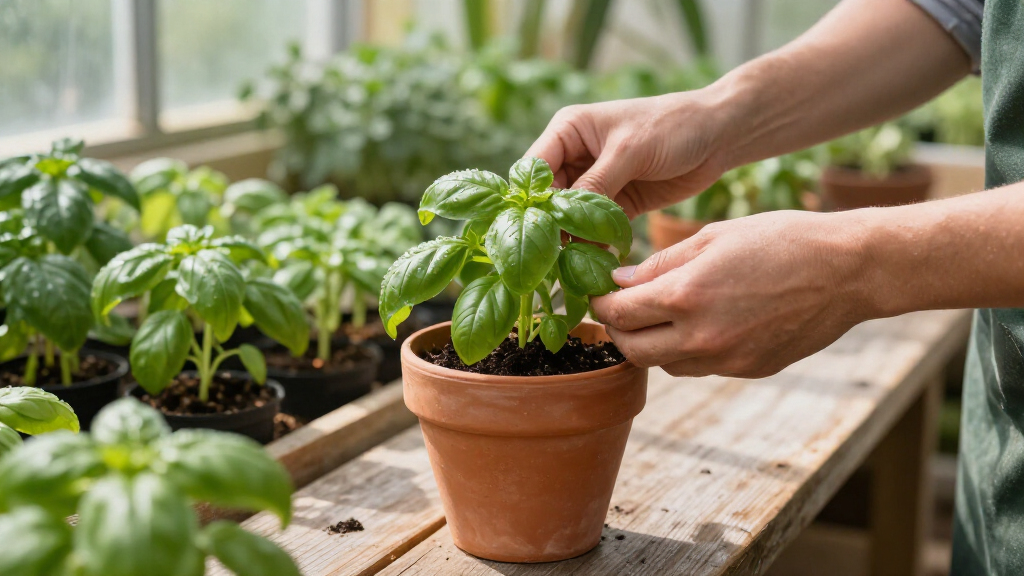
For plants intended to flower, the writer advises gardeners to first establish a healthy, bushy plant. The suggested routine is to harvest leaves and pinch stem tips for about four to six weeks, then let selected plants grow without further pinching at around the six-to-eight-week mark. Related advice on growing crops in containers appears in this guide to growing tomatoes. The report also says basil needs consistent watering, especially during dry periods.
The writer suggests planting roughly one flowering basil plant per row or large 4-by-8-foot raised bed, or one per two smaller 4-by-4-foot beds. If flowering activity slows, the report says a plant can be cut back to encourage another round of leaves and blooms. It does not report a measured number of insects, a comparison with other flowers or evidence that this spacing produces a particular pollination outcome.
A Second Role for Basil
The recommendation gives gardeners a way to balance two goals that can compete: harvesting basil leaves and providing flowers for visiting insects. Rather than abandoning culinary use, the report proposes keeping separate plants for food and for blooms. That can be a practical option for gardeners who have space to grow a few extra annual herbs.
The writer also presents basil as a possible alternative to mint for attracting pollinators. The report describes mint as a strong draw but warns that it spreads through underground runners and can be difficult to contain in garden beds. Basil, by contrast, is described as an annual that frost kills, making it less likely to persist and spread into unwanted areas. This distinction may matter to gardeners looking for flowering plants that are easier to manage in a vegetable plot.
Pollinators and other beneficial insects are relevant to vegetable gardens because some crops rely on insect visits, and some predatory insects feed on common pests. The report says flowering basil may attract insects that eat aphids, spider mites and tomato hornworms. It does not establish how often that happens or whether basil flowers reduce pest damage or improve yields. Readers should treat the proposed benefits as a gardening strategy to try, not a guaranteed result.
As an affiliate, we earn on qualifying purchases.
From Leaf Harvest to Blooms
Conventional basil-growing advice often tells gardeners to pinch flowers and harvest frequently. As the Rural Sprout report explains, cutting stems above leaf nodes encourages the plant to put out more leafy growth rather than directing its growth toward flowering. That approach suits gardeners whose main aim is a steady supply of leaves for cooking.
The report does not say that this advice is wrong in every case. Instead, it suggests changing the routine for some plants once they have filled out. The writer describes a personal shift in thinking after leaving a garden largely unattended during a move and seeing bees visit the flowering basil. The observation led to a proposal to grow extra plants specifically for blooms.
The report’s practical distinction is between plants kept productive for the kitchen and plants allowed to flower. It also notes that basil flowers can be cut back if gardeners want another flush of growth, and that different plants can be managed at different times to maintain some blooms. These are recommendations from the report, not results from a documented trial.
“What if I planted basil specifically for eating, but then populated the garden with extra basil plants specifically to let them flower and attract pollinators?”
— Rural Sprout report author
pollinator attracting flowering basil plants
As an affiliate, we earn on qualifying purchases.
As an affiliate, we earn on qualifying purchases.
Pollinator Results Are Unmeasured
The report is based on the writer’s own garden experience and does not give a publication date, formal study, pollinator counts or details that would allow readers to compare basil with other flowering plants under the same conditions. Its observations show that insects visited the writer’s flowering basil, but do not establish how much basil flowers increase pollinator activity across different locations or seasons.
It is also unclear whether the suggested plant spacing is suitable for every garden, how many additional pollinators would visit nearby crops, or whether those visits lead to higher harvests. The report mentions potential beneficial insects and garden pests but does not measure pest reduction. Results may depend on local conditions, basil variety, weather and what other flowers are available.
As an affiliate, we earn on qualifying purchases.
How Gardeners Can Test It
The report offers a seasonal approach rather than a formal follow-up: grow some basil for leaves, let selected plants flower after they have become established, and observe which insects visit. Gardeners interested in the suggestion can keep flowering and frequently pinched plants side by side, noting bloom timing and insect activity without assuming that one garden’s results will apply everywhere.
The report provides no announced study, trial or additional data. Its next practical milestone is the flowering period, when gardeners can see whether basil attracts pollinators in their own beds and decide whether the space devoted to flowering plants is worthwhile.
raised bed vegetable gardening kit
As an affiliate, we earn on qualifying purchases.
As an affiliate, we earn on qualifying purchases.
Key Questions
Should I stop pinching every basil plant?
No. The report recommends continuing to pinch and harvest plants grown mainly for leaves, while allowing some extra plants to flower. The choice depends on whether a plant’s main purpose is cooking or attracting visiting insects.
When does the report suggest letting basil flower?
It suggests pinching tips and harvesting for about four to six weeks, then letting an established plant grow after roughly six to eight weeks. Timing may vary with growing conditions; those periods are the writer’s guidance, not a tested schedule for every garden.
Does flowering basil definitely improve vegetable yields?
The report does not show that it does. The writer observed pollinators on flowering basil, but provides no crop-yield measurements or controlled comparison linking the flowers to a larger harvest.
How much flowering basil does the report recommend?
The writer suggests one plant per row or large 4-by-8-foot bed, or one per two smaller 4-by-4-foot beds. The report does not establish this as a universal spacing rule or quantify the pollinator coverage it produces.
Source: rss
Fall yard work Picks
leaf blowers
As an affiliate, we earn on qualifying purchases.