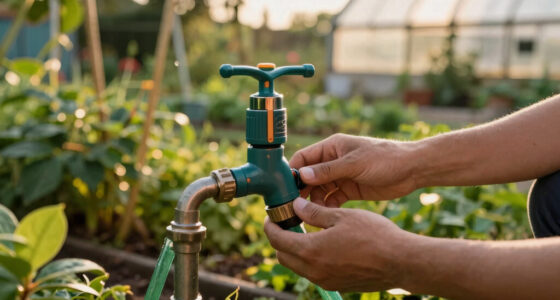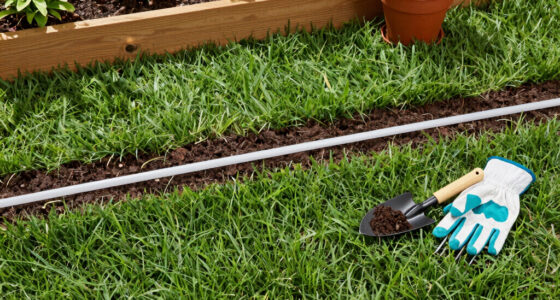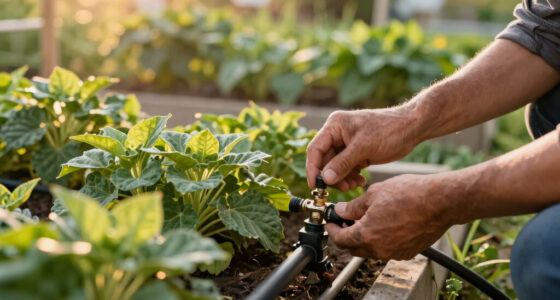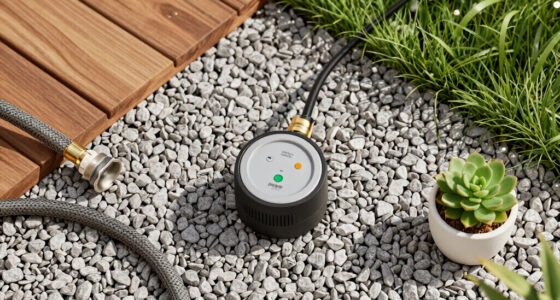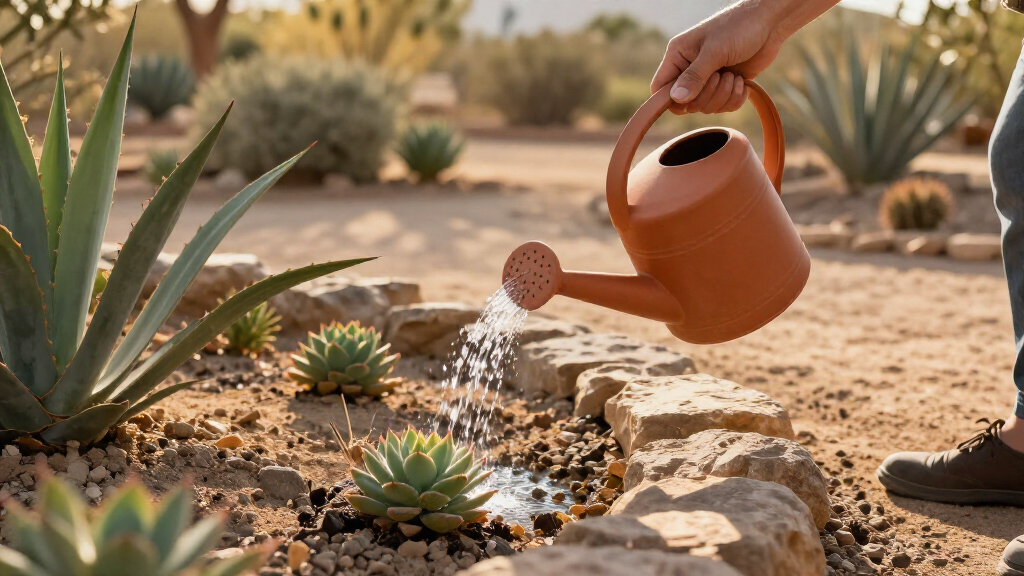
For a few desert plants, a watering can keeps costs low and lets you adjust water plant by plant. As the garden grows, carrying and refilling a can for every session takes more time; drip irrigation costs more to set up but can water many root zones with less effort. Choose a can for containers, young shrubs, or a small mixed planting. Choose drip for larger beds or repeated watering across many plants. The decision comes down to whether individual control or easier coverage matters more in your garden.

Get garden gear delivered free with Prime
- Fast, free delivery on millions of items
- Prime Video, Amazon Music and more included
- Member-only deals all year

Root & Vessel Classic 2-Gallon Watering Can, Hunter Green
- ✔ Brand: Root & Vessel
- ✔ Capacity: 2 gallons
- ✔ Material: UV-resistant plastic

Qilebi 1.8L Watering Can with Long Spout and Detachable Shower Head
- ✔ Brand: Qilebi
- ✔ Capacity: 1.8 liters
- ✔ Material: Plastic

Nakaya Japanese Long-Spout Watering Can, 850 ml
- ✔ Brand: Nakaya
- ✔ Model: V047
- ✔ Capacity: 850 ml (28 oz)
At a Glance
| Criteria | Watering cans | Drip irrigation | Winner |
|---|---|---|---|
| Water efficiency | Can target individual plants, though spills and uneven pouring can waste water. | Delivers water near roots and can reduce evaporation when properly designed and scheduled. | B |
| Control and flexibility | Easy to vary volume and avoid watering a nearby plant or bare soil. | Flow and placement are set by emitters; changes may require moving or adjusting parts. | A |
| Coverage and effort | Requires carrying and refilling; effort rises with plant count and distance. | Can water many plants with little hands-on effort once installed. | B |
| Startup cost | Low; a basic can is enough to begin. | Higher; tubing, fittings, timer, and sometimes a filter add cost. | A |
| Maintenance | Simple to clean and inspect; no tubing or emitters to troubleshoot. | Emitters and lines need checks for clogging, leaks, and damage. | Depends |
| Best garden scale | Best for containers, young plants, and small beds. | Best for larger beds and repeated watering of many plants. | Depends |
Root & Vessel Classic 2-Gallon Watering Can, Hunter Green
For watering a row of patio pots or several plants in an outdoor bed, capacity is the Root & Vessel’s main advantage. Its two-gallon reservoir holds more than either the Qilebi or Nakaya, reducing trips back to the tap during a larger watering round. Measurement markings add a useful way to portion water, which can help gardeners follow a consistent routine rather than pouring by guesswork. That control matters when plants have different needs or when we want to avoid soaking every container equally.The detachable nozzle gives this can more flexibility than a simple wide-spout design: we can remove it to change the flow and make cleaning easier. Still, the listing does not describe a shower head with multiple spray settings like the Qilebi has, so buyers wanting a soft spray as well as a stream may prefer that smaller option. Its thick-walled, UV-resistant plastic is specified for durability outdoors, but it remains plastic. The tradeoff is clear: more water per fill and marked measurements in exchange for a larger can and a material that will not suit everyone.
Pros:
- Two-gallon capacity means fewer refills during larger watering rounds.
- Measurement markings help portion water consistently.
- Detachable nozzle can be removed to change the flow and simplify cleaning.
- Thick-walled, UV-resistant plastic is designed for outdoor durability.
Cons:
- Its larger capacity may be unnecessary for a small indoor plant collection.
- Plastic construction will not suit buyers who prefer metal.
Best for: Gardeners watering several outdoor desert plants, raised beds, or large patio containers who value fewer refills and marked capacity.
Not ideal for: People tending only a few indoor succulents, or buyers who specifically want a metal watering can or a described soft-spray setting.
Bottom line: We rank the Root & Vessel first for its combination of outdoor-oriented durability, measured pours, and the lineup’s largest capacity.
“We rank the Root & Vessel first for its combination of outdoor-oriented durability, measured pours, and the lineup’s largest capacity.”
Qilebi 1.8L Watering Can with Long Spout and Detachable Shower Head
The Qilebi is the most adaptable pick for gardeners who want to change how water reaches the soil. Its detachable shower head switches between a direct stream and a soft spray, a useful distinction when watering different container plants or trying to avoid a forceful pour onto the soil surface. The long spout also helps direct water into pots and tight corners. Compared with the Root & Vessel, it gives up capacity and measurement markings, but adds an explicitly described spray option.At 1.8 liters, it sits between the two-gallon Root & Vessel and the compact 850 ml Nakaya in capacity. That makes it more practical than the Nakaya for a handful of containers, though large outdoor watering rounds will still mean refills. Its compact dimensions and ergonomic handle favor easy handling and storage, while the semi-open inlet is described as supporting everyday use. The product information does not specify UV resistance, so we would not choose it over the Root & Vessel on outdoor durability details alone. Choose it for flow flexibility; choose the larger can when carrying more water is the priority.
Pros:
- Detachable shower head provides both a direct stream and soft spray.
- Long spout reaches into pots and tight corners.
- Compact shape and ergonomic handle support handling and storage.
- Its 1.8-liter capacity exceeds the Nakaya’s 850 ml.
Cons:
- Smaller capacity than the Root & Vessel means more refills for larger gardens.
- Plastic construction may not suit buyers seeking metal.
- UV resistance is not specified in the supplied details.
Best for: Container gardeners who want a choice between a direct pour and a gentler spray, especially when watering pots with different needs.
Not ideal for: People watering many outdoor plants in one round who want the largest reservoir, or buyers looking for stated UV-resistant construction.
Bottom line: We place the Qilebi second because its stream-or-spray control is distinctive, while its capacity and outdoor durability details are less compelling for larger desert gardens.
“We place the Qilebi second because its stream-or-spray control is distinctive, while its capacity and outdoor durability details are less compelling for larger desert gardens.”
Nakaya Japanese Long-Spout Watering Can, 850 ml
The Nakaya is the specialist in this group: its long spout and compact 850 ml capacity are aimed at indoor plants, including succulents and cacti. A narrow, directed pour can make it easier to get water into an individual pot without carrying a bulky can around a shelf or windowsill. For a small collection, that focused scale may be more convenient than either the Qilebi or the two-gallon Root & Vessel.That convenience has a limit. With less than half the Qilebi’s listed capacity and far less than the Root & Vessel’s, the Nakaya is a poor match for watering many pots in succession. Its stated intended use is indoor, while the Root & Vessel is explicitly listed for both indoor and outdoor use and has UV-resistant plastic. The Nakaya’s details do not mention a detachable nozzle or spray head, so it is also less versatile when a softer shower is desired. We’d pick it for precise indoor tending, but skip it for outdoor beds or anyone wanting one can to cover a broader garden.
Pros:
- Long spout supports a directed pour into individual pots.
- Compact size is suited to indoor use and small plant collections.
- Listed as suitable for houseplants, succulents, and cacti.
- Made in Japan.
Cons:
- 850 ml capacity will require frequent refills for larger watering tasks.
- Specified for indoor use, unlike the Root & Vessel.
- No detachable spray attachment is listed.
Best for: Indoor gardeners with a small number of succulents, cacti, or houseplants who want a compact can with a long spout.
Not ideal for: People watering outdoor desert beds, large container groupings, or anyone who wants a larger reservoir or adjustable spray.
Bottom line: We rank the Nakaya third overall because it is a useful indoor specialist but its small capacity and indoor focus limit its fit for desert gardens outdoors.
“We rank the Nakaya third overall because it is a useful indoor specialist but its small capacity and indoor focus limit its fit for desert gardens outdoors.”
As an Amazon Associate we earn from qualifying purchases.
Key Differences
For a handful of plants, a watering can makes it easy to vary the amount for each container, transplant, or shrub. You can direct water where it is needed and skip nearby plants that do not need it. That control comes with a recurring task: every watering session means carrying, pouring, and refilling. As the number of plants or distance increases, the time and effort add up.
Drip irrigation takes more setup and requires checks for leaks and clogged emitters. In return, it can deliver water to many root zones with less carrying and more consistent coverage. Its efficiency depends on correct placement and scheduling; a poorly positioned emitter or leak can waste water. Choose drip when routine coverage is becoming a burden. For a few plants, the added equipment may not earn its cost.
Detailed Comparison
Water efficiency (Drip irrigation wins — moderate)
Drip irrigation generally has the advantage across a bed because it delivers water near roots and can keep water off paths and exposed soil. That advantage depends on correct placement and scheduling. On a few containers, a careful pour can be just as targeted. Check drip lines for leaks and blocked emitters, which can reduce efficiency.
Control and flexibility (Watering cans wins — moderate)
Watering cans suit varied plantings where each plant may need a different amount. You can adjust each pour and change targets immediately. Drip emitters deliver repeatable amounts, but changes require adjusting or moving parts. Choose a can if plant needs or garden layout change often.
Coverage and effort (Drip irrigation wins — major)
Drip irrigation reduces the work of watering many plants once the system is installed. A watering can is straightforward for a small patio collection, but carrying and refilling it becomes time-consuming across a large bed. The more plants and distance involved, the more useful drip’s lower hands-on effort becomes.
Startup cost (Watering cans wins — moderate)
A watering can has the lower startup cost. Drip irrigation may require tubing, emitters, connectors, a timer, and filtration suited to the water source. The extra cost is easier to justify when the system saves substantial watering time across many plants; for a few pots, a can is usually the practical choice.
Maintenance (minor difference)
A watering can needs little upkeep beyond cleaning and inspection. Drip irrigation requires occasional checks for leaks, clogged emitters, and damaged lines, but reduces the effort of each watering session. Choose based on which matters more: simple equipment or less hands-on watering. The upkeep difference grows with system size.
Best garden scale (major difference)
Use a watering can for a few containers or plants that benefit from individual attention. Choose drip for larger beds or many plants with recurring water needs. A can keeps a small garden simple; drip reduces the burden of covering a broad planting. Match the method to the number of plants and the time you want to spend watering.
Watering cans: Pros and Cons
Pros:
- Low purchase cost and minimal setup.
- Precise control for individual plants and containers.
- Easy to move, store, and use wherever water is needed.
- Makes it natural to inspect plants during watering.
Cons:
- Requires repeated carrying and refilling.
- Coverage becomes slow and tiring as the garden grows.
- Pouring too quickly or onto bare ground can waste water.
- Consistency depends on remembering and completing each session.
Drip irrigation: Pros and Cons
Pros:
- Waters many plants with less hands-on effort.
- Targets root zones and can limit water on paths and exposed soil.
- Supports repeatable schedules, especially with a timer.
- Can be expanded as beds or plantings grow.
Cons:
- Costs more to install than buying a can.
- Needs setup suited to plant spacing and water pressure.
- Emitters can clog and lines can leak or be damaged.
- Less convenient to reposition when the garden layout changes.
Who Should Choose What
Choose Watering cans if:
- You water a few containers, seedlings, or young shrubs.
- You want to spend little and prefer to adjust water plant by plant.
- Your planting layout changes often or is too small to justify tubing.
- You want watering to double as a regular inspection of plant health.
Choose Drip irrigation if:
- You have a larger bed or enough plants that hand watering takes substantial time.
- You want consistent, targeted delivery while reducing routine labor.
- You can spend time setting up and checking lines and emitters.
- You are willing to pay more for convenience and repeatable coverage.
Skip both if: If your garden is very large or water restrictions demand a professionally designed system, compare both with a locally appropriate irrigation plan before committing.
Value for Money
For a few plants, a watering can provides useful control without much upfront cost. Drip irrigation costs more, but can justify the expense when it saves repeated labor across a larger bed and delivers water consistently near roots. Consider drip when the time spent hand watering has become a regular burden; for a compact garden, the can is usually the better value.
Final Verdict
Choose watering cans for a small, varied desert garden where low cost and plant-by-plant control matter most. Choose drip irrigation for a larger bed or many plants where carrying water takes time and consistent root-level delivery matters. The deciding factor is how much ground you need to cover: a can is practical at low plant counts, while drip becomes more valuable as watering effort grows.
Frequently Asked Questions
Are watering cans or drip irrigation better for conserving water?
Drip irrigation usually has the advantage across larger beds because it places water near roots. A careful gardener can also use a can efficiently on a small number of plants. Poor scheduling, leaks, or misplaced emitters can waste water with either approach.
Is drip irrigation worth the added cost for a few desert plants?
Usually not. For a few containers or shrubs, a watering can offers direct control with little startup cost. Drip becomes more attractive when the number of plants or the area to cover makes manual watering repetitive.
Can I use a watering can for newly planted desert shrubs?
Yes. A can makes it easy to give each new shrub focused watering while it establishes. If you have many new plants, drip can provide repeatable delivery with less carrying, provided each emitter is placed and checked appropriately.
Does drip irrigation mean I can stop checking my garden?
No. Check that lines are intact and emitters are flowing, and observe whether plants appear to be receiving suitable water. Automation reduces routine labor but does not replace inspection or sensible scheduling.