
TL;DR

Get garden gear delivered free with Prime
- Fast, free delivery on millions of items
- Prime Video, Amazon Music and more included
- Member-only deals all year
Hardscape absorbs sunlight and releases heat back toward nearby plants, so a patio can run hotter and dry out faster than a garden bed a few feet away. Check the sun, wind, paving, and soil in the exact spot, then choose locally adapted plants and protect their roots with suitable pots, careful watering, mulch, or afternoon shade.
A patio can feel like a skillet by late afternoon, even when the garden bed just a few steps away still feels manageable. Sun warms paving and walls; those surfaces then release heat back toward leaves, pots, and soil. A plant sold for full sun may still wilt beside a hot west-facing wall.
This guide helps you choose patio plants for the conditions you actually have, not for a generic “sunny spot.” You’ll learn how to read a patio’s small but powerful microclimate, protect roots, water wisely, and shortlist plants that may suit your region. The aim is a patio that stays leafy through the heat, with less guesswork and fewer crispy surprises.
There is no universal heat-proof plant list. A dry Arizona patio, a humid Southern courtyard, and a cold-winter balcony ask different things of the same species. Start with the spot, then check local hardiness, water needs, and invasive-plant guidance before you buy.
Map morning and afternoon sun, nearby paving, walls, and wind before you choose plants.
A full-sun label does not guarantee tolerance of reflected heat or hot container roots.
Use larger, lighter containers and afternoon shade to soften heat around roots.
Water according to root-zone moisture and drainage, especially while plants establish.
Check local hardiness, water needs, and invasive-species guidance before planting.
Patio field guide · Heat & hardscape
Choosing Patio Plants for Heat Bouncing Off Hardscape
Sun-warmed paving and walls radiate heat toward leaves, pots, and soil. Read the conditions in the exact spot, then choose plants and root protection that fit your local climate.
Observe first · Plant with purposeFive moves for a more resilient patio
Small changes to placement, plant choice, and care can reduce heat stress and crispy surprises.
Track sun, paving, walls, and drying wind in the exact planting spot.
Full sun does not guarantee tolerance of radiant heat or hot container roots.
Use larger, lighter containers and afternoon shade to soften root-zone heat.
Check root-zone moisture and drainage, especially while plants establish.
Check local hardiness, water needs, mature size, and invasive-plant guidance.
Find the hot spots before you buy a plant
A patio is a patchwork of microclimates, not one uniform “sunny spot.”
Sun timing
Note direct sun in the morning, at midday, and late afternoon. West-facing exposure can pair harsh sun with already-warm surfaces.
Nearby surfaces
Mark paving and walls. A pot beside a warm wall may receive heat from two directions, even after shade arrives.
Wind & distance
Drying wind speeds moisture loss. Compare spots a few feet apart at the same time of day.
Care access
Map shade and hose reach. A thirsty herb is easier to monitor near water than in a hard-to-reach hot corner.
Choose for radiant heat and local fit
These are candidates to investigate, not a universal shopping list. Humidity, winter lows, soil, and care change the answer.
Sedum · Yarrow
Some salvias and lavender may suit hot, dry exposures where locally adapted.
Blue fescue
Consider regional ornamental grasses, including suitable switchgrasses.
Rosemary
Often a candidate in mild-winter climates; check local winter and drainage needs.
Lantana · Zinnia
Vinca and portulaca may fit some climates when suitable and noninvasive.
When paving turns hot, give roots a buffer
Containers amplify temperature and moisture swings. Design the pot and its placement as part of the planting plan.
Small, dark pot
Less growing mix buffers change; dark sides absorb more direct solar warmth, and stone can heat the base.
Larger, pale pot
More mix offers root room; a light color absorbs less solar warmth. Raise it off hot paving when practical.
Improve the whole root environment
Choose a container with good drainage and use well-draining mix that still holds enough moisture for the plant. Pot feet reduce direct contact with hot paving and help water drain, though they cannot block heat from the air or wall.
Water thoroughly when the root zone needs it, then let drainage and plant needs guide the next check. Containers often need more frequent moisture checks. Mulch can reduce evaporation and moderate soil temperature; keep it away from stems and crowns.
Drought tolerant does not mean no water—especially during establishment or prolonged heat.
Five steps from patio map to steady care
Start with the site, then make choices that match the conditions and your watering routine.
Map exposure
Record sun timing, hot surfaces, wind, and hose access.
Confirm local fit
Verify hardiness, water needs, size, and invasive guidance.
Protect roots
Choose suitable pots, drainage, mulch, and afternoon shade.
Match water needs
Keep drought-adapted and thirsty plants on appropriate routines.
Watch & respond
Check root-zone moisture and plant condition as weather shifts.
Make heat management part of the layout
Shade and smart grouping lower stress while keeping routine care practical.
Add afternoon shelter
A trellis, umbrella, pergola, or taller plant can reduce the hottest-hour load. Keep shade compatible with each plant’s light needs.
Water the root zone
Soak thoroughly when needed and allow excess to drain. Check often during establishment and heat, rather than following one fixed schedule.
Keep mulch thoughtful
Use organic mulch to slow evaporation and moderate soil temperature. Leave stems and crowns clear, and avoid heat-intensifying materials.
Read the hot spots before you buy a single plant
Choosing patio plants starts with observing the exact planting area: note direct sun, afternoon exposure, nearby paving or walls, and drying wind. These details matter because plants respond to the conditions around their leaves and roots, not to a broad label like “sunny.” A west-facing wall may store heat through the day and release it after direct sun has passed, while nearby paving can warm a pot from below. Those effects can add up, so a plant thriving near the porch steps may struggle beside the wall a few feet away.
For a few days, check the spot in the morning, around midday, and in late afternoon. Note when the sun reaches it and whether the wall or paving stays hot after shade arrives. The timing reveals whether a plant faces brief morning sun or the more demanding combination of afternoon sun and already-warm surfaces. A west-facing courtyard, for example, may collect hard afternoon sun just as the day reaches its hottest point; a north-facing corner near the same courtyard may stay cooler and suit a different plant. Matching plants to those distinct exposures can reduce stress without requiring you to shade the whole patio.
Also notice wind and distance. Wind can dry leaves and potting mix quickly, while a pot placed right against a sun-warmed wall may receive heat from two directions. Move a small thermometer or simply compare how the paving feels at midday with a nearby shaded bed; even a few feet can tell a different story. A thermometer reading is only a snapshot, but comparing spots at the same time helps you see which locations are likely to need more frequent moisture checks or afternoon protection.
Think of a patio as a patchwork of microclimates, not one uniform exposure. Before planting, sketch where the hottest paving lies, where shade falls, and where you can reach a hose. That quick map helps you use the cooler pockets for plants that need protection and reserve the hotter zones for locally adapted candidates. It also makes practical care easier: a thirsty herb placed near a hose is simpler to monitor than one tucked in the hottest, least accessible corner.
Popular right now

Shark Rocket Ultra-Light Corded Stick Vacuum, HV301, Gray/Orange

Dyson Airwrap i.d. Multi-Styler for Straight and Wavy Hair

Ninja CREAMi 7-in-1 Ice Cream Maker, NC299AMZ
As an affiliate, we earn on qualifying purchases.
Pick plants for radiant heat, not just a sunny forecast
Choosing patio plants for reflected heat means looking for tolerance of hot, dry conditions as well as strong sunlight. “Full sun” usually describes light exposure; it does not promise that a plant can cope with hot roots, heat radiating from nearby surfaces, or soil that dries quickly. A plant may use light well for flowering yet still lose water faster than its roots can replace it when paving heats the air and soil. That distinction explains why a sun-loving plant can look fine in an open bed and struggle in a paved courtyard.
Start with candidates adapted to your region and exposure. Depending on climate, some salvias, yarrow, sedum, lavender, ornamental grasses, rosemary, lantana, vinca, portulaca, and zinnia may work. They are possibilities, not a universal shopping list: humid heat, winter freezes, heavy soil, or frequent watering can change which ones perform well. For example, a plant accustomed to dry summers may dislike humid nights or consistently damp soil, while a tender perennial may thrive in summer but fail through winter. Ice plant also needs a local suitability check, since some types can spread aggressively.
Ask a local nursery or extension service how a plant handles hot pavement and summer nights in your area. Check its water needs and mature size too. These details affect more than survival: a plant that needs frequent moisture may be a poor fit for a hard-to-reach container, and a mature shrub that sprawls into a path can reduce airflow and make routine watering awkward. A compact salvia might fit a narrow strip beside a warm walkway; a shrub that grows wide could quickly crowd the path and make watering awkward.
When choosing, group plants by similar water needs. A drought-adapted lavender and a thirsty annual may both enjoy sun, but they should not share a watering routine that keeps one too wet or leaves the other parched. Grouping plants this way lets you water thoroughly according to each group’s needs instead of compromising with one schedule for the entire patio. Choose for the whole local setting: light, heat, humidity, winter lows, soil, and the care you can provide.
Heat tolerance is a local fit. The right plant for a dry desert patio may be the wrong one for a humid courtyard or a cold-winter balcony.
Keep container roots cooler when the paving turns hot
To keep patio container plants cooler, choose a larger pot, favor a light color or insulating material, and keep the base off very hot paving where practical. Small, dark containers can heat up quickly because they have little mix to buffer temperature changes and their exposed sides absorb sun. That leaves roots with less protection from rapid heating and drying. The leaves may look thirsty even while the root zone is under heat stress, so adding water alone may not solve the problem.
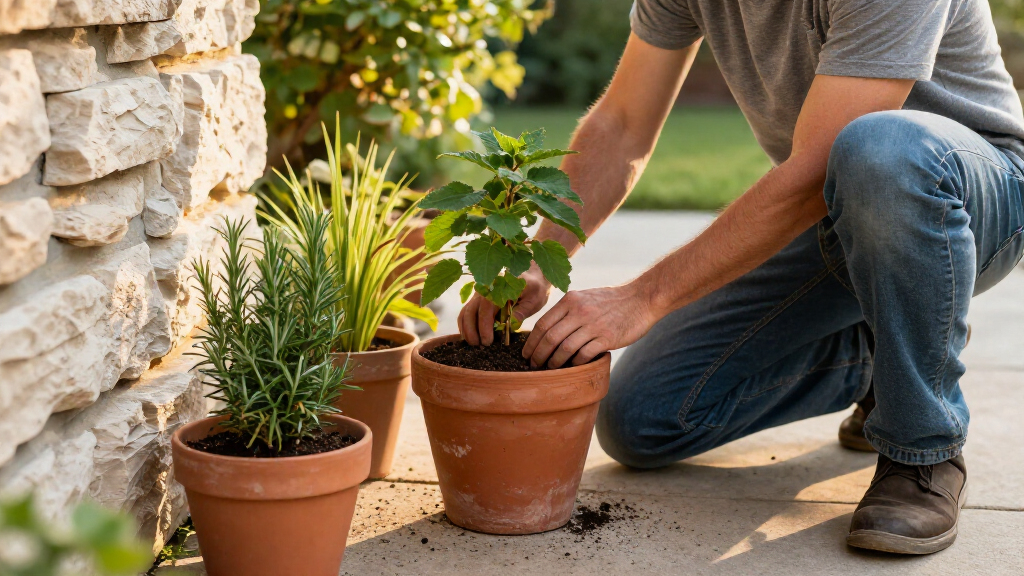
Imagine two pots beside the same west-facing wall: a small black pot sitting flat on stone, and a larger pale pot raised slightly on pot feet. The larger pot holds more growing mix and offers more room for roots; the lighter surface absorbs less direct solar warmth than a dark one. Raising the base can limit contact with hot paving and allow drainage, though it will not stop heat reaching the pot from the air or wall. Neither makes the patio cool, but both can soften the extremes. The tradeoff is that larger pots take more space and hold more water, so they need to drain well and suit the mature size of the plant.
Use potting mix that drains well while still holding enough moisture for the plant. A container needs drainage holes, and water should reach the root ball rather than racing down a gap at the edge. Good drainage matters because roots need air as well as water; a pot that stays saturated can stress them even in hot weather. If a plant wilts after a quick splash, check the mix with a finger; a dry, shrunken root ball can repel water and remain dry inside. Slow watering in stages can help the mix absorb moisture instead of letting it run past the roots.
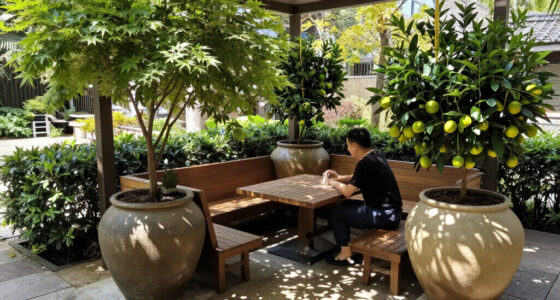
Set containers where they get the light the plant needs without unnecessary afternoon punishment. A trellis, umbrella, or taller plant can shade a pot during the fiercest hours, especially on a scorching patio. Shading the container can protect roots while leaving the foliage in brighter light, but too much shade may reduce flowering or weaken plants that need direct sun. If you move pots, do it gradually when possible: a plant shifted from partial shade into intense afternoon sun can scorch even if it likes bright conditions.
Water deeply and mulch without trapping heat against stems
Water patio plants when the soil and plant need it, soaking the root zone thoroughly and letting excess water drain. No fixed calendar suits every patio: containers, fresh plantings, wind, pot size, and a week of intense heat all change how quickly soil dries. Watering by the calendar can leave roots either too dry or oxygen-starved in saturated mix, so checking moisture gives a better cue. A small container on sunny stone may need checking much more often than a mature shrub in a large bed.
Check moisture before watering. Push a finger into the mix or soil; if the top looks dry but the root zone remains moist, wait and check again later. If the mix is dry deeper down, water slowly until the whole root ball is wet and water exits the drainage holes. This reaches roots throughout the container rather than wetting only the surface, where water evaporates quickly. For example, a newly planted vinca on a hot balcony may need daily attention during a heat wave, while an established, locally adapted shrub in a larger bed may need less frequent soaking.
Organic mulch can reduce evaporation and buffer soil temperature, making it useful around many patio plantings. That moderation helps keep moisture available between waterings, but mulch cannot compensate for a plant placed in an unsuitable exposure or a container without drainage. Leave a clear ring around stems and crowns so damp material does not sit against tender growth, and avoid piling mulch against walls. Choose a suitable material and apply it thoughtfully; a thick mound in a cramped strip can hold unwanted moisture where you need airflow.
Drought tolerant does not mean water free. New plants need consistent care while their roots establish, and containers dry faster than open ground because they have less soil volume and more exposed surface. If a plant wilts after watering, check that water reached the roots, the pot drains, and roots are not overheated or damaged before simply adding more water. This check prevents a common cycle in which a stressed plant receives more water even though its root zone is already wet.
Use shade to take the edge off the afternoon blast
Afternoon shade can lower the heat load on patio plants, pots, and soil while still leaving enough light for the plants you choose. Try an umbrella, pergola, trellis, or a well-placed taller plant to block the strongest late-day sun. This can reduce water loss and leaf scorch during the most intense hours, while targeted shade lets you keep sunnier areas for plants that need them. The useful shade is the kind that matches the plants’ needs rather than leaving everything dark all day.
For instance, if a west-facing wall bakes a row of containers from 2 p.m. onward, an umbrella shifted over that row for the hottest hours may give roots and leaves a break. A trellis can cast patterned shade and soften the wall’s glare; a taller shrub can shelter smaller plants from wind. Watch the shadow across the day before fixing a structure in place, since a patch that seems shady at breakfast may be exposed by afternoon. Temporary shade also makes it easier to adjust coverage as the season changes.
Shade also helps people use the patio, so it can serve the garden and your comfort at once. But match each plant to the light that remains. A sun-loving flowering annual may bloom less if it stays shaded, while a plant that scorches in direct late-afternoon sun may look better with a few protected hours. The aim is to remove the harshest exposure without depriving the plant of the light it needs to grow and flower.
Keep airflow in mind, especially in humid climates. Dense, crowded planting against a wall can trap warm, still air and make foliage stay damp after watering. Space plants so air can move around them, and use shade as a targeted tool instead of packing the patio with foliage in the hope that more leaves will automatically cool everything. Open spacing may mean less immediate coverage of bare ground, but it makes it easier to inspect plants, water evenly, and limit lingering dampness.
Compare plant options against your local summer
Heat-tolerant candidates vary by climate, so compare their likely fit with your patio’s sun, water, and winter conditions before planting. The examples below are starting points for a local check, not guarantees. A dry desert courtyard and a humid, frost-prone patio can ask very different things of plants with the same “sun” label. The table helps narrow the questions to ask; it cannot account for every cultivar, soil, or exact exposure.
| Plant group | Possible candidates | What to check locally |
|---|---|---|
| Perennials and groundcovers | Some salvias, yarrow, sedum, lavender | Water needs, drainage, winter hardiness, humidity tolerance |
| Grasses | Blue fescue or region-suited switchgrasses | Local climate fit, mature width, and whether the chosen species suits the site |
| Shrubs and herbs | Rosemary in mild-winter climates; Mediterranean herbs and local shrubs | Winter lows, soil drainage, and growth habit |
| Annuals | Lantana, vinca, portulaca, zinnia | Local suitability, water needs, and invasive-species guidance |
Picture a narrow, sunny strip beside a hot path. A compact, locally suitable perennial could cover the soil without blocking the walkway, while a sprawling shrub might become a pruning chore. In a pot, a seasonal annual can add color, but its smaller root space may need closer moisture checks. The choice is a tradeoff between coverage, upkeep, and how closely you can monitor the root zone.
Use the comparison to make better questions for a local nursery: Will this plant take late-afternoon reflected heat here? How large will it get? Does it need protection in winter? Can it share a watering zone with the plants I already have? These answers matter more than a national “best plants” ranking because they connect a plant’s needs to the conditions and care available at your particular patio.
Spot heat stress before a plant gives up
Scorched leaf edges, faded foliage, poor growth, or wilting while the soil still feels moist can signal that a plant is struggling with patio heat. These signs show that the plant is under stress, but they do not identify its cause: underwatering, damaged roots, poor drainage, and pests can create similar symptoms. Check the whole root zone and the spot before changing your watering routine. That diagnosis matters because adding water helps a dry root ball but can worsen stress when roots are already sitting in wet mix.
Say your potted salvia droops at 4 p.m. even though you watered at lunch. Feel the soil below the surface and check whether the pot drains freely. If the root ball is wet, adding more water may leave roots short of air; if it is dry in the center, the earlier water may have run around the edges without soaking the mix. If moisture is adequate and drainage is sound, the timing of the wilt may point toward afternoon heat, which makes shade or a cooler position a useful next adjustment.
Compare the plant with one in a cooler position. If only the pot against the west wall develops crispy edges, move it into afternoon shade or raise it off the paving and watch for improvement. Change one condition at a time so you can tell whether shade, watering, or placement made the difference. Keeping track of the change prevents you from layering several fixes together and then being unable to tell which one helped.
Heat waves can turn an ordinary patio into a much harsher place, and established plants may still show stress during prolonged extremes. Give new plants a careful establishment period, check containers often during hot weather, and avoid diagnosing every drooping leaf as thirst. A thoughtful check can save water and spare a plant from repeated overwatering. It can also show when a plant is simply a poor fit for that spot, so you can relocate it rather than keep correcting the same problem.
Follow five steps to build a patio planting plan
Build a reliable patio planting plan by mapping exposure, checking local plant fit, protecting roots, grouping water needs, and watching how plants respond. This order helps you solve the site before buying a cart full of plants. Each step reduces a different source of stress: exposure determines heat load, plant choice sets the care requirements, and root-zone setup helps the plant cope with the conditions that remain.
- Map the heat. Record direct sun, afternoon exposure, nearby walls and paving, and wind. For example, mark the hottest west-side corner separately from a shaded entry. These notes show where plants may need extra checks and where a cooler pocket can support more sensitive choices.
- Choose locally adapted plants. Check hardiness, water requirements, mature size, and local invasive-species guidance. Ask whether a candidate can take reflected heat, not only full sun. A plant that survives the heat but outgrows its space or needs a different watering routine can still make a poor patio fit.
- Set up the root zone. Use well-draining mix or soil, a suitably large and light-colored pot, and mulch where appropriate. Keep pots off hot paving if you can. These measures buffer temperature and moisture swings, though they cannot make up for blocked drainage or a plant in the wrong exposure.
- Arrange water and shade. Group plants with similar needs and decide where an umbrella or trellis can shade the hottest afternoon spot without blocking all useful light. This makes care more consistent while preserving the light needed for healthy growth.
- Observe and adjust. During establishment and heat waves, check soil moisture and leaf condition. If one pot struggles, move it or change its shade before changing several things at once. A single adjustment at a time helps you learn which part of the microclimate is causing trouble.
For a small courtyard, this might mean putting lavender and a region-suited grass in a sunny, well-drained zone, then placing a thirstier seasonal planter where you can check it easily. That arrangement uses the patio’s cooler and hotter pockets instead of asking every plant to tolerate the same conditions. It also lets you keep unlike watering needs separate without giving up variety.
Keep the plan flexible. A patio changes as an umbrella moves, a vine fills a trellis, or a nearby wall reflects afternoon sun. A quick seasonal check is often enough to spot those shifts before they turn into a row of crispy leaves. Treating the plan as something to adjust makes it easier to respond to changing shade and weather instead of assuming last season’s placement will always work.
Frequently Asked Questions
What does heat bouncing off hardscape mean?
Sun-warmed paving, walls, and patios radiate heat toward nearby plants and can make the surrounding air and soil hotter. A plant beside a west-facing wall may face more stress and faster drying than one a few feet away.
Can full-sun plants handle a hot patio?
Sometimes, but the label only describes light exposure. It does not guarantee tolerance of radiant heat, hot roots, or fast-drying soil, so check whether the plant suits your local summer and exact patio conditions.
How often should I water patio plants?
There is no universal schedule. Check moisture below the soil surface and water thoroughly when the root zone needs it; containers and newly planted plants often need closer checks during hot weather.
What is the best way to keep patio containers cool?
Choose a larger, light-colored pot, use a well-draining mix, and keep the container off very hot paving where practical. Afternoon shade can help too, as long as the plant still gets the light it needs.
Why does my plant wilt after I water it?
Water may not have reached the root ball, the container may drain poorly, or roots may be overheated or damaged. Check the soil below the surface and the drainage holes before adding more water, since wet roots can struggle too.
Conclusion
Treat the patio as its own climate: map the heat, choose plants suited to your local summer, and give their roots room, drainage, and protection. Then watch how the spot behaves through an afternoon, because one wall or slab can change the whole planting area.
Start with one pot in the hottest corner and adjust it until it thrives. A little shade, a cooler root zone, and the right plant can turn a hard, glaring patio into a patch of living green.