TL;DR

Get garden gear delivered free with Prime
- Fast, free delivery on millions of items
- Prime Video, Amazon Music and more included
- Member-only deals all year
Amateur Gardening has outlined six ways gardeners can support plants with household items and garden materials they may already have. The ideas range from ladders and wire baskets for larger plants to chopsticks, reusable straws, branches and twine for smaller or lighter growth. How well each works depends on the plant and the strength and stability of the support.
Amateur Gardening has outlined six ways to support plants without buying new equipment, using items such as an old ladder, a wire wastebasket, chopsticks, reusable metal straws, fallen branches and twine. The advice offers gardeners ways to reuse materials while matching a support to a plant’s size and growth habit.
The suggestions address common problems as plants grow: tall perennials can lean or spread across paths, climbers need something to grow against, and heavy flower heads can pull stems down, so gardeners may consider plant supports suited to their needs. The report says a single stake may suit a delicate stem, while a vigorous climber or a plant that flops outward needs a broader, sturdier structure.
For climbers, the report suggests leaning an old ladder against a stable wall or fence and guiding stems over its rungs. A wire wastebasket can be turned upside down over a spreading perennial, with its rim pushed into the soil so stems grow through the gaps. The report cautions against using a basket that is badly rusted, unstable or has sharp sections.
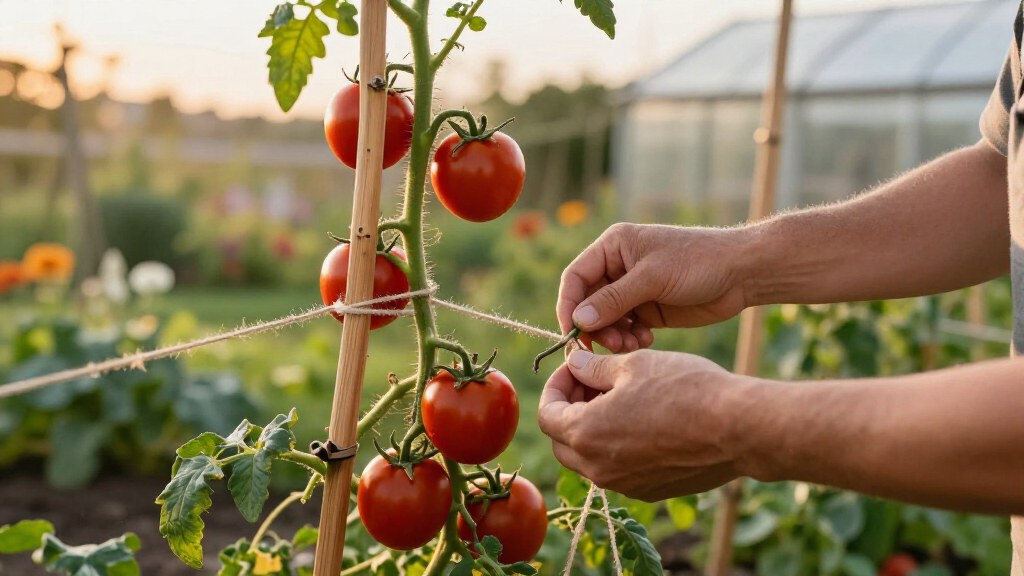
For individual stems and small plants, a reusable metal straw or wooden chopstick can act as a stake. The plant should be tied loosely, leaving room for the stem to thicken. Two or three chopsticks joined with string can form a small framework. The other two suggestions are to anchor healthy, sturdy fallen branches around a floppy plant, or tie twine between points on a fixed structure such as a fence or railing for a lightweight climber.
Matching Supports to Plant Growth
The ideas could help gardeners avoid buying a separate support for every leaning stem or climbing plant, while putting otherwise unused materials to work. Their usefulness is not the same across all plants: small stakes are for young or delicate growth, while tall, heavy or vigorous plants need stronger support.
Stability is a practical concern as well as a matter of appearance. The report advises securing a ladder before guiding a climber onto it, since mature foliage can catch the wind. Branches should be free of signs of rot or disease and firmly anchored, particularly when they will hold heavier growth. Reuse is not automatically suitable if an item is damaged, sharp or too weak for the plant.
As an affiliate, we earn on qualifying purchases.
Six Reuse Ideas for the Garden
The report is aimed at the point in the growing season when plants that stood upright earlier may start to flop or need help climbing. Rather than treating plant supports as interchangeable, it recommends choosing one according to the plant’s form: cages for outward-spreading growth, a stake for a single stem, and a ladder or tied twine for climbers.
The proposed materials differ in scale and durability. An old ladder or fixed fence can provide a larger framework; chopsticks and metal straws are intended for small plants or container specimens. Fallen branches offer a rustic option, while the report says to arrange them so they are secure as well as visually suited to the planting. It does not provide prices or a measured estimate of potential savings.
“The trick is to match what you find to the kind of support your plant actually needs.”
— Amateur Gardening report
As an affiliate, we earn on qualifying purchases.
Limits of the Suggested Supports
The report does not identify particular plant species for each suggestion, set weight limits for the reused materials, or provide testing that compares their performance with purpose-made supports. Suitability will depend on the plant, the material’s condition and how securely it is installed. It also gives no cost figures, so the amount any gardener might save is not quantified.
The final suggestion describes tying twine between points on a sturdy structure for a lightweight climber, but the supplied source text ends before the instructions are complete. It does not specify a recommended spacing or layout for the lines.
reusable metal straws for garden stakes
As an affiliate, we earn on qualifying purchases.
As an affiliate, we earn on qualifying purchases.
Check Stability as Plants Grow
Gardeners using these ideas can start by identifying whether a plant needs a single stake, support around its full spread or a structure to climb. They should then check that the chosen item is sound, placed securely and not restricting the plant’s growth. Loosely tied stems and regular checks can help prevent ties from becoming tight as plants thicken.
The source does not announce a follow-up test or a later milestone. The practical next step is to monitor the supports as foliage grows and as conditions change, replacing or reinforcing any item that becomes unstable or proves too weak.
As an affiliate, we earn on qualifying purchases.
Key Questions
What are the six plant supports suggested in the report?
The report suggests an old ladder, wire wastebasket, reusable metal straw, wooden chopsticks, fallen branches and twine tied to an existing sturdy structure.
Which ideas are intended for small plants?
Metal straws and chopsticks are suggested for young plants, individual stems and small container plants. The report says these narrow stakes are not strong enough for a tall perennial or vigorous climber.
How can a wire wastebasket support a perennial?
The report suggests turning an open-wire basket upside down over the plant and pushing its rim securely into the soil. Stems can grow through the gaps. Avoid baskets that are badly rusted, unstable or sharp.
Can an old ladder be used for any climbing plant?
The report presents a ladder as an option for climbers that can scramble over rungs or need help getting started. It does not name specific species. The ladder should be firmly secured before the plant grows onto it.
Does the report say how much money gardeners can save?
No. It recommends reusing items instead of buying supports but gives no prices or estimated savings. The actual saving will depend on what a gardener already has and what would otherwise have been purchased.
Source: rss
Fall Picks
fall essentials
As an affiliate, we earn on qualifying purchases.