TL;DR

Get garden gear delivered free with Prime
- Fast, free delivery on millions of items
- Prime Video, Amazon Music and more included
- Member-only deals all year
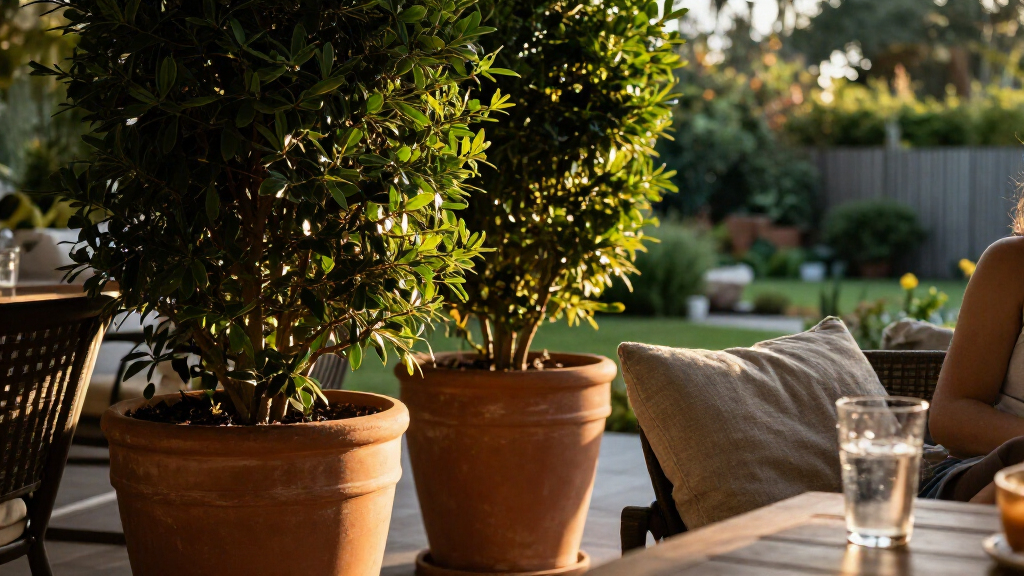
Container hedges are shrubs grown in large pots to screen a patio, soften direct sun, and filter wind where in-ground planting is impractical. In desert heat, choose climate-suited plants, leave small gaps to reduce gust pressure, use stable drained containers, and check pot moisture often because even drought-tolerant shrubs dry faster in pots.
Choose the screen’s job and placement by checking the patio during the hottest or windiest hour you want to improve.
Select locally suitable shrubs by mature size, sun exposure, winter limits, and container performance; drought tolerance does not remove the need to water pots.
Space containers according to mature shrub width, and adjust the view from your usual seat before filling the pots.
Use drained, stable containers and leave some foliage porosity so gusts can pass through; check balcony or deck load limits first.
Monitor pot moisture regularly in heat and wind, and plan for winter root protection because container roots face greater temperature swings.
Outdoor living · Climate-smart design
Screen a Patio From Sun and Wind With Container Hedges
Large potted shrubs can bring privacy, soften harsh afternoon sun, and filter gusts where planting in the ground is impractical. Make the screen fit the site, the climate, and the way you use the patio.
01 / Choose the job
One screen, several possible benefits
A hedge can do more than one thing, but placement and plant form determine where the benefit lands. Start with the problem you most want to improve.
Afternoon heat
Cast targeted shade
Stand on the patio at the hottest hour. Place the screen where its height and foliage can shade the seating area—not just the edge of the yard.
Sightlines
Soften the view
Check the view from your usual chair. Evergreen shrubs can screen year-round in suitable climates; deciduous choices provide seasonal coverage.
Breezy corners
Filter, don’t seal
A slightly open planting can soften wind. Dense foliage or a solid wall may catch gusts and create turbulent air near the edges.
02 / Fit the plants to the place
Climate, exposure, and container life
There is no single best shrub for every patio. Reflected heat, winter lows, mature size, and the time you can spend on care all matter.
Ask how it grows in a pot
A shrub that thrives in a garden bed may struggle beside a sun-baked wall. Compare locally suitable compact shrubs, and ask about container performance, mature size, sun tolerance, and pruning habit.
Container roots face larger temperature swings than roots in the ground. Drought-tolerant plants still need moisture checks: pots dry faster, especially in heat and wind.
- Match sun exposure and winter limits to the exact patio location.
- Choose mature height and width for the view and shade you want.
- Keep neighboring plants’ light and water needs compatible.
What shapes the result?
These are planning priorities, not measured ratings. Local growing conditions and plant choices change the balance.
03 / Plan the line
Close the sightline. Keep room to care.
Young shrubs can leave lasting gaps if you space them only by their purchase size. Set empty pots out first and check the view from where you sit.
Mark the edge
Choose where shade or privacy will help most at the hour you need it.
Set pot spacing
Use mature shrub width as a starting point; consider staggering to break a straight view.
Check access
Leave room for pruning, drainage checks, watering, and a clear walking route.
Adjust the view
Look from seated and standing positions before filling heavy containers with mix.
04 / Build for weather
Stable pots, breathable foliage
Wind, weight, drainage, and water needs are part of the design—not details to solve after planting.
A hedge should soften a gust, not become a sail.
Use stable, adequately sized containers with drainage holes and quality potting mix. Secure lightweight planters, avoid a continuous dense barrier in exposed spots, and check balcony or deck load limits before adding large pots filled with wet soil.
05 / Keep it thriving
Container care through heat and winter
Movable pots offer flexibility, but their roots and mix respond quickly to weather. Make monitoring part of the routine.
Water
Check the mix regularly
Sun and wind dry containers faster than garden beds. Drip irrigation or self-watering planters can help, but keep monitoring and never leave pots standing in water.
Winter
Protect exposed roots
Hardiness in the ground does not guarantee survival in a pot. Insulate containers or move them to seasonal shelter when local winter conditions call for it.
Growth
Make room to maintain
Prune without blocking walkways, watch for root-bound shrubs, and repot or root-prune when needed. Reposition containers as the patio or season changes.
Trace the plan
From discomfort to a living screen
Keep expectations realistic: container plants usually provide a localized screen, shaped by height, spacing, foliage density, and seasonal leaf retention.
Observe
Note sun, wind funnels, and the sightline at the uncomfortable hour.
Select
Match climate-suited shrubs and containers to the patio’s conditions.
Arrange
Set mature-width spacing, porous foliage, safe access, and stable placement.
Maintain
Monitor moisture, prune for healthy airflow, and protect roots seasonally.
Decide whether you need shade, privacy, or a gentler breeze
A container hedge can screen a patio from sun and wind, but it works best when you decide which problem matters most before you buy plants. Shrubs that block a neighbor’s window may not cast useful afternoon shade, and a dense wall that hides the view can catch strong gusts. Think of the hedge as a movable shade sail made of leaves: its position and height determine where the benefit lands.
Stand on the patio at the uncomfortable hour and note where the sun hits, where the wind funnels through, and which sightlines you want to soften. For example, if the west side of a Phoenix patio bakes after 3 p.m., a screen on the west or southwest edge may cast shade when you need it. A row placed on the north edge might add privacy without doing much for the afternoon heat.
Decide whether you want year-round screening or seasonal coverage. Evergreen shrubs keep their foliage in suitable climates, while deciduous plants can let winter sun through; local winter lows matter, especially because roots in pots face colder conditions than roots in the ground. A screen can also combine shrubs and ornamental grasses for a softer filter that moves in a breeze.
Set the job before choosing the plant: shade, privacy, and wind filtering overlap, but one row may not do all three equally well.
Try a simple test before committing: move a chair to the spot you hope to shade and use a temporary umbrella or shade cloth at roughly the hedge’s planned height. If the shade falls across the table rather than behind it, you have a useful placement clue.
Popular right now

Shark PowerDetect Corded Stick Vacuum with HEPA Filtration, Purple (HZ4001AMZ)

Vitamix Propel Series 750 Professional-Grade Blender, 4 Programs, Black

Bose QuietComfort Wireless Noise-Cancelling Headphones, Petal Pink
As an affiliate, we earn on qualifying purchases.
Choose shrubs that can handle your patio’s sun and heat
Screening a patio from sun and wind starts with shrubs suited to your local climate, exposure, and maintenance time. There is no single best privacy shrub for every desert patio: reflected heat, afternoon sun, winter lows, and the plant’s mature size all change the answer. A plant that thrives in an in-ground landscape may struggle when its roots sit in a hot pot beside a sun-baked wall.
Compare locally suitable compact shrubs at a nursery, and ask how much sun they take in a container and how large they grow without repeated hard pruning. A shrub sold in a one-gallon pot may eventually need a much larger home. If you want a screen at seated eye level, a plant with naturally dense lower growth may suit you better than a tall, narrow shrub that leaves gaps near the ground.
Container growing brings a tradeoff: pots avoid some soil problems and make it easier to rearrange the patio, but their roots face greater temperature swings and dry faster than roots in a garden bed. Drought-tolerant does not mean drought-proof in a container. In a hot, windy spell, the same shrub that coasts in a landscape bed may need frequent moisture checks in a pot.
For example, a gardener screening a small seating nook might choose several compact shrubs that tolerate the patio’s afternoon exposure, then add a grass or flowering container where extra softness matters more than a uniform wall. Keep their water and light needs compatible so one plant does not stay thirsty while its neighbor sits in soggy mix.
- Check mature width and height, not just the nursery-pot size.
- Match sun exposure and winter limits to the exact patio location.
- Ask about container performance and pruning habit before buying several plants.
Space pots by mature width so the screen stays useful
Container hedges are rows or groupings of shrubs grown in large pots, and the gaps between those pots decide how much privacy and wind filtering you get. Plan spacing around each plant’s mature width, not its size at purchase. A young shrub can look lost in a broad gap, and simply moving the pots closer may leave too little room for airflow, watering, and pruning once the plants fill out.
Set the pots in place before planting and look at the view from the seat you use most. If a neighbor’s bright window remains visible through a gap, adjust the spacing or stagger the containers. Staggering can break a straight sightline without turning the row into a tightly packed barrier. Keep enough room to reach behind each pot and to pass safely along the patio.
Spacing also affects plant health. Crowded foliage dries more slowly after irrigation or rain, can rub against itself in wind, and takes more pruning to hold a tidy shape. On the other hand, a wide-open row may offer little screening until shrubs grow. If you need coverage immediately, consider a temporary movable screen while plants establish rather than forcing immature shrubs into a cramped arrangement.
Picture a four-pot row along a small balcony. If each shrub will eventually spread about as wide as its pot spacing, the mature foliage can form a connected visual screen; if the pots stand much farther apart, the gaps remain obvious. The nursery’s mature-width estimate gives you a starting point, while the actual view from your chair tells you whether to stagger or shift the row.
- Mark the patio edge where shade or privacy would help.
- Set empty pots at the planned mature spacing and check the view from seated and standing positions.
- Leave access for care, including pruning, drainage checks, and carrying water.
- Adjust the line or stagger pots before filling them with heavy mix.
Use a porous screen to filter wind without building a sail
A container hedge usually reduces wind rather than blocking it completely, and a slightly open screen is often safer than an airtight wall. Dense foliage can catch gusts like a sail, while a solid barrier can push air into turbulent eddies around its edges. A hedge with some porosity lets part of the breeze pass through, helping soften the blast without concentrating all the pressure at one point.
This matters especially on exposed patios, balconies, and roof decks, where wind can be stronger than it feels at ground level. Broad leaves and tall stems give gusts more surface to grab. Heavy, stable containers help, but they do not make a top-heavy shrub immune to tipping. Secure lightweight planters where appropriate, and check building guidance or local rules before placing heavy pots on a balcony or shared space.
For example, if a patio gets a hard crosswind, a continuous row of closely clipped shrubs may shake and lean after a storm. Breaking the row into smaller groups or mixing shrubs with ornamental grasses can let some air through while still softening the wind at the chairs. Keep the arrangement clear of doors, walkways, and places where a falling pot could injure someone.
Wind filtering also has limits: a plant screen will not stop every gust, and it may not shelter the entire patio. Test the layout on a breezy day and watch how leaves move at the sitting area. If foliage whips violently or pots rock, reduce the exposed height, use more stable containers, or move the screen to a less exposed position.
Leave the breeze a way through. A screen that filters wind can feel calmer without taking on the full force of every gust.
Pick large, drained pots and check the weight before filling them
Large containers give shrub roots more room and usually dry more slowly than small pots, while their added weight can make a tall screen more stable. Every pot needs drainage holes, and shrubs need quality potting mix rather than dense garden soil. Garden soil can compact in a container, restricting drainage and leaving roots short of air.
Choose a container that suits the plant’s eventual root system and mature height; nursery guidance is a useful starting point. A broad, heavy pot may steady a shrub better than a narrow lightweight one, but filled containers can become difficult to move. Plan the final position first, especially on decks and balconies where wet soil, pots, and plants all add load.
For instance, a lightweight resin pot may be easy to reposition before planting, but a tall shrub in it can sway in a gust. A heavier pot can help, yet a large planter filled with wet mix is no small load. If you are screening a balcony, check its load limits and any building rules before installation, and account for several pots rather than judging one planter alone.
Do not let containers sit in standing water. Raise pots slightly if needed so water can escape, and make sure runoff does not create a slippery walkway or bother a neighbor below. You can still use a saucer where appropriate, but empty it after watering rather than leaving roots in a puddle.
- Use pots with open drainage holes and a suitable potting mix.
- Favor a stable footprint for tall shrubs in exposed spots.
- Check structural limits before adding heavy planters to a balcony or roof deck.
Keep container hedges watered through desert heat
Container hedges need moisture checks more often than the same shrubs planted in the ground because pots expose roots to heat, wind, and faster drying. There is no reliable one-size watering schedule: pot size and material, sun, wind, plant type, and season all change how quickly mix dries. Check the mix regularly and water according to the plant’s needs and current conditions.
On a hot, breezy afternoon, a small dark pot against a west-facing wall can dry much faster than a large light-colored planter in morning sun. Check several pots, not just the one nearest the hose. If the top looks dry, feel farther down in the mix before deciding; then water thoroughly enough for moisture to reach the root zone and allow excess to drain away.
Drip irrigation or self-watering planters can reduce daily work, but neither removes the need to monitor plants. Emitters can clog, and a self-watering reservoir can run low during a heat wave. A gardener leaving town for a summer weekend might use a tested drip setup and ask someone to inspect the pots, especially if the hedge is newly planted or exposed to wind.
Keep an eye on how the shrubs respond. Wilt, crispy leaf edges, or a pot that feels unusually light can signal stress, though symptoms vary by plant and can have more than one cause. Adjust watering gradually and avoid keeping roots constantly saturated. Think of the potting mix as a small reservoir: in desert heat, you need to refill it before the roots run dry, while still letting extra water escape.
Plan for pruning, winter shelter, and realistic coverage
Container hedges provide localized screening, and they may look less complete than a mature in-ground hedge. Their coverage depends on height, spacing, foliage density, and whether the plant keeps its leaves through the season. A row of pots can soften one seating area without shading the whole patio, so judge success from the place where you actually sit.
Leave room to prune without blocking walkways, and choose shrubs whose natural shape fits the space. Repeated hard cuts to keep an oversized plant small can leave thin foliage or add more work than the patio deserves. If roots fill the pot and growth slows, the shrub may need a larger container or careful root pruning based on its species and condition.
Winter deserves attention too. A shrub’s hardiness in the ground does not guarantee that its roots will survive the same cold in a container, because the pot is exposed on all sides. Depending on the plant and local winter conditions, you may need to insulate the pot, move it to a sheltered spot, or provide seasonal cover. A movable hedge gives you options, but large filled planters can be hard to shift, so account for that before planting.
For example, a patio screen that looks lush in October may thin out after a cold spell if the chosen shrub was only marginally hardy and its roots sat exposed in a small pot. Check local plant guidance, then group containers near a protected wall when cold weather approaches. Keep the screen’s purpose realistic: it can make a reading chair feel more private and less exposed, even if it does not create a sealed outdoor room.
Frequently Asked Questions
Which shrubs work best in containers for patio privacy?
The best choice depends on your local climate, the patio’s sun, the height you want, and whether you need foliage year-round. Compare locally suitable compact shrubs by their mature size and container needs, and ask a nursery how they handle your specific exposure.
How large should the pots be?
Choose containers that can support the shrub’s mature root system and height, using nursery guidance as a starting point. Larger pots usually hold moisture longer and can feel more stable, but filled planters add substantial weight.
How far apart should I space the containers?
Use the shrubs’ mature width as your starting point, then check the sightline from the patio seat. Too much space leaves gaps; crowding plants can restrict airflow and increase pruning and watering work.
Will container hedges block wind completely?
Usually they filter wind rather than stop it, and that is often preferable. A porous screen can soften a breeze while reducing the sail-like effect a dense, continuous barrier may create.
How often do container hedges need watering in desert heat?
There is no fixed schedule because heat, wind, pot size, material, and plant type all affect drying. Check the potting mix regularly, water when appropriate for the shrub and conditions, and let excess water drain away.
Can container hedges survive winter outdoors?
Some can, but roots in pots face colder conditions than roots in the ground. Check the plant’s local winter suitability and be ready to shelter or insulate containers when needed.
Can I put large hedge planters on a balcony?
Check the balcony’s load limits and building guidance before placing them. Include the weight of wet soil, pots, and mature plants, and remember that wind exposure can be stronger at elevation.