
TL;DR

Get garden gear delivered free — and shop member deals
- Fast, free delivery on millions of items
- Access to Prime Big Deal Days deals on October 6–7
- Prime Video, Amazon Music and more included
Landscape designers are adopting new color rules in 2026, emphasizing greens, monochromatic palettes, and color-drenching techniques to maximize space and create modern, cohesive gardens. These strategies are increasingly popular for small and large gardens alike.
Landscape designers in 2026 are increasingly using specific color strategies to make gardens appear larger and more unified. These new rules focus on calming greens, monochromatic schemes, and impactful color accents, helping both small and large gardens achieve a modern, cohesive aesthetic. This shift is driven by evolving design trends and a focus on wellbeing, making space appear more expansive and intentional.
Recent trends highlight a move away from bold, contrasting colors toward more subdued, curated palettes that enhance spatial perception. Kevin Lenhart, landscape architect at Yardzen, confirms that greens are now the dominant color story of 2026, with layering from soft sage to deep forest creating depth and cohesion. This approach is rooted in research showing green’s calming effects, promoting mental and emotional wellbeing, and was prominently featured at this year’s RHS Chelsea Flower Show.
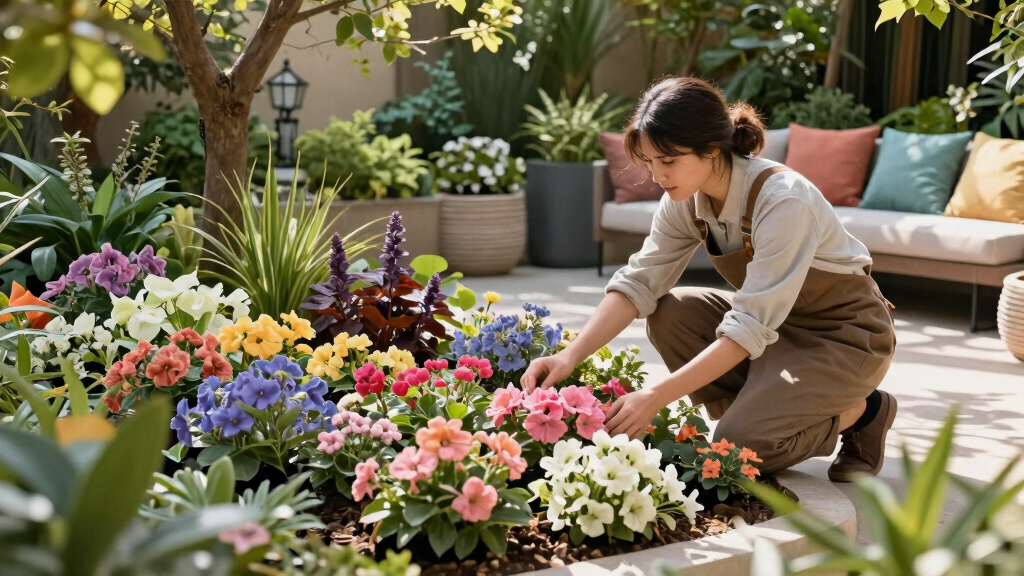
Another key technique involves creating a monochromatic base, using various shades of a single color—such as purple from lavender to plum—to unify a space and add visual interest. This method is effective in both small and large gardens, helping to make spaces feel uncluttered and cohesive. Additionally, color-drenching involves layering plants of the same bold hue, like purple, to create focal points, often complemented by matching accessories or accents.
Landscape designers also employ chroma layering, which uses different intensities of colors—vibrant at the front, softer at the back—to create the illusion of depth and space. These techniques are part of a broader move toward more curated, modern garden aesthetics that emphasize natural harmony and visual cohesion.
Impacts of New Color Strategies on Garden Design
The adoption of these new color rules in landscape design is significant because it helps gardeners and homeowners create the perception of more space, especially in small gardens. By emphasizing greens and monochromatic schemes, gardens appear more unified and less cluttered, which can improve mental wellbeing and aesthetic appeal. These techniques are also cost-effective and easily implementable, making professional-quality design accessible to a broader audience.
Furthermore, these trends reflect a broader societal shift toward natural, calming environments that promote health and relaxation. As more people seek to enhance their outdoor spaces for wellbeing, understanding how to use color effectively becomes increasingly valuable for both professional and amateur gardeners.
As an affiliate, we earn on qualifying purchases.
Evolution of Color Use in Modern Garden Design
Historically, garden design favored bold, contrasting colors to create visual interest. However, in recent years, there has been a move toward more subdued, curated palettes that emphasize harmony and natural aesthetics. The 2026 trends build on this shift, with landscape designers increasingly focusing on greens and monochromatic schemes to maximize perceived space and cohesion.
This evolution is partly driven by research highlighting the mental health benefits of green spaces and the popularity of eco-therapy. The RHS Chelsea Flower Show showcased this trend with displays emphasizing foliage and subtle color gradations, signaling a broader industry acceptance of these principles.
These developments are also influenced by the rising popularity of sustainable and low-maintenance gardens, where cohesive color schemes reduce visual clutter and simplify planting choices.
“Designers are layering tones from soft sage to deep forest across planting, materials, and furnishings to create depth and cohesion.”
— Kevin Lenhart, Yardzen
As an affiliate, we earn on qualifying purchases.
Unconfirmed Aspects of Color Trend Adoption
It is not yet clear how widely these new color strategies are being adopted by amateur gardeners versus professional designers. While trends at RHS Chelsea Flower Show indicate industry direction, the extent of consumer uptake remains to be seen, and long-term impacts on garden perceptions are still developing.color-drenching garden accessories
As an affiliate, we earn on qualifying purchases.
As an affiliate, we earn on qualifying purchases.
Future Developments in Garden Color Strategies
Expect further integration of these color techniques into mainstream garden design, with more homeowners and landscape professionals adopting monochromatic, green-centric, and color-drenching approaches. Future research may explore their long-term effects on garden aesthetics and wellbeing, while new design tools and guides are likely to emerge to facilitate wider implementation.
As an affiliate, we earn on qualifying purchases.
Key Questions
How can I incorporate green into my garden design?
Use layered greens from soft sage to deep forest, focusing on foliage rather than flowers to create a calming, cohesive space. Incorporate different textures and plant heights for added depth.
What is monochromatic planting, and how does it work?
Monochromatic planting involves using various shades of a single color, such as purple from lavender to plum, to create unity and visual interest without cluttering the space.
Can color-drenching be used in small gardens?
Yes, color-drenching with a bold hue like purple can create focal points and make small gardens feel more intentional and expansive when combined with other design techniques.
Are these color trends suitable for shady gardens?
Yes, many of the new color strategies, especially greens and monochromatic schemes, work well in shady gardens, enhancing perceived space and harmony.
What are the benefits of using these new color rules?
They help create a sense of spaciousness, cohesion, and calm, while also making gardens more visually appealing and easier to maintain.
Source: rss
Fall yard work Picks
leaf blowers
As an affiliate, we earn on qualifying purchases.