TL;DR

Get garden gear delivered free with Prime
- Fast, free delivery on millions of items
- Prime Video, Amazon Music and more included
- Member-only deals all year
A forgotten bag of spring bulbs may still be usable in November, but the right next step depends on bulb condition, local soil and available cold storage. Firm bulbs can often be planted in unfrozen, workable ground; alternatives include a protected outdoor pot or a planned indoor forcing project. None guarantees a strong spring display.
November does not automatically end the chance to plant spring bulbs, and a forgotten bag of tulips does not automatically need to go in the refrigerator, according to a Planet Natural report. Gardeners should first check whether bulbs are healthy, identify what kinds they have, and assess whether garden soil remains workable; those checks determine whether direct planting, a protected pot or indoor forcing is the more practical option.
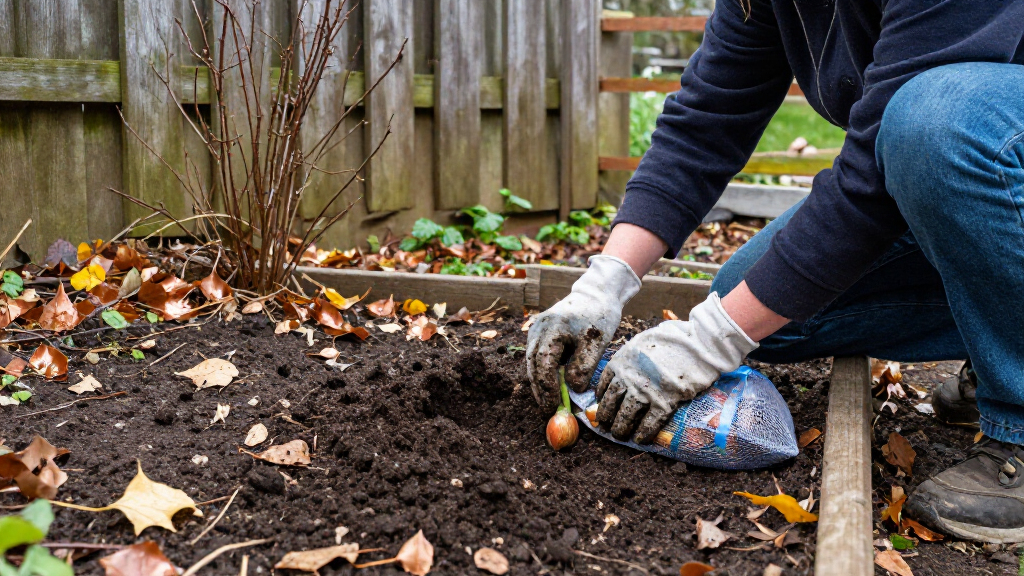
Begin by emptying the bag and sorting bulbs by species, keeping the package label. Firm bulbs that feel reasonably heavy are generally better rescue candidates. Dry, papery outer skins are normal, while wet softness, spreading decay, a bad smell or mold associated with damaged tissue are reasons to set a bulb aside. Severely shriveled, lightweight bulbs are unlikely to produce a reliable display. A small green tip alone is not a reason to discard a firm bulb; handle it gently.
If the intended bed is unfrozen and workable at planting depth, prompt planting may be the simplest choice. Iowa State guidance cited in the report says tulips and other spring-flowering bulbs can be planted into late November or early December in Iowa if the ground has not frozen. That is a regional example, not a deadline for every location. Follow the bulb package for planting depth and spacing, select a well-drained site, and label the planting date. Late planting leaves less time for roots to establish, so spring results may be uneven.
When the bed is frozen or unsuitable, gardeners can plant bulbs in a container with drainage holes and well-draining potting mix, then protect it through winter. A pot is exposed to colder, more variable conditions than bulbs planted in garden soil, so its location and temperature matter. Another option is forcing suitable bulbs indoors: plant them in a draining pot and provide the species’ required cold period. Illinois Extension describes roughly 12–15 weeks of chilling for many spring bulbs, with needs varying by species and cultivar. Check supplier instructions, especially if bulbs may already have been precooled.
Choosing a Rescue Route That Fits
The decision affects whether bulbs have a chance to root and flower, and it can prevent a last-minute fix from creating new problems. Planting into waterlogged, compacted or frozen soil is not a sound substitute for a suitable planting site. Likewise, putting a planted pot outside without accounting for its exposure can leave bulbs vulnerable to severe freezing or repeated thawing.
Correct identification matters because tulips, hardy daffodils and hyacinths do not necessarily share the same needs as paperwhite narcissus or amaryllis, which are commonly grown indoors without the same chilling routine. Sorting a mixed bag helps gardeners avoid guessing at depth, timing or cold requirements. The guidance offers practical options, but it does not promise that a late-planted or forced bulb will flower well.
Popular right now

Ninja CREAMi Scoop & Swirl 13-in-1 Ice Cream and Soft Serve Maker, NC701

Ninja DualZone Air Fryer 10 Qt Smart 6-in-1 Grey (DZ950)

Bose QuietComfort True Wireless Earbuds with Active Noise Cancellation, Black
As an affiliate, we earn on qualifying purchases.
Why November Is Not a Universal Cutoff
The calendar alone cannot determine whether planting is possible. The relevant question is whether soil at the needed depth can be dug without encountering ground frozen hard or soil so wet that it smears and compacts. A surface crust after a cold night may thaw; conditions below it can be different. Local weather, elevation and winter patterns shape how much time remains.
The report cites Iowa State’s late-planting advice for Iowa and Illinois Extension’s general chilling range for many bulbs. These sources address different parts of the decision: a regional opportunity to plant outdoors and a typical, variable cold period for forcing. Neither provides a single schedule that applies to every species or climate.
Local Conditions Set the Limits
The report does not establish whether a particular garden’s soil is still workable, whether a given bulb has already received chilling, or whether a specific storage space stays within the needed temperature range. Those details depend on local weather, species and cultivar, as well as the bulb’s condition. Late planting may produce an uneven display, and no option guarantees flowers.
For container protection, a garage or shed is not automatically suitable: temperatures can vary widely, and sunny spaces may warm during the day. Forcing instructions also differ. A refrigerator may be suitable only if it can hold the planted pot at the required temperature and the bulbs are kept away from ripening fruit, whose ethylene can interfere with flower development. The source material does not give a universal temperature or schedule for every bulb.
Inspect, Plant and Monitor
Gardeners can start by checking each bulb and reading its label, then test the intended bed with a trowel. If soil is workable, plant promptly at the package’s recommended depth and spacing. If using a pot, make sure it drains and decide on a protected location before moving it outdoors. For indoor forcing, follow the supplier’s species-specific chilling directions and use a thermometer to monitor the holding space.
Label pots and beds with the bulb name and planting date, and check container moisture periodically: the mix should not dry out completely or remain saturated. Spring growth and flowering will show how the rescue attempt fared; late planting and variable winter conditions make the outcome uncertain.
Key Questions
Can spring bulbs still be planted in November?
Often, if the ground remains unfrozen and workable at the required depth. Iowa State guidance cited in the report allows planting into late November or early December in Iowa, but local conditions vary.
How can I tell whether a forgotten bulb is still usable?
Favor bulbs that are firm and reasonably heavy for their size. Wet softness, spreading decay, a bad smell or substantial mold on damaged tissue are warning signs. Dry outer skins or a small green tip do not, by themselves, mean a bulb is spoiled.
Can I store the bulbs in a refrigerator until spring?
The report does not recommend treating refrigeration as an automatic solution. For forcing, bulbs are generally planted in a draining pot and chilled for a period set by species-specific instructions. Keep the pot away from ripening fruit, and do not assume warm storage counts as chilling.
Is a pot safe to leave outside all winter?
Not necessarily. A container can experience colder and more variable conditions than garden soil. Use a pot with drainage and arrange appropriate winter protection based on local Extension advice and monitored conditions.
Source: planetnatural.com