TL;DR

Get garden gear delivered free — and shop member deals
- Fast, free delivery on millions of items
- Access to Prime Big Deal Days deals on October 6–7
- Prime Video, Amazon Music and more included
Experts recommend specific pruning methods to improve tomato plant health and boost yields. Proper pruning can prevent disease and encourage bigger, more abundant fruit production.
Experts in horticulture and agriculture have confirmed that proper pruning of tomato plants significantly enhances their health and productivity. This advice, based on recent studies and practical experience, aims to help gardeners and farmers achieve larger, healthier harvests this season.
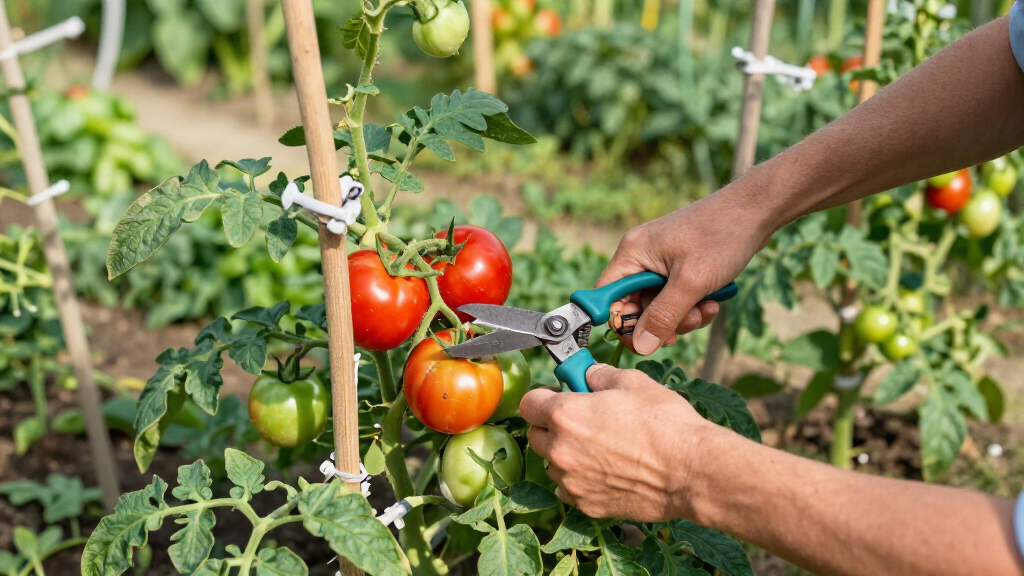
According to horticultural specialists, effective tomato pruning involves removing suckers—small shoots that develop between the main stem and branches—to improve airflow and reduce disease risk. They emphasize that pruning should be done selectively, focusing on removing only non-productive suckers and dead or diseased foliage.
Research from agricultural extension services indicates that proper pruning can lead to increased fruit size and yield, as plants direct more energy toward developing fewer but larger tomatoes. Experts recommend pruning early in the season, especially for indeterminate varieties, to establish a strong plant structure.
Pruning tools should be sanitized regularly to prevent the spread of pathogens, and gardeners are advised to wear gloves and protective gear to avoid skin irritation from plant residues. While some claim that heavy pruning can harm plants, current evidence suggests that moderate, strategic pruning supports better plant health and productivity.
Why Proper Tomato Pruning Can Transform Your Harvest
Implementing expert-recommended pruning techniques can lead to healthier tomato plants, reduced disease incidence, and larger yields. For home gardeners and commercial growers alike, this practice offers a straightforward way to maximize crop quality and quantity, potentially increasing profits and reducing the need for chemical interventions.
As an affiliate, we earn on qualifying purchases.
Recent Advances and Traditional Practices in Tomato Pruning
Tomato pruning has long been part of traditional gardening practices, with recent scientific studies reinforcing its benefits. Experts now emphasize the importance of timing and technique, especially as climate conditions and plant varieties vary. Recent extension service guidelines reflect a consensus that strategic pruning is essential for managing indeterminate tomato varieties that grow continuously throughout the season.
While some growers advocate for minimal pruning to preserve plant vigor, current research suggests that targeted removal of suckers and diseased foliage optimizes plant health and fruit production. The debate over heavy versus light pruning continues, but the emphasis is shifting toward precision and timing.
“Pruning is not just about removing excess growth; it’s about directing the plant’s energy into producing larger, better-quality fruit. Proper technique makes a significant difference.”
— Dr. Emily Carter, horticulturist
garden gloves for pruning tomatoes
As an affiliate, we earn on qualifying purchases.
As an affiliate, we earn on qualifying purchases.
What Aspects of Tomato Pruning Still Require Clarification
While expert recommendations are clear on basic pruning techniques, questions remain about the optimal frequency and intensity of pruning for different tomato varieties and growing conditions. There is also ongoing research into how pruning impacts plant resilience under varying climate stresses. The long-term effects of heavy pruning on plant vigor are still being studied, and some growers report mixed results.
plant disease prevention pruning tools
As an affiliate, we earn on qualifying purchases.
As an affiliate, we earn on qualifying purchases.
Next Steps in Research and Practical Adoption of Pruning Techniques
Researchers plan to conduct controlled trials comparing different pruning regimes across diverse climates and tomato varieties to refine guidelines. Growers and gardeners are encouraged to experiment with recommended methods and share their results. Extension services and horticultural organizations will likely update their advice as new evidence emerges, making ongoing education essential for optimal results.
As an affiliate, we earn on qualifying purchases.
Key Questions
When is the best time to prune tomato plants?
Most experts recommend pruning early in the season, once the plant has developed a few sets of true leaves, and continuing as needed to remove suckers and diseased foliage throughout the growing period.
How much of the plant should I prune?
Experts advise removing only non-productive suckers and dead or diseased leaves, avoiding excessive cutting that could stress the plant. Moderate, targeted pruning is most effective.
Can pruning harm my tomato plants?
When done correctly, pruning supports plant health. Over-pruning or improper technique can cause stress, but current evidence suggests that strategic pruning benefits overall growth and yield.
Do all tomato varieties require the same pruning approach?
No, indeterminate varieties benefit most from regular pruning to control growth and improve fruit size, while determinate types usually require less pruning as they grow to a predetermined size.
Are there tools recommended for pruning tomatoes?
Sharp, clean pruning shears or scissors are recommended. Tools should be sanitized regularly to prevent disease spread, and protective gloves are advised for safety.
Source: rss
Fall yard work Picks
leaf blowers
As an affiliate, we earn on qualifying purchases.