
TL;DR

Get garden gear delivered free with Prime
- Fast, free delivery on millions of items
- Prime Video, Amazon Music and more included
- Member-only deals all year
Gardening Know How published a fall soil-improvement method that buries a modest amount of kitchen scraps directly in empty garden beds, without a compost bin. Its six ingredients include produce scraps, coffee grounds, eggshells, oats, cinnamon and optional leftover beer; the author says the method is a personal approach, not a precise or proven formula.
Gardening Know How has published a fall trench-composting method that puts selected kitchen scraps directly into empty raised beds to break down over winter, offering gardeners a way to reuse food waste without a compost bin. The report describes a six-ingredient mix, but its author presents the quantities as flexible guidance rather than a tested, exact recipe.
The core ingredient is uncooked fruit and vegetable scraps, such as peels, cores and trimmings. The author recommends chopping larger pieces to roughly 1 inch (2.5 cm) and avoiding scraps coated in oil, sauce or dressing. Meat, fish, bones and dairy are excluded. Used coffee grounds and finely crushed, rinsed eggshells round out the main food-waste ingredients; the report says grounds should be cooled and used in moderation, while shells break down slowly.
The other three ingredients are a small handful of plain rolled oats, about half a teaspoon of cinnamon and, if available, around half a cup of flat beer. Beer is optional: the author says its effect on the soil is unclear and advises against opening a bottle specifically for the mix. The report also cautions that cinnamon’s popular uses as a fungicide, rooting aid or pest deterrent should not be treated as a dependable solution to an existing garden problem.
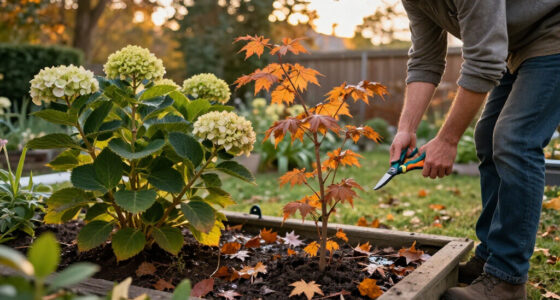
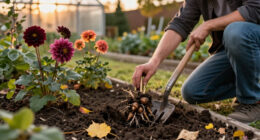
For the method, the author digs a trench about 12–18 inches (30–45 cm) deep in an empty bed, mixes in the scraps and some soil, then covers the material with at least 6–8 inches (15–20 cm) of soil. Fall is also a good time to test garden soil. A rough guide is about 1 gallon (4 liters) of scraps for a 4-by-4-foot (1.2-by-1.2-meter) bed. The report recommends keeping the amount modest, covering food waste fully, and not digging near established plants or burying scraps in a bed intended for immediate planting.
A Bin-Free Way to Reuse Fall Scraps
The method gives gardeners with empty beds and no compost bin a direct way to handle some food scraps on site. If the material breaks down as intended over winter, it can add organic matter to the soil ahead of spring planting. That makes the report relevant to readers looking to reuse household waste, though it does not establish a measured improvement in soil quality or plant growth.
The precautions matter as much as the ingredient list. Food scraps left exposed can attract animals, while digging near growing plants can disturb roots. The article’s advice to use an empty area, keep the amount limited and bury scraps beneath a substantial layer of soil addresses those practical risks. The recipe should be understood as a gardening practice described by one author, not a guaranteed substitute for all soil amendments or composting approaches.
As an affiliate, we earn on qualifying purchases.
How the Trench Method Works
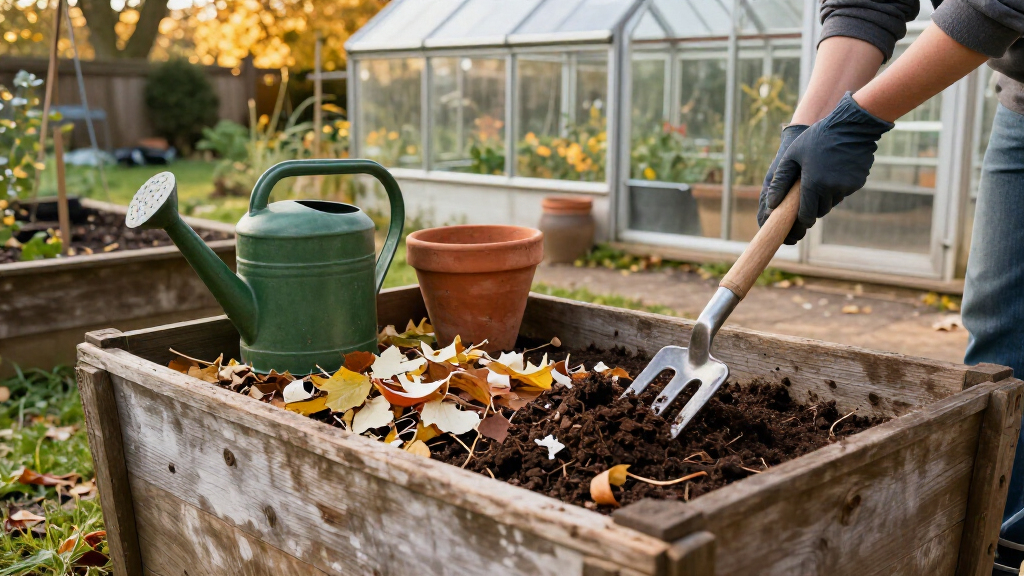
In the report, the author collects suitable scraps in a kitchen caddy and empties it into a shallow trench every few days, moving to another spot in an empty raised bed and continuing until the ground freezes. The material is buried in place rather than processed in a separate compost container. The stated aim is for it to break down over winter before the bed is planted in spring.
The author says the ingredients can be left out if unavailable, but does not recommend replacing them with other items. The amounts are also described as rough guidance, not a strict formula. Where available, the report suggests mixing in a couple of handfuls of shredded leaves to help balance moist scraps and keep them from clumping. It also mentions a small amount of fresh grass clippings, but the supplied source text ends before giving further guidance on that addition.
“Think of it as an easy, personal way to put kitchen scraps to work in the garden, rather than a precise recipe.”
— Gardening Know How report author
garden soil amendment organic compost
As an affiliate, we earn on qualifying purchases.
As an affiliate, we earn on qualifying purchases.
What the Recipe Cannot Establish
The supplied report does not provide trial results or measurements showing how quickly the mix breaks down, how much it changes soil nutrients, or whether it improves spring growth. It also does not quantify the effects of cinnamon, oats or beer in the buried mixture. The author explicitly says the beer’s measurable contribution is unknown and describes several other claimed uses as popular gardening ideas rather than established outcomes.
The source text supplied for this article cuts off during its discussion of grass clippings, so any further instructions or cautions from the original report cannot be confirmed here. Gardeners should also account for local conditions, including soil temperature and the timing of ground freeze, which can affect how much breakdown occurs before planting.
As an affiliate, we earn on qualifying purchases.
Before Spring Planting Begins
The report’s next step is seasonal: bury modest batches in empty beds before the ground freezes, then allow them to break down over winter. It advises keeping food waste covered and avoiding planting immediately in a bed where scraps have just been buried. The source does not give a specific spring inspection date or a method for checking whether all material has decomposed, so gardeners will need to assess their beds before planting.
No follow-up research or measured results are cited in the supplied material. For now, the recipe remains an attributed, practical gardening suggestion; the claimed soil benefits and the contribution of several optional ingredients are not quantified.
garden soil nutrients organic fertilizer
As an affiliate, we earn on qualifying purchases.
As an affiliate, we earn on qualifying purchases.
Key Questions
Does this fall soil method require a compost bin?
No. The scraps are buried directly in a trench in an empty bed, where they are intended to break down over winter.
Which food scraps does the report say to avoid?
The author excludes meat, fish, bones and dairy, as well as produce scraps coated in oil, sauce or dressing.
How deep should the trench and soil covering be?
The report recommends a trench about 12–18 inches deep and at least 6–8 inches of soil over the scraps.
Are all six ingredients necessary?
No. The author says ingredients can be omitted if unavailable. Flat beer is optional, and the author says its effect on the soil is not known to be measurable.
Is the recipe proven to improve soil or plant growth?
The supplied report does not present trial data or measured outcomes. It describes a personal method intended to add organic matter, not a proven guarantee of improved growth.
Source: rss
Halloween Picks
halloween
As an affiliate, we earn on qualifying purchases.