TL;DR

Get garden gear delivered free with Prime
- Fast, free delivery on millions of items
- Prime Video, Amazon Music and more included
- Member-only deals all year
Caladiums in regions with freezing winters should be lifted in fall as foliage fades, before frost reaches the plants. Gardeners can clean, dry and store the tubers in dry packing material at 55 to 60°F or warmer, then replant when frost risk has passed and soil reaches at least 70°F. In mild regions, winter rain and poor drainage can also make lifting worthwhile.
Caladiums should be lifted in fall before frost damages them in areas with freezing winters, according to a seasonal care guide from Gardener’s Path. The report outlines how to dig up the tropical plants’ tubers, dry them and store them through winter, offering gardeners in colder or very wet climates a way to replant them the following spring.
The guide says to watch for fading foliage and cooler conditions as signs that caladiums are heading into dormancy. In colder regions, it recommends lifting when soil is around 60°F, before a freeze. The article also points to falling nighttime temperatures and drooping, pale leaves as practical cues. Caladiums may tolerate temperatures in the 40s, it says, but a freeze can kill them.
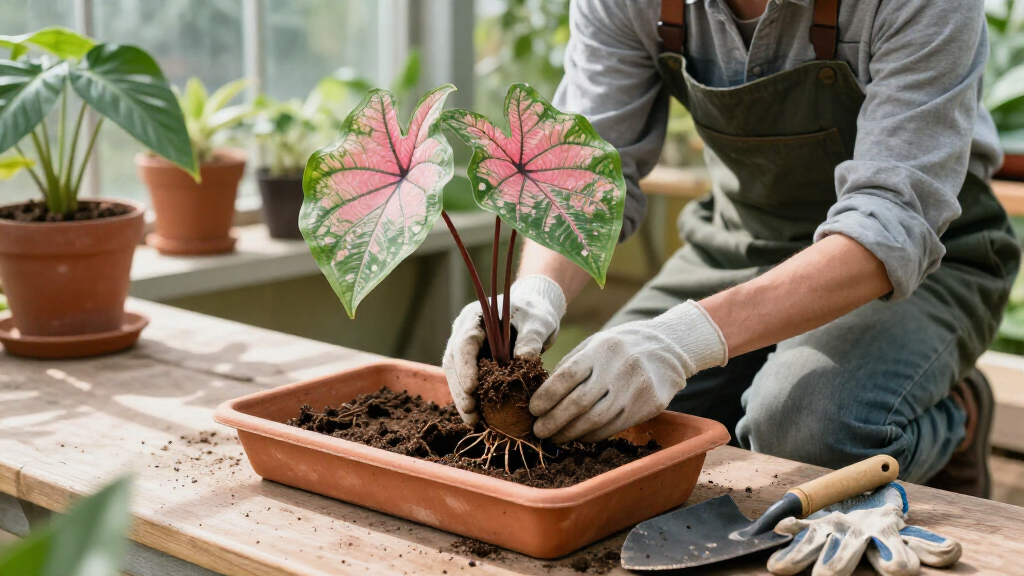
To lift the plants, loosen soil about six to eight inches around the clump and eight inches deep, taking care not to cut or bruise the shallow tubers. Raise the plant with its root ball, then remove soil gently—either with a low-pressure hose or by letting the plant dry enough for soil to brush away. The guide advises trimming off soft, dead or rotten areas and letting the tubers dry in a warm, dry spot out of direct sun. Curing may take a week or longer; the tubers should feel dry before storage.
Once cured, remove the remaining foliage and roots. Pack tubers at least an inch apart in dry vermiculite, sphagnum peat moss or sand, then cover them with two to three inches of the same material. Store them in a cool, dry place at 55 to 60°F or warmer, protected from direct sun and disturbance. Keep the packing medium dry. The guide says to replant outdoors after frost risk has passed and soil is at least 70°F.
Protecting Tubers Through Winter
Proper timing and drying determine whether stored caladiums are likely to remain usable for spring planting. Digging before frost helps protect the plants from cold injury, while allowing the tubers to dry fully before packing reduces the risk of rot during storage, according to the Gardener’s Path guidance.
The advice also applies beyond cold climates. In regions where winters are frost-free but persistently rainy, wet soil and poor drainage can cause tubers to rot, the report says. Lifting them can give gardeners an alternative to leaving them in saturated ground. The practical stakes are a chance to keep plants from one season to the next rather than treating them as annuals.
As an affiliate, we earn on qualifying purchases.
Cold and Wet Winter Risks
Caladiums are tropical foliage plants that grow as perennials in USDA hardiness zones 9 to 11, according to the source article. In colder places, they are often grown as annuals or lifted in autumn and stored. The plants grow actively through warm months and enter dormancy as temperatures drop and their leaves fade.
The guide says caladiums grow best in soil at 70°F or warmer. In warm regions where soil remains above 60°F year-round, they may be left in the ground, though winter drainage matters. Container-grown plants can be brought indoors when nighttime temperatures begin falling below 60°F. The report says to stop watering once growth ceases and resume when spring growth appears.
caladium curing and drying supplies
As an affiliate, we earn on qualifying purchases.
As an affiliate, we earn on qualifying purchases.
Timing Varies by Garden
The source gives temperature ranges and visual signs, but does not set one calendar date for lifting; local weather, soil conditions and plant behavior differ. It also notes that curing time varies, so a week is a guide rather than a fixed deadline. Gardeners should not store tubers until all parts feel dry.
The article describes fungicide use as optional and directs readers who choose it to follow package instructions. It does not establish that treatment is necessary for every gardener or provide evidence comparing treated and untreated storage. Storage success can also depend on local conditions and handling, so the guidance does not guarantee that every tuber will survive until spring.
garden vermiculite for tuber storage
As an affiliate, we earn on qualifying purchases.
As an affiliate, we earn on qualifying purchases.
Replant After Frost Passes
Check stored tubers during winter and keep their packing medium dry, while maintaining storage temperatures above the guide’s stated lower range. In spring, wait until frost danger has passed and the soil reaches at least 70°F before planting outdoors. Gardeners can also start tubers indoors in early or mid-spring in a warm location, then move them outside in early summer, the report says.
For indoor starting, place each tuber bud-side up in well-draining potting medium, keep it moist but not waterlogged, and provide warmth and indirect light. The source does not give a fixed date for moving plants outdoors; that decision depends on local frost conditions and soil temperature.
As an affiliate, we earn on qualifying purchases.
Key Questions
When should I lift caladiums?
Lift them in fall as the leaves fade, before a freeze. The Gardener’s Path guide suggests using soil near 60°F, along with local forecasts and signs such as drooping or pale foliage.
How should I dry caladium tubers before storage?
Remove clinging soil gently, cut away soft or rotten areas, and leave the tubers in a warm, dry place out of direct sun. Curing can take a week or longer; wait until the tubers feel dry before packing them.
What temperature is suitable for storing caladiums?
Store cured tubers in a cool, dry location where temperatures do not fall below 55 to 60°F, packed in dry vermiculite, sphagnum peat moss or sand.
Can caladiums stay in the ground in a mild climate?
They may be left in the ground in warm, frost-free areas, but the guide warns that persistently wet soil and poor drainage can lead to rot. Lifting and storing is one option in especially rainy winters.
When can stored caladiums be planted again?
Plant outdoors after frost risk has passed and soil is at least 70°F. Alternatively, start them indoors in spring and move them outside when local conditions are suitable.
Source: rss
Fall yard work Picks
leaf blowers
As an affiliate, we earn on qualifying purchases.