TL;DR

Get garden gear delivered free — and shop member deals
- Fast, free delivery on millions of items
- Access to Prime Big Deal Days deals on October 6–7
- Prime Video, Amazon Music and more included
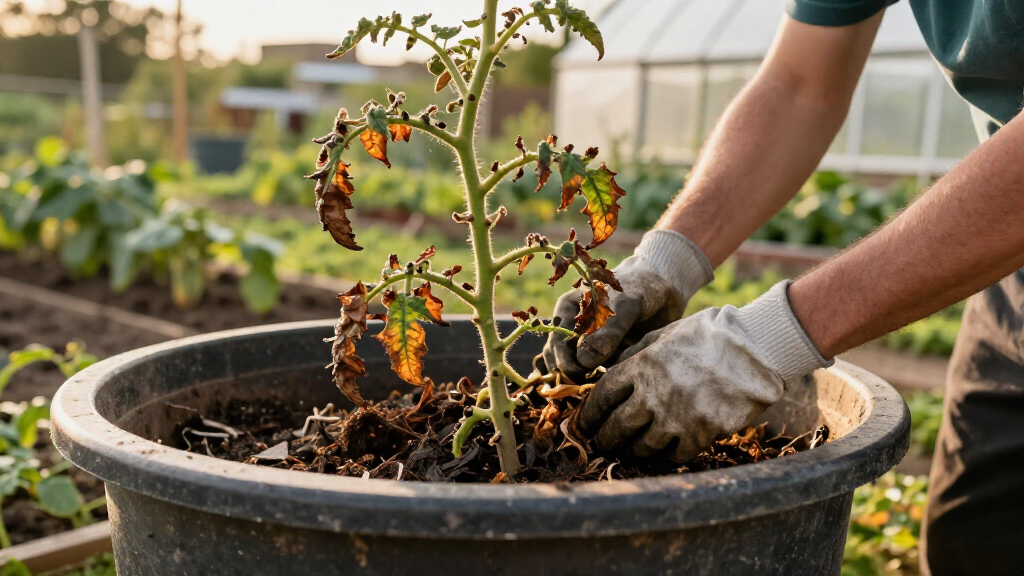
Planet Natural’s fall guide recommends sorting spent tomato plants by their overall health and symptoms before disposal. Healthy, naturally declining vines can go in a well-managed home pile; plants with fast-spreading lesions, unexplained wilt, crown decay or other concerning signs should be kept out of a casual backyard compost pile. Symptoms alone may not identify the cause, so check local disposal rules and seek local advice when needed.
Planet Natural’s fall checklist advises gardeners to inspect spent tomato plants before composting them, separating healthy, naturally declining vines from plants with signs that may indicate disease or serious pest damage. The guidance matters because some symptoms overlap, and a small backyard pile is not a dependable way to sanitize material whose condition is uncertain.
The guide recommends checking the whole plant on a dry day, rather than judging it from one spotted leaf. Inspect leaves, stems, fruit and the crown or roots, then look for patterns across the bed: whether one plant or several are affected, whether symptoms are spreading into new growth, and whether tomatoes or peppers nearby show similar trouble. Yellowing late in the season can reflect normal aging, drought, nutrient imbalance, herbicide injury or disease, so a visual check may not establish a diagnosis.
Vines with normal late-season decline, no concerning pattern of disease, no serious fruit rot and no heavy pest infestation can be composted at home, according to the checklist. It advises removing clips and ties, chopping vines, and mixing them with dry leaves, straw, shredded paper or other carbon-rich material. Keep the pile as moist as a wrung-out sponge and turn it as it settles. Sound but unwanted fruit can go in with healthy vines; dropped or rotting fruit should be collected separately.
Plants with rapidly spreading lesions, sudden wilt despite moist soil, badly decayed crowns or roots, or unusual growth and color warrant a more cautious choice. The guide recommends keeping suspicious plants out of a casual, cool home pile; bagging plants with broad blight-like damage or unexplained collapse for disposal in the trash under local rules is one option. A municipal yard-waste program may accept diseased material, but gardeners should check its current rules before sending it.
Why Sorting Vines Matters
The decision affects both compost quality and garden hygiene. Healthy tomato vines can add useful plant material to a home pile, but placing suspicious debris in a small, unevenly heated heap may not reliably reduce plant pathogens. The guide says a properly managed hot pile can reduce many pathogens, while cautioning that most backyard piles do not heat evenly or stay hot long enough for gardeners to treat heat as a certain sanitation step.
Taking time to sort plants also helps avoid treating an uncertain symptom as a confirmed disease. A conservative disposal choice for a badly affected plant can limit the movement of suspect material, while notes about which plants and bed areas were affected may help with later diagnosis and crop planning. The checklist does not say that every brown leaf signals a disease, or that every symptom can be identified by sight.
As an affiliate, we earn on qualifying purchases.
Inspect Before Fall Cleanup
The checklist frames cleanup as a three-way decision: a home compost pile, a municipal compost program that accepts yard waste, or the trash. It starts before plants are pulled, since examining symptoms while the plant is intact can reveal whether damage is confined to older leaves or involves stems, fruit and roots as well.
For suspected disease, the guide distinguishes cautious handling from diagnosis. Blight-like lesions, wilt and powdery growth can have multiple causes; leaf spots may also overlap among diseases and other stresses. If a diagnosis would affect what to plant, treat or save next year, the report suggests photographing the plant and contacting a local nursery rather than treating a visual impression as certain.
As an affiliate, we earn on qualifying purchases.
Symptoms Do Not Confirm Disease
The source material does not provide laboratory findings or establish that any particular symptom on an individual plant confirms a specific disease. Wilt, spots, powdery growth and unusual color can have more than one cause, and the checklist says inspection may not identify every pathogen. It also does not provide a universal disposal rule for all municipalities; acceptance of diseased garden waste depends on local program policies.
The source excerpt ends during its discussion of powdery growth and distorted or mosaic-like leaves. It therefore does not give a complete disease-by-disease account for those symptoms. Gardeners should treat unusual signs as reasons for caution, not as proof of a named infection, and seek local guidance if the diagnosis would change next season’s decisions.
As an affiliate, we earn on qualifying purchases.
Check Local Disposal Rules
Before disposing of suspicious vines, gardeners can check whether their municipal compost program accepts diseased garden material and follow local trash rules if using that route. For plants that appear healthy, remove reusable ties and clips, chop the vines and mix them into a managed pile with dry, carbon-rich material rather than leaving a wet mat on top.
For unclear or unusual symptoms, photograph the plant and contact a local nursery or other knowledgeable local resource. Keeping a record of affected plants and their location can support future diagnosis and planting decisions; the checklist does not specify a later publication or other scheduled update.
As an affiliate, we earn on qualifying purchases.
Key Questions
Can healthy tomato vines go in a backyard compost pile?
Yes, according to Planet Natural, if the vines show normal late-season decline and no concerning disease pattern, serious fruit rot or heavy pest problem. Chop them and mix them with dry, carbon-rich material in a managed pile.
Does a hot compost pile kill every tomato plant disease?
The checklist says a properly managed hot pile can reduce many plant pathogens, but most backyard piles do not heat evenly or remain hot long enough to guarantee sanitation. It advises keeping clearly suspicious material out of a casual home pile.
What should I do with a tomato plant that wilted suddenly?
Sudden wilt despite adequate soil moisture can have several causes. The guide recommends a conservative disposal choice when the cause is unknown, including bagging the plant for trash under local rules, and avoiding moving soil from around its root ball to another tomato bed.
Can a municipal compost program take diseased tomato plants?
Some programs may accept diseased garden material, but acceptance varies. Check the program’s current rules before sending tomato debris.
Should I diagnose tomato disease from one spotted leaf?
No. Planet Natural cautions that symptoms overlap and one leaf may not reveal the cause. Look at the whole plant and the pattern across the bed; if the diagnosis would affect next year’s choices, photograph it and ask a local nursery for guidance.
Source: rss
Halloween Picks
halloween
As an affiliate, we earn on qualifying purchases.