TL;DR

Get garden gear delivered free — and shop member deals
- Fast, free delivery on millions of items
- Access to Prime Big Deal Days deals on October 6–7
- Prime Video, Amazon Music and more included
Desert plants can die in January because they suffer dehydration, root damage, or overwatering, despite winter dormancy. Proper watering depends on soil, plant type, and weather—not just the calendar.
Ever wonder why your desert plants look perfectly fine in January, yet some still die? It’s not just the cold. Many gardeners wrongly assume that winter means zero watering and that plants are safe from dehydration. The truth is, desert plants are still fighting for water, even in the coldest months.
In this guide, you’ll learn why winter watering isn’t a simple “once a month” rule. Instead, it’s about understanding the delicate dance between soil moisture, plant type, and weather conditions. Get ready to see winter plant care in a new light — because your plants’ survival depends on it.
Never assume winter means no watering — check soil moisture at root depth first.
Overwatering in winter can rot roots just as quickly as drought can dehydrate plants.
Cold soil slows water uptake, but dehydration still occurs if moisture isn’t maintained.
Use a moisture probe or long screwdriver to reliably assess soil rather than relying on appearance alone.
Adjust watering based on plant type, soil, exposure, and recent weather — not a fixed schedule.
Winter Watering: Why Desert Plants Still Die in January
It’s not just the cold. Desert plants keep fighting for water through the coldest months — and both drought and overwatering can kill them silently. Survival depends on soil moisture at the root zone, plant type, and weather. Not the calendar.
Why Your Desert Plants Are Still Drinking in January
Dormant doesn’t mean dormant-thirsty. Evergreens like ocotillo and desert sage keep transpiring through sunny, windy winter days, while cold soil slows the roots that should replace that lost moisture.
Leaves Keep Losing Water
Evergreen species continue losing moisture through leaves and needles on bright, windy days — even when growth appears completely dormant. Dehydration follows if roots can’t keep pace.
Roots Absorb Slower Below 50°F
Cold soil acts as a barrier for roots. A mature mesquite in a shaded bed may struggle to take up moisture during a cold snap — risking dehydration even after recent rains.
Moist Soil Protects Roots
Adequately moist soil changes temperature more slowly than bone-dry soil, offering roots some freeze protection. But saturation is never safe — wet tissues freeze more easily.
Relative Winter Water Demand by Plant Type (Indicative)
Two Silent Killers: Drought vs. Overwatering
Overwatering in winter can rot roots just as quickly as drought can dehydrate plants. Both extremes are dangerous — and both are easy to miss until it’s too late.
Too Little Water
Roots can’t replace moisture lost to sun and wind. A dry root zone in winter causes stress, wilting, and eventually plant death.
- Wilting, dull color, leaf drop
- Shriveled pads on prickly pear
- Dry, cracked soil at root depth
- Vulnerability to cold damage
Too Much Water
Saturated, cold soil is oxygen-starved — a perfect environment for root rot, crown decay, and fungal issues that kill plants slowly and silently.
- Blackened roots, foul smell
- Wet tissues freeze more easily
- Soggy soil persisting for weeks
- Fatal for aloe, agave, and succulents
What Different Desert Plants Need in Winter
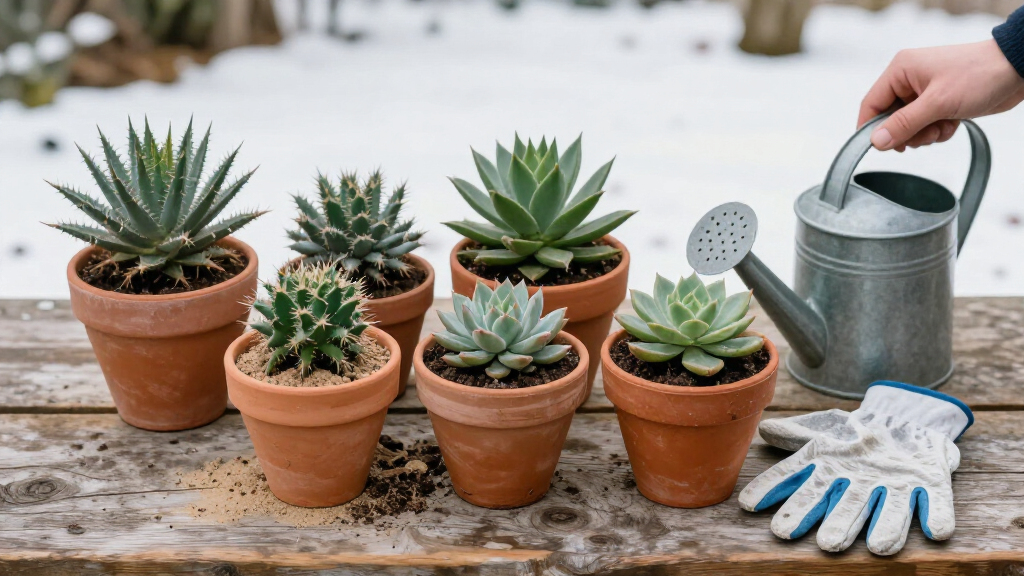
A newly planted desert sage may need occasional deep watering; a mature barrel cactus in a pot may need nothing at all. Understanding these differences prevents winter losses.
| Plant Type | Water Needs | Special Tips |
|---|---|---|
| Evergreen shrubs & trees | Moderate, ongoing moisture. These plants keep transpiring all winter. | Check soil moisture at least every 4–6 weeks at root depth. |
| Succulents & cacti | Very little. Mostly drought-tolerant through winter. | Water only if soil is completely dry — and avoid wetting the crown. |
| Recently planted landscape | More frequent. Limited root systems can’t reach deeper moisture. | Keep soil slightly moist; monitor closely through cold snaps. |
The Winter Watering Protocol
Six steps that replace the calendar with observation. The goal: avoid both dehydration and overwatering — every plant and site is different.
Probe the Soil
Check several inches below the surface with a probe or long screwdriver.
Water Deeply
Moisten the entire root zone, then let it drain and partially dry.
Time It Right
Water in late morning while the ground is not frozen.
Respect Freezes
No watering on frozen soil or when a hard freeze is forecast.
Target Roots
Water the root zone — never the crown, trunk, or stems. Check container drainage.
Follow Rainfall
Adjust irrigation to recent weather, not a fixed schedule.
Why Desert Plants Die in January — The Real Causes
Damage blamed on “not enough water” is often caused by something else entirely. Here are the most common killers, ranked by how easily they go unnoticed.
Desiccation
Roots can’t replace moisture lost during sunny, dry, or windy weather.
Root Rot
Frequent irrigation or poor drainage leaves cold soil saturated and oxygen-starved.
Freeze Injury
Tissues or exposed roots are damaged by temperatures below species tolerance.
Water Trapped in Crowns
Moisture around the growing point of agaves, yuccas, and aloes invites rot.
Summer-Style Irrigation
Frequent shallow watering encourages surface roots that dry and freeze easily.
Misdiagnosis
Real culprit may be cold, drainage problems, rodents, disease, or earlier heat stress.
Poor Establishment
Plants installed just before winter lack the roots to survive cold and drought together.
Salt Accumulation
Limited winter rainfall plus repeated irrigation lets salts build up around roots.
Why Your Desert Plants Are Still Drinking Water in January
Despite the dormancy of many desert plants, they still lose water through their leaves or needles on sunny, windy winter days. Evergreen species like ocotillo or desert sage keep transpiring, which can cause dehydration if their roots can’t keep up. Roots absorb water much more slowly in cold soil, often making plants thirstier than they look.
Imagine a cactus sitting in frozen ground. Its roots are barely active, yet if the soil dries out completely, the plant starts to wilt. Even in winter, a dry root zone can cause stress and lead to plant death. This is why winter watering isn’t about a fixed schedule but about checking moisture at the root zone.
soil moisture meter for desert plants
As an affiliate, we earn on qualifying purchases.
As an affiliate, we earn on qualifying purchases.
How Cold Soil Slows Water Absorption — But Doesn’t Stop It
Cold soil acts like a barrier for roots. When temperatures drop below 50°F, roots absorb water less efficiently. This slowdown can leave plants dehydrated even if the air feels cool and moist. For example, a mature mesquite in a shaded bed may struggle with moisture uptake during a cold snap, risking dehydration despite recent rains.
Cold soil also changes temperature more slowly than dry soil, which can help roots stay protected if moisture is present. But don’t mistake this for safety—overwatering with cold soil can drown roots, leading to rot and fungal issues. The key is to water deeply enough to reach the roots but avoid saturation.
Understanding this balance is crucial because overwatering in cold conditions can be just as harmful as drought. Excess moisture combined with cold temperatures creates a perfect environment for root rot, which can kill plants slowly and silently. Conversely, under-watering during cold spells can lead to dehydration, making plants vulnerable to cold damage and stress. The goal is to find that sweet spot where roots are moist but not waterlogged, ensuring they can function effectively despite the chill.
As an affiliate, we earn on qualifying purchases.
Why Overwatering in Winter Is Just as Deadly as Drought
It’s a common mistake: watering a desert plant in winter, thinking it needs hydration. But saturated, cold soil creates an oxygen-starved environment that promotes root rot and crown decay. For succulents like aloe or agave, this can be fatal. Their thick tissues are already sensitive to freezing; wet tissues freeze more easily, increasing damage risk.
Picture a container of prickly pear in a shaded corner. It’s been watered lightly, but the soil stays soggy for weeks. The roots can’t breathe, and cold weather slows their recovery. Overwatering turns from a help to a hazard fast, especially in winter.
The critical point is that overwatering in winter can silently undermine plant health. Roots need oxygen to function, and waterlogged soil deprives them of this vital resource. Over time, this leads to root decay, which weakens the entire plant and makes it susceptible to disease and cold injury. On the other hand, drought stress during winter can cause dehydration, leading to wilting and tissue damage. Both extremes are dangerous, and understanding this tradeoff helps gardeners tailor their watering practices to avoid these pitfalls.
As an affiliate, we earn on qualifying purchases.
What Different Desert Plants Need in Winter — A Quick Guide
| Plant Type | Water Needs | Special Tips |
|---|---|---|
| Evergreen shrubs & trees | Moderate, ongoing moisture | Check soil moisture at least every 4-6 weeks |
| Succulents & cacti | Very little; mostly drought-tolerant | Water only if soil is completely dry, and avoid crown moisture |
| Recently planted landscape | More frequent, due to limited root system | Keep soil slightly moist; monitor closely |
Understanding these differences helps prevent winter losses. For instance, a newly planted desert sage might need occasional deep watering, while a mature barrel cactus in a pot might need nothing at all.
As an affiliate, we earn on qualifying purchases.
How To Keep Your Desert Plants Alive in the Cold Months
- Check soil moisture several inches below the surface. Use a probe or moisture meter for accuracy.
- Water deeply enough to moisten the entire root zone, then let it drain and dry out partly.
- Warm your watering time to late morning when soil isn’t frozen.
- Don’t water if a hard freeze is forecast or if the soil is frozen.
- If soil is very dry and a freeze is coming, a light watering can help buffer the cold. But never flood the roots.
- Focus water at the root zone, not on the plant crown or stems.
- For containers, confirm drainage holes are open, and remove excess water from saucers.
- Adjust irrigation based on recent rain, not a fixed calendar.
Remember, the goal is to avoid both dehydration and overwatering. Every plant and site is different, so observe carefully and adapt your watering accordingly.
What Happens When You Get It Wrong — Real Risks and Signs
Getting winter watering wrong can lead to quick or slow plant death. Too little water causes dehydration, evident in wilting, dull color, and leaf drop. Too much, especially in cold, causes root rot, which looks like blackened roots or a foul smell.
For example, a young yucca planted last fall might suddenly turn brown at the base if roots rot from overwatering. Conversely, a dormant prickly pear with shriveled pads signals dehydration.
Knowing the signs helps you act fast. Check roots or cut open a plant if you suspect rot. Better to err on the side of slightly dry than soaked in winter.
Frequently Asked Questions
Do desert plants need water in winter?
Yes, but it depends. Evergreen desert plants and new installations often need some supplemental water to prevent dehydration. Established cacti and succulents typically require very little, as their drought-tolerant adaptations carry them through dry winter months.
How often should I water in winter?
There’s no one-size-fits-all answer. Check soil moisture at root level every few weeks. Adjust based on recent rainfall, soil type, plant needs, and local temperatures. The key is to keep roots just moist enough without overdoing it.
Should I water before a freeze?
If the soil is dry and a freeze is imminent, a light deep watering can help buffer roots from dehydration. But avoid saturating the soil or watering frozen ground, as this can cause more harm than good.
Can watering cause freeze damage?
Yes. Excess water can make tissues more susceptible to freezing injury, especially if the plant is wet and temperatures drop sharply. Proper timing and quantity are critical — never flood or irrigate during a hard freeze.
How do I tell if my plant is dehydrated or damaged by cold?
Dehydration causes dull, wilted leaves, and dry, crispy edges. Cold damage often appears as blackened or translucent tissue, sometimes with a sudden collapse. Roots may be rotted or waterlogged, so inspecting below ground helps diagnose accurately.
Conclusion
Winter watering isn’t about blindly following a schedule. It’s about paying close attention to your soil, your plants, and the weather. Keep roots moist but not soaked, and you’ll give your desert plants the best shot at surviving the cold months.
Remember, a healthy plant in winter is one that’s managed carefully — not one that’s over- or under-watered. Think of your landscape as a living, breathing system that needs your watchful eye year-round. Keep it balanced, and your desert garden will thrive through January and beyond.
Fall yard work Picks
leaf blowers
As an affiliate, we earn on qualifying purchases.