
TL;DR

Get garden gear delivered free with Prime
- Fast, free delivery on millions of items
- Prime Video, Amazon Music and more included
- Member-only deals all year
Proper hardware is essential for shade cloth that endures wind. High-quality, corrosion-resistant grommets, clips, and lock channels, combined with tensioning systems, can reduce fabric flapping by up to 80% and last for years outdoors.
Use stainless steel grommets and lock channels with tensioning for maximum wind resistance.
Regular inspection and maintenance extend hardware lifespan and keep your shade tight.
Installing hardware properly with the right tools prevents tearing and loosening.
Investing upfront in quality hardware saves money and hassle over time.
Combine hardware choices with proper tensioning to reduce fabric flapping by over 80%.
Grommets, Clips and Lock Channel
Shade cloth survives wind when its attachment system controls movement. Corrosion-resistant hardware, evenly distributed loads and deliberate tensioning turn a vulnerable sheet of fabric into a resilient outdoor barrier.
Achievable when tensioning systems are combined with correctly installed lock channels.
A durable combination for gusts, heat, sand and long-term outdoor exposure.
Movement magnifies stress at every edge, corner and fastening point.
Three components. Three different jobs.
Wind resistance is strongest when attachment points, edge capture and adjustable tension work together. No single fastener compensates for a loose or uneven installation.
Grommets
Metal or UV-stabilized rings create defined fixing points. Heavy-duty stainless steel resists corrosion and helps distribute pulling force without cutting into the cloth.
Clips
Spring-loaded or locking clips make installation and removal fast. Choose sturdy stainless, galvanized or UV-resistant models with broad grips that spread pressure.
Lock Channel
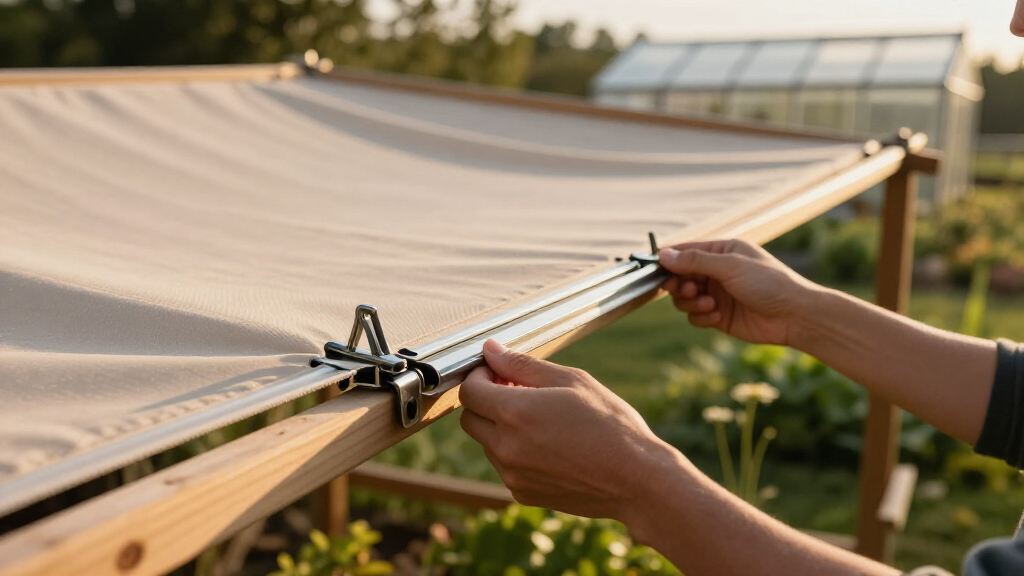
Aluminum or UV-resistant channels secure an entire cloth edge. Paired with tensioning, they provide the highest resistance to flapping and localized tearing.
Match the fastener to the exposure.
Material strength matters, but coverage matters too. Continuous edge capture generally outperforms isolated attachment points as gust intensity rises.
| Decision factor | Grommets | Clips | Lock channels |
|---|---|---|---|
| Preferred material | Stainless steel or UV-stabilized plastic | Stainless, galvanized steel or UV plastic | Aluminum or UV-resistant plastic |
| Wind resistance | ✓High when heavy-duty | ~Moderate to high | ✓Very high with tensioning |
| Installation | ~Tool and spacing required | ✓Quick and removable | ~Alignment and fixing required |
| Load distribution | Point by point | Point by point | Continuous along the edge |
| Best use | Perimeters and tie-down points | Supplemental grip and seasonal access | Permanent, high-wind installations |
Use lock channels as the primary edge restraint, tension gradually across the surface, then reinforce vulnerable spans with stainless hardware. The system—not merely the individual part—creates resilience.
A six-step wind-resistant build.
Precision prevents weak spots. Work in sequence, keep edges aligned and increase tension in small increments rather than pulling one area tight all at once.
Select durable parts
Specify corrosion-resistant grommets, clips and channels for outdoor exposure.
Mark equal spacing
Lay out consistent tension points along reinforced cloth edges.
Set the grommets
Punch clean holes and press each ring firmly with the correct tool.
Align the channel
Level, clamp and fasten the track securely to the support frame.
Tension gradually
Work across opposing edges until the cloth is evenly taut.
Reinforce and test
Add clips where needed, then check corners, spans and movement.
Over-tightening one corner creates concentrated stress; under-tensioning lets the cloth flap. The target is firm, even tension across the complete surface.
Flapping is the real wear multiplier.
Every repeated snap loads the fabric, fasteners and frame. Better edge capture and tension progressively reduce movement—and therefore reduce fatigue.
Relative movement control
Conceptual performance comparison based on material quality, edge coverage and the presence of active tensioning.
Resilience spectrum
Move right by improving material durability, attachment coverage and tension control.
Four habits keep hardware working.
Sun, sand, salt, moisture and repeated gusts slowly change an installation. Seasonal checks catch small failures before they spread through the cloth.
Inspect every season
Check for corrosion, bending, cracked plastic, loose fasteners and fabric distortion—especially before forecast high winds.
Replace damaged parts
Remove rusted or bent clips immediately. A single weak attachment point can create uneven loading and initiate a tear.
Wash away deposits
Use fresh water and a soft brush to remove dust, sand and salt that hold moisture against metal surfaces.
Re-tension after storms
Check cables and lock channels after major gusts. Restore even tautness before repeated flapping accelerates wear.
Before you upgrade.
Quality hardware costs more upfront, but fewer failures, repairs and replacements typically make it the practical long-term choice.
Are stainless steel grommets worth the extra cost?
Yes in exposed or desert settings. They resist corrosion and deformation better than low-grade alternatives, helping prevent loosened edges and costly tears.
How often should hardware be inspected?
Inspect at least once per season and again before or after severe wind. Pay special attention to corners, long unsupported spans and visibly loose areas.
Can an existing shade be retrofitted?
Often, yes. Replace deteriorated fasteners, reinforce sound fabric edges and add improved clips or channels where the frame allows secure attachment.
Can a DIYer install lock channels?
Most careful DIYers can. Follow the manufacturer’s fixing schedule and use a level, clamps and gradual tension adjustments to maintain alignment.
Build a system, not a collection of parts.
Use stainless attachment points, continuous edge restraint and adjustable tension together. Install them evenly, inspect them seasonally and correct looseness before the next gust arrives.
Why Your Shade Cloth Hardware Needs to Be Tougher Than Wind
Wind isn’t just a breeze here; it’s a force. Your shade cloth hardware must resist corrosion, tearing, and loosening. High-quality, corrosion-resistant grommets and stainless steel clips stand up to the intense sun and gusts. But why does this matter so much? Because inferior hardware can fail under pressure, leading to fabric tears or the shade becoming loose, which not only reduces shade effectiveness but also increases maintenance costs. The tradeoff often lies in cost versus durability—cheap hardware might save money initially but can result in frequent replacements, especially in harsh desert conditions. Investing in robust hardware ensures your shade remains secure longer, saving you time, money, and the hassle of repairs. Additionally, durable hardware maintains tension over time, which is crucial for preventing flapping that accelerates fabric wear. Ultimately, choosing the right hardware is about creating a resilient barrier against nature’s toughest elements, ensuring your outdoor space remains comfortable and protected for years to come.
stainless steel grommets for shade cloth
As an affiliate, we earn on qualifying purchases.
As an affiliate, we earn on qualifying purchases.
What Hardware Works Best for Windy Conditions? The Top Choices
Not all hardware is created equal when it comes to surviving desert winds. Heavy-duty stainless steel grommets are less likely to rust and tear, and their strength helps maintain the integrity of the fabric under stress. Lock channels equipped with tensioning systems are vital because they allow you to fine-tune the fabric’s tautness, which directly impacts how well the shade withstands gusts. Proper tensioning prevents excessive flapping that can loosen fasteners or cause tears. Clips, especially those with spring-loaded grips, are quick to install and remove, but their effectiveness depends on their material and design; high-quality, sturdy clips resist wind pulling and reduce fabric movement. When selecting hardware, consider the tradeoffs: heavier materials might be more resistant but can be harder to handle or install, while lighter options may require more frequent adjustments. The ideal setup balances strength, ease of installation, and long-term durability, ensuring your shade remains secure even in the fiercest desert storms.
Here’s a quick comparison:
| Feature | Grommets | Clips | Lock Channels |
|---|---|---|---|
| Material | Stainless steel, UV-stabilized plastic | Galvanized steel, UV plastic | Aluminum, UV-resistant plastic |
| Wind Resistance | High if heavy-duty | Moderate to high | Very high with tensioning |
| Ease of Installation | Moderate | Easy | Moderate |
wind-resistant shade cloth lock channels
As an affiliate, we earn on qualifying purchases.
As an affiliate, we earn on qualifying purchases.
Step-by-Step: Installing Hardware That Won’t Fail in Wind
- Choose high-quality, corrosion-resistant grommets and lock channels—skimping here risks early failure in high winds.
- Use a grommet tool to punch evenly spaced holes along the shade cloth’s edges, ensuring consistent tension points that distribute stress evenly.
- Insert the grommets securely, pressing firmly to prevent tearing; proper installation avoids weak spots that can rip under gusts.
- Attach the lock channels to your support frame, making sure they are aligned and tightly fastened to prevent shifting during storms.
- Secure the shade cloth edges into the lock channels, and adjust tension gradually to achieve a taut surface that resists flapping.
- Attach clips at intervals along the grommets or lock channels for extra hold, especially in areas prone to high winds.
- Regularly check and tighten hardware before storms or wind storms hit, as even the best hardware can loosen over time.
As an affiliate, we earn on qualifying purchases.
How to Keep Your Shade Cloth Hardware Working in Wind Year After Year
Windy weather can wear down hardware fast, especially in desert environments where sand, heat, and moisture accelerate corrosion. To keep your setup strong and reliable:
- Inspect your hardware regularly for signs of corrosion, rust, or bending—these small issues can compromise the entire system’s integrity.
- Replace any rusted or bent clips immediately, as they can cause uneven tension or tearing of the fabric.
- Clean hardware with fresh water and a soft brush every season to remove dust, sand, and salt deposits that can accelerate corrosion.
- Re-tension lock channels and cables periodically, especially after storms, to maintain optimal tautness and prevent flapping that can weaken hardware points.
In a desert backyard, I once replaced rusty grommets with stainless steel ones after just two years. The difference was clear: no tearing, no loosening, just a secure shade all summer long. Regular maintenance not only prolongs hardware life but also ensures your shade remains effective and safe during fierce gusts.
corrosion-resistant shade cloth clips
As an affiliate, we earn on qualifying purchases.
As an affiliate, we earn on qualifying purchases.
What to Expect When Upgrading Your Shade Hardware
Upgrading to wind-resistant hardware isn’t just a matter of swapping out parts; it’s an investment in the longevity and reliability of your shade. Expect to spend a little more upfront on quality components—like stainless steel grommets and tensioning lock channels—because these materials resist corrosion and wear far better than cheaper alternatives. While the initial cost might be higher, the long-term benefits include fewer replacements, less downtime, and peace of mind during storms. Additionally, installing high-quality hardware often involves a bit of extra effort and precision, but the payoff is a shade that stays taut and secure through even the most ferocious desert winds. Think of it as giving your outdoor space a sturdy backbone—an upgrade that ensures your shade endures, protecting your family and investments for years to come.
Frequently Asked Questions
Are stainless steel grommets really worth the extra cost in my desert yard?
Absolutely. They resist rust and tearing far better than plastic or aluminum, especially in the intense sun and occasional storms. Over time, they pay for themselves by lasting longer and preventing costly repairs.How often should I check my shade hardware for wind damage?
Inspect your hardware at least once each season, especially before storms or high winds. Look for rust, bent clips, or loose lock channels. Catching small issues early keeps your shade secure longer.Can I install lock channels myself, or do I need a pro?
Most DIYers can handle it with basic tools and patience. Follow manufacturer instructions carefully, and use a level and clamps to keep everything aligned. It’s a straightforward upgrade that makes a big difference.What’s the biggest mistake people make when installing shade hardware?
Ignoring proper tension—either making it too loose or too tight—can cause tearing or hardware failure. Regularly re-tension lock channels and cables, especially after storms, for best results.Conclusion
When the desert winds pick up, your shade’s strength depends on more than fabric. It’s the hardware—grommets, clips, and lock channels—that keeps it all together. Make smart choices upfront, check regularly, and your shade will survive gusts and storms for years to come. Think of it as giving your outdoor space a sturdy backbone that’s built to last through the wildest weather.Halloween Picks
halloween
As an affiliate, we earn on qualifying purchases.