The best flowering vine overall in this roundup is Clematis ‘Jackmanii’: it pairs showy flowers with a perennial habit, without the scale and long wait of wisteria. For a long bloom season, Major Wheeler honeysuckle is a standout live-plant choice, while heavenly blue morning glory suits gardeners who want fast color from seed. The main tradeoffs are how quickly a vine grows, how much support and pruning it needs, and whether it blooms by day, at night, or only after it matures. Fragrance, evergreen foliage, and winter hardiness also narrow the field. Read on for the full breakdown and help matching each vine to your space and priorities.

Get garden gear delivered free with Prime
- Fast, free delivery on millions of items
- Prime Video, Amazon Music and more included
- Member-only deals all year
Complete the kit


Key Takeaways
- Jackmanii clematis takes the top spot for combining prominent flowers and perennial growth without wisteria’s larger structural demands or slower route to flowering.
- Live plants trade speed for convenience: Mandevilla, honeysuckle, jasmine, and clematis arrive established, while morning glory, moonflower, and cardinal climber seeds require germination and early care.
- Wisteria is a long-term commitment, not a quick color fix: the two-year-old Blue Moon plant has a head start over Japanese wisteria seeds, but both need sturdy support and regular management.
- Bloom timing changes the experience: moonflower offers evening fragrance, morning glories open in daylight, and evergreen jasmine picks bring foliage value beyond their flowers.
- The best fit depends on climate and space as much as bloom color: tropical mandevilla and cold-tolerant perennial options differ sharply in winter needs, mature size, and suitability for containers or permanent structures.
| Marde Ross & Company Heavenly Blue Morning Glory Seeds, 250 Count |  | Best for Abundant Blue Blooms | Seed count: 250 | Flower color: Blue | Flower size: 4–5 inches | VIEW LATEST PRICE | See Our Full Breakdown |
| 2 Pink Mandevilla Vine Live Plants, 4–7 Inches Tall |  | Best for Warm-Climate Containers | Plant type: Mandevilla flowering vine | Quantity: 2 live plants | Plant height: 4–7 inches | VIEW LATEST PRICE | See Our Full Breakdown |
| Perennial Farm Clematis ‘Jackmanii’ Live Vine, 4-Quart Container |  | Best Perennial Flowering Vine | Flower color: Deep purple | Flower size: 5–6 inches | Blooming period: Spring to fall | VIEW LATEST PRICE | See Our Full Breakdown |
| White Moonflower Vine Seeds, Fragrant Night-Blooming Climbing Vine |  | Best for Evening Fragrance | Seed count: 20+ | Flower color: White | Maximum vine height: Up to 15 feet | VIEW LATEST PRICE | See Our Full Breakdown |
| 50+ Dark Red Morning Glory Climbing Vine Seeds |  | Best for Mixed-Color Annual Displays | Seed count: 50+ | Plant type: Annual | Mature size: 6–10 feet tall, 3–6 feet wide | VIEW LATEST PRICE | See Our Full Breakdown |
| 2 Red Coral Honeysuckle Live Plants, 5–9 Inches Tall |  | Best for Starter Plants | Plant type: Red Coral Honeysuckle flowering vine | Quantity: 2 live plants | Plant height: Approximately 5–9 inches each | VIEW LATEST PRICE | See Our Full Breakdown |
| Seed Needs Cardinal Climber Flower Seeds, 2 Packs (200 Seeds) |  | Best for Fast Seasonal Coverage | Botanical name: Ipomoea x multifida | Plant type: Annual flowering vine | Seed quantity: 200 seeds in 2 packs | VIEW LATEST PRICE | See Our Full Breakdown |
| Blue Moon Wisteria Vine, 2-Year-Old Plant |  | Best for Repeat Summer Blooms | Scientific name: Wisteria macrostachya ‘Blue Moon’ | Plant age: 2 years | Flower color: Lilac-blue | VIEW LATEST PRICE | See Our Full Breakdown |
| Sweet Autumn Clematis (Clematis paniculata), White Flowers, 8-Inch Container |  | Best for Fragrant Fall Flowers | Plant type: Perennial vine | Botanical name: Clematis paniculata | Flower color and size: White; approximately 1 inch | VIEW LATEST PRICE | See Our Full Breakdown |
| Japanese Wisteria Floribunda Seeds, Purple, 10 Pack |  | Best for Seed-Growing Wisteria Fans | Plant type: Japanese Wisteria Floribunda | Quantity: 10 seeds | Flower color: Purple | VIEW LATEST PRICE | See Our Full Breakdown |
| Carolina Jasmine Evergreen Vine, 2-Pack |  | Best for Year-Round Foliage | Plant type: Evergreen vine | Scientific name: Gelsemium sempervirens | Quantity: 2 plants | VIEW LATEST PRICE | See Our Full Breakdown |
| Major Wheeler Honeysuckle Live Plant in 2.5-Inch Pot |  | Best for Training on Garden Supports | Plant type: Honeysuckle (Lonicera) | Quantity: 1 live plant | Pot size: 2.5 inches | VIEW LATEST PRICE | See Our Full Breakdown |
| Perfect Plants Confederate Jasmine Live Plant, 1 Gallon |  | Best for Fragrant, Established-Size Planting | Plant type: Jasmine vine | Container size: 1 gallon | Mature height: 10–12 feet | VIEW LATEST PRICE | See Our Full Breakdown |
| flowering vine | Plant type | Sunlight |
|---|---|---|
| Marde Ross & Company Heavenly | — | Full sun or part shade |
| 2 Pink Mandevilla Vine Live Pl | Mandevilla flowering vine | — |
| Perennial Farm Clematis ‘Jackm | — | — |
| White Moonflower Vine Seeds | — | Full sun |
| 50+ Dark Red Morning Glory Cli | Annual | — |
| 2 Red Coral Honeysuckle Live P | Red Coral Honeysuckle flowering vine | Full sun to partial shade |
| Seed Needs Cardinal Climber Fl | Annual flowering vine | Full sun |
| Blue Moon Wisteria Vine | — | Full sun to partial shade |
| Sweet Autumn Clematis | Perennial vine | Full sun to part shade |
| Japanese Wisteria Floribunda S | Japanese Wisteria Floribunda | Full sun |
| Carolina Jasmine Evergreen Vin | Evergreen vine | — |
| Major Wheeler Honeysuckle Live | Honeysuckle (Lonicera) | — |
| Perfect Plants Confederate Jas | Jasmine vine | — |
More Details on Our Top Picks
Marde Ross & Company Heavenly Blue Morning Glory Seeds, 250 Count
For a big sweep of vivid blue flowers, Heavenly Blue morning glory offers more planting potential than the 20+ seeds in the Moonflower Vine pack. Its 250 untreated, non-GMO seeds can cover a long fence or trellis, and vines may reach 12 feet with 4–5-inch trumpet blooms from summer into fall. Germination is listed at 5–10 days, giving growers a relatively quick start, while the flowers can attract hummingbirds, butterflies, and bees. Compared with the live Jackmanii clematis, this is a seed-grown annual-style climbing option rather than a rooted perennial vine. The tradeoff is ongoing care: it needs regular watering, and sowing after frost means waiting until spring planting conditions are safe.
Pros:- 250 seeds give gardeners room to plant across a broad support or share with others
- Vivid blue flowers measure 4–5 inches across
- Vines can reach 12 feet and bloom from summer to fall
- Untreated, non-GMO, and neonicotinoid-free seeds
Cons:- Requires regular watering through growth
- Must be sown after frost, so it is not an instant mature display
- Needs a trellis, fence, or other climbing support to grow upward
Best for: Gardeners who want to cover a large trellis or fence with blue flowers and are comfortable starting vines from seed.
Not ideal for: Buyers seeking a ready-to-plant perennial vine or a climber that needs little watering.
- Seed count:250
- Flower color:Blue
- Flower size:4–5 inches
- Plant height:Up to 12 feet
- Germination time:5–10 days
- Bloom period:Summer to fall
- Sunlight:Full sun or part shade
- Seed treatment:Untreated, non-GMO, neonicotinoid-free
Our verdict“Choose these seeds for a generous display of blue climbers, but pick Jackmanii clematis instead if you want a rooted perennial.”
2 Pink Mandevilla Vine Live Plants, 4–7 Inches Tall
This pair of live pink mandevilla vines suits warm-climate gardeners who want plants to train rather than a packet of seeds to start. At 4–7 inches tall, they can be guided onto a trellis or grown in hanging baskets, giving more flexibility than the upright seed-grown Heavenly Blue morning glory. Mandevilla is listed for USDA Zones 9–11 and prefers full sun with well-drained soil, so it is a better fit for frost-free gardens or protected containers than colder regions. The set contains two plants, but they arrive without pots, and the photos depict mature growth rather than the shipped size. That means buyers need containers or a planting spot ready, plus realistic expectations about establishing small plants before they fill a support.
Pros:- Includes two live plants rather than seeds
- Can be trained on a trellis or grown in a hanging basket
- Pink flowers offer a different look from the blue and purple seed options
- Long-blooming flowers suit warm-season displays
Cons:- Plants arrive without pots
- Hardiness range is limited to Zones 9–11
- Small 4–7-inch plants need time and care before filling a support
Best for: Gardeners in USDA Zones 9–11 who want two live flowering vines for sunny trellises, patios, or hanging baskets.
Not ideal for: Gardeners in freezing climates who need a hardy outdoor vine, or buyers who expect plants to arrive in pots or at mature display size.
- Plant type:Mandevilla flowering vine
- Quantity:2 live plants
- Plant height:4–7 inches
- Flower color:Pink
- Sunlight exposure:Full sun
- Soil:Well-drained
- Hardiness zones:9–11
- Pot included:No
Our verdict“Pick this pair for a sunny, warm-climate container or trellis display, but choose Heavenly Blue morning glory for a larger seed quantity and broader zone listing.”
Perennial Farm Clematis ‘Jackmanii’ Live Vine, 4-Quart Container
Among these picks, Jackmanii clematis is the strongest choice for gardeners who want a rooted vine that can return as a perennial in a suitable climate. Its deep purple flowers span 5–6 inches, and the vine is expected to reach 10–12 feet on an arch, fence, or trellis. The stated bloom season runs from spring to fall, with June, July, and September listed as flowering months; that gives it a longer garden role than the summer-to-fall Heavenly Blue morning glory, which is grown from seed. This clematis is supplied in a 4-quart container, so it starts as a live, established plant rather than a sowing project. Tradeoffs include moderate watering to keep moisture even, possible dormant or trimmed arrival in winter shipping months, and shipping exclusions in some states.
Pros:- Fully rooted vine arrives in a 4-quart container
- Large 5–6-inch deep purple flowers make a bold display
- Expected height of 10–12 feet suits arches, fences, and trellises
- Long stated flowering season with pollinator appeal
Cons:- May arrive dormant and trimmed when shipped from November through March
- Shipping is unavailable to some states
- Needs moderate watering and consistently even soil moisture
Best for: Gardeners seeking a substantial, live perennial vine for a trellis or garden arch in a suitable climate.
Not ideal for: Buyers who need a small, low-maintenance seed option, live outside the available shipping areas, or expect a leafy plant during winter shipment.
- Flower color:Deep purple
- Flower size:5–6 inches
- Blooming period:Spring to fall
- Flowering months:June, July, and September
- Expected height:10–12 feet
- Container size:4 quarts
- Sunlight exposure:Partial sun
- USDA hardiness zone:4
Our verdict“Choose Jackmanii for a ready-to-plant perennial with large purple blooms, rather than a seed-grown seasonal climber like Heavenly Blue morning glory.”
White Moonflower Vine Seeds, Fragrant Night-Blooming Climbing Vine
Moonflower brings a feature the other picks lack: fragrant white blooms that open at night. Its vines can reach up to 15 feet, making it a tall choice for a sunny support, and the seed listing gives it a role distinct from the daytime color of Heavenly Blue morning glory. It is suited to Zones 8–11, or can be grown as an annual elsewhere, so colder-climate gardeners can still try it if they accept seasonal planting. The main extra work happens before sowing: seeds need to be scored and soaked, then planted half an inch deep. With just 20+ seeds and moderate watering needs, this is less suited to covering a broad fence cheaply in seed volume than the 250-count Heavenly Blue pack. It also cannot tolerate freezing.
Pros:- Fragrant flowers open at night, adding an evening garden feature
- Vines can reach up to 15 feet
- Can grow as an annual outside Zones 8–11
- Seeds are listed as GMO-free
Cons:- Seeds require scoring and soaking before planting
- Cannot tolerate freezing
- Pack contains 20+ seeds, fewer than the 250-count Heavenly Blue option
Best for: Gardeners who want fragrant, night-opening white flowers on a tall support and are willing to prepare seeds before sowing.
Not ideal for: Buyers who want low-preparation seeds, a frost-tolerant vine, or enough seed to cover a large area.
- Seed count:20+
- Flower color:White
- Maximum vine height:Up to 15 feet
- Expected plant height:10 feet
- Blooming period:Summer
- Sunlight:Full sun
- USDA hardiness zones:8–11; annual elsewhere
- Seed preparation:Score and soak before planting; sow 1/2 inch deep
Our verdict“Choose Moonflower for night fragrance and height, but select Heavenly Blue morning glory for more seeds and vivid daytime color.”
50+ Dark Red Morning Glory Climbing Vine Seeds
These morning glory seeds are the flexible pick for gardeners who want a mixed-color annual vine rather than the defined blue flowers of Marde Ross Heavenly Blue. The listing describes blooms in purple, pink, blue, and white, with plants reaching 6–10 feet tall and 3–6 feet wide. That makes them suitable for a trellis or cottage-garden planting where a varied palette matters more than a single consistent hue. The seeds are non-GMO and the vines may attract butterflies and honey bees, but the color information is inconsistent: the title says dark red, while the description lists several colors and product details name dark red and dark purple. Full sun, regular watering, and moist, well-draining soil are also required, so this is not the best fit for a dry or shaded site.
Pros:- 50+ non-GMO seeds provide a useful quantity for seasonal planting
- Vines reach 6–10 feet and can cover a trellis
- Listed bloom colors include purple, pink, blue, and white
- Blooms may attract butterflies and honey bees
Cons:- Flower-color details conflict between the title, description, and product details
- Requires full sun and regular watering
- Annual growth means it is not presented as a returning perennial vine
Best for: Gardeners who want a non-GMO annual climbing vine for a sunny trellis and are comfortable with uncertain flower-color results.
Not ideal for: Buyers who need a reliably specified flower color, a shade-tolerant plant, or a vine that can thrive with infrequent watering.
- Seed count:50+
- Plant type:Annual
- Mature size:6–10 feet tall, 3–6 feet wide
- Sun exposure:Full sun, 6–8 hours daily
- Soil:Moist, well-draining; sandy soil listed
- Soil pH:6.0–6.8
- Bloom time:Summer to fall
- USDA hardiness zones:1–11
Our verdict“Pick this for a sunny, mixed-color annual display if color variation is acceptable; choose Heavenly Blue for a more clearly specified blue bloom.”
2 Red Coral Honeysuckle Live Plants, 5–9 Inches Tall
For buyers who want to begin with living plants rather than seeds, this pair of Red Coral Honeysuckle starters offers a practical head start. Both arrive potted at about 5–9 inches tall, and their climbing habit suits a trellis, outdoor bed, or container. Compared with the Seed Needs Cardinal Climber, these are already rooted plants, but they offer less coverage at the outset and lack the seed pack’s stated 15-foot expected height. Full sun to partial shade gives them some placement flexibility; regular watering and well-drained soil still call for ongoing care. I’d check the hardiness guidance before buying: the listing conflicts between USDA Zones 5–9 and 8–11, making climate fit less certain than for the clearly listed Blue Moon Wisteria.
Pros:- Includes two live potted starter plants
- Can be grown in outdoor gardens or containers
- Twining growth can be trained onto trellises and other supports
Cons:- Small 5–9-inch plants need time to provide substantial coverage
- Requires regular watering and well-draining soil
- Hardiness zones conflict between the description and product specs
Best for: Gardeners who prefer two rooted starter vines for a trellis or container over sowing seeds and can verify that their local climate suits the plant.
Not ideal for: Buyers in regions where hardiness-zone fit is decisive, or gardeners seeking an established, tall vine with immediate screening coverage.
- Plant type:Red Coral Honeysuckle flowering vine
- Quantity:2 live plants
- Plant height:Approximately 5–9 inches each
- Growth habit:Climbing vine
- Growing areas:Outdoor gardens, containers, trellises, and landscapes
- Sunlight:Full sun to partial shade
- Soil and watering:Well-draining soil; regular watering and moderate moisture
- Hardiness zone:Conflicting listing information: USDA Zones 5–9 in description; Zones 8–11 in product specs
Our verdict“Choose these two honeysuckles if you want potted live starters and can resolve the zone discrepancy before planting.”
Seed Needs Cardinal Climber Flower Seeds, 2 Packs (200 Seeds)
If a fence or trellis needs quick summer color, Cardinal Climber is the most coverage-focused seed option in this group: it can reach about 15 feet and bears red, trumpet-shaped flowers from summer into fall. The 200 seeds across two packs give gardeners room to sow along a longer support, unlike the two small live Red Coral Honeysuckle starters. Its annual habit is the tradeoff: foliage and flowers fade in cooler weather, while the Blue Moon Wisteria is a perennial choice for a longer-term structure. Cardinal Climber needs full sun and regular watering, so it suits a sunny site where seasonal growth is welcome, not a shaded corner or a low-maintenance planting. Its blooms also attract pollinators, adding more than just leafy screening.
Pros:- Fast-growing annual can reach about 15 feet
- Red trumpet-shaped blooms continue from summer through fall
- Two packs provide 200 seeds for broader sowing
- Flowers attract butterflies, bees, ladybugs, and hummingbirds
Cons:- Annual growth and blooms wilt in cooler weather
- Needs full sun and regular watering
- Does not provide the lasting structure of perennial vines such as Blue Moon Wisteria
Best for: Gardeners with a sunny fence or trellis who want abundant seasonal red flowers, pollinator activity, and enough seed to cover a broader area.
Not ideal for: Buyers seeking a perennial vine, shade-tolerant planting, or a flowering screen that remains through cold weather.
- Botanical name:Ipomoea x multifida
- Plant type:Annual flowering vine
- Seed quantity:200 seeds in 2 packs
- Flower color and size:Red; approximately 1.5 inches
- Expected bloom period:Summer to fall
- Expected height:Up to 15 feet
- Sunlight:Full sun
- Moisture and soil:Regular watering; average to sandy soil that is not too nitrogen-rich
- Seed features:GMO-free; heirloom
Our verdict“Pick Cardinal Climber for fast, pollinator-friendly summer coverage when an annual vine suits your garden plan.”
Blue Moon Wisteria Vine, 2-Year-Old Plant
This two-year-old Blue Moon Wisteria is the strongest fit here for gardeners who want a flowering vine with a substantial, long-term presence. It can reach about 25 feet, and its fragrant lilac-blue clusters may bloom up to three times in summer—more repeat-flowering potential than the spring-blooming Japanese Wisteria Floribunda Seeds. The live plant also skips the uncertainty and wait involved in starting from the Japanese wisteria’s 10 seeds. That head start comes with a serious structural demand: vigorous growth needs sturdy support, and ample sunlight helps flowering. Compared with the compact-starting Red Coral Honeysuckle pair, Blue Moon is better suited to a large, permanent structure than a small container. Its listed hardiness through Zone 4 makes it a broader-climate choice, though it still needs room and support.
Pros:- Two-year-old live plant provides a head start over seeds
- Fragrant lilac-blue flower clusters can reach one foot long
- May bloom up to three times in summer
- Listed as hardy in USDA Zones 4–9
Cons:- Vigorous growth needs sturdy support and room
- Ample sunlight is needed for the best flowering
- Its mature size can overwhelm small gardens or light trellises
Best for: Gardeners with a sturdy arbor or trellis, room for a large perennial vine, and a sunny site suited to fragrant repeat summer blooms.
Not ideal for: Small-space gardeners, buyers without strong permanent support, or anyone who wants a compact vine requiring little training.
- Scientific name:Wisteria macrostachya ‘Blue Moon’
- Plant age:2 years
- Flower color:Lilac-blue
- Flower cluster length:Up to 1 foot
- Flowering period:Summer; may bloom up to 3 times
- Mature height:About 25 feet
- Sunlight:Full sun to partial shade
- Hardiness zone:USDA Zones 4–9
- Soil and moisture:Loam; moderate watering
Our verdict“Choose Blue Moon Wisteria for a roomy, well-supported garden where a live perennial vine and repeat summer flowers matter more than compact growth.”
Sweet Autumn Clematis (Clematis paniculata), White Flowers, 8-Inch Container
For a garden that needs flowers after summer color has faded, Sweet Autumn Clematis stands apart with fragrant white blooms in September and October. It arrives rooted in an 8-inch container, making it a more direct planting option than either wisteria seed pack. Its stated sun-to-part-shade tolerance also gives it more placement flexibility than full-sun Cardinal Climber. The flowers are only about one inch across, so the appeal is seasonal abundance and fragrance rather than the large cascading clusters offered by Blue Moon Wisteria. The listing calls it low-maintenance, but gives no mature height or width; I’d avoid buying it for a tightly measured spot without checking its eventual spread. It is perennial and listed for Zones 4–8, though evergreen foliage is limited to milder climates.
Pros:- Fragrant white flowers bloom from September through October
- Arrives rooted in an 8-inch container and ready to plant when weather permits
- Grows in full sun to part shade
- Listed as a perennial hardy in USDA Zones 4–8
Cons:- Mature height and width are not provided
- One-inch flowers are smaller than Blue Moon Wisteria’s long clusters
- May remain evergreen only in milder climates
Best for: Gardeners who want a rooted perennial for late-season fragrant white flowers and have space to accommodate an unspecified mature spread.
Not ideal for: Buyers who need precise mature dimensions, evergreen foliage in a cold climate, or large individual blooms for a focal display.
- Plant type:Perennial vine
- Botanical name:Clematis paniculata
- Flower color and size:White; approximately 1 inch
- Bloom period:Fall, September through October
- Sunlight:Full sun to part shade
- Hardiness zone:USDA Zones 4–8
- Container size:8 inches
- Soil type:Sandy soil
- Item weight:5 pounds
Our verdict“Choose Sweet Autumn Clematis for a rooted perennial that adds fragrance and white flowers in early fall, provided its unknown mature size suits your site.”
Japanese Wisteria Floribunda Seeds, Purple, 10 Pack
Japanese Wisteria Floribunda seeds suit patient gardeners who want to raise a long-lived climbing vine from the beginning. The listing describes fragrant, cascading purple spring flowers and a potential height of 29 feet, giving it a large-scale role more like Blue Moon Wisteria than the seasonal Cardinal Climber. The key difference is the starting point: this pack contains just 10 seeds, while Blue Moon arrives as a two-year-old plant and may repeat its flowers through summer. Seed-grown wisteria means waiting for a mature flowering vine, and the supplied details do not say how long germination or flowering may take. Full sun, good drainage, and regular watering are specified, so this is not a fit for gardeners seeking a quick, low-effort display or a compact container vine.
Pros:- Perennial climbing vine with fragrant purple flowers
- Cascading blooms can add vertical interest
- Expected height of about 29 feet suits large supports
- Pack includes 10 GMO-free seeds
Cons:- Seed-grown plants take longer to establish than the two-year-old Blue Moon Wisteria
- Requires full sun, well-drained soil, and regular watering
- Listing gives no hardiness-zone information or timeline to flowering
Best for: Patient gardeners who want to grow a tall, perennial wisteria from seed and have a sunny, well-drained outdoor site with room for a climbing vine.
Not ideal for: Buyers seeking flowers soon, repeat summer blooms, detailed hardiness guidance, or a small vine for limited space.
- Plant type:Japanese Wisteria Floribunda
- Quantity:10 seeds
- Flower color:Purple
- Blooming period:Spring
- Expected plant height:About 29 feet
- Sunlight:Full sun
- Planting period:Spring
- Soil and moisture:Average, well-drained soil; regular watering
- Material feature:GMO-free
Our verdict“Choose these seeds if you have room and patience to raise a large wisteria, but pick Blue Moon if you want an established plant sooner.”
Carolina Jasmine Evergreen Vine, 2-Pack
I’d choose this two-plant Carolina jasmine set when lasting green coverage matters as much as summer flowers. Its evergreen foliage can soften a fence or trellis outside the blooming season, while the bright yellow summer blooms offer a more vivid color than the pale flowers of Perfect Plants Confederate Jasmine. It also differs from Major Wheeler Honeysuckle, which is supplied as one potted plant rather than a pair of young vines.
The tradeoff is that these arrive in small 2-by-2-inch biodegradable containers, so they need attentive establishment and prompt unpacking; the listed expected height of one foot does not suggest an instant screen. They prefer moist, nutrient-rich soil and moderate watering, so I wouldn’t pick them for a hands-off, dry planting. The stated zone range is broad, but buyers should still check local growing conditions.
Pros:- Evergreen foliage provides coverage beyond the summer bloom period.
- Yellow flowers give a strong color contrast with pale-flowered Confederate Jasmine.
- Two plants can be placed along a fence or trellis for broader coverage.
- Care guidance is included.
Cons:- Small 2-by-2-inch containers mean the young plants need time and care to establish.
- Prefers nutrient-rich, moist soil and moderate watering rather than dry conditions.
- Plants should be unpacked promptly after delivery.
Best for: Gardeners who want evergreen coverage from two young vines and can keep their planting soil consistently moist.
Not ideal for: Buyers seeking an immediately filled trellis or a low-watering vine; these arrive in small containers and need attentive establishment.
- Plant type:Evergreen vine
- Scientific name:Gelsemium sempervirens
- Quantity:2 plants
- Blooming period:Summer
- Sun exposure:Full sun to shade
- USDA hardiness zones:3–10
- Expected plant height:1 foot
- Container:Biodegradable, 2 x 2 inches
- Soil and watering:Nutrient-rich, moist soil; moderate watering
Our verdict“Choose this pair for evergreen foliage and yellow summer flowers if you can provide moist soil and wait for young vines to fill in.”
Major Wheeler Honeysuckle Live Plant in 2.5-Inch Pot
I’d pick Major Wheeler Honeysuckle for a gardener who already has a trellis, arch, or fence and wants a single live vine to train across it. Its climbing habit and tubular seasonal flowers make the support structure part of the display. Compared with the Carolina Jasmine two-pack, this is one plant rather than two small starts, and its stated preference for full sun to partial shade is more specific than Carolina Jasmine’s broad exposure range.
The main compromise is the 2.5-inch nursery pot: it is a modest start, not an instant flowering screen, and the description gives no mature size or flower color beyond “Major Wheeler.” It also needs a structure to climb, regular watering, and soil that drains well. I’d skip it if you want a self-supporting groundcover or need detailed size expectations before planting. Unlike the larger one-gallon Confederate Jasmine, this option calls for more patience as it establishes.
Pros:- Climbing habit suits trellises, fences, arches, and garden supports.
- Can be trained to follow a chosen structure.
- Seasonal tubular flowers add a distinct shape to the display.
- Full sun to partial shade gives flexibility across suitable garden locations.
Cons:- Requires a support structure for climbing growth.
- Arrives as one plant in a 2.5-inch pot, so it will need time to establish and spread.
- Needs regular watering and well-draining soil.
Best for: Gardeners with a trellis, fence, or arch who want one trainable honeysuckle and can provide regular watering.
Not ideal for: Buyers without a climbing support or those who need a larger, established plant with stated mature dimensions.
- Plant type:Honeysuckle (Lonicera)
- Quantity:1 live plant
- Pot size:2.5 inches
- Growth habit:Climbing vine
- Sun exposure:Full sun to partial shade
- USDA hardiness zones:4–9
- Soil:Well-draining
- Watering:Regular watering with good drainage
- Flower description:Seasonal tubular flowers
Our verdict“Choose Major Wheeler if you have a support ready and want a trainable flowering vine, but skip it if you need immediate coverage or a larger starting plant.”
Perfect Plants Confederate Jasmine Live Plant, 1 Gallon
Among these three live vines, I’d favor Perfect Plants Confederate Jasmine when fragrance and a more substantial planting plan matter most. It is listed in a one-gallon container with a mature size of 10–12 feet tall and 4 feet wide, giving buyers clearer scale expectations than the small-pot Major Wheeler Honeysuckle. Its pale, pinwheel-shaped flowers are described as fragrant, while Carolina Jasmine is the stronger choice for bright yellow summer color and a two-plant purchase.
This vine is suited to fences and trellises and tolerates full sun to partial shade, but it is not a compact choice: its listed mature height calls for room and a suitable structure. I’d also verify hardiness locally before ordering, since the listing gives conflicting zone information—zone 4 in one field and zones 7–11 elsewhere. Shipping is unavailable to California and Arizona, which rules it out for gardeners in those states.
Pros:- Fragrant, pale pinwheel-shaped flowers provide a scent-focused display.
- One-gallon container is larger than Major Wheeler Honeysuckle’s 2.5-inch pot.
- Evergreen foliage can provide coverage beyond the spring and summer bloom period.
- Can be shaped along fences, trellises, and other garden structures.
Cons:- Shipping is not available to California or Arizona.
- The listing gives conflicting hardiness information: zone 4 and zones 7–11.
- Listed mature dimensions of 10–12 feet tall and 4 feet wide require space and support.
Best for: Gardeners seeking fragrant pale blooms in a larger container and who have room for a vine listed to reach 10–12 feet.
Not ideal for: Gardeners in California or Arizona, buyers with limited vertical space, or anyone who needs clear hardiness-zone guidance before purchase.
- Plant type:Jasmine vine
- Container size:1 gallon
- Mature height:10–12 feet
- Mature width:4 feet
- Blooming period:Spring and summer
- Sun exposure:Full sun to partial shade
- USDA hardiness zones:Conflicting listing: zone 4; also zones 7–11
- Soil and watering:Loam; moderate watering
- Shipping restriction:Does not ship to California or Arizona
Our verdict“Choose Confederate Jasmine for fragrant blooms and a larger starting plant if your location is eligible and you can resolve the hardiness-zone uncertainty.”

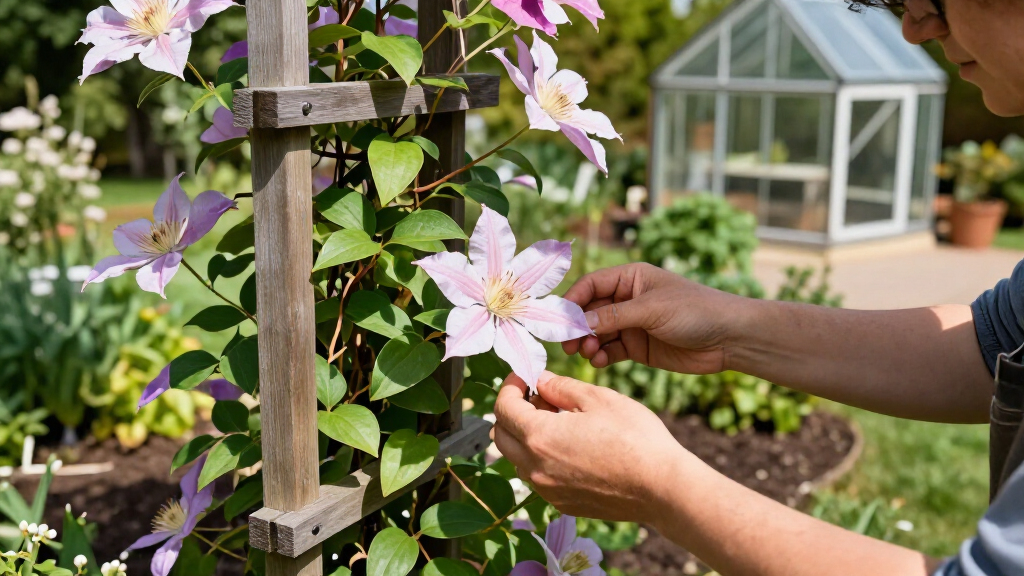
How We Picked
I compared all 13 options by the traits that shape the actual garden experience: flower display, expected growth habit, bloom timing, fragrance, planting format, and the work needed to train and maintain each vine. I also weighed whether a listing offers an established live plant or seeds, since that affects how much early care is needed and how quickly a gardener can expect visible growth. A vine’s suitability depends on local climate and the support available, so I favored options with a clear use case rather than treating every flowering climber as interchangeable.
The ranking favors a strong balance of ornamental impact, practicality, and manageable commitment. That puts Jackmanii first for its blend of perennial presence and conspicuous flowers; options such as Major Wheeler and heavenly blue morning glory earn their places for distinct strengths in season-long color or quick seed-grown coverage. Wisteria ranks lower not because its flowers lack appeal, but because mature size, support needs, and the uncertainty of seed-grown flowering ask more of the buyer. Specialized picks remain valuable when their particular qualities—night fragrance, evergreen foliage, or warm-weather container growth—match the garden.
| flowering vine | Sunlight |
|---|---|
| Marde Ross & Company Heavenly | Full sun or part shade |
| 2 Pink Mandevilla Vine Live Pl | — |
| Perennial Farm Clematis ‘Jackm | — |
| White Moonflower Vine Seeds | Full sun |
| 50+ Dark Red Morning Glory Cli | — |
| 2 Red Coral Honeysuckle Live P | Full sun to partial shade |
| Seed Needs Cardinal Climber Fl | Full sun |
| Blue Moon Wisteria Vine | Full sun to partial shade |
| Sweet Autumn Clematis | Full sun to part shade |
| Japanese Wisteria Floribunda S | Full sun |
| Carolina Jasmine Evergreen Vin | — |
| Major Wheeler Honeysuckle Live | — |
| Perfect Plants Confederate Jas | — |
Factors to Consider When Choosing Best Flowering Vines
Choosing a flowering vine is less about picking the prettiest bloom and more about matching growth, climate, and care to the place you have. I would settle these questions before buying: what the vine must climb, when you want flowers, and how much upkeep you can take on.
Match the vine’s mature size to its support
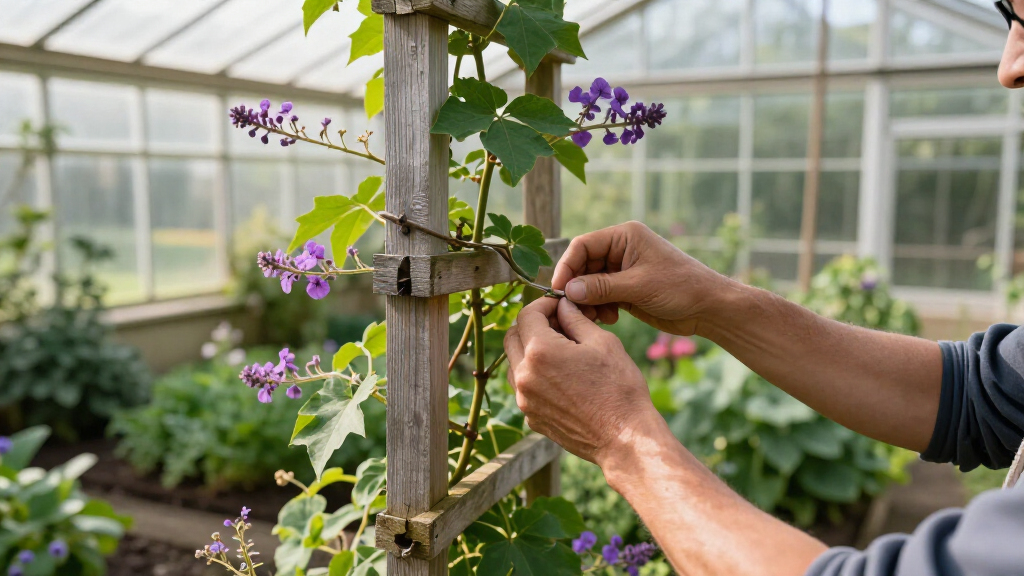
A vine that looks small in a pot may eventually cover a wall, pergola, or fence, so plan for its mature reach rather than its arrival size. Light annual vines can use slender trellises, while woody, long-lived climbers need a support built to carry years of growth. Avoid attaching a vigorous vine to a structure that is hard to repair or prune around. Leave access behind the plant for training and airflow, especially where stems can become dense. If you have only a balcony or compact patio, favor a container-friendly choice and a support you can move or replace. Buying a large climber for a small trellis can turn a flowering feature into a constant pruning job.
Choose seeds or live plants based on your timeline
Seeds usually give you more plants to start and a flexible way to cover a sunny area, but germination, thinning, and early training take time. Live plants arrive further along, which can make establishment easier, though their small starting size still means you will need patience as they settle in. For a first vine, consider whether you want the hands-on process of starting seeds or the simpler task of planting a rooted specimen. Seed-grown woody vines can take longer to flower than established plants, so don’t select them for an immediate floral display. Check planting directions for sowing depth, temperature, and whether soaking or scarification is recommended. The package quantity alone does not tell you how quickly a vine will fill its space.
Check local winter conditions before choosing a perennial
Vines differ widely in how they handle cold, and a plant that is perennial in one region may need seasonal protection or indoor care elsewhere. Look up the plant’s hardiness range against your local winter lows, then account for the fact that pots expose roots to colder temperatures than garden soil. Warm-climate vines can be excellent seasonal patio plants, but they may not survive outdoors through frost. Evergreen foliage also depends on climate; a vine may lose leaves or suffer dieback in colder conditions even if it recovers later. Before planting near a house, verify whether the species is appropriate for your area and whether it can escape cultivation. Regional extension guidance is often more useful than a broad label such as “easy care.”
Decide when and where you want the flowers
Flowering time affects both placement and enjoyment: daytime blooms are easy to see from a garden path, while night-opening flowers make more sense near a patio or window used in the evening. Fragrance can be a benefit close to seating, but a strongly scented vine may be less welcome beside an open bedroom window. Bloom season matters too; a vine with a concentrated flush can look dramatic but leave a longer gap afterward. Combining climbers with different flowering windows can extend color, provided their light and water needs are compatible. Don’t assume a vine will flower heavily in its first season, particularly if it is young or has been planted into a new site. Choose for the conditions where the plant will grow, not just the flower photo.
Budget time for pruning and training
Climbing plants do not all need the same pruning schedule, and cutting at the wrong time can remove the next season’s flowers. Before planting, identify whether a vine flowers on new or old growth and follow guidance for that species. Set aside a few minutes during active growth to direct stems onto the support; early training is easier than untangling a mature vine. Fast growth is useful when you want quick coverage, but it can also mean more frequent trimming and monitoring. If you want a low-maintenance planting, avoid choosing a vigorous climber solely because it promises rapid coverage. A modestly sized plant in the right location may be more satisfying than a larger vine that outgrows its support.
Think beyond flowers: fragrance, foliage, and wildlife
Flowers may be the reason for buying, but foliage and scent determine how useful a vine feels between bloom periods. Evergreen types can soften a wall through more of the year, while deciduous vines may offer stronger seasonal color or easier access for maintenance. Fragrant flowers can enhance a seating area, but they may attract insects; that is useful for pollinators and less convenient beside a frequently used doorway. If you want a vine for wildlife, check whether its flowers provide accessible nectar and whether the plant is suitable for your region. Avoid planting a vigorous species where it can spread beyond the space you can manage. A balanced choice accounts for the whole growing season, not only peak bloom.
Frequently Asked Questions
Which flowering vine is the better choice if I want flowers this season?
An established live plant generally gives you a head start over a seed packet, though its size and planting conditions still affect how quickly it grows. A young vine may spend its first season building roots and stems rather than producing a full display. Seeds can grow quickly in warm conditions, but germination and early training add uncertainty. Choose a live plant for a more direct start, and check whether the listing’s plant size fits your expectations. For either format, sunlight, watering, and a suitable support matter more than the product name alone.
Can I grow wisteria on a small trellis or beside a house?
Wisteria is usually a poor match for a light trellis or a structure that cannot support substantial woody growth over time. Its stems can become heavy, and regular pruning is needed to keep it within bounds and encourage flowering. Before planting, check the mature growth habit and use a strong, independent support with room for access. Keep it away from gutters, roof edges, and other features that are difficult to inspect or repair. If your space is small, a less vigorous vine is likely to be easier to manage.
Which option makes the most sense for a container garden?
Container success depends on the vine’s mature size, climate needs, and how much support can fit on a patio or balcony. A compact setup calls for a manageable climber and a sturdy trellis that can be secured to the pot or nearby structure. Warm-weather plants may suit containers because they can be moved or protected when temperatures fall, though larger specimens become harder to relocate. Use a pot with drainage and expect to water more often than you would for an in-ground vine. Check local care guidance before selecting an evergreen or tropical option for year-round outdoor growth.
How do I choose between a fragrant vine and one with a longer flowering season?
Start with how you use the space: fragrance is most rewarding near a patio or a regularly opened window, while a longer bloom period can provide color across more of the garden. Night-blooming fragrance suits evening seating but may be less useful in a spot you mainly enjoy during the day. A vine with a shorter, showier flowering window can still be a strong choice if its foliage or structure adds interest afterward. Consider whether scent could attract insects near a doorway or dining area. If both qualities matter, check the expected bloom period and fragrance intensity for your local growing conditions.
Do morning glory and moonflower seeds need a trellis before they sprout?
They do not need a trellis to germinate, but it is helpful to have the support in place before the young vines begin climbing. Adding a support later can damage delicate stems or leave them sprawling where they are harder to train. Place the structure where the seedlings will receive the light and airflow they need, and follow the seed directions for sowing and spacing. Check the vine regularly as it grows so stems attach where you want them. Also confirm that the chosen species is permitted and manageable in your area before sowing it.
Conclusion
For the strongest all-around balance, I recommend Clematis ‘Jackmanii’ as the best overall: it brings a substantial perennial flower display without the long-term scale of wisteria. Best value goes to heavenly blue morning glory seeds for gardeners who want multiple fast-growing plants and are comfortable starting from seed; best for beginners is a live, established vine such as Major Wheeler honeysuckle, which avoids the germination step while offering a clear ornamental purpose. For a premium, long-term focal point, choose the two-year-old Blue Moon wisteria only if you have sturdy support and room to prune. For specific needs, pick moonflower for evening fragrance, evergreen jasmine for foliage interest, or Mandevilla for a warm-climate container display. My final check would be local hardiness, available support, and the amount of pruning you are willing to do—those factors matter as much as bloom color.
Fall Picks
fall essentials
As an affiliate, we earn on qualifying purchases.