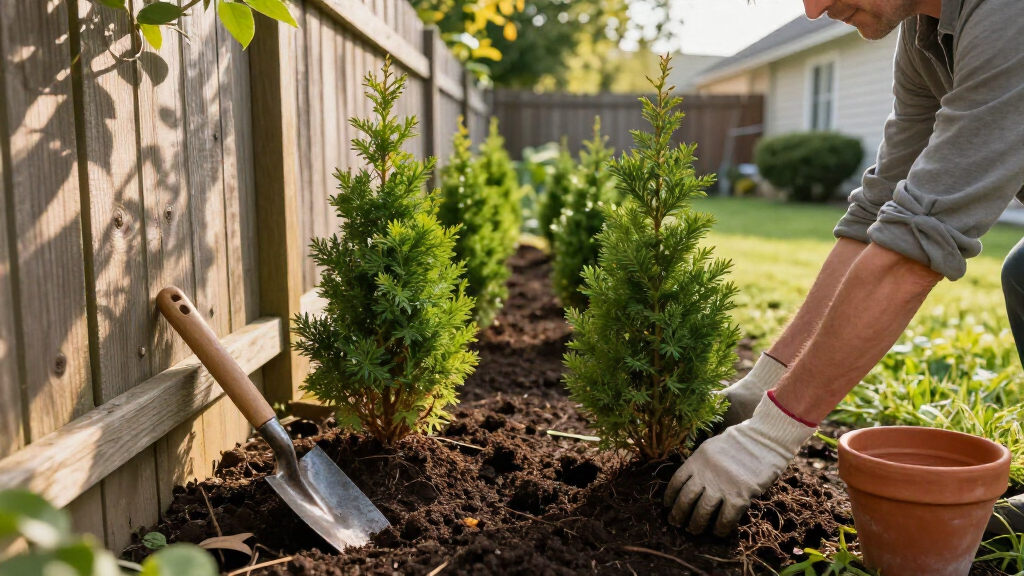
The best privacy hedge plant for most yards is the Perfect Plants Thuja Green Giant Arborvitae, which combines fast growth of 3–5 feet per year with a dense, evergreen screen that holds up in most climates. If you need coverage on a tight budget, the Green Wall Willow Cuttings and Curled Leaf Privet deliver hedge footage for far less money, though you trade away some polish and instant impact. Buyers in warmer southern zones should look at Podocarpus Maki, a slower but remarkably tidy evergreen that privet and arborvitae can’t match for elegance. The main tradeoffs in this category come down to speed versus structure: fast growers like hybrid willows fill in within two seasons but demand heavy pruning and short lifespans, while dense evergreens take longer to mature but need almost no maintenance once established. Keep reading for the full breakdown of all 14 options, including which sizes and pack quantities actually make sense.

Get garden gear delivered free — and shop member deals
- Fast, free delivery on millions of items
- Access to Prime Big Deal Days deals on October 6–7
- Prime Video, Amazon Music and more included
Complete the kit



Key Takeaways
- Thuja Green Giant dominated the comparison for overall screening, but the pack format matters more than the plant: the 18-pack liners, 2-foot 8-pack, and 3-gallon single suit completely different timelines and budgets.
- Privet appeared five times in the lineup, and the comparison revealed a clear split — the 2.25-gallon and 3-gallon potted shrubs are ready-to-plant screening, while the 2-inch plug packs (20 and 15 counts) are money-savers that take two extra seasons to catch up.
- The fastest privacy in the entire roundup comes from willow cuttings and hybrid willow whips, but both are deciduous, so they drop their leaves in winter — a dealbreaker for anyone screening a year-round space.
- Podocarpus (both Maki and Macrophyllus) was the slowest grower of the group, yet the only option that delivers a fine-textured, formal hedge without constant shearing — the pick for patience over speed.
- Red Tip Photinia ‘Red Robin’ was the lone colorful option, trading pure screening density for bronze-red new growth and seasonal interest that no evergreen conifer in this lineup can offer.
| Perfect Plants Thuja Green Giant Arborvitae, 2 ft (8-Pack) Privacy Trees |  | Best Overall | Plant Type: Thuja Green Giant Arborvitae | Quantity: 8-pack | Initial Height: 2 ft | VIEW LATEST PRICE | See Our Full Breakdown |
| Perfect Plants Podocarpus Maki Live Plant, 1 Gallon (Japanese Yew) |  | Best for Narrow Spaces | Plant Type: Evergreen shrub | Pot Size: 1 Gallon | Mature Height: 8–10 feet | VIEW LATEST PRICE | See Our Full Breakdown |
| Perfect Plants Thuja Green Giant Arborvitae Liners, 18-Pack |  | Best Bulk Value for Large Properties | Quantity: 18 liners | Plant Type: Evergreen tree | Mature Height: Up to 60 ft | VIEW LATEST PRICE | See Our Full Breakdown |
| Green Wall Willow Privacy Tree Cuttings – Ultra Fast Growing Privacy Screen Hedge (10 Cuttings) |  | Fastest Growing Pick | Quantity: 10 cuttings | Plant Type: Willow tree cuttings | Recommended Spacing: 2–3 feet apart | VIEW LATEST PRICE | See Our Full Breakdown |
| Curled Leaf Privet – 10 Live Quart Size Plants (Ligustrum Japonicum Recurvifolium) |  | Best for Warm, Sunny Climates | Botanical Name: Ligustrum Japonicum Recurvifolium | Quantity: 10 live plants | Plant Size: Quart size | VIEW LATEST PRICE | See Our Full Breakdown |
| Brighter Blooms Waxleaf Privet Shrub, 3 Gallon |  | Best Head Start — Largest Established Plant | Plant type: Evergreen shrub | Container size: 3 gallon | Suitable forms: Topiary, clipped hedge, or small standard tree | VIEW LATEST PRICE | See Our Full Breakdown |
| Red Tip Photinia ‘Red Robin’ Live Plant in 2.5-Quart Nursery Pot |  | Best for Color — Most Ornamental Hedge | Plant type: Evergreen flowering shrub | Variety: ‘Red Robin’ | Pot size: 2.5-quart nursery pot | VIEW LATEST PRICE | See Our Full Breakdown |
| Ligustrum Waxleaf Privet – 20 Live Plants, 2″ Pot Size – Evergreen Privacy Hedge |  | Best Value for Full Property Coverage | Quantity: 20 live plants | Pot size: 2 inches | Plant type: Evergreen/semi-evergreen shrub | VIEW LATEST PRICE | See Our Full Breakdown |
| Podocarpus Macrophyllus Japanese Yew – 10 Live Plants – Privacy Hedge Evergreen Shrub |  | Best Low-Maintenance Formal Screen | Quantity: 10 live plants | Brand: Florida Foliage | Botanical name: Podocarpus macrophyllus | VIEW LATEST PRICE | See Our Full Breakdown |
| Hybrid Willow Tree Plants – Fast Growing Privacy Hedge, Wind Block & Shade (24 Trees) |  | Fastest Screen in the Roundup | Plant type: Austree Hybrid Willow | Quantity: 24 trees/cuttings | Growth rate: Up to 12 feet per year | VIEW LATEST PRICE | See Our Full Breakdown |
| Ligustrum Waxleaf Privet – 15 Live Plants – Evergreen Privacy Hedge | | Best Bulk Buy for Long Hedges | Quantity: 15 plants | Plant size: 2″ rooted liners | Mature height: 8-10 feet | VIEW LATEST PRICE | See Our Full Breakdown |
| Ligustrum Recurvifolium Privet Shrub, 2.25 Gallon |  | Best Head Start | Plant type: Evergreen shrub | Container size: 2.25 gallon | USDA hardiness zones: 7-11 | VIEW LATEST PRICE | See Our Full Breakdown |
| Perfect Plants Emerald Green Arborvitae, 1 Gallon |  | Best for Tight Spaces | Plant size: 1 gallon | Mature height: 8-15 feet | Mature width: 3-4 feet | VIEW LATEST PRICE | See Our Full Breakdown |
| Perfect Plants Thuja Green Giant Arborvitae, 3 Gallon Privacy Tree |  | Best for Fast, Full-Scale Screening | Plant type: Thuja Green Giant Arborvitae (evergreen) | Pot size: 3 gallon | Growth rate: Up to 3 feet per year | VIEW LATEST PRICE | See Our Full Breakdown |
| privacy hedge plant | Plant Type | Quantity | Mature Height |
|---|---|---|---|
| Perfect Plants Thuja Green Gia | Thuja Green Giant Arborvitae | 8-pack | Up to 60 ft |
| Perfect Plants Podocarpus Maki | Evergreen shrub | — | 8–10 feet |
| Perfect Plants Thuja Green Gia | Evergreen tree | 18 liners | Up to 60 ft |
| Green Wall Willow Privacy Tree | Willow tree cuttings | 10 cuttings | — |
| Curled Leaf Privet | Evergreen flowering shrub & hedge | 10 live plants | — |
| Brighter Blooms Waxleaf Privet | Evergreen shrub | — | — |
| Red Tip Photinia ‘Red Robin’ L | Evergreen flowering shrub | — | — |
| Ligustrum Waxleaf Privet | Evergreen/semi-evergreen shrub | 20 live plants | 8–10 feet |
| Podocarpus Macrophyllus Japane | Shrub & hedge | 10 live plants | 15–20 feet |
| Hybrid Willow Tree Plants | Austree Hybrid Willow | 24 trees/cuttings | — |
| Ligustrum Waxleaf Privet | Evergreen/semi-evergreen shrub | 15 plants | 8-10 feet |
| Ligustrum Recurvifolium Privet | Evergreen shrub | — | — |
| Perfect Plants Emerald Green A | — | — | 8-15 feet |
| Perfect Plants Thuja Green Gia | Thuja Green Giant Arborvitae (evergreen) | — | — |
More Details on Our Top Picks
Perfect Plants Thuja Green Giant Arborvitae, 2 ft (8-Pack) Privacy Trees
This 8-pack earns the top spot because it solves the privacy equation with the fewest compromises: fast growth, dense evergreen coverage, and enough trees to screen a real stretch of yard. Starting at 2 feet, these saplings close gaps faster than smaller Thuja liners sold in bulk, while staying far more affordable per tree than gallon-size arborvitaes. The wide-bottomed pyramidal shape means natural coverage from the ground up — a real advantage over willow cuttings, which need rows planted to fill in.
The tradeoff is scale. Left unpruned, each tree can reach 60 feet tall and 20 feet wide, so this pick demands a yard that can handle serious timber. Compared with the more compact Podocarpus Maki, it is simply the wrong plant for tight side yards. But for homeowners with a long property line and patience measured in a few seasons, not decades, it is the most reliable path to a living wall.
Pros:- Fast-growing evergreen that closes gaps quicker than most hedge options
- Dense, dark green foliage with a pleasant pine scent covers from ground level up
- Thrives across USDA zones 5–9, suiting most U.S. climates
- Low maintenance once established and tolerates pruning to a controlled size
Cons:- Requires substantial space due to enormous mature dimensions
- Takes several seasons to achieve full privacy from 2-foot saplings
Best for: Homeowners with a long property line who want a fast, dense, low-maintenance evergreen screen
Not ideal for: Small or narrow lots — the mature 20-foot spread and 60-foot height will overwhelm the space if pruning lapses
- Plant Type:Thuja Green Giant Arborvitae
- Quantity:8-pack
- Initial Height:2 ft
- Mature Height:Up to 60 ft
- Mature Width:Up to 20 ft
- Growth Habit:Wide-bottomed pyramidal shape
- USDA Hardiness Zones:5–9
- Maintenance:Low once established
Our verdict“Buy this 8-pack if you have room for big evergreens and want the best balance of speed, density, and long-term value in one purchase.”
Perfect Plants Podocarpus Maki Live Plant, 1 Gallon (Japanese Yew)
Where the Thuja Green Giant spreads 20 feet wide, the Podocarpus Maki stays a disciplined 3–4 feet — and that columnar habit is the entire point. For side yards, driveway strips, and courtyards where a bulky arborvitae would swallow the walkway, this Japanese yew builds a tidy vertical screen that needs almost no pruning to hold its shape. The glossy dark green foliage also looks more refined than the needled texture of Thuja, and it handles drought, pests, and pollution with minimal fuss.
The honest tradeoff is patience. This is a slow grower, so anyone who wants a wall of green in two years should be looking at willow cuttings or Thuja instead. It also cannot ship to California or Arizona. But for buyers in zones 7–11 who value a permanent, elegant, space-efficient hedge over speed, this is the strongest choice here.
Pros:- Narrow 3–4 foot width fits spaces too tight for wide-spreading hedge trees
- Glossy evergreen foliage with a polished, formal appearance year-round
- Drought-tolerant, pest-resistant, and pollution-tolerant once established
- Columnar form holds its shape with minimal pruning
Cons:- Slow to reach mature size compared with faster-growing hedge options
- Cannot ship to California or Arizona due to state restrictions
Best for: Gardeners in warm zones who need a slim, formal evergreen screen for tight side yards or foundation plantings
Not ideal for: Anyone wanting fast privacy — the slow growth rate means years of waiting compared with Thuja or willow
- Plant Type:Evergreen shrub
- Pot Size:1 Gallon
- Mature Height:8–10 feet
- Mature Width:3–4 feet
- USDA Zones:7–11
- Sun Exposure:Full sun to partial shade
- Soil Requirement:Well-draining soil
- Drought Tolerance:Drought-tolerant once established
Our verdict“Pick the Maki when your screening area is narrow and you prefer a slow-growing, sculptural hedge over a fast but bulky alternative.”
Perfect Plants Thuja Green Giant Arborvitae Liners, 18-Pack
This is the same Thuja Green Giant that anchors the roundup’s top pick, but in liner form and double the count — a combination built for perimeter-scale projects. Eighteen plants spaced along a boundary can enclose an entire backyard, something an 8-pack of 2-foot trees simply cannot do on a budget. The tradeoff is starting size: liners are small, so full privacy is a multi-year project rather than a quick fix.
Compared with Green Wall Willow cuttings, another budget bulk option, these liners deliver evergreen coverage — willows drop their leaves and go bare in winter, exactly when you still want screening. Thuja also holds a cleaner pyramidal silhouette with less management. The catch is the same as its sibling product: unpruned trees reach 60 feet tall, and the pack cannot ship to California or Arizona. For rural properties, windbreaks, and long lot lines where cost per plant matters most, this is the smartest bulk buy on the list.
Pros:- 18 plants cover a full property perimeter at low cost per tree
- Evergreen foliage provides winter screening unlike deciduous willow
- Tolerates pruning to keep a managed hedge height
- Little maintenance required once established across zones 5–9
Cons:- Liners start very small, so privacy coverage takes several years
- Cannot ship to California or Arizona
Best for: Rural homeowners or buyers screening a long property line who want maximum plants per dollar
Not ideal for: Suburban lots with neighbors close by — 18 trees growing to 60 feet will create shade and spacing conflicts
- Quantity:18 liners
- Plant Type:Evergreen tree
- Mature Height:Up to 60 ft
- Mature Width:Up to 20 ft
- Growing Zones:USDA zones 5–9
- Shape:Wide-bottomed pyramidal
- Shipping Restriction:Cannot ship to California or Arizona
Our verdict“Choose this 18-pack when you have acreage to screen and the patience to grow trees up from small starts.”
Green Wall Willow Privacy Tree Cuttings – Ultra Fast Growing Privacy Screen Hedge (10 Cuttings)
If speed is the deciding factor, nothing else in this lineup competes. Willow cuttings root directly in soil and grow at a pace that makes even the Thuja Green Giant look leisurely, forming a dense living wall for privacy, wind, and noise within a few seasons. The planting method is refreshingly simple — stick cuttings in the ground 2–3 feet apart — which makes this one of the most beginner-friendly options here, with no pots, root balls, or transplant shock to manage.
The tradeoffs are structural. Unlike evergreen choices such as Curled Leaf Privet or Thuja, willows drop their foliage in winter, so your screen goes transparent exactly when you may want it most. Full coverage also requires planting the whole pack in rows, and cuttings need a season to establish before the wall truly thickens. Still, for a backyard border where three-season screening at minimal cost is the goal, this is the fastest route from bare to blocked.
Pros:- Ultra-fast growth delivers screening years sooner than arborvitae or yew
- Cuttings plant directly in soil with fast rooting — no transplanting skills needed
- Dense foliage forms an effective barrier against wind and noise
- Hardy, low maintenance, and returns reliably year after year
Cons:- Deciduous — loses leaves in winter, reducing off-season privacy
- Requires planting multiple rows of cuttings for full coverage
Best for: Beginners and budget buyers who want the fastest possible living screen and can accept winter leaf drop
Not ideal for: Anyone needing year-round evergreen privacy — willows go bare in cold months
- Quantity:10 cuttings
- Plant Type:Willow tree cuttings
- Recommended Spacing:2–3 feet apart
- Uses:Privacy screens, windbreaks, hedges, natural fencing
- Maintenance:Low once established
- Soil/Climate:Adaptable to many soil types and climates
Our verdict“Grab this 10-pack when speed matters more than winter greenery and you want the easiest planting process available.”
Curled Leaf Privet – 10 Live Quart Size Plants (Ligustrum Japonicum Recurvifolium)
For Southern and coastal gardeners, Curled Leaf Privet offers something the Thuja and willow options cannot: evergreen coverage with ornamental character. The gracefully curled leaves give the hedge a softer, more textured look than flat privet varieties or needled arborvitaes, and quart-size plants establish faster than bare cuttings like the Green Wall Willow pack. As a water-wise shrub, it also suits sandy, sunny regions where thirstier hedge plants struggle.
The tradeoffs are environmental rather than structural. This privet demands full sun, so shaded side yards are off the table — buyers in those conditions should lean toward the shade-tolerant Podocarpus Maki instead. It also prefers sandy soil and may need amendments in heavier clay. Within its comfort zone, though, it works as hedge, border, or standalone specimen, giving warm-climate gardeners more design flexibility than single-purpose screening trees.
Pros:- Evergreen curled foliage provides year-round privacy with decorative texture
- Water-wise and hardy once established, well suited to hot sunny regions
- Versatile as hedge, border, or standalone specimen plant
- Quart-size plants establish faster than bare-root cuttings
Cons:- Requires full sun — performs poorly in shaded gardens
- Prefers sandy soil and may need amendments in other soil types
Best for: Gardeners in sunny, sandy, warm-climate regions who want a water-wise evergreen hedge with decorative foliage
Not ideal for: Shaded or clay-heavy gardens — this privet needs full sun and prefers sandy soil to thrive
- Botanical Name:Ligustrum Japonicum Recurvifolium
- Quantity:10 live plants
- Plant Size:Quart size
- Plant Type:Evergreen flowering shrub & hedge
- Sunlight Exposure:Full sun
- Soil Type:Sandy soil
- Foliage:Evergreen with curled leaves
Our verdict“Buy this 10-pack if you garden in full sun and sandy soil and want a low-water evergreen hedge that looks as good as it screens.”
Brighter Blooms Waxleaf Privet Shrub, 3 Gallon
Most privacy hedge orders arrive as tiny liners or bare cuttings, which means waiting seasons before anything resembles a screen. This 3-gallon Waxleaf Privet flips that equation: you start with a shrub that already has structure, glossy evergreen foliage, and a root system that can hit the ground running. Compared with the Ligustrum Waxleaf Privet 20-pack, which spreads the same species across 2-inch pots, this single plant trades quantity for immediate visual impact — ideal for filling a gap in an existing hedge rather than planting a whole run from scratch.
The tradeoff is cost per foot of coverage. Buying established plants is the expensive way to build a hedge, and shaping it into topiary or a small standard tree takes commitment with the shears. Still, for buyers who want instant green rather than a two-year wait, this is the shortcut.
Pros:- Arrives as an established 3-gallon shrub with real structure
- Glossy evergreen foliage looks refined year-round
- Flexible shaping as hedge, topiary, or small standard tree
- Suitable for a wide range of garden styles and skill levels
Cons:- Highest cost per foot of coverage versus bulk liner options
- Shipping restricted to AK, AZ, HI, OR, and PA residents
- Formal shapes require ongoing pruning discipline
Best for: Homeowners filling gaps in an established hedge or wanting instant structure without the wait
Not ideal for: Budget buyers planting a long property line — the cost per plant adds up fast compared to bulk liner packs
- Plant type:Evergreen shrub
- Container size:3 gallon
- Suitable forms:Topiary, clipped hedge, or small standard tree
- Foliage:Glossy evergreen
- Foliage color:Dark green
- Best use:Gap filling, specimen shaping, established hedges
Our verdict“Buy this if you want one or two mature-looking evergreens now instead of nursing a whole hedge line from cuttings.”
Red Tip Photinia ‘Red Robin’ Live Plant in 2.5-Quart Nursery Pot
Privacy hedges tend to be walls of green, and that’s exactly where the Red Robin Photinia breaks from the pack. Its coppery red new growth against glossy mature foliage gives a hedge seasonal color no privet or arborvitae in this lineup can match, and white spring flowers add another layer of interest. At a mature 8–10 feet tall, it screens comparably to the Waxleaf Privet 20-pack but with far more decorative payoff.
The catch: that famous red flush only comes from new growth, which means regular pruning is non-negotiable if you want the color — this is not a plant-and-forget screen like the Podocarpus Japanese Yew. It also demands well-drained soil and good airflow, so heavy clay or crowded plantings will cause problems. For gardeners who see a hedge as landscape design rather than pure barrier, it earns its spot.
Pros:- Coppery red new growth provides color no green-only hedge offers
- Glossy evergreen foliage and white spring flowers
- Works as hedge, border, screen, or pruned small specimen tree
- Somewhat drought tolerant once established
Cons:- Red color only appears on new growth, requiring frequent pruning
- Needs well-drained soil and good air circulation to stay healthy
- Single 2.5-quart plant means slow, costly coverage for long runs
Best for: Design-minded homeowners who want a privacy screen that doubles as a colorful landscape feature
Not ideal for: Low-maintenance gardeners or those with heavy, poorly drained clay soil — it will decline without pruning and drainage
- Plant type:Evergreen flowering shrub
- Variety:‘Red Robin’
- Pot size:2.5-quart nursery pot
- Mature size:8–10 ft. high × 6–8 ft. wide
- Sunlight:Full to partial sun
- Soil:Well-drained
- Bloom season:Spring
- USDA hardiness zone:6
- Watering:Moderate; somewhat drought tolerant once established
Our verdict“Choose this if you’d rather look at a hedge than just hide behind one — provided you’ll keep the shears busy.”
Ligustrum Waxleaf Privet – 20 Live Plants, 2″ Pot Size – Evergreen Privacy Hedge
When the job is screening an entire backyard boundary, per-plant math matters more than anything else, and this 20-plant Waxleaf Privet bundle is the most cost-effective way to fence a long run in evergreen. At 8–10 feet mature height with a naturally bushy habit, it forms a dense screen faster than the Podocarpus Japanese Yew 10-pack, and its tolerance of full sun to partial shade and varied soils gives it wider planting flexibility than the fussier Red Robin Photinia.
Be realistic about the starting point: 2-inch pots mean small plants, so the first year is about watering and establishment, not privacy. The Brighter Blooms single 3-gallon gives you instant presence; this bundle gives you scale. Shearing two or three times a year keeps the hedge tidy, which is modest work for 20 shrubs’ worth of coverage.
Pros:- Best cost per foot of evergreen coverage in this lineup
- Fast growth establishes screens quicker than slower hedges
- Adaptable to sun, partial shade, and various soil types
- Versatile as hedge, windbreak, topiary, or small patio tree
Cons:- Arrives in small 2-inch pots requiring attentive first-year watering
- Needs shearing 2–3 times per year to maintain a formal shape
- Fragrant summer flowers and fruit may not suit tidy-formal gardeners
Best for: Homeowners screening a full property line or long fence on a budget who can wait a season or two
Not ideal for: Anyone wanting immediate privacy this year — small starter plants need time to fill in
- Quantity:20 live plants
- Pot size:2 inches
- Plant type:Evergreen/semi-evergreen shrub
- Mature height:8–10 feet
- Blooming period:Summer
- Sunlight exposure:Full sun to partial shade
- Soil type:Sandy soil; tolerates various types
- Moisture needs:Regular watering until established
Our verdict“The smart buy for bulk coverage — just plan on a patient establishment year before the screen delivers.”
Podocarpus Macrophyllus Japanese Yew – 10 Live Plants – Privacy Hedge Evergreen Shrub
For buyers who want a hedge that behaves, the Japanese Yew is the disciplined choice in this roundup. Its slow growth — a liability if you’re impatient — becomes an asset once the screen is established, because minimal pruning keeps it looking sharp compared with the shearing schedule the Waxleaf Privet 20-pack demands. The narrow, leathery dark green foliage and dense upright branching create a refined, almost architectural screen, and it’s one of the few options here that tolerates low light, even indoors.
That patience requirement is real: the Hybrid Willow cuttings will tower over these in year one. Hardy only in zones 7–10, it also can’t go where winter gets serious — northern buyers should look at arborvitae instead. But for warm-climate gardeners who want a set-and-forget evergreen wall that won’t outgrow its space, this 10-pack earns its place.
Pros:- Minimal pruning needs thanks to naturally slow, tidy growth
- Tolerates full sun to partial shade, even low indoor light
- Dense evergreen foliage with refined, formal appearance
- Versatile as screen, clipped hedge, topiary, or patio container tree
Cons:- Slow growth means years before real privacy coverage
- Not winter hardy outside USDA zones 7–10
- Requires regular watering until roots mature
Best for: Warm-climate gardeners in zones 7–10 who want a tidy, low-pruning screen and don’t mind slow fill-in
Not ideal for: Cold-climate buyers or anyone needing privacy within a couple of years — it grows slowly and isn’t winter hardy past zone 10
- Quantity:10 live plants
- Brand:Florida Foliage
- Botanical name:Podocarpus macrophyllus
- Plant type:Shrub & hedge
- Mature height:15–20 feet
- Sunlight exposure:Full sun to partial shade
- Hardiness zones:USDA Zones 7–10
- Blooming period:Winter
Our verdict“Pick this if you’d rather prune once a season than every month — and you live where winters stay mild.”
Hybrid Willow Tree Plants – Fast Growing Privacy Hedge, Wind Block & Shade (24 Trees)
Nothing else in this lineup comes close on speed. These Austree Hybrid Willow cuttings can add up to 12 feet per year, eventually reaching 50–75 feet, which makes them the answer when a new build or a new neighbor demands privacy this decade, not next one. The Podocarpus Japanese Yew might take a decade to screen the same span; the Waxleaf Privet needs several seasons. With 24 cuttings in the set, coverage per dollar is strong for large properties, and they double as windbreaks and erosion control.
The tradeoffs are structural: you’re planting fresh cuttings, not rooted shrubs, and they demand consistently moist soil — think watering 2–3 times weekly. At full height they’re trees, not a tidy 8-foot hedge, so this suits rural or large-lot settings rather than a suburban lot where 60-foot willows would overwhelm the yard and possibly neighbor relations.
Pros:- Up to 12 feet of growth per year for near-immediate screening
- 24 cuttings cover large property lines economically
- Non-invasive root system with low long-term maintenance
- Multi-purpose privacy, wind block, shade, and erosion control
Cons:- Ships as cuttings, so plants need time and water to establish
- Requires consistently moist soil with watering 2–3 times per week
- Massive mature size is impractical for small or formal gardens
Best for: Rural or large-lot owners who need rapid privacy, wind protection, or erosion control and can water consistently
Not ideal for: Small suburban yards — 50–75 foot mature trees will overwhelm the space and need constant moisture
- Plant type:Austree Hybrid Willow
- Quantity:24 trees/cuttings
- Growth rate:Up to 12 feet per year
- Maximum height:50–75 feet
- Use:Privacy hedge, wind block, shade, landscaping
- Care:Keep soil moist; water 2–3 times per week; sun and fresh air
- Form:Can be trimmed to stay low and dense
Our verdict“The clear pick when speed is everything — just make sure your yard can handle 60-foot trees and a regular watering routine.”
Ligustrum Waxleaf Privet – 15 Live Plants – Evergreen Privacy Hedge
Filling a property line on a budget is where this 15-pack earns its place. Compared with the Ligustrum Recurvifolium 2.25-gallon shrub, you give up instant size — these are small rooted liners — but you get more than triple the plant count, which is what actually matters when a hedge needs to run 30 or 40 feet. Waxleaf privet is a fast grower once rooted, shears cleanly into a dense wall, and adds fragrant summer blooms the arborvitae options can’t match. The tradeoff is patience and labor: expect a season or two of diligent watering and shaping before the screen reads as a true hedge. Buy this for coverage per dollar, not for immediate impact.
Pros:- 15 plants per order makes long hedgerows affordable
- Fast-growing evergreen that shears into a dense formal screen
- Fragrant white summer blooms plus glossy year-round foliage
- Versatile as hedge, topiary, windbreak, or container plant
Cons:- Tiny 2-inch starter plants take seasons to reach screening height
- Needs shearing 2-3 times per year to hold its shape
- Requires consistent watering until the root system establishes
Best for: Homeowners planting a long property-line hedge who want maximum plants per dollar and don’t mind waiting for them to fill in
Not ideal for: Buyers who want privacy this season — 2-inch liners will look sparse for a year or more compared with gallon-size stock
- Quantity:15 plants
- Plant size:2″ rooted liners
- Mature height:8-10 feet
- Plant type:Evergreen/semi-evergreen shrub
- Blooming period:Summer
- Sunlight exposure:Full sun
- Uses:Privacy hedge, screen, windbreak, topiary, containers
Our verdict“This is the pick for patience-friendly buyers covering a lot of linear footage without paying gallon-pot prices for every plant.”
Ligustrum Recurvifolium Privet Shrub, 2.25 Gallon
If the 15-pack of Waxleaf liners is the slow-and-cheap route, this 2.25-gallon Recurvifolium is the shortcut: a shrub with enough root mass and canopy to read as a hedge plant on day one. Compared with the Emerald Green Arborvitae in a smaller 1-gallon pot, you’re buying roughly a season or two of growth already done for you. Recurvifolium privet tolerates heavy pruning without sulking, adapts to varied soils, and its deer resistance gives it an edge over hedges that get browsed bare in winter. The tradeoff is cost per foot of hedge — planting a full run of these costs far more than a liner multipack — and the 8-foot mature height is mid-range, not a towering screen.
Pros:- 2.25-gallon size delivers immediate visual impact
- Adaptable to varied soils and sun exposures
- Tolerates heavy pruning, so shaping mistakes are forgiving
- Deer resistant with fragrant white spring flowers
Cons:- Requires regular watering until established
- Specified for full sun, limiting shadier planting spots
- Expensive way to plant a long hedge compared with liner packs
Best for: Buyers filling a short hedge or a few gaps who want established plants that look substantial immediately
Not ideal for: Anyone screening a long boundary on a budget — gallon-priced shrubs bought individually add up fast
- Plant type:Evergreen shrub
- Container size:2.25 gallon
- USDA hardiness zones:7-11
- Expected height:8 feet
- Expected width:6 feet
- Bloom season:Spring, white flowers
- Deer resistant:Yes
- Expected planting period:Spring to fall
Our verdict“Choose this when you need a privacy plant that performs now rather than in two seasons, and you’re only filling a modest stretch.”
Perfect Plants Emerald Green Arborvitae, 1 Gallon
Not every privacy problem needs a 40-foot giant, and that’s exactly the gap this Emerald Green fills. Where the Thuja Green Giant sprawls to 20 feet wide and can overwhelm a side yard, this arborvitae holds a disciplined 3-4 foot column, making it the right tool for narrow lot lines, alongside driveways, or framing a patio without eating it. The tradeoff is speed: at roughly 1 foot per year, it’s one of the slowest options in this lineup, so a screening-height hedge is a multi-year project. One caution — the listing carries conflicting hardiness zone ranges (2-7 in specs, 3-8 in the description), so buyers in borderline zones should verify locally before committing.
Pros:- Slim 3-4 foot width suits tight lot lines and small yards
- Dense emerald foliage gives true year-round privacy
- Compact, deer resistant, and drought tolerant once established
- Low maintenance compared with shearing-hungry privets
Cons:- Slow growth rate of about 1 foot per year
- Conflicting hardiness zone ranges in the listing
- Needs consistent watering and winter protection in its first year
Best for: Homeowners with narrow side yards or small urban lots who need a tidy, space-efficient evergreen screen
Not ideal for: Buyers wanting fast privacy — at about a foot of growth per year, this column takes years to screen, and the zone listing is ambiguous
- Plant size:1 gallon
- Mature height:8-15 feet
- Mature width:3-4 feet
- Growth rate:About 1 foot per year
- USDA hardiness zones:2-7 (listing also states 3-8)
- Sunlight:Full sun
- Special features:Compact, deer resistant, drought tolerant
Our verdict“This is the space-conscious choice for small yards where a Green Giant would be overkill and patience is part of the plan.”
Perfect Plants Thuja Green Giant Arborvitae, 3 Gallon Privacy Tree
When the goal is blocking a two-story neighbor window or blanketing a large backyard boundary, nothing else in this lineup competes on speed and scale. Up to 3 feet of growth per year means a real screen in two to three seasons — the Emerald Green Arborvitae needs five times as long to reach comparable height. The 3-gallon pot gives these a stronger start than the Green Giant liner 18-pack, trading cost per plant for lost growing time. But size cuts both ways: at 40 feet tall by 20 feet wide at maturity, this is genuinely too much tree for a small lot, and buyers in California and Arizona can’t get it shipped at all. First-year care — regular watering and mulch — is non-negotiable.
Pros:- Up to 3 feet of growth per year builds a screen in a few seasons
- Deer-resistant, drought-tolerant dark green foliage year-round
- 3-gallon size establishes faster than liner packs
- Works as a dense screen, border, or single specimen tree
Cons:- Mature size of 40 feet tall by 20 feet wide overwhelms small yards
- Cannot ship to California or Arizona
- Requires regular watering and mulching through the first year
Best for: Owners of larger properties who need a tall, wide privacy wall quickly and have room for a 40-foot tree
Not ideal for: Small-yard gardeners and buyers in California or Arizona — the mature footprint is enormous and shipping is restricted in those states
- Plant type:Thuja Green Giant Arborvitae (evergreen)
- Pot size:3 gallon
- Growth rate:Up to 3 feet per year
- Mature size:40 ft tall x 20 ft wide
- USDA hardiness zones:5-9
- Soil preference:Well-drained
- Features:Deer-resistant, drought-tolerant, year-round color
- Shipping restrictions:Not available to California and Arizona
Our verdict“If you have the acreage and want maximum privacy at maximum speed, this is the heavyweight pick — just measure your space first.”
How We Picked
I evaluated every option against the four factors that actually determine whether a privacy hedge succeeds: growth rate (how quickly the plant closes gaps into a functional screen), year-round density (whether the plant holds its foliage in winter or drops it), establishment effort (how much water, pruning, and babysitting a young plant needs in its first two seasons), and cost per linear foot of finished hedge, which varies dramatically between cuttings, plugs, and gallon-size pots.
Ranking also reflected plant format as much as species. A 2-inch plug pack and a 3-gallon potted shrub of the same plant serve different buyers — one trades time for budget, the other trades budget for instant structure. Options that combined fast growth, evergreen habit, and reasonable establishment landed at the top; narrowly specialized picks (fastest fill, lowest cost, or most formal appearance) were ranked for the specific buyer they serve rather than overall performance. Climate fit mattered too, since several southern evergreens simply fail in cold zones where arborvitae thrive.
Factors to Consider When Choosing Best Privacy Hedge Plants
Choosing between hedge plants is less about finding the “best” species and more about matching a plant’s growth habits to your timeline, climate, and tolerance for maintenance. These are the factors that separated a satisfying hedge from an expensive disappointment in this comparison.Decide How Fast You Actually Need Coverage
Growth rate is the single biggest cost driver in this category, and most buyers overpay for speed they don’t need. Willow cuttings and hybrid willow whips can add 6–10 feet per year, closing a bare fence line in two seasons — but that speed comes with aggressive roots, heavy annual pruning, and a shorter useful life. Green Giant arborvitae hits a sweet spot at 3–5 feet per year, fast enough to feel like progress but structured enough to stay tidy for decades. Privet and podocarpus sit at the patient end. My advice: if a neighbor’s windows directly overlook your patio, pay for gallon-size plants and faster species; if you’re planning ahead three to five years, plugs and liners save serious money with the same end result.
Evergreen Versus Deciduous — The Winter Question
This is the mistake I see most often: buyers purchase fast-growing willows for privacy around a hot tub, living room window, or dining area, then discover the screen goes bare every November. Deciduous plants still provide summer shade and seasonal screening, but they fail the core job of a privacy hedge during the months you’re indoors most. Evergreen options — arborvitae, privet, podocarpus, and photinia — hold their foliage year-round, which is why they dominate this lineup. If winter privacy matters at all, rule out willows entirely before comparing anything else. Semi-evergreen privets add a wrinkle: in colder zones they can thin or defoliate partially, so check your hardiness zone against the plant’s range rather than trusting the label alone.
Plant Size Versus Price Per Foot of Hedge
Math matters more here than in almost any plant purchase, because a hedge is bought by the linear foot, not the plant. A 3-gallon shrub gives you immediate structure but costs several times more per foot than a pack of liners or plugs covering the same distance. The honest tradeoff: small plants establish faster relative to their size, often catching up to transplanted large shrubs within two or three seasons. Large potted plants skip that waiting period but suffer more transplant shock and need dedicated watering through their first summer. Calculate how many feet of hedge you need, check the recommended spacing for the species (willows spread wide; arborvitae need 5–8 feet apart), and price the project both ways before committing.
Maintenance Commitment and Pruning Tolerance
Hedges are not plant-and-forget, and the maintenance burden varies more than buyers expect. Privet in warm climates grows relentlessly and needs shearing several times per season to stay formal — treat it as a part-time hobby. Willow privacy screens are even more demanding; without hard annual pruning they turn into full-size trees with serious root systems near pipes and foundations. Arborvitae and podocarpus sit at the low-maintenance end, needing only light shaping and naturally holding their hedge form. If your schedule is packed or you plan to age in place in your home, weighting your decision toward slow, tidy evergreens will save hundreds of hours over the hedge’s life.
Climate Fit and Hardiness Zone Reality
Every plant in this roundup has a hardiness ceiling or floor, and ignoring it wastes an entire season and budget. Podocarpus and waxleaf privet are southern performers — they thrive in heat but scorch or die back in zones below roughly 7. Green Giant arborvitae is the opposite: a cold-hardy workhorse that struggles with drought and reflected heat in the Deep South. Hybrid willows are the most forgiving across zones, one reason they’re popular as quick fixes. Before ordering anything, look up your USDA zone, then read the plant’s range with skepticism — sellers often list the ideal edge of the range, not the comfortable middle. Local conditions like winter wind exposure or a south-facing wall can shift performance a full zone in either direction.
Spacing, Planting Windows, and First-Season Care
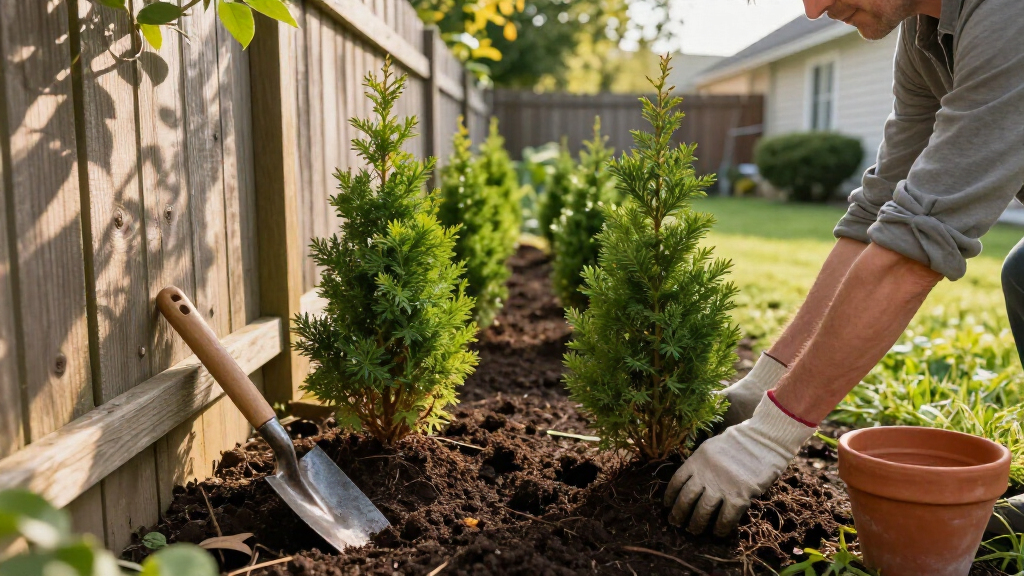
A great plant installed badly produces a failed hedge, and spacing errors are permanent. Planting too tightly to get faster coverage causes crowding, dead interior branches, and disease from poor air circulation two or three years later — a mistake no amount of pruning fixes. Follow spacing recommendations even when it feels too generous, and stagger plants in a double row for faster fill on a wide border. Timing also matters: bare-root cuttings and plugs need early-spring planting to root before summer heat, while gallon-size pots can go in through fall in most regions. Budget for the first summer of watering too — young hedges need deep, regular watering weekly, and the first dry spell is when most privacy projects quietly die.
Frequently Asked Questions
How many Thuja Green Giant plants do I need, and which pack size should I choose?
Green Giants should be spaced 5–8 feet apart, so a 50-foot property line needs roughly 7–10 plants. The 18-pack of liners covers a long boundary at the lowest cost per plant, but expect a two-to-three-season wait before real screening. The 2-foot 8-pack splits the difference, giving you visible structure the day you plant at a moderate price. The 3-gallon single is best for filling a gap in an existing hedge or screening a specific window where waiting isn’t acceptable. If you’re patient, buy liners; if you want privacy this year, buy the largest plants your budget allows.
Are privet hedges high maintenance, and which privet option is easiest?
Privet is one of the fastest hedge plants to fill in, but in warm climates it grows aggressively and needs shearing two to four times per season to keep a formal shape. The Curled Leaf Privet (Recurvifolium) varieties are slightly slower and more compact than waxleaf privet, which makes them easier to manage. Among the options compared, the larger potted shrubs (2.25 and 3 gallon) are the easiest start because their root systems are established — the 2-inch plug packs work fine but spend their first season building roots instead of height. If you want a privet hedge you can mostly ignore, choose recurvifolium and let it grow into a loose, natural shape rather than shearing it formally.
Will willow privacy screens actually block my neighbors in winter?
No — hybrid willows and willow cuttings are deciduous, meaning they drop their foliage in fall and leave you with bare branches until spring. They still provide a partial visual barrier from dense branch structure, but anyone expecting a solid screen around a window, patio, or pool in January will be disappointed. Willows make the most sense for summer shade, windbreak duty, or screening a seasonal outdoor living space. If you need year-round privacy, evergreen options like Green Giant arborvitae, privet, or podocarpus are the right category, and the speed advantage of willows stops mattering after the evergreens catch up in years three and four.
Why choose podocarpus over faster options like arborvitae or privet?
Podocarpus trades speed for refinement — it grows slowly, but it forms a dense, fine-textured, dark-green hedge that holds a formal shape with minimal shearing, something neither arborvitae nor privet can match. It’s also the best choice for warm, humid southern climates where Green Giant arborvitae struggles with heat and drought stress. The tradeoff is real: expect a noticeably longer wait for a functional screen, and podocarpus is one of the more expensive plants per foot in this lineup. Choose it if you’re in zones 8–10, you value a polished landscape look, and you’re planning to stay in your home long enough to enjoy the mature hedge.
Is Red Tip Photinia a good privacy hedge or just an accent plant?
Photinia ‘Red Robin’ is a legitimate hedge plant, but it fills a different role than the evergreen workhorses in this roundup. Its signature bronze-red new growth means every pruning flush brings fresh color, making it the best pick if you want screening that also looks interesting — most privacy plants are a wall of uniform green. The tradeoffs are density and pace: photinia is slightly airier than privet or arborvitae at maturity, and it needs regular trimming to keep producing the colorful new foliage. It’s also susceptible to leaf spot in humid climates when pruned frequently, so it performs best in drier regions. Choose it for a decorative boundary rather than a maximum-privacy fortress.
Conclusion
For most buyers, the Perfect Plants Thuja Green Giant Arborvitae is the best overall choice — pick the pack size that matches your timeline, from the budget-friendly 18-pack of liners to the instant-impact 3-gallon tree. The best value in the lineup is the Green Wall Willow Cuttings or the Ligustrum Waxleaf Privet 20-pack for buyers covering long boundaries cheaply, provided you accept the wait (and bare winters, with the willows). The best premium pick is the Podocarpus Maki or the Brighter Blooms 3-gallon Waxleaf Privet — larger, established plants that deliver real screening in the first season and a refined look for years. Beginners should start with the Emerald Green Arborvitae 1-gallon or a Green Giant 8-pack: forgiving, hardy plants with straightforward care. For specific needs, choose Red Tip Photinia for a colorful decorative screen, hybrid willows for the fastest possible fill and windbreak duty, and Curled Leaf Privet for warm-climate gardeners who want a classic flowering hedge. Match the plant to your zone, budget your first summer of watering, and space generously — the right hedge planted correctly will outlast the fence you’re trying to improve on.
Fall yard work Picks
leaf blowers
As an affiliate, we earn on qualifying purchases.