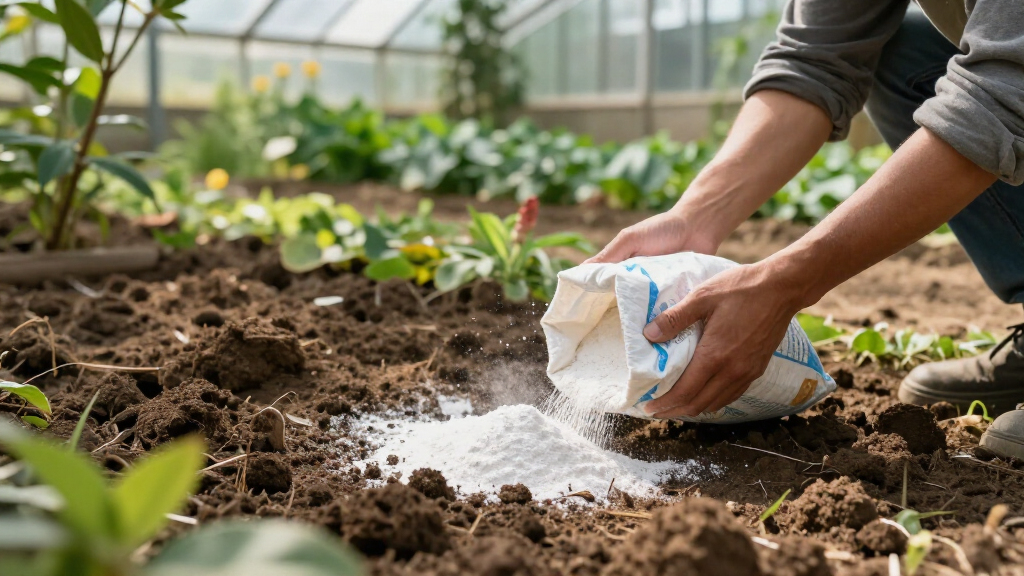
For most gardeners comparing the best gypsum for caliche soil improvement, I’d start with The Andersons NutraSoft OP Pelletized Gypsum for its practical pellet form and generous bag size. Earth Science Fast Acting Gypsum is a standout for buyers who want granules marketed for quicker soil conditioning, while Espoma Organic Garden Gypsum offers a familiar organic-gardening option in both small and large bags. The main tradeoffs are application convenience, quantity, and whether gypsum addresses the actual soil problem: it supplies calcium and sulfur, but it does not dissolve caliche or fix every cause of poor drainage. Soil testing matters more than choosing a product with the strongest label claims. Read on for how the nine options differ and which one best fits your garden, lawn, or soil-care plan.

Get garden gear delivered free with Prime
- Fast, free delivery on millions of items
- Prime Video, Amazon Music and more included
- Member-only deals all year
Complete the kit


Key Takeaways
- The Andersons NutraSoft OP leads this comparison for buyers seeking a pelletized product in a larger bag; its practical format does not make it a remedy for every caliche-related problem.
- Earth Science Fast Acting Gypsum comes in two bag sizes, giving buyers a choice between a smaller trial and a larger project supply without changing product type.
- Espoma Organic Garden Gypsum also spans small and large bags, so the main distinction is the scale of use rather than a different formulation.
- Powdered options, including Olympus Myco and the OMRI-listed 5 lb powder, suit buyers with specific mixing or small-area needs but can be less convenient to spread across a lawn.
- Caliche is a calcium carbonate layer, so gypsum should not be treated as a caliche breaker; soil testing and attention to drainage determine whether any product here fits.


| gypsum for caliche soil improvement | Brand | Weight | Form | Model number |
|---|---|---|---|---|
| The Andersons NutraSoft OP Pel | The Andersons | 40 lb | — | — |
| Espoma Organic Garden Gypsum S | Espoma | 6 lb | — | GG6 |
| Organic Gypsum Powder 5 lb | Cz Garden Supply | 5 lb | Powder | CzGYPpdr |
| Earth Science Fast Acting Gyps | Earth Science | — | Granules | 12504 |
| Down to Earth Organic Prilled | Down to Earth All Natural Fertilizers | — | Granules | DTE-FERT-GardenGypsum-5lb-FOS |
| Earth Science Fast Acting Gyps | Earth Science | 25 lb | — | — |
| Gypsum Granules | Cz Garden | 5 lb | Granules | — |
| Olympus Myco 97% Pure Gypsum P | Olympus Myco | 5 lb (80 oz) | Powder | — |
| Espoma Organic Garden Gypsum S | Espoma | 36 lb | Granules | 839222 |
More Details on Our Top Picks
The Andersons NutraSoft OP Pelletized Gypsum, 40 lb Bag
For a lawn or garden where caliche-related water movement problems cover a broad area, The Andersons NutraSoft OP offers a larger bag and stated coverage of 6,600 square feet. Its pelletized form is easier to distribute across a yard than Cz Garden Supply Organic Gypsum Powder, which comes in a small pouch suited to more targeted use. DG Technology granules disperse and dissolve after irrigation, so watering is part of the application rather than an optional convenience. The product is also OMRI listed and described as useful for compacted soil and salt or pet damage. One important limit: gypsum is not a way to dissolve a caliche hardpan, and this listing does not establish a caliche-specific treatment rate. I’d pair it with a soil test and drainage assessment, and skip it if you cannot irrigate after spreading.
Pros:- 40 lb bag and stated 6,600 sq ft coverage suit broader applications than the 5 lb options in this group.
- Pelletized format is easier to distribute over lawns than loose powder.
- DG Technology granules disperse and dissolve after irrigation.
- OMRI listed and described for clay compaction, salt damage, and pet damage.
Cons:- Requires irrigation for granules to disperse and dissolve.
- No product-specific caliche treatment rate is provided.
- A large-area amendment cannot address a physical hardpan or poor drainage by itself.
Best for: Homeowners treating a large lawn or garden area who want a pelletized, OMRI-listed amendment and can water after application.
Not ideal for: Buyers trying to break through a confirmed caliche hardpan or those unable to irrigate after spreading; gypsum alone is not a hardpan remedy, and these granules need water to disperse.
- Brand:The Andersons
- Weight:40 lb
- Coverage:6,600 sq ft
- Type:Pelletized gypsum soil amendment
- Listing:OMRI listed
- Volume:640 fluid ounces
- Manufacturer part number:NS
Our verdict“Choose The Andersons for broad, irrigated lawn applications, not as a standalone fix for a caliche hardpan.”
Espoma Organic Garden Gypsum Soil Conditioner, 6 lb
Espoma Organic Garden Gypsum is the small-bag choice for gardeners who want a pelletized amendment for a limited bed rather than a lawn-scale treatment. Its 6 lb size is easier to handle and store than The Andersons NutraSoft OP 40 lb bag, though it will take multiple bags to cover a larger area. The product is approved for organic gardening and is described as helping loosen heavy clay soil and support root growth. That makes it a practical soil-conditioning option where a test suggests gypsum is appropriate, but it is not a fertilizer and the listing gives no coverage rate or caliche-specific application directions. I would not treat it as a fix for a cemented caliche layer; compared with the powder from Cz Garden Supply, Espoma’s pellets are the simpler format for spreading across a bed.
Pros:- Organic-approved soil conditioner for garden use.
- Pellet form is more convenient to spread than loose powder.
- Small bag is manageable for limited beds and storage.
- Described as helping loosen heavy clay soil and support root growth.
Cons:- A 6 lb bag may require multiple applications or bags for larger areas.
- Not a fertilizer.
- No coverage figure or caliche-specific application rate is provided.
Best for: Organic home gardeners conditioning a small raised bed or planting area who prefer easy-to-spread pellets over powder.
Not ideal for: People treating a large lawn, looking for a fertilizer, or trying to mechanically break a confirmed caliche layer; the small bag and limited application details make it a poor fit for those jobs.
- Brand:Espoma
- Model number:GG6
- Weight:6 lb
- Item type:Garden gypsum soil conditioner
- Number of items:1
- UPC:050197022064
Our verdict“Pick Espoma for a small organic garden bed where convenient pellets matter more than bulk coverage.”
Organic Gypsum Powder 5 lb – OMRI Listed Calcium Sulfate Dihydrate Soil Amendment for Lawns, Plants & Mushroom Cultivation
Cz Garden Supply Organic Gypsum Powder is the most targeted option here for buyers who want a powder rather than a spreadable pellet. That form can suit container gardens, small planting areas, or mushroom substrate preparation, while The Andersons NutraSoft OP is a more practical choice for distributing material across a large lawn. The resealable pouch helps keep the remaining product contained, and the listing identifies it as OMRI listed and made in the USA. It supplies calcium and sulfur, but claims about soil improvement should not be read as proof it will dissolve caliche or correct every drainage problem. Compared with Espoma’s 6 lb pellets, this 5 lb powder offers a different application format, not greater area coverage; the listing provides no coverage rate, so I’d check soil needs before applying broadly.
Pros:- Powder form suits targeted uses and mushroom substrate preparation.
- OMRI listed for organic use.
- Resealable heavy-duty pouch helps contain unused product.
- Supplies calcium and sulfur.
Cons:- 5 lb package may be insufficient for large areas.
- Powder can be less convenient to spread evenly than pellets.
- No coverage figure or caliche-specific application rate is listed.
Best for: Organic gardeners treating containers or small, targeted planting areas, and growers who specifically need gypsum powder for substrate preparation.
Not ideal for: People seeking quick, even coverage across a large lawn or a remedy for a solid caliche layer; the powder format and lack of a stated coverage rate make it less straightforward for broad treatment.
- Brand:Cz Garden Supply
- Model number:CzGYPpdr
- Weight:5 lb
- Form:Powder
- Package type:Resealable heavy-duty pouch
- OMRI listed:Yes
- Country of origin:USA
Our verdict“Choose Cz Garden Supply when you need a small, resealable supply of gypsum powder for targeted applications rather than lawn-scale spreading.”
Earth Science Fast Acting Gypsum Granules – 5 lb – Soil Conditioner with Calcium, Salt Damage Repair, and Nutri-Bond Runoff Reduction
Earth Science Fast Acting Gypsum Granules stand out for buyers who already use a spreader and want a product listing that specifically names Nutri-Bond runoff reduction. The description says the technology can cut nutrient runoff by up to 50%, a distinction absent from Espoma Organic Garden Gypsum and Down to Earth Organic Prilled Garden Gypsum. The granules are also described for compacted clay and salt-damaged soil, with calcium for plant needs. That breadth does not make it a caliche treatment: no caliche-specific rate or coverage area is clear in the supplied data, and gypsum cannot replace physical hardpan removal where needed. Compared with Cz Garden Supply’s powder, this product is easier to distribute with a spreader, but buyers without one may find the application less even. Verify the label directions for the area being treated.
Pros:- Granules are suited to spreader application.
- Nutri-Bond technology is described as reducing nutrient runoff by up to 50%.
- Listing identifies uses for compacted soil, salt damage, and calcium supply.
- Described as suitable for children, pets, and all grass types.
Cons:- Requires a spreader for even application.
- Supplied coverage data is unclear and does not give a usable area figure.
- No caliche-specific application directions are provided.
Best for: Gardeners with a spreader who want granules for soil conditioning and are especially concerned about nutrient runoff or salt damage.
Not ideal for: Buyers without a spreader, those needing a clearly stated coverage rate, or anyone expecting gypsum to break through a solid caliche hardpan.
- Brand:Earth Science
- Model number:12504
- Manufacturer:Earth Science Growing
- Item weight:5 lb
- Unit count:80 ounces
- Form:Granules
- Mixing ratio:1:0:0
- Coverage:Listed as 5; area unit not specified
Our verdict“Choose Earth Science if you have a spreader and value its runoff-control feature, but confirm the application rate before treating caliche-affected ground.”
Down to Earth Organic Prilled Garden Gypsum – Calcium Sulfate, 5 lb
Down to Earth Organic Prilled Garden Gypsum earns its place for gardeners who want an OMRI-listed, pH-neutral calcium-and-sulfur amendment around acid-sensitive plants. That pH detail differentiates it from a general soil conditioner: the listing says it can supply these nutrients without changing soil pH. Its granular form can be applied by hand or with a spreader, giving it more application flexibility than Cz Garden Supply Organic Gypsum Powder. The tradeoff is scale: this is a 5 lb product, while The Andersons NutraSoft OP comes in a 40 lb bag with stated lawn coverage. The supplied data gives no clear area coverage, and “Prilled” appears as the coverage field rather than a measured area. I’d use it for a small garden after checking soil conditions, not as a stand-alone answer to a hard caliche layer.
Pros:- OMRI listed for certified organic gardening.
- Described as pH-neutral, making it suitable for acid-sensitive plants.
- Supplies calcium and sulfur.
- Granules can be applied by hand or with a spreader.
Cons:- Only available in a 5 lb size in the supplied product data.
- Granules may be dusty during application.
- Coverage information is unclear, and no caliche-specific rate is supplied.
Best for: Organic gardeners with small beds or acid-sensitive plants who want a pH-neutral gypsum product that can be applied by hand or spreader.
Not ideal for: People treating broad lawn areas or seeking a product with a clear coverage rate; the 5 lb package and ambiguous coverage data limit planning.
- Brand:Down to Earth All Natural Fertilizers
- Model number:DTE-FERT-GardenGypsum-5lb-FOS
- Item weight:5 lb
- Unit count:80 ounces
- Form:Granules
- Specific use:Plant growth
- Application method:Hand or spreader
- Mixing ratio:1:0:0
Our verdict“Choose Down to Earth for a small organic planting area where pH neutrality matters, not for bulk caliche remediation.”
Earth Science Fast Acting Gypsum (25 lb.)
For broad lawn treatment, this 25-pound bag covers up to 5,000 square feet, giving it a wider reach per purchase than the small-bag options such as Olympus Myco 97% Pure Gypsum Powder. Its fast-acting formula is positioned for lawn growth and greener color, but the available product details do not specify calcium sulfate purity, application rate, or a caliche-specific result. That makes it a practical choice for treating a sizable lawn when the aim is general soil conditioning, rather than a precise amendment plan for a small garden bed. Repeated applications may be needed, so buyers should plan around the label directions and their soil conditions. Compared with Espoma’s 36-pound granules, this bag is lighter to handle, though Espoma supplies more material overall.
Pros:- Stated coverage of up to 5,000 square feet
- Fast-acting formula is intended for lawn treatment
- 25-pound bag is smaller to handle than Espoma’s 36-pound bag
- Product description connects use with lawn growth and greener color
Cons:- May require repeated applications for desired results
- No gypsum purity or detailed application rate is provided
- Lawn-growth claims do not establish performance for caliche soil
Best for: Homeowners treating a broad lawn who want one bag with stated coverage of up to 5,000 square feet.
Not ideal for: Gardeners treating a small bed or seeking a stated purity level and a caliche-specific application rate; those details are not provided here.
- Brand:Earth Science
- Weight:25 lb
- Coverage:Up to 5,000 sq ft
- Product type:Fast-acting gypsum
- Intended use:Lawn growth and soil conditioning
- Application note:May require multiple applications
Our verdict“Choose this for broad lawn coverage in a manageable-size bag, but look elsewhere if you need detailed purity or caliche application guidance.”
Gypsum Granules – Made in USA – OMRI Listed – Calcium Sulfate Dihydrate – Garden Soil Amendment Fertilizer for Lawns, Plants, Calcium & Sulfur Additive
Organic gardeners who want a clearly identified calcium-and-sulfur amendment may prefer these OMRI-listed granules, made from calcium sulfate dihydrate. The 5-pound resealable pouch is easier to store and portion than the 25-pound Earth Science Fast Acting Gypsum, but its modest amount is a poor match for treating large caliche-affected areas. The product description says it can loosen compacted soil and support water penetration; those benefits may help with soil structure, but the listing does not give a caliche-specific rate or coverage figure. It is also not a complete fertilizer, so it cannot replace a broader nutrient plan. Compared with Olympus Myco 97% Pure Gypsum Powder, this option adds an OMRI listing and granule form, while Olympus provides a stated purity range.
Pros:- OMRI listed for organic gardening
- Identifies calcium sulfate dihydrate as the material
- Resealable 5-pound pouch suits small-scale storage and use
- Granules are described as helping loosen compacted soil and improve water penetration
Cons:- Small package may require multiple purchases for larger areas
- No coverage figure or caliche-specific application rate is provided
- Not a complete fertilizer
Best for: Organic home gardeners treating a few beds or containers who want a small, resealable package of calcium sulfate dihydrate.
Not ideal for: People treating large lawns, extensive caliche ground, or anyone who needs a stated coverage rate; the 5-pound pouch may be insufficient.
- Brand:Cz Garden
- Material:Calcium sulfate dihydrate
- Weight:5 lb
- Unit count:80 oz
- Country of origin:USA
- Organic listing:OMRI listed
- Form:Granules
- Package:Resealable pouch
Our verdict“Pick this for small organic garden projects where a compact, resealable gypsum package matters more than broad-area coverage.”
Olympus Myco 97% Pure Gypsum Powder, 5 lb
Olympus Myco is the clearest pick here for buyers prioritizing a stated gypsum purity range: its calcium sulfate dihydrate is listed at 97%–99%. That gives it a specification advantage over Earth Science Fast Acting Gypsum, which lists broad lawn coverage but no purity figure. The powder can suit garden, lawn, and mushroom-substrate uses, and the description attributes soil-loosening and moisture-distribution benefits to it. For caliche improvement, though, purity alone does not establish how much to apply or whether the soil needs gypsum; the listing provides no coverage rate or caliche-specific directions. Its 5-pound size is easier to handle than Espoma’s 36-pound granules but makes it less practical for treating extensive ground. The powder form may also be less convenient to spread evenly than pelletized or granular alternatives.
Pros:- Lists 97%–99% purity
- Identifies calcium sulfate dihydrate as the material
- Suitable for gardens, lawns, and mushroom substrates
- Small 5-pound package is easier to handle than Espoma’s 36-pound bag
Cons:- No coverage figure or application rate is provided
- Powder may be harder to spread evenly than granules
- Purity information does not establish suitability or effectiveness for a particular caliche soil
Best for: Gardeners who want a small gypsum package with a stated purity range and plan to measure and apply it carefully.
Not ideal for: Buyers treating a large caliche area or seeking ready-to-use coverage guidance; the package is small and no application rate is supplied.
- Brand:Olympus Myco
- Material:Calcium sulfate dihydrate
- Purity:97%–99%
- Weight:5 lb (80 oz)
- Model:5 lbs
- Form:Powder
- Listed uses:Gardens, lawns, and mushroom substrates
Our verdict“Choose Olympus when a stated purity range and a small multipurpose package matter more than easy spreading or large-area coverage.”
Espoma Organic Garden Gypsum Soil Conditioner, 36 lb.
Espoma’s 36-pound pelletized bag is the strongest fit in this group for buyers who need substantial material in an organic-gardening format. Its granules are described as easier to apply uniformly than the powder in Olympus Myco 97% Pure Gypsum Powder, and the larger amount is better suited to broad soil-conditioning work than the 5-pound Cz Garden pouch. The product is also described for heavy clay, turf salt damage, and pet spotting. Those uses do not, by themselves, show how it will perform in caliche, and the supplied details give no specific application rate or area coverage. The bag’s weight is a real handling drawback, especially for buyers who need to move it across a yard. Compared with Earth Science’s 25-pound bag, Espoma offers more material but is heavier to carry.
Pros:- 36-pound quantity suits larger soil-conditioning jobs
- Pelletized granules support easier, more uniform application than powder
- Described as approved for certified organic gardening
- Also intended for heavy clay and turf damage from winter salts or pets
Cons:- 36-pound bag can be difficult to lift and maneuver
- No specific application rate or coverage area is provided
- Listed uses do not establish a caliche-specific treatment rate
Best for: Organic gardeners or homeowners treating a larger area who prefer pelletized gypsum and can handle a 36-pound bag.
Not ideal for: People with limited lifting capacity, small garden beds, or buyers who need a clear application rate and stated coverage before purchasing.
- Brand:Espoma
- Model number:839222
- Weight:36 lb
- Unit count:576 oz
- Form:Granules
- Specific use:Soil conditioning
- Target species:All plants
- Coverage:Medium
- Mixing ratio:1:0:0
Our verdict“Choose Espoma for a larger organic soil-conditioning job if you can manage the heavy bag and determine an appropriate application rate.”

How We Picked
I compared the nine listed products by the factors that change the buying decision for caliche-affected ground: application form, package size, stated composition or certifications, and the kinds of jobs each format can reasonably suit. Pelletized and prilled products tend to be easier to distribute over lawns and beds, while powders can better suit measured, small-scale applications or buyers who need a fine material. I treated label claims such as fast action, salt-damage repair, and organic status as product-specific points to verify against the site’s soil needs—not proof that gypsum will solve caliche.
The ranking favors practical fit and clear use cases over broad promises. The Andersons ranks first for its combination of pellet form and larger supply; Earth Science and Espoma follow as useful choices with distinct bag-size options and recognizable application roles. Smaller specialty powders and similarly described granules rank lower because their clearest advantage is a narrower format or stated use, rather than a clear advantage for treating caliche itself. None is ranked as a substitute for a soil test, physical drainage work, or professional advice where a hard caliche layer is the main obstruction.
| gypsum for caliche soil improvement | Form |
|---|---|
| The Andersons NutraSoft OP Pel | — |
| Espoma Organic Garden Gypsum S | — |
| Organic Gypsum Powder 5 lb | Powder |
| Earth Science Fast Acting Gyps | Granules |
| Down to Earth Organic Prilled | Granules |
| Earth Science Fast Acting Gyps | — |
| Gypsum Granules | Granules |
| Olympus Myco 97% Pure Gypsum P | Powder |
| Espoma Organic Garden Gypsum S | Granules |
Factors to Consider When Choosing Best Gypsum For Caliche Soil Improvement
Before choosing a bag, I’d separate the soil condition from the product format. Caliche is a hardened, calcium-carbonate-rich layer, while gypsum is calcium sulfate; adding gypsum may help certain soil chemistry or structure problems, but it does not dissolve a cemented caliche pan. These checks can prevent buying more amendment than the site can use.
Confirm What Is Limiting the Soil
Start by finding out whether the problem is sodic soil, salinity, compaction, a shallow caliche layer, or simply poor drainage. These conditions can look alike at the surface but call for different responses. A soil test can identify sodium and other chemical constraints, while a small test pit can reveal whether a hard layer is blocking water or roots. Gypsum is most relevant when the soil chemistry supports its use, not just because the ground is pale or hard. If water stops at a cemented layer, mechanical breaking, raised beds, or a drainage plan may matter more than spreading any of these products. Treat the label’s soil-improvement language as a reason to check suitability, not a diagnosis.
Match the Form to the Application Area
Granules, pellets, and prills are generally easier to spread evenly over a lawn or broad bed than fine powder. Powder can be useful for small plots, measured blends, or applications where a fine texture is preferred, but wind and uneven distribution can complicate outdoor use. Choose a product form that works with the spreader or hand method you have, then check whether the label permits that application. A form that is easy to apply can reduce missed strips and concentrated patches, but it does not make the amendment more effective against a caliche layer. For a small garden, a compact bag may be easier to handle than a large supply. For a broad area, bag count and storage become part of the decision.
Calculate Coverage Before Buying a Large Bag
Bag weight alone does not tell you how much area a product will treat; the labeled application rate does. Compare the rate on each package with the area you plan to cover, and calculate the total amount before choosing a larger bag. This matters in this lineup because several products are offered in multiple package sizes, while others are small specialty packs. Avoid applying extra material simply because the soil looks severely affected; overapplication can waste product and may create nutrient imbalances. If the recommended rate is unclear or the label does not address your intended site, ask the manufacturer or a local soil professional before purchasing. Keep any unused material dry and sealed according to its label.
Read Organic and Certification Claims Precisely
Organic gardening claims and OMRI listing can matter to buyers following a particular production standard, but they do not establish that a product will correct caliche. Check the exact product label and certification status rather than assuming similar names or package sizes share the same listing. Also distinguish calcium sulfate from other calcium amendments: their chemistry and use instructions differ. If your goal is to follow an organic program, confirm that the product and intended use meet that program’s rules. If that is not a priority, application form, testing, and coverage may carry more weight. Certification is a selection filter, not a substitute for matching the amendment to the soil problem.
Plan for Water Movement and Soil Structure
Gypsum needs water to move through soil and carry dissolved components into the root zone, but water cannot pass freely through every compacted or cemented layer. Before applying it, consider where irrigation or rainfall will drain and whether runoff could carry material away. Loosening a surface crust may help in some situations, but a deep caliche pan can require a different physical solution. Do not increase irrigation without considering drainage, since standing water can harm roots and worsen site problems. On a small area, testing a limited section first can show how the soil responds before you treat the whole yard. This staged approach can prevent a large purchase from becoming a poor fit.
Decide When to Pay for Convenience or Supply
A larger bag can simplify treatment across a broad lawn, but only if the labeled rate and confirmed need justify that volume. Pelletized or granulated products may be worth choosing when easier spreading is a priority, while a powder may suit a buyer working with a small bed or a specific mixing task. A fast-acting label claim should not be the deciding factor unless the product instructions explain the claim and the soil condition matches its intended use. If you are new to gypsum, a smaller package or a limited trial area can reduce leftover product and give you a chance to evaluate the result. Experienced gardeners managing a tested, large area may value the larger formats more. Pay for the form and quantity that fit the job, not a promise that gypsum can remove caliche.
Frequently Asked Questions
Will gypsum break up a hard caliche layer?
No product in this roundup should be treated as a caliche breaker. Caliche is a cemented layer rich in calcium carbonate, while gypsum supplies calcium sulfate and is used for particular soil chemistry or structure issues. If the layer blocks roots or water, a soil profile check can help determine whether mechanical disruption, drainage changes, or raised planting areas are more appropriate. A soil test can also show whether gypsum has a role in the surrounding soil. Avoid applying it on the assumption that it will dissolve the hardpan.
Should I buy pellets or powder for a lawn with caliche soil?
For a broad lawn, pellets or granules are usually simpler to distribute evenly with common spreading tools. Powder can suit small beds or measured applications, though it may be harder to handle in windy conditions. Neither form changes whether gypsum is appropriate for the soil chemistry or whether a caliche layer is blocking drainage. Check the application rate and spreader directions on the specific label before deciding. If you are unsure how much area needs treatment, start with a small test section rather than choosing by bag size alone.
Can I use gypsum without a soil test?
You can buy and apply gypsum without testing, but you may not know whether it addresses the cause of the problem. A soil test can identify conditions such as excess sodium and help guide the application rate; a test pit can reveal a physical caliche layer that an amendment will not remove. Surface crusting or slow drainage alone does not confirm that gypsum is needed. If testing is not immediately available, avoid heavy applications and follow the product label carefully. For a large lawn or persistent plant decline, testing before treatment can prevent wasted material and misguided irrigation changes.
Which bag size makes sense for a first-time application?
For a small garden or an initial trial, a smaller package such as the 5 lb or 6 lb options may be easier to handle and store. A larger bag is more practical when the measured treatment area and label rate call for more material. The lineup includes small and large versions of both Earth Science and Espoma products, so buyers can keep the product family consistent while matching quantity to the job. Calculate coverage from the label rather than guessing from package weight. If a soil test has not confirmed the need, a limited trial may be a safer first step than buying a large supply.
Does an OMRI-listed gypsum product work better on caliche?
OMRI listing relates to suitability for certain organic production standards; it does not mean a product is more effective against caliche. The OMRI-listed powders in this roundup may fit buyers who need that certification and prefer a fine material, but their format may be less convenient for broad lawn coverage. Check the exact label and certification details for the product you plan to buy. Then match the amendment to a tested soil need and the intended application area. If the main issue is a cemented hardpan, certification does not change the need for a physical or drainage-focused solution.
Conclusion
For a broad, practical starting point, I’d choose The Andersons NutraSoft OP Pelletized Gypsum as the best overall option in this lineup, especially when a pellet form and larger supply suit the job. Earth Science Fast Acting Gypsum is my best value-style pick for buyers who want a granulated option in a small or larger bag, while Espoma Organic Garden Gypsum is a strong fit for gardeners who prioritize an organic-gardening product and want a choice of package size. Beginners should start with a smaller bag and a test area rather than treating a whole yard before confirming the soil problem. For specific needs, choose an OMRI-listed powder or Olympus Myco’s powder format only when fine material or a stated specialty use fits your plan. If a hard caliche layer is the main obstacle, I’d prioritize soil testing and a drainage or physical-treatment plan before buying gypsum.