
TL;DR
Open a free Amazon Business account
Business pricing, bulk buying and tax-exempt orders.
Create a free accountAs an affiliate, we earn on qualifying purchases.
Hard, alkaline desert water causes mineral deposits that clog drip emitters. Regular flushing, filtration, and smart upgrades help keep your system reliable and efficient.
Nothing’s more frustrating than watching your drip system slow to a drip—literally. In desert zones with alkaline water, mineral buildup from calcium and magnesium turns tiny emitters into clogged bottlenecks. If your plants look thirsty or your water flow drops unexpectedly, mineral deposits are probably to blame.
But don’t worry. A few simple habits and some innovative tools can keep your drip lines humming, even in tough water. You’ll learn how to spot early signs of clogging, prevent buildup, and use new tech to make maintenance easier and more effective.
Hard water in deserts causes mineral deposits that clog emitters, often reducing flow by up to 80%.
Regular flushing, filtering, and vinegar cleaning keep systems working smoothly and extend lifespan.
Advanced emitters and IoT sensors can detect and prevent clogging, saving time and water.
Water softening and anti-scale treatments tailored for drip systems are effective in high-mineral areas.
Monitoring system flow rates helps catch early clogging signs before plants suffer.
How Hard Water Turns Your Emitters into Tiny Blockades
Hard water is loaded with dissolved minerals—mainly calcium and magnesium—that don’t just sit passively. When water evaporates or cools, these minerals settle out. In drip emitters, that means tiny deposits that gradually block water flow.
Imagine trying to water a garden with a soda straw—every few days, it gets clogged with mineral crust. Over time, flow drops by 50%, and plants start to wilt. In desert regions, high mineral content makes this problem worse. An example: in parts of Arizona, water can have calcium levels over 200 ppm, accelerating clogging.
Understanding this process reveals why maintenance is crucial: mineral buildup isn’t just a nuisance; it directly impacts plant health by reducing water availability. The tradeoff is between investing time in preventive measures versus dealing with the consequences of poor watering—wilting plants, uneven growth, and increased water waste. Recognizing the severity of mineral deposits helps gardeners prioritize regular system checks and upgrades, ensuring consistent watering and healthier plants.
As an affiliate, we earn on qualifying purchases.
Spotting & Fixing Clogged Emitters Before Your Plants Suffer
If your plants are unevenly watered or water drips slowly from some emitters, clogging is likely. Visible signs include white crusty buildup at emitter outlets or a drop in flow rate—sometimes by over 70%.
To fix clogged emitters:
- Remove and soak them in vinegar for an hour to dissolve deposits.
- Flush your system with clean water to clear out loose debris.
- Install filters to catch particles before they reach emitters.
Regular inspection, especially after heavy mineral rains or in summer, keeps problems manageable. For example, checking emitters every two weeks during peak watering season prevents mineral buildup from turning into full blockages.
Addressing clogs early is vital because persistent blockages can cause uneven watering, leading to stress or damage in plants. Quick fixes like vinegar soaks are effective, but understanding the signs helps prevent larger issues. The tradeoff between routine maintenance and emergency repairs highlights the importance of proactive care in high-mineral environments, ultimately saving time and resources while keeping plants healthy.
water softening system for drip irrigation
As an affiliate, we earn on qualifying purchases.
As an affiliate, we earn on qualifying purchases.
Prevent Clogging in Hard, Alkaline Water: Easy Tips That Work
Prevention beats cleaning. In desert zones, you can cut clogging risks with simple strategies:
- Install high-quality filters with fine mesh screens—100-mesh or finer work best.
- Use pressure regulators to avoid high pressure that forces minerals into tiny orifices.
- Flushing your system every month with plain water helps wash out mineral buildup.
- Apply environmentally friendly anti-scale treatments designed for drip systems.
A neighbor in Phoenix swears by a weekly vinegar flush and filters that trap particles before they clog. These small steps add up to a system that keeps watering without interruption. The deeper implication is that consistent preventive measures not only extend the lifespan of your system but also reduce the likelihood of sudden failures, which can be costly and damaging to plants. The tradeoff involves a modest investment of time and materials upfront to avoid larger, more complex repairs later—making proactive prevention a wise garden management strategy in mineral-rich waters.
As an affiliate, we earn on qualifying purchases.
Tech That Keeps Your Drip Lines Clear in Tough Desert Water
Modern drip emitters are smarter about resisting mineral buildup. Vortex or turbulent-flow designs create swirls that prevent minerals from settling out. Materials like UV-resistant plastics also help resist mineral adhesion.
Plus, IoT sensors now monitor flow rates and pressure, sending alerts when clogging starts—saving you time and guesswork. For example, a farm in California installed flow sensors that alerted them to clogging early, reducing water waste by 15% and avoiding crop stress.
Choosing these advanced emitters and monitoring tools can be a game-changer, especially in high-mineral environments. The implication here is that investing in these technologies can significantly reduce maintenance time and prevent crop damage, but they come with higher initial costs. The tradeoff involves balancing the upfront investment against long-term savings in water, labor, and crop yield quality—an often worthwhile consideration for serious desert gardeners.
irrigation system flow rate monitor
As an affiliate, we earn on qualifying purchases.
As an affiliate, we earn on qualifying purchases.
Step-by-Step: Clear Your Drip System of Mineral Clogs
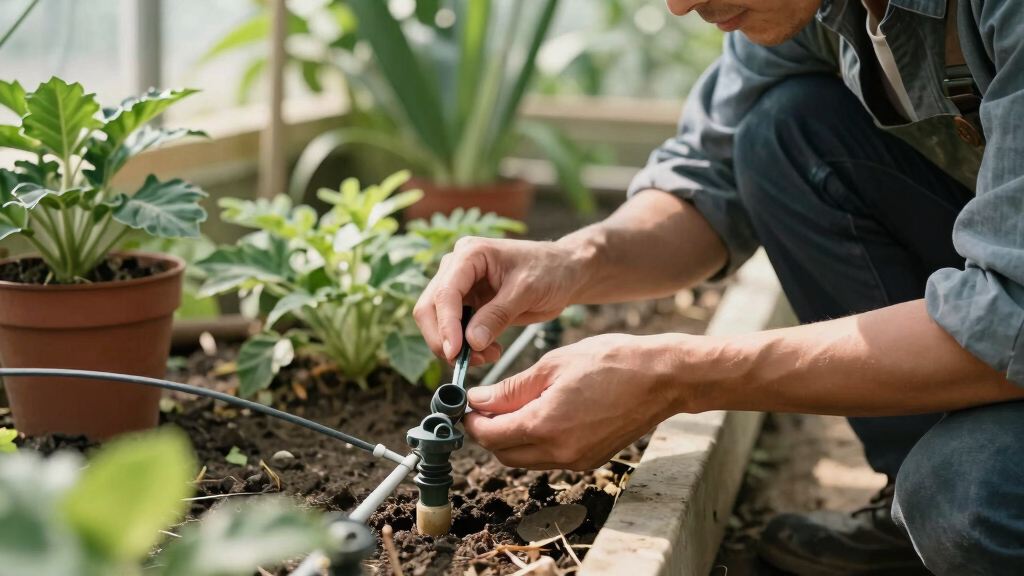
- Turn off water supply and remove affected emitters.
- Soak emitters in a vinegar solution (1 part vinegar to 3 parts water) for 30-60 minutes.
- Use a soft brush or toothpick to scrub away stubborn deposits.
- Flush the entire system with clean water—preferably using a flushing valve.
- Reinstall emitters and test for flow.
Repeat this process every few months in high-mineral zones, especially after heavy rains or droughts that concentrate minerals. Regular cleaning prevents buildup from reaching a point where it causes significant flow restrictions, which can stress plants or cause uneven watering. The tradeoff is that consistent maintenance requires time but pays off by maintaining system efficiency and plant health, reducing costly replacements and repairs over time.
Compare: Regular Maintenance vs. High-Tech Solutions
| Feature | Basic Maintenance |
|---|---|
| Frequency | Bi-weekly flushing and annual cleaning |
| Cost | Low—mostly vinegar, filters, and routine checks |
| Effort | Moderate—manual cleaning required |
| Clog Resistance | Average, depends on water quality |
| High-Tech Solutions | Smart emitters, IoT sensors, anti-scale agents |
|---|---|
| Frequency | Minimal—alerts and automatic cleaning |
| Cost | Higher upfront, but reduces labor and downtime |
| Effort | Low—monitor and respond to alerts |
| Clog Resistance | High, especially in mineral-rich water |
Choosing between these options depends on your budget, garden size, and how much time you’re willing to invest. High-tech solutions offer superior clog resistance and automation, but require a larger upfront investment. Regular maintenance is more affordable but demands consistent effort and vigilance. The key is understanding that integrating modern technology can significantly reduce the risk of clogging, which is especially important in high-mineral environments, ultimately saving time, water, and plant health over the long term.
Frequently Asked Questions
How can I tell if my drip emitters are clogged?
If water flow slows down or stops from some emitters, or if you see white crusty buildup, clogging is likely. A simple test is to remove and soak emitters in vinegar—if they flow freely afterward, buildup was the culprit.
What’s the best way to prevent clogging in hard water areas?
Install fine mesh filters, regularly flush the system, and use environmentally friendly anti-scale agents. These steps keep mineral deposits from settling in your emitters and reduce maintenance over time.
Are some emitters more resistant to mineral buildup?
Yes, vortex or turbulent-flow emitters are designed to create swirling water that prevents minerals from settling. Materials like UV-resistant plastics also help resist mineral adhesion, making them a better choice for alkaline water.
Can I use chemical treatments safely?
Yes, but only choose eco-friendly, drip-safe anti-scale treatments. Always follow manufacturer instructions and wear protective gear when handling chemicals to keep your system and environment safe.
How often should I clean or replace emitters?
Most gardeners check every season, but in high-mineral zones, consider cleaning every 3-4 months. Replace emitters if cleaning doesn’t restore proper flow or if they become damaged by mineral buildup.
Conclusion
Don’t let mineral deposits turn your lush desert garden into a wilted patch. Simple habits—like regular flushing, smart filters, and early cleaning—keep your drip lines flowing in tough water.
Think of your irrigation system as a living part of your garden. A little attention now saves big headaches later. Keep it clean, keep it healthy, and enjoy thriving plants no matter how alkaline your water gets.
Summer Picks
summer essentials
As an affiliate, we earn on qualifying purchases.