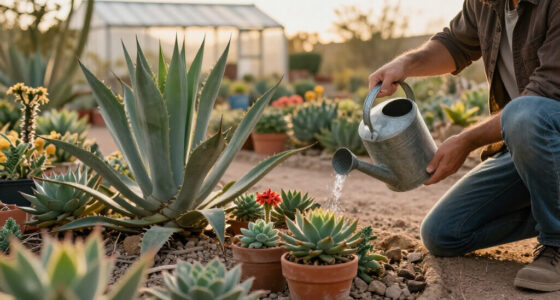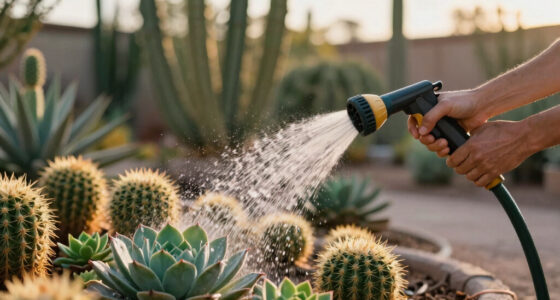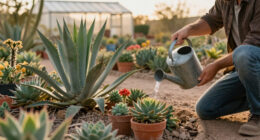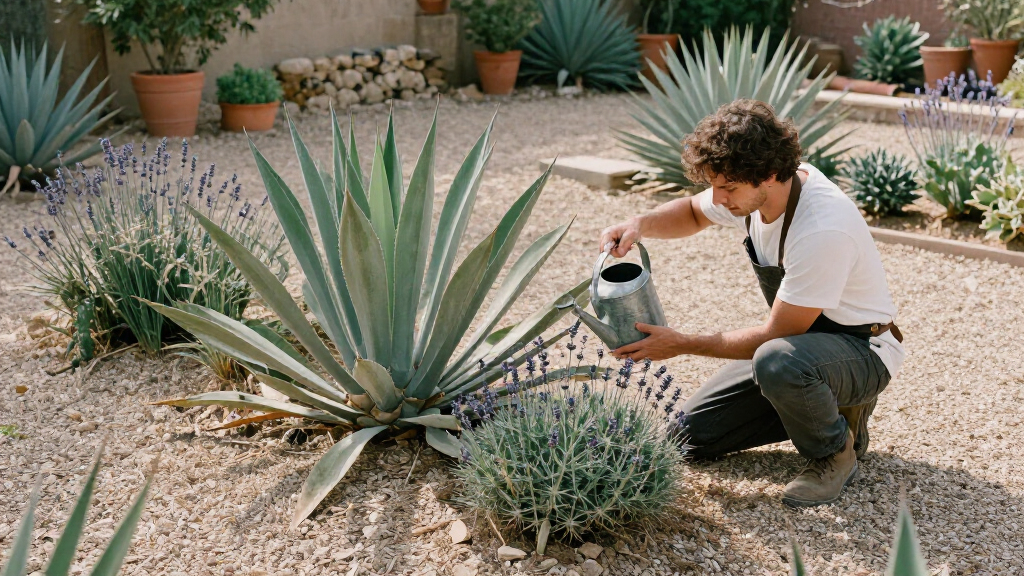
Choosing between agave and prickly pear is less about which plant can survive dry weather—many species of both do—and more about what you want your desert garden to do. Agave is the stronger choice for a bold, tidy focal point with relatively predictable dimensions. Prickly pear is better when you want a wider planting, spring flowers, and sometimes edible pads or fruit, and can manage its spines and spread.

Get garden gear delivered free — and shop member deals
- Fast, free delivery on millions of items
- Access to Prime Big Deal Days deals on October 6–7
- Prime Video, Amazon Music and more included
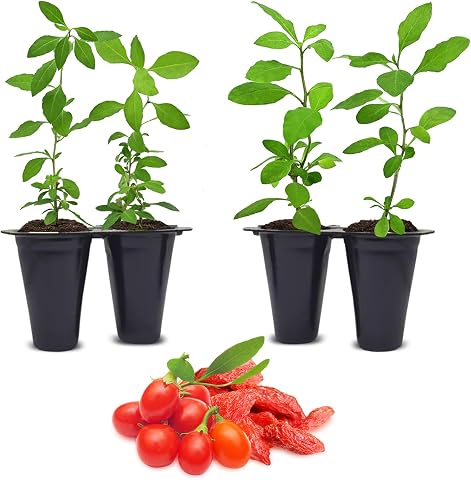
Goji Berry (Wolfberry) Live Starter Plants, 4-Pack
- ✔ Brand: Fam Plants
- ✔ Plant type: Listed as tropical; described as goji berry (wolfberry)
- ✔ Quantity: 4 starter plants

The Drought-Defying California Garden: 230 Native Plants for a Lush, Low-Water Landscape
- ✔ Format: Gardening book
- ✔ Plant count: 230 native plants
- ✔ Region: California

Dry Climate Gardening: Growing Beautiful, Sustainable Gardens in Low-Water Conditions
- ✔ Format: Gardening book
- ✔ Subject: Dry-climate gardening
- ✔ Stated emphasis: Beautiful, sustainable gardens
Neither label describes one uniform plant: species and cultivars vary in mature size, cold tolerance, spine type, and water needs. Match the plant to your climate and site rather than assuming every agave or Opuntia suits every desert garden. The comparison below focuses on common landscape uses and the practical tradeoff: agave’s defined, architectural form versus prickly pear’s branching growth, seasonal display, and extra handling demands.
At a Glance
| Criteria | Agave | Prickly pear cactus (Opuntia) | Winner |
|---|---|---|---|
| Growth habit and space | Usually a single, defined rosette; size depends on species. | Branches into pads and can spread outward; growth and height vary by species. | A |
| Water needs after establishment | Very low for many landscape species once established; needs occasional water in prolonged drought. | Very low after establishment; occasional deep watering can support growth during long dry spells. | Tie |
| Flowers and seasonal interest | Bold foliage year-round; mature plants may produce a tall, dramatic flower stalk, often near the end of their life. | Often offers conspicuous seasonal flowers and, for some species, fruit; pads add structure year-round. | B |
| Spines and handling | Many have sharp terminal spines or leaf-edge teeth; choose and site carefully. | Spines and tiny detachable glochids can make contact difficult; spineless cultivars still need careful handling. | A |
| Maintenance and longevity | Generally low routine care, but some species produce offsets and flowering can mark the end of the main rosette. | May need pruning or removal to control spread and keep paths clear. | A |
| Climate fit | Varies widely; some handle frost, while tropical or subtropical types need protection. | Many types suit hot, dry sites, but cold tolerance differs substantially by species. | Depends |
| Landscape and edible uses | Strong focal-point plant for gravel beds, slopes, and containers sized for mature growth. | Useful for broad beds, wildlife plantings, erosion control, and, for suitable edible types, food. | Depends |
Goji Berry (Wolfberry) Live Starter Plants, 4-Pack
For buyers who mean actual plants when they search for drought-tolerant desert plants, this is the most direct match in the lineup. The four-pack of goji berry starter plants is described as drought-tolerant once established, and the self-fertile feature means each plant can fruit independently. That can be useful if you are planting in stages, using containers, or simply do not want fruit production to depend on a separate pollinator plant. Unlike both books below, this option gives us a specific edible shrub and a stated growing range rather than general planning guidance.The climate details are another reason it ranks first: the listing specifies USDA zones 5–9 and cold hardiness down to -10°F, alongside suitability for container or in-ground growing. Those details make it a more concrete choice than the books for a gardener checking basic fit. Still, the listing also calls the plant type tropical, which sits awkwardly beside the stated cold-hardiness range; buyers should verify the seller’s identification and care guidance rather than treating that label as a settled botanical description. The spec for expected plant height is only two inches, so it is not a reliable indication of mature size and should not be used to plan spacing.Compared with The Drought-Defying California Garden, goji offers a defined crop but much less breadth: it is one plant type, not a menu of native landscape choices. Compared with Dry Climate Gardening, it is more actionable if your priority is adding a fruiting shrub now, but it cannot supply an overall design strategy. We would choose it for its edible use and establishment-stage drought tolerance, while skipping it if we need a strictly native desert palette or want plants adapted to a particular arid region without further research.
Pros:
- Four starter plants provide a concrete planting option rather than general advice.
- Each plant is described as self-fertile and able to produce fruit independently.
- Drought-tolerant once established, according to the supplied description.
- Listed for USDA zones 5–9, with cold hardiness down to -10°F.
Cons:
- The listed expected plant height of two inches is not useful for mature-size or spacing decisions.
- The tropical plant label conflicts with the stated cold-hardiness range and deserves clarification.
- Drought tolerance applies after establishment; new plants still need suitable care and watering.
Best for: Gardeners seeking an edible, self-fertile shrub for a container or garden bed in a compatible growing zone.
Not ideal for: Buyers who need a confirmed mature-size specification, a region-specific native plant, or a plant that needs no regular water during establishment.
Bottom line: We rank this first for buyers who want an actual edible, drought-tolerant plant, provided they confirm its sizing and climate details before planting.
“We rank this first for buyers who want an actual edible, drought-tolerant plant, provided they confirm its sizing and climate details before planting.”
The Drought-Defying California Garden: 230 Native Plants for a Lush, Low-Water Landscape
This guide is the strongest choice for a California gardener who wants to consider a range of plants before buying. Its central distinction from the goji four-pack is breadth: instead of offering one edible species, it focuses on 230 California native plants for a lush landscape with low water use. That regional focus matters because “drought-tolerant” is not a universal plant category; local climate and regional adaptation can shape whether a garden thrives with reduced irrigation. The book is therefore a planning resource, not a ready-to-plant product.Compared with Dry Climate Gardening, the California title gives us a clearer boundary for its intended reader and a stated plant count, which makes it easier to judge whether it fits a particular project. If we garden in California and want native options rather than a single fruiting shrub, this is the more specific starting point. Its title promises a broad selection, but the supplied description does not identify individual species, explain how entries are organized, or confirm the level of cultivation detail. We should not assume it includes every local microclimate or provides a complete design plan without checking the book itself.This pick makes the most sense for people who value regional native selection over an immediate harvest. It is less useful to someone outside California who needs locally appropriate plant recommendations, and it cannot replace a live plant order when the priority is getting something into the ground now. The breadth is its advantage over goji; the geographic limit is its main compromise. Against the more general dry-climate book, the California focus is a practical strength for in-state readers but a reason to skip it elsewhere.
Pros:
- Names a substantial selection of 230 native plants.
- Targets low-water landscape planning rather than a single crop.
- California focus gives regional context that the general dry-climate title does not specify.
- Useful as a research step before committing to a planting palette.
Cons:
- It is a book, not a source of live plants.
- Its stated regional focus limits direct usefulness for gardeners outside California.
- The supplied details do not identify species or specify the depth of planting instructions.
Best for: California gardeners comparing native plant options for a low-water landscape before selecting and purchasing plants.
Not ideal for: Gardeners outside California, buyers looking for live plants, or readers who need verified species-level details from the supplied listing.
Bottom line: We recommend it as the most focused planning resource for California gardeners, but not as a substitute for region-appropriate guidance elsewhere or for buying plants.
“We recommend it as the most focused planning resource for California gardeners, but not as a substitute for region-appropriate guidance elsewhere or for buying plants.”
Dry Climate Gardening: Growing Beautiful, Sustainable Gardens in Low-Water Conditions
For readers who are still shaping the idea of a low-water garden rather than choosing a specific plant, this title offers the broadest framing in the lineup. Its subject is creating attractive, sustainable gardens in dry climates, whereas the California guide narrows its scope to native plants from one region and the goji pack supplies a particular fruiting shrub. That makes this book the most general option by apparent subject, but it also means we have less listing information to evaluate its practical fit.The comparison with The Drought-Defying California Garden is especially important. The California title identifies 230 native plants and a defined region; this title does not provide a plant count, a geographic scope, or examples of the advice it contains. Buyers seeking a concrete shortlist of plants should therefore favor the California book if they garden in California, or consult local sources if they do not. The goji pack is even more immediately specific as a purchase, but it cannot address the wider questions implied by a sustainable garden.We place this third not because its topic is irrelevant, but because the supplied description supports fewer confident distinctions. It may suit a reader exploring dry-climate gardening as a whole, yet we cannot verify particular methods, plant recommendations, or regional coverage from the provided details. That uncertainty is a meaningful tradeoff for buyers who need actionable, location-specific choices. Choose it for the general low-water gardening theme; skip it if you need known plant selections or clear regional guidance before making a purchase.
Pros:
- Its stated focus is gardens designed for low-water conditions.
- Addresses sustainable gardening rather than only a single plant or crop.
- The broad dry-climate framing may appeal to readers still forming a garden plan.
Cons:
- The supplied information gives no plant count or named species.
- No geographic focus or detailed guidance is specified in the listing details provided.
- It does not provide live plants or the immediate specificity of the goji starter set.
Best for: Readers beginning to explore sustainable garden ideas for low-water conditions and who are comfortable verifying the book’s scope before relying on it.
Not ideal for: Buyers who need named plant recommendations, a confirmed regional focus, or live drought-tolerant plants.
Bottom line: This is a plausible broad-topic resource for early planning, but the limited available details make it a less certain choice than the California-specific guide.
“This is a plausible broad-topic resource for early planning, but the limited available details make it a less certain choice than the California-specific guide.”
As an Amazon Associate we earn from qualifying purchases.
Key Differences
The clearest difference is shape over time. Agave tends to hold a recognizable rosette, so it is easier to plan as a single accent and keep clear of paths. A mature plant can still be large, heavily armed, or offset-producing, and some species send up a towering flower stalk before the main rosette dies. Prickly pear grows through pads and branches; that gives it a more expansive, changeable profile and can create a substantial barrier or habitat patch, but it may need pruning to prevent encroachment.
Both can be exceptionally water-wise once established, so water use alone rarely settles the choice. Flowering favors prickly pear for reliable seasonal display, while agave’s bloom is dramatic but typically a less frequent, end-of-life event for the rosette. Handling favors agave only in the limited sense that its hazards are often easier to anticipate: both plants can injure people, and prickly pear’s small glochids can be especially hard to see and remove. Check the specific species’ cold tolerance, mature dimensions, and local invasive-plant guidance before buying either.
For value, a smaller, healthy plant of a locally suitable species is usually a better investment than paying a premium for a large specimen that may be poorly matched to the site. Choose agave when form and a controlled footprint matter most; choose prickly pear when flowers, branching coverage, wildlife value, or edible production justify the extra space and handling care.
Detailed Comparison
Growth habit and space (Agave wins — moderate)
Agave wins by a moderate margin for gardeners who want a defined focal point. Its rosette is generally easier to place as a single specimen, though the mature diameter can be much larger than a nursery plant suggests, and some species create offsets. Prickly pear branches into pads and can spread across a bed, so it is more useful for filling a broad area or forming a barrier but less convenient beside a narrow walkway. Check mature dimensions for the exact species; neither plant should be selected from its container size alone.
Water needs after establishment (minor difference)
This is a tie in most suitable sites. Many landscape agaves and prickly pears handle long dry periods with little supplemental irrigation once established. Both need appropriate drainage, and newly planted specimens need water while roots establish. In extended heat and drought, occasional deep watering may help either plant, depending on species, soil, and local conditions. Do not treat drought-tolerant as a promise of thriving in every climate or of needing no water at all.
Flowers and seasonal interest (Prickly pear cactus (Opuntia) wins — moderate)
Prickly pear wins by a moderate margin for repeatable seasonal color. Many Opuntia species produce conspicuous flowers, and some also set colorful fruit; pads provide a distinctive outline beyond bloom season. Agave offers durable architectural foliage, and a mature plant’s tall flower stalk can be spectacular, but the rosette commonly flowers once and then dies, though offsets may remain. Pick agave for year-round shape and prickly pear for a more regular flower-and-fruit display.
Spines and handling (Agave wins — moderate)
Agave has a slight practical advantage because its hazards are often more visible and confined to leaf tips or margins, though those spines can still cause serious punctures. Prickly pear may have large spines as well as tiny glochids that detach easily and are difficult to spot. Spineless cultivars reduce some risk but should not be assumed completely safe. Keep either plant away from children’s play areas, pets’ routes, and tight paths; wear suitable protective gear for pruning or planting.
Maintenance and longevity (Agave wins — moderate)
Agave wins by a minor-to-moderate margin where low routine maintenance is the priority. A well-sited plant usually needs little shaping, although dead leaves, offsets, or a post-flowering stalk may require removal. Prickly pear can be equally forgiving about water but often needs more active containment, especially near paths or neighboring plants. Its spread is an advantage in a naturalized bed and a drawback in a formal, tightly controlled layout.
Climate fit (major difference)
There is no universal winner. Hardiness varies substantially within both groups: some species tolerate meaningful frost, while others are damaged by cold or prolonged wet conditions. A plant that thrives in a hot, dry low desert may fail in a cold or humid garden, and winter wetness can be as important as minimum temperature. Compare the exact species or cultivar against local guidance and provide drainage; do not buy by the common name alone.
Landscape and edible uses (moderate difference)
The winner depends on the job. Agave is usually better for a focal point, gravel garden, or a strong vertical-and-rosette contrast among lower plants. Prickly pear is more versatile for broad coverage, wildlife planting, erosion control, and edible pads or fruit when using an appropriate species and following safe food-handling practices. Some agaves also have traditional food uses, but many ornamental landscape plants are not grown or prepared for that purpose. Confirm suitability rather than treating every plant as edible.
Agave: Pros and Cons
Pros:
- Distinctive rosette makes it a clear focal point.
- Many landscape species need little supplemental water after establishment.
- Usually easier to site as a defined accent than a spreading cactus.
- Low routine pruning in a well-chosen location.
Cons:
- Sharp leaf tips or marginal teeth can make close planting hazardous.
- Some varieties become much larger than expected or produce offsets.
- A mature rosette may die after its dramatic flowering stalk appears.
- Cold tolerance and response to wet soil vary by species.
Prickly pear cactus (Opuntia): Pros and Cons
Pros:
- Many species provide conspicuous flowers and sometimes colorful fruit.
- Branching pads can cover broad areas and support habitat or erosion-control goals.
- Suitable types may provide edible pads or fruit.
- Highly drought-tolerant after establishment in an appropriate site.
Cons:
- Can spread into paths or neighboring beds and require containment.
- Spines and hard-to-see glochids make planting and pruning difficult.
- A poor choice for tight spaces, frequent contact, or some family and pet settings.
- Cold tolerance, edible use, and growth habit depend on the exact species.
Who Should Choose What
Choose Agave if:
- You want one sculptural accent with a relatively defined footprint.
- You value strong foliage form more than frequent seasonal flowers.
- You have a dry, well-drained site and can place sharp leaves away from traffic.
- You prefer a plant that usually needs less routine shaping than a spreading cactus.
Choose Prickly pear cactus (Opuntia) if:
- You have room for branching growth and want a broad, naturalistic planting.
- Seasonal flowers, fruit, wildlife value, or edible production matter to you.
- You can keep spiny growth away from paths, play spaces, and regular handling.
- You are willing to prune or remove pads if the plant spreads beyond its intended area.
Skip both if: Your site stays waterlogged, your climate falls outside the selected species’ hardiness range, or the planting location is a busy narrow path where sharp spines would create an ongoing hazard.
Value for Money
Neither plant is automatically worth paying more for. Price differences often reflect plant size, cultivar, availability, and nursery production, not a guarantee of better drought performance. A smaller specimen of a locally hardy, correctly identified plant can establish well and cost less than a large showpiece that is difficult to handle or poorly suited to the site.
Pay more for a named species or cultivar when its mature size, cold tolerance, reduced spine burden, flower color, or edible use solves a real problem for your garden. For a focal point where immediate scale matters, a larger agave may justify its cost if there is safe access for planting and enough room at maturity. For a broad prickly pear planting, buy only the amount needed and plan for spread; paying a premium for a large quantity can be poor value if later removal is likely. In most cases, correct plant selection and drainage matter more than buying the biggest specimen.
Final Verdict
For most gardeners seeking one low-water architectural accent, choose agave: it is easier to plan as a defined feature and usually needs less containment. Choose prickly pear when your priority is a spreading, seasonal planting with conspicuous flowers, possible fruit, or habitat value—and you have room to manage spines and growth. The biggest deciding factor is not which plant tolerates more drought; both can do well with little water after establishment. It is whether you want a controlled rosette or a branching cactus, and whether your climate and layout suit the specific species.
Frequently Asked Questions
Which is more drought-tolerant, agave or prickly pear?
Many species of both are highly drought-tolerant once established, so the difference is usually small. Species, soil drainage, planting age, and local heat matter more than the broad plant group. Water new plants while they establish, then adjust irrigation to local conditions rather than assuming either needs none.
Which plant is safer near a walkway?
Neither is a good choice for a narrow, high-traffic path. Agave leaf tips and teeth can puncture skin, while prickly pear may have both visible spines and difficult-to-see glochids. If you use either, allow generous clearance and choose a less-armed plant elsewhere for close-contact locations.
Does agave die after flowering?
Many agaves flower once from a mature rosette and that main rosette dies afterward. Some produce offsets that continue growing, but the timing and offset production vary by species. The flower stalk can be an impressive display, but it is not the same kind of recurring seasonal bloom that many prickly pears provide.
Can prickly pear pads or fruit be eaten?
Some Opuntia species are grown for edible pads or fruit, but not every ornamental plant is suitable for food use. Confirm the species and intended use, and handle and prepare it safely to remove spines and glochids. Do not eat a plant based only on a generic prickly pear label.
Halloween Picks
halloween
As an affiliate, we earn on qualifying purchases.