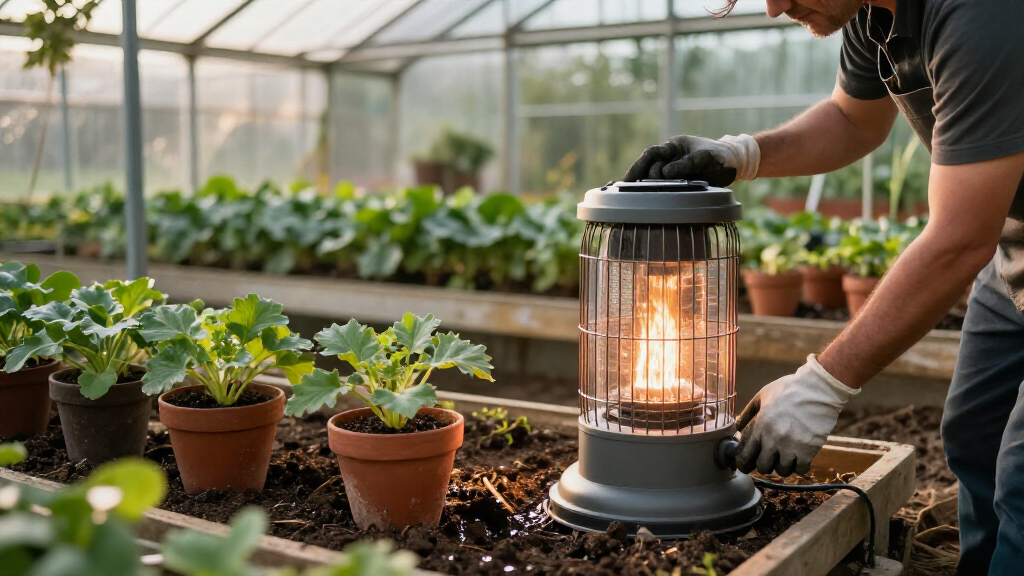
Heat-resistant greenhouse heaters can help protect plants from cold, but the right choice depends on your greenhouse size, power supply, and how closely you need to control temperature. My best overall pick is the BioGreen Palma, which combines heating, fan circulation, and digital thermostat control. The Dr. Infrared Heater DR218 is a straightforward alternative, while the Pasapair WiFi Heater suits growers who want app-based adjustments. Across this group, the main tradeoffs are simple controls versus remote convenience, and focused heating versus added air circulation. Read on for the full comparison, selection criteria, and advice on choosing a heater that fits your greenhouse.

Get garden gear delivered free with Prime
- Fast, free delivery on millions of items
- Prime Video, Amazon Music and more included
- Member-only deals all year
Complete the kit


Key Takeaways
BioGreen Palma leads for balanced functionality: its heater-and-fan design plus digital thermostat gives it a broader greenhouse role than models focused mainly on heat output.
WiFi is a convenience, not a heating upgrade: Pasapair and the WiFi-enabled lesotc add remote control, but buyers should still check their greenhouse signal and prefer dependable local controls.
Most options cluster around 1500W: this makes greenhouse size, insulation, drafts, and thermostat placement more useful decision points than wattage alone.
Safety features deserve close attention: models listing overheat protection, such as the VEVOR, make safety provisions more visible, but no heater should sit near water, foliage, or combustible materials.
Product differences are often about control and placement: digital thermostats, adjustable airflow or angle, and portability can matter more to daily use than similar headline power ratings.
| SmterCon Greenhouse Heater with Digital Thermostat |  | Best for Straightforward Thermostat Control | Power: 1500 watts | Heating coverage: Up to 120 sq. ft. | Amperage: 15 A | VIEW LATEST PRICE | See Our Full Breakdown |
| BioGreen Palma Electric Greenhouse Heater and Fan with Digital Thermostat |  | Best for Damp Greenhouses and Air Circulation | Power settings: 750 W or 1,500 W | Heat output: 5,118 BTU/hr | Heating coverage: Up to 120 sq. ft. | VIEW LATEST PRICE | See Our Full Breakdown |
| LHUKSGF 1500W Greenhouse Heater with Digital Thermostat |  | Best for More Coverage and Multiple Modes | Heating technology: PTC ceramic | Power settings: 20 W fan-only, 750 W, and 1,500 W | Heat output: 5,120 BTU | VIEW LATEST PRICE | See Our Full Breakdown |
| Dr. Infrared Heater DR218 Greenhouse Heater, 1500 W |  | Best for Radiant Heat | Power: 1,500 watts | Heating method: Radiant heat | Heating coverage: Up to 150 sq. ft. | VIEW LATEST PRICE | See Our Full Breakdown |
| Lesotc 1500W PTC Smart Greenhouse Heater |  | Best for Remote App Control | Power: 1,500 watts | Heating coverage: Up to 150 sq. ft. | Temperature range: 41°F–95°F | VIEW LATEST PRICE | See Our Full Breakdown |
| Tonree 1500W Portable Greenhouse Heater with Digital Thermostat |  | Best for Humid Greenhouses | Power output: 1500W | Heating coverage: Up to 120 sq. ft. | Power modes: 20W fan, 750W, 1500W | VIEW LATEST PRICE | See Our Full Breakdown |
| Noarixa Greenhouse Heater with Thermostat |  | Best for Straightforward Thermostat Control | Power levels: 20W, 750W, 1500W | Heat output: 5120 BTU | Heating area: Up to 160 sq. ft. | VIEW LATEST PRICE | See Our Full Breakdown |
| VEVOR 1500W Greenhouse Heater with Fan, Adjustable Angle, and Overheat Protection |  | Best for Airflow and Aiming Heat | Power: 1500W | Voltage: 120V | Amperage: 12.5A | VIEW LATEST PRICE | See Our Full Breakdown |
| Buyplus 1500W Greenhouse Heater with Digital Thermostat |  | Best for Wider Stated Coverage | Heating power: 1500W | Coverage: Up to 215 sq. ft. | Thermostat range: 40°F–108°F (5°C–42°C) | VIEW LATEST PRICE | See Our Full Breakdown |
| Pasapair 1500W WiFi Greenhouse Heater with Thermostat |  | Best for Remote Scheduling | Power: 1500W | Heating method: Electric PTC ceramic | Temperature range: 41°F–108°F | VIEW LATEST PRICE | See Our Full Breakdown |
| GNRZZT Greenhouse Heater with Thermostat, 1500W PTC Ceramic Heater |  | Best for Precise Heat in Damp Spaces | Heating power: 1500 W | Heat output: 5120 BTU per hour | Heating method: Forced air, PTC ceramic | VIEW LATEST PRICE | See Our Full Breakdown |
| OVRYVHNX 1500W Electric Greenhouse Heater with Digital Thermostat |  | Best for Corrosion-Resistant Construction | Power output: 1500 W (5120 BTU/hr) | Coverage area: Up to 160 sq. ft. | Thermostat range: 41°F to 108°F | VIEW LATEST PRICE | See Our Full Breakdown |
| ZIZIWIN Greenhouse Heater with Digital Thermostat, 1500W |  | Best for Compact Greenhouses with Airflow Control | Power: 1500 W | Heating method: Convection | Coverage: Up to 120 sq. ft. | VIEW LATEST PRICE | See Our Full Breakdown |
| lesotc 1500W Greenhouse Heater with Thermostat and WiFi App Control |  | Best Smart-Control Pick | Heating element: PTC ceramic | Heat output: 1500 W | Coverage: Up to 150 sq. ft. | VIEW LATEST PRICE | See Our Full Breakdown |
| heat-resistant greenhouse heater | Heating method | Heating coverage | Thermostat range |
|---|---|---|---|
| SmterCon Greenhouse Heater wit | Convection | Up to 120 sq. ft. | — |
| BioGreen Palma Electric Greenh | — | Up to 120 sq. ft. | 32°F to 185°F |
| LHUKSGF 1500W Greenhouse Heate | — | Up to 160 sq. ft. | 41°F–108°F (5°C–42°C) |
| Dr. Infrared Heater DR218 Gree | Radiant heat | Up to 150 sq. ft. | 32°F–104°F |
| Lesotc 1500W PTC Smart Greenho | — | Up to 150 sq. ft. | — |
| Tonree 1500W Portable Greenhou | — | Up to 120 sq. ft. | — |
| Noarixa Greenhouse Heater with | Forced air | — | — |
| VEVOR 1500W Greenhouse Heater | Forced air | — | — |
| Buyplus 1500W Greenhouse Heate | Convection | — | 40°F–108°F (5°C–42°C) |
| Pasapair 1500W WiFi Greenhouse | Electric PTC ceramic | Up to 215 sq. ft. | — |
| GNRZZT Greenhouse Heater with | Forced air, PTC ceramic | — | 41–108°F |
| OVRYVHNX 1500W Electric Greenh | — | — | 41°F to 108°F |
| ZIZIWIN Greenhouse Heater with | Convection | — | — |
| lesotc 1500W Greenhouse Heater | — | — | 41–113°F |
More Details on Our Top Picks
SmterCon Greenhouse Heater with Digital Thermostat
The SmterCon is a practical fit for growers who want a heater to cycle around a chosen temperature without relying on app control. Its 1500-watt output is rated for spaces up to 120 square feet, matching the BioGreen Palma’s stated coverage, though the Palma adds a lower 750-watt setting and a fan-only mode. SmterCon instead offers adjustable ventilation, which can help move warm air around the growing area. Independent overheat protection adds a useful safety layer, but it does not change the core limits: this is a corded electric heater with a 15-amp draw at full power and modest stated coverage. I’d choose it for a small greenhouse with a suitable electrical circuit; for a larger space, the LHUKSGF’s 160-square-foot rating is a better match.
Pros:- Digital thermostat automatically cycles the heater to maintain a selected temperature.
- Rated to heat spaces up to 120 square feet.
- Adjustable ventilation supports air circulation.
- Independent overheat protection is included.
Cons:- The 1500-watt setting can add substantial electricity use during extended operation.
- Coverage is limited to spaces up to 120 square feet.
- The supplied product details do not specify a splash-resistance rating.
Best for: Growers with a greenhouse of up to 120 square feet who want automatic thermostat cycling and adjustable ventilation without app setup.
Not ideal for: Owners of larger or poorly insulated greenhouses, or anyone trying to limit electricity use during long cold spells; its coverage is limited and its full-power draw is 15 amps.
- Power:1500 watts
- Heating coverage:Up to 120 sq. ft.
- Amperage:15 A
- Heating method:Convection
- Dimensions:9.5 × 7.5 × 8.6 in
- Thermostat:Digital, with automatic on/off control
- Safety feature:Independent overheat protection
Our verdict“Choose the SmterCon for thermostat-led heating in a small greenhouse, but pick the LHUKSGF if you need more stated coverage.”
BioGreen Palma Electric Greenhouse Heater and Fan with Digital Thermostat
The BioGreen Palma earns its place for combining greenhouse heating with substantial air movement in a splash-proof stainless steel housing. Its fan circulates up to 5,800 cubic feet per hour, and a fan-only mode can move air when added heat is not wanted. Two heat settings, 750 and 1,500 watts, also give more flexibility than the single listed power rating of the SmterCon. Both are rated for spaces up to 120 square feet, so the Palma’s advantage is not greater coverage but its combination of airflow, lower heat setting, and IPX4 protection for splash-prone conditions. It still needs a 120-volt supply and draws up to 15 amps. I’d favor it over the Dr. Infrared DR218 when adjustable airflow and damp-environment protection matter more than radiant heat.
Pros:- Two heating levels, 750 and 1,500 watts, allow more control over heat output.
- Fan circulates up to 5,800 cubic feet of air per hour and can run without heat.
- IPX4 splash-proof stainless steel housing suits damp greenhouse conditions.
- Thermostat automatically switches heating on and off.
Cons:- Stated heating coverage is limited to 120 square feet.
- Requires a 120-volt electrical supply and can draw 15 amps at full power.
- Its forced-air approach may not suit growers who prefer the Dr. Infrared DR218’s radiant heating method.
Best for: Greenhouse owners with splash-prone conditions who want a heater that can also circulate air or run at a lower heat setting.
Not ideal for: Growers with spaces larger than 120 square feet or without a suitable 120-volt, 15-amp electrical supply.
- Power settings:750 W or 1,500 W
- Heat output:5,118 BTU/hr
- Heating coverage:Up to 120 sq. ft.
- Thermostat range:32°F to 185°F
- Air circulation:Up to 5,800 ft³/hr
- Water protection:IPX4 splash-proof
- Material:Stainless steel
- Voltage and amperage:120 V; 15 A
Our verdict“Pick the BioGreen Palma for a small, damp greenhouse where adjustable heat and active air circulation are priorities.”
LHUKSGF 1500W Greenhouse Heater with Digital Thermostat
Among these five, the LHUKSGF has the largest stated heating area at up to 160 square feet, giving it an edge over the 120-square-foot SmterCon and BioGreen Palma for growers with a somewhat larger space. Its 750- and 1,500-watt settings let you choose between reduced output and full heat, while the 20-watt fan-only mode supports air movement without heating. The IPX4 splash-resistant housing and overheat protection also suit greenhouse use better than a model whose supplied details omit a water-protection rating. The tradeoff is that 160 square feet remains a modest coverage claim, and actual warmth will depend on insulation and conditions. Unlike the Dr. Infrared DR218, this is a forced-air ceramic heater, not a radiant model.
Pros:- Rated for spaces up to 160 square feet, more than the SmterCon and BioGreen Palma.
- Offers 750-watt and 1,500-watt heating plus a 20-watt fan-only mode.
- IPX4 splash resistance and overheat protection are specified.
- Digital thermostat cycles automatically within a 41°F–108°F range.
Cons:- Coverage is still aimed at relatively small spaces and may fall short in drafty structures.
- Forced-air heating may not suit growers seeking the radiant approach used by the Dr. Infrared DR218.
- The listed 12.5-amp draw still calls for a suitable electrical circuit.
Best for: Growers with a greenhouse or grow tent approaching 160 square feet who want heat levels plus a separate fan-only mode.
Not ideal for: Owners of large, drafty structures who need heat beyond the stated coverage, or buyers seeking radiant rather than forced-air warmth.
- Heating technology:PTC ceramic
- Power settings:20 W fan-only, 750 W, and 1,500 W
- Heat output:5,120 BTU
- Heating coverage:Up to 160 sq. ft.
- Thermostat range:41°F–108°F (5°C–42°C)
- Water resistance:IPX4
- Amperage:12.5 A
- Dimensions:6.4 × 8.2 × 11 in
Our verdict“Choose the LHUKSGF when you need the widest stated coverage in this group and value separate heat and fan modes.”
Dr. Infrared Heater DR218 Greenhouse Heater, 1500 W
The Dr. Infrared Heater DR218 is the distinct choice here for growers who prefer radiant heat over a fan-led design. It is rated for up to 150 square feet, placing its coverage above the SmterCon and BioGreen Palma but below the LHUKSGF’s 160-square-foot claim. Its adjustable thermostat spans 32°F to 104°F, and the IPX4-rated housing is protected against water splashes—useful in a greenhouse where moisture is part of the setting. The tradeoff is a simpler operating package: it has one speed setting, unlike the BioGreen’s two heat levels and fan mode or the LHUKSGF’s three modes. At 11.5 pounds, it is portable but not the lightest option listed. I’d choose it for radiant heating, not for adjustable airflow or multiple operating modes.
Pros:- Radiant heating offers an alternative to the forced-air designs in this group.
- Rated for coverage up to 150 square feet.
- IPX4 housing is protected against water splashes.
- Adjustable thermostat and built-in overheat protection are included.
Cons:- Only one speed setting, with less mode flexibility than the BioGreen Palma or LHUKSGF.
- At 11.5 pounds, it is heavier than the Lesotc at 3.2 pounds.
- The one-year warranty is specified.
Best for: Growers with a greenhouse up to 150 square feet who prefer radiant heat and want splash protection with an adjustable thermostat.
Not ideal for: Buyers who want fan-only circulation, multiple heat settings, or a lighter unit for frequent repositioning.
- Power:1,500 watts
- Heating method:Radiant heat
- Heating coverage:Up to 150 sq. ft.
- Voltage and amperage:120 V; 12.5 A
- Thermostat range:32°F–104°F
- Water protection:IPX4
- Dimensions and weight:10 × 10 × 15 in; 11.5 lb
- Warranty:1 year
Our verdict“Pick the DR218 if radiant heat and splash protection matter more to you than fan modes or lighter portability.”
Lesotc 1500W PTC Smart Greenhouse Heater
The Lesotc PTC Smart Greenhouse Heater is the pick for growers who want to adjust heat remotely rather than relying only on a built-in thermostat. Its Smart Life app control works over 2.4GHz WiFi, and automatic temperature monitoring, a 1–12-hour timer, and oscillation add control over when and where warm air moves. At 3.2 pounds, it is far easier to reposition than the 11.5-pound Dr. Infrared DR218. The Lesotc is rated for up to 150 square feet, while the LHUKSGF claims up to 160 square feet and includes IPX4 splash resistance; no water-resistance rating is supplied for the Lesotc. It also has fan-only operation and tip-over and overheat protection. App dependence and variable heating performance make it a better fit for connected, compact spaces than for a damp or poorly insulated greenhouse.
Pros:- Smart Life app allows remote control over 2.4GHz WiFi.
- Automatic temperature monitoring, oscillation, and a 1–12-hour timer provide control over operation and airflow.
- Fan-only mode can circulate air without heating.
- At 3.2 pounds, it is lighter than the Dr. Infrared DR218 and includes tip-over and overheat protection.
Cons:- App control requires a 2.4GHz WiFi network.
- No splash-resistance rating is provided, unlike the IPX4-rated LHUKSGF and Dr. Infrared DR218.
- Heating performance can vary with insulation, outdoor temperature, and greenhouse layout.
Best for: Connected-home growers with a greenhouse up to 150 square feet who want remote temperature control, oscillation, and a timer.
Not ideal for: Growers without 2.4GHz WiFi or those placing a heater where splash resistance is a key requirement; the supplied details do not list a water-protection rating.
- Power:1,500 watts
- Heating coverage:Up to 150 sq. ft.
- Temperature range:41°F–95°F
- Control:Smart Life app via 2.4GHz WiFi
- Modes:Heating and fan-only
- Oscillation and timer:Oscillation; 1–12 hours
- Safety features:Tip-over and overheat protection
- Voltage, amperage, and weight:120 V; 12.5 A; 3.2 lb
Our verdict“Choose the Lesotc for remote control and easy repositioning in a connected greenhouse, but favor an IPX4-rated model for splash-prone locations.”
Tonree 1500W Portable Greenhouse Heater with Digital Thermostat
The Tonree’s clearest advantage for greenhouse use is its IPX5 water resistance, a higher stated protection level than the IPX4 Noarixa and VEVOR models. That makes it a stronger fit for humid growing spaces where splashes are a concern, though it is not a license to expose the heater to rain or standing water. Its digital thermostat and 750W/1500W heat settings let growers tailor output rather than run full power continuously. Coverage is rated at 120 sq. ft., less than Noarixa’s 160 sq. ft. and Buyplus’s 215 sq. ft., so this pick favors moisture protection over reach. The portable floor-standing design avoids installation, but buyers needing broad coverage or a useful low-heat setting should compare alternatives: its 20W fan mode is for airflow, not meaningful heating.
Pros:- IPX5 water resistance is a stronger stated splash-protection level than the IPX4 Noarixa and VEVOR.
- Digital thermostat supports controlled heating rather than relying only on manual switching.
- Three modes include 750W and 1500W heat output.
- Portable floor-mount design with a carrying handle requires no installation.
Cons:- Rated coverage of 120 sq. ft. is the smallest among the compared thermostat-equipped models.
- The 20W fan-only mode circulates air but provides little heating.
- Water resistance does not establish suitability for rain or direct water exposure.
Best for: Greenhouse owners with a compact, humid growing area who prioritize splash resistance and thermostat control.
Not ideal for: Growers heating more than 120 sq. ft. or seeking a low-power setting that still provides substantial warmth.
- Power output:1500W
- Heating coverage:Up to 120 sq. ft.
- Power modes:20W fan, 750W, 1500W
- Water resistance:IPX5
- Heating element:PTC ceramic
- Thermostat:Digital
- Mounting type:Floor mount
- Model:MGP-2
Our verdict“Choose the Tonree for a smaller, humid greenhouse where IPX5 protection matters more than wide coverage.”
Noarixa Greenhouse Heater with Thermostat
Noarixa is a practical middle ground for growers who want automatic temperature control without the app and scheduling features of the Pasapair. Its thermostat range runs from 41°F to 108°F, while the digital display, timer, and overheat protection provide useful controls in a compact unit. The stated 160 sq. ft. coverage exceeds the Tonree’s 120 sq. ft., although it falls short of the Buyplus and Pasapair ratings of 215 sq. ft. IPX4 splash resistance suits damp greenhouse conditions, but Tonree has the stronger stated water-resistance rating. Noarixa’s three power settings include a 20W fan mode, which is better understood as air circulation than heat. Choose it for a modest space and simple controls; skip it if you need remote operation or stronger moisture protection.
Pros:- Adjustable thermostat spans 41°F to 108°F.
- Digital display and on/off timer add control without requiring Wi-Fi.
- IPX4 splash resistance and overheat protection are specified.
- Compact portable format needs no assembly.
Cons:- Rated coverage is smaller than the Buyplus and Pasapair 215 sq. ft. claims.
- The 20W setting is a fan mode, not a meaningful low-heat level.
- IPX4 offers less stated water resistance than the Tonree’s IPX5 rating.
Best for: Growers with a greenhouse up to about 160 sq. ft. who want thermostat automation, a timer, and simple onboard controls.
Not ideal for: Buyers needing app-based remote scheduling, IPX5 protection, or substantial heating in spaces larger than its rated coverage.
- Power levels:20W, 750W, 1500W
- Heat output:5120 BTU
- Heating area:Up to 160 sq. ft.
- Temperature range:41°F–108°F (5°C–42°C)
- Heating method:Forced air
- Water resistance:IPX4
- Safety features:Overheat protection
- Dimensions:8.8 × 12 × 6.5 in.
Our verdict“Pick Noarixa for a compact greenhouse where thermostat and timer controls matter more than app access or maximum coverage.”
VEVOR 1500W Greenhouse Heater with Fan, Adjustable Angle, and Overheat Protection
VEVOR stands apart from the thermostat-led Tonree and Noarixa by focusing on directed airflow: its head tilts 25° so you can aim warmth toward a bench, seedling area, or work zone. A separate fan mode also supports circulation when heat is not needed, though the listing does not give a fan wattage or temperature-control range. Its flame-retardant housing and overheat shutoff address operating safety, while the IPX4 rating indicates splash resistance rather than protection from direct water exposure. Compared with the Buyplus, VEVOR provides a defined tilt angle but lacks a stated thermostat and coverage figure, making it less suited to hands-off temperature regulation. It makes the most sense for targeted heating in a small indoor greenhouse or workspace, not for buyers who need precise climate control.
Pros:- 25° adjustable angle helps direct heat toward a selected area.
- Separate fan mode can circulate air without using the heating setting.
- Overheat protection and flame-retardant housing are specified.
- Portable floor-standing unit has a stable grip base and handle.
Cons:- No thermostat or temperature range is listed for maintaining a set greenhouse temperature.
- No heating coverage figure is provided, making room-size fit harder to judge.
- IPX4 protection is for splashes, not direct water exposure.
Best for: Growers or hobbyists who want a portable heater that can direct forced air toward a specific bench or work area.
Not ideal for: Buyers who need a specified coverage area, digital thermostat, or automatic temperature regulation for plants.
- Power:1500W
- Voltage:120V
- Amperage:12.5A
- Modes:Heating and fan
- Heating method:Forced air
- Heating element:Coil
- Protection:IPX4 and overheat protection
- Adjustable angle:25°
- Weight:6.4 lb
Our verdict“Choose VEVOR for adjustable, localized airflow, but pick the Buyplus or Noarixa if thermostat-led temperature control is your priority.”
Buyplus 1500W Greenhouse Heater with Digital Thermostat
Among the non-connected options here, Buyplus offers the widest stated coverage: up to 215 sq. ft., compared with 160 sq. ft. for Noarixa and 120 sq. ft. for Tonree. Its digital thermostat spans 40°F to 108°F, giving growers a way to set a target temperature, while the 25W fan-only mode can move air without calling for full heat. An adjustable 0°–45° angle and 7.5-foot cord add placement flexibility. The tradeoff is that coverage figures are not a guarantee of uniform warmth; greenhouse insulation, drafts, and outdoor temperatures affect results. The claimed three-second heating time describes a product claim, not the time required to warm an entire space. Compared with the app-controlled Pasapair, Buyplus is simpler, but lacks its scheduling and remote controls.
Pros:- Rated for up to 215 sq. ft., more than the Tonree and Noarixa.
- Digital thermostat adjusts from 40°F to 108°F.
- 25W fan-only mode and adjustable angle support air circulation and placement.
- 7.5-foot cord and portable handle offer flexibility around a greenhouse.
Cons:- The 215 sq. ft. figure does not establish how evenly the space will heat.
- The stated three-second heating claim does not indicate whole-space warm-up time.
- No water-resistance rating is provided in the product data.
Best for: Greenhouse owners seeking thermostat control and a larger stated coverage area without needing Wi-Fi features.
Not ideal for: Buyers who want app scheduling, verified whole-room warm-up expectations, or a heater with a disclosed water-resistance rating.
- Heating power:1500W
- Coverage:Up to 215 sq. ft.
- Thermostat range:40°F–108°F (5°C–42°C)
- Fan-only mode:25W
- Heating method:Convection
- Heating element:Radiant
- Cord length:7.5 ft.
- Adjustable angle:0°–45°
- Safety feature:Self-resetting overheat protection
Our verdict“Choose Buyplus for its broad stated coverage and adjustable thermostat, provided you do not need app control or a stated splash rating.”
Pasapair 1500W WiFi Greenhouse Heater with Thermostat
Pasapair is the control-focused choice in this group: Wi-Fi app access, a seven-day schedule, and a wired external temperature probe let growers manage heat remotely and measure conditions away from the heater itself. That probe is a meaningful difference from the onboard thermostat on Buyplus, which may reflect the heater’s immediate surroundings rather than a separate plant zone. Four heating modes and a 90° tilt add flexibility, while overheat protection, a child lock, weighted base, and non-slip feet address day-to-day operation. The 215 sq. ft. coverage matches Buyplus’s stated figure, but Pasapair adds more controls rather than more reach. Its limits are practical: it requires 2.4 GHz Wi-Fi and is not made for rain or direct water exposure, so it suits covered, connected setups rather than exposed greenhouses.
Pros:- Smart Life app, remote, onboard panel, and wired thermostat provide several control options.
- External probe measures temperature away from the heater.
- Seven-day schedule and 24-hour timer support planned operation.
- Four modes, 90° adjustable tilt, overheat protection, and child lock.
Cons:- Wi-Fi connectivity supports 2.4 GHz only, not 5 GHz.
- Not designed for rain or direct water exposure.
- The 12-foot remote range and 6.5-foot cord can limit placement flexibility.
Best for: Connected greenhouse growers who want remote temperature monitoring, recurring schedules, and control from outside the growing space.
Not ideal for: Buyers without 2.4 GHz Wi-Fi or those placing a heater where rain, irrigation spray, or direct water exposure is possible.
- Power:1500W
- Heating method:Electric PTC ceramic
- Temperature range:41°F–108°F
- Heating modes:4
- Heating coverage:Up to 215 sq. ft.
- Connectivity:2.4 GHz Wi-Fi
- Controls:Onboard panel, remote, wired thermostat, Smart Life app
- Adjustable tilt:90°
- Power cord length:6.5 ft.
Our verdict“Choose Pasapair if remote scheduling and a separate temperature probe justify the Wi-Fi setup and the heater can stay sheltered.”
GNRZZT Greenhouse Heater with Thermostat, 1500W PTC Ceramic Heater
The GNRZZT pairs 1500W forced-air PTC heating with a thermostat adjustable from 41°F to 108°F, making it a practical choice for growers who want a specific temperature target rather than simple high-or-low heat. Its stated ±1°F accuracy and IPX4 splash protection suit humid greenhouse conditions, while the overheat shutoff and anti-slip base add safeguards for floor placement. Compared with the ZIZIWIN, which covers a smaller stated area and adds adjustable airflow, the GNRZZT claims coverage up to about 160 sq. ft. but does not list a ventilation mode. Its compact footprint is useful where floor space is tight; the tradeoff is that it remains a portable floor heater, not a broad-area or exposed-outdoor solution. Actual warmth will depend on insulation, drafts, and ambient temperature.
Pros:- Digital thermostat adjusts from 41°F to 108°F with stated ±1°F accuracy.
- IPX4 splash protection is suited to damp greenhouse conditions.
- PTC forced-air heating provides quick heat distribution.
- Overheat shutoff and an anti-slip base support safer floor use.
Cons:- Coverage is limited to approximately 160 sq. ft. and can fall in drafty spaces.
- No oscillation or fan-only mode is listed.
- Splash resistance does not make it suitable for unrestricted exposure to rain.
Best for: Greenhouse growers with a covered, humid space of up to about 160 sq. ft. who want adjustable thermostat control and splash protection.
Not ideal for: Growers heating larger or poorly insulated greenhouses, or anyone seeking a heater with app control, oscillation, or a dedicated fan-only mode.
- Heating power:1500 W
- Heat output:5120 BTU per hour
- Heating method:Forced air, PTC ceramic
- Thermostat range:41–108°F
- Thermostat accuracy:±1°F
- Coverage:Up to approximately 160 sq. ft.
- Water resistance:IPX4 splash-proof
- Safety features:Overheat auto shutoff; anti-slip base
- Dimensions:6.89 × 9.25 × 12.2 in (D × W × H)
Our verdict“Choose the GNRZZT for thermostat-controlled heating in a covered, humid greenhouse, but look elsewhere for app control or air circulation modes.”
OVRYVHNX 1500W Electric Greenhouse Heater with Digital Thermostat
The OVRYVHNX makes a straightforward case for greenhouse use with a stainless steel housing, IPX4 splash protection, and a thermostat rated to ±1°F accuracy. Its 1500W output and stated coverage of up to 160 sq. ft. put it in the same general heating class as the GNRZZT; both offer automatic overheat protection and a stable base. The OVRYVHNX is a little larger, and its listed floor-mount design suits growers who have room to keep a heater clear of benches and plant trays. Unlike the lesotc, it does not list WiFi controls, oscillation, or a timer, so it favors basic local temperature management over remote convenience. The bright yellow finish may stand out in a greenhouse, and its coverage claim still depends on sealing, insulation, and outside temperatures.
Pros:- Stainless steel housing is specified for corrosion resistance in humid conditions.
- Digital thermostat has stated ±1°F accuracy and a 41°F to 108°F range.
- IPX4 splash protection suits covered, damp environments.
- Overheat protection and an anti-slip base are included.
Cons:- Stated coverage is limited to up to 160 sq. ft.
- No WiFi, oscillation, or timer is listed.
- Yellow finish may be visually conspicuous in a greenhouse.
Best for: Growers seeking a floor-mounted stainless steel heater for a damp greenhouse up to about 160 sq. ft., with precise thermostat control.
Not ideal for: Buyers who want remote app settings, oscillation, a timer, or a heater that blends unobtrusively into a greenhouse.
- Power output:1500 W (5120 BTU/hr)
- Coverage area:Up to 160 sq. ft.
- Thermostat range:41°F to 108°F
- Thermostat accuracy:±1°F
- Material:Stainless steel
- Water resistance:IPX4 splash-proof
- Amperage:12.5 A
- Mounting type:Floor mount
- Dimensions:7.09 × 9.84 × 13.39 in (D × W × H)
Our verdict“Pick the OVRYVHNX for stainless steel construction and simple thermostat-led heating, not for smart controls or a discreet finish.”
ZIZIWIN Greenhouse Heater with Digital Thermostat, 1500W
With stated coverage up to 120 sq. ft., the ZIZIWIN is a better match for a compact greenhouse than the GNRZZT or OVRYVHNX, both of which claim coverage up to 160 sq. ft. Its digital thermostat switches the heater on and off to maintain a selected temperature, while adjustable airflow offers a useful second function when heat is not needed. At 3.5 lb and under 10 inches in each listed dimension, it is also easier to reposition than the larger OVRYVHNX. The main distinction is its listed convection heating method, rather than the forced-air design described for the GNRZZT. Fire-resistant materials and overheat protection add relevant safeguards, but the product data does not give an IP splash rating. I would not choose it for a persistently wet location or a larger, draft-prone greenhouse.
Pros:- Compact, 3.5 lb design is easier to reposition than the larger OVRYVHNX.
- Digital thermostat automatically switches heating to maintain the selected setting.
- Adjustable airflow can support ventilation or summer cooling.
- Overheat protection and fire-resistant materials are specified.
Cons:- Coverage is limited to up to 120 sq. ft., less than the GNRZZT and OVRYVHNX claims.
- No IP splash-protection rating is provided in the product data.
- The convection heating method may not distribute heat as quickly as forced-air designs.
Best for: Growers with a compact greenhouse or grow tent up to 120 sq. ft. who want thermostat control and adjustable airflow for seasonal use.
Not ideal for: Owners of larger greenhouses or anyone needing a stated splash-resistance rating for a particularly damp installation.
- Power:1500 W
- Heating method:Convection
- Coverage:Up to 120 sq. ft.
- Controls:Digital thermostat with adjustable temperature and speed
- Safety features:Overheat protection; fire-resistant materials
- Weight:3.5 lb
- Dimensions:9.45 × 7.48 × 8.66 in
- Model:MGP-2
Our verdict“Choose the ZIZIWIN for a smaller greenhouse where adjustable airflow matters, but favor an IPX4-rated option for damp conditions.”
lesotc 1500W Greenhouse Heater with Thermostat and WiFi App Control
The lesotc stands apart from the thermostat-only GNRZZT and OVRYVHNX by adding WiFi app control, temperature alerts, and a 24-hour timer. That setup is useful for growers who want to adjust heat or check conditions without walking to the greenhouse. Its 70° oscillation can spread warmth across a wider area than a fixed-direction heater, while fan mode provides airflow when active heating is not needed. The thermostat range extends to 113°F, above the 108°F ceiling listed for the GNRZZT and OVRYVHNX. The tradeoff is a slightly smaller stated coverage area of up to 150 sq. ft., and its IPX4 housing is specified for covered greenhouse use rather than open exposure. Tip-over, overheat, and power-restoration protection add safety features, but the heater still needs a suitable sheltered placement.
Pros:- WiFi app provides temperature control, alerts, and a 24-hour timer.
- 70° oscillation helps distribute warmth beyond a fixed direction.
- Fan mode offers airflow without active heating.
- IPX4 protection and tip-over, overheat, and power-restoration safeguards are listed.
Cons:- Coverage is stated up to 150 sq. ft., below the 160 sq. ft. claims for the GNRZZT and OVRYVHNX.
- Designed for covered greenhouse use, not unrestricted outdoor exposure.
- App features depend on a usable WiFi connection.
Best for: Greenhouse owners with reliable WiFi who want remote temperature adjustments, alerts, and timer scheduling in a covered space up to 150 sq. ft.
Not ideal for: Buyers without reliable WiFi, those heating an exposed outdoor area, or growers who need the largest stated coverage in this group.
- Heating element:PTC ceramic
- Heat output:1500 W
- Coverage:Up to 150 sq. ft.
- Thermostat range:41–113°F
- Temperature sensor accuracy:±1°F
- Oscillation:70°
- Modes and timer:Heat and fan; 24-hour timer
- Ingress protection:IPX4
- Safety features:Tip-over shutoff, overheat protection, power-restoration protection
Our verdict“Choose the lesotc if remote control and oscillation matter more than maximum stated coverage or offline simplicity.”
How We Picked
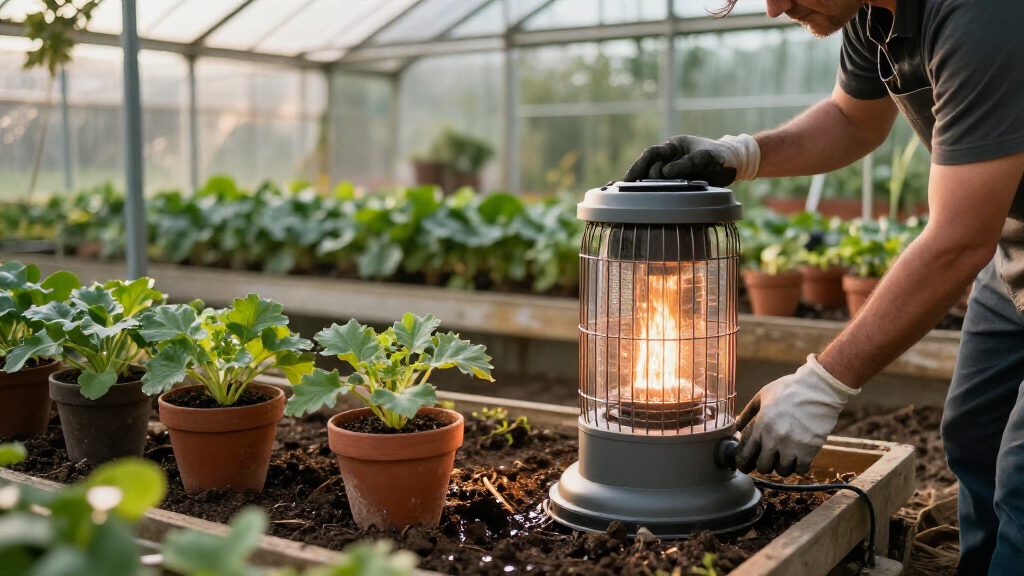
I ranked these heaters around the problems greenhouse owners actually need to solve: keeping temperatures within a useful range, spreading warmth through the space, and operating equipment safely in a humid growing environment. I compared stated wattage, thermostat type, airflow or angle adjustment, portability, WiFi access, and named protections. I also considered whether each feature changes daily usability or mainly adds convenience.
The BioGreen Palma ranks first because its combination of heating, fan circulation, and digital thermostat gives it a well-rounded role. The DR218 and VEVOR stand out for simpler heating or more explicit positioning and protection features, while connected models earn consideration for remote control rather than presumed stronger performance. Many products share a 1500W rating, and the supplied information does not establish a reliable heat-output comparison across them; I avoid treating matching wattage as proof of equal results. Buyers should verify current specifications, safety certifications, and suitability for damp locations before purchase.
| heat-resistant greenhouse heater | Heating coverage | Heating method |
|---|---|---|
| SmterCon Greenhouse Heater wit | Up to 120 sq. ft. | Convection |
| BioGreen Palma Electric Greenh | Up to 120 sq. ft. | — |
| LHUKSGF 1500W Greenhouse Heate | Up to 160 sq. ft. | — |
| Dr. Infrared Heater DR218 Gree | Up to 150 sq. ft. | Radiant heat |
| Lesotc 1500W PTC Smart Greenho | Up to 150 sq. ft. | — |
| Tonree 1500W Portable Greenhou | Up to 120 sq. ft. | — |
| Noarixa Greenhouse Heater with | — | Forced air |
| VEVOR 1500W Greenhouse Heater | — | Forced air |
| Buyplus 1500W Greenhouse Heate | — | Convection |
| Pasapair 1500W WiFi Greenhouse | Up to 215 sq. ft. | Electric PTC ceramic |
| GNRZZT Greenhouse Heater with | — | Forced air, PTC ceramic |
| OVRYVHNX 1500W Electric Greenh | — | — |
| ZIZIWIN Greenhouse Heater with | — | Convection |
| lesotc 1500W Greenhouse Heater | — | — |
Factors to Consider When Choosing Heat-resistant Greenhouse Heaters
Choosing a greenhouse heater is less about finding the largest number on a label and more about matching the heater to the space and the way you grow. These broader checks can help avoid an undersized, inconvenient, or poorly placed unit.
Match Heat Output to the Greenhouse, Not Just the Listing
A 1500W rating appears across much of this lineup, but it does not promise the same temperature in every greenhouse. Glass or thin plastic, leaky doors, wind exposure, and the desired minimum temperature all change the heating load. Measure the space and check the manufacturer’s coverage guidance rather than assuming a common wattage suits every structure. A small, well-sealed greenhouse may hold heat more effectively than a larger one with drafts. For a large or poorly insulated greenhouse, a single portable heater may struggle during severe cold. Fixing air leaks and insulating vulnerable areas can improve results without adding another heater.
Prioritize Safe Placement and Greenhouse Conditions
Greenhouses combine moisture, watering, and electrical equipment, so a heater’s location matters as much as its feature list. Check the manual for clearance distances, approved indoor or damp-area use, and whether the unit must remain upright. Keep it away from irrigation spray, standing water, leaves, plastic sheeting, and anything that could block an intake or outlet. An overheat protection feature is useful, but it does not replace careful placement or supervision. Use an appropriate outlet and avoid extension cords unless the manufacturer permits them and the electrical setup is suitable. If the product information does not clearly address greenhouse conditions, contact the manufacturer before relying on it in a humid structure.
Choose Thermostat Control for the Way You Grow
A thermostat can reduce temperature swings by switching heat in response to conditions, but the sensor only helps if it measures the area that matters. Place the unit or its sensor near plant level, away from the heater’s direct airflow, sunny glazing, and cold door drafts. Digital controls may make settings easier to read, while simpler controls can be sufficient when you only need basic frost protection. Remote app access adds convenience for checking or adjusting settings away from the greenhouse, but it depends on network coverage and a functioning connection. If a heater loses connectivity, local controls should still be practical for everyday use. Avoid paying extra for smart features if you plan to set one temperature and leave the unit alone.
Decide Whether Air Circulation Is Worth the Tradeoff
Some greenhouse heaters also move air, which can help distribute warmth beyond the immediate area around the unit. A fan-equipped model such as the BioGreen Palma may suit spaces where stagnant pockets are a concern, while an adjustable-angle design can direct airflow toward a particular zone. Air movement is not a substitute for adequate heat output, insulation, or good greenhouse layout. Strong or poorly aimed airflow may dry nearby foliage or create uneven conditions, so keep the outlet clear of delicate plants. Consider whether you need circulation year-round or only during heating periods. A heater with fewer moving functions may be easier to place when you want heat concentrated in a small area.
Think Through Power, Running Time, and Backup Plans
Before buying, check the greenhouse circuit and the heater’s electrical requirements; a 1500W appliance can draw substantial power when it runs for long stretches. The actual running time depends on outdoor temperatures, insulation, thermostat settings, and how often the greenhouse loses heat. A thermostat can limit unnecessary operation, but it cannot make an inefficient structure inexpensive to heat. If a cold spell threatens valuable plants, consider what happens during an outage or equipment fault rather than treating one heater as the entire protection plan. A separate temperature alert or backup strategy may be appropriate for sensitive crops. Compare expected use and electrical capacity before adding multiple heaters to the same circuit.
Pay for Features You Will Use and Verify the Details
Remote control, adjustable angle, portability, and digital displays all solve different problems; none is automatically worth an upgrade for every grower. A heater that needs frequent repositioning benefits more from a portable form than one mounted in a fixed corner. App control is valuable when you regularly monitor temperatures off-site, but less useful if your greenhouse has unreliable WiFi. Check the exact model’s manual for controls, protection features, cleaning instructions, and any warranty terms because similar product names can describe different versions. Also confirm whether the unit is intended only for frost protection or for maintaining a warm growing temperature. Choose the least complicated option that covers your actual use, then spend attention on safe installation and greenhouse sealing.
Frequently Asked Questions
Can one 1500W greenhouse heater protect my whole greenhouse?
Not necessarily. The same 1500W rating can produce different results depending on greenhouse size, insulation, drafts, outside temperature, and the temperature you want to maintain. Check the manufacturer’s coverage guidance and compare it with your space rather than using wattage as a standalone measure. If the greenhouse is large or leaky, sealing gaps or using more than one properly supported heat source may be necessary. Avoid placing extra heaters on a circuit that cannot safely support their combined load.
Is a WiFi greenhouse heater worth choosing over a digital thermostat model?
WiFi is most useful if you need to check or change settings when you are away from the greenhouse. It does not, by itself, mean the heater warms more evenly or handles colder conditions better. Confirm that your greenhouse has reliable network coverage and that the heater still has usable local controls if the connection drops. If you rarely adjust settings remotely, a digital thermostat without app features may be simpler. Compare the controls and safety instructions for the exact model before deciding.
Does a fan-equipped greenhouse heater make sense for a small growing space?
It can, especially if warmth tends to collect near the heater instead of reaching plants elsewhere in the space. The BioGreen Palma pairs heating with a fan, while the VEVOR adds an adjustable angle that can help direct airflow. In a compact greenhouse, though, a fan may be unnecessary if heat already spreads evenly. Keep airflow from blowing directly onto delicate plants, and do not treat circulation as a replacement for adequate heating capacity. Choose based on temperature patterns in your greenhouse, not the fan feature alone.
What should I check before using an electric heater in a humid greenhouse?
Read the manual for permitted locations, clearances, orientation, and any stated limits on moisture exposure. A greenhouse can have condensation and watering spray even when the heater is described for greenhouse use, so keep the unit clear of water, wet flooring, foliage, and plastic coverings. Use a suitable outlet and check that the circuit can handle the heater’s electrical demand. Overheat protection is helpful but does not make unsafe placement acceptable. If the documentation does not clearly cover damp conditions, ask the manufacturer before use.
Should I choose one heater with more features or two basic heaters?
Start with the greenhouse layout and electrical capacity. One feature-rich unit may be enough for a compact space, while a long or divided greenhouse can have cold zones that a single heater cannot address. Two heaters can spread warmth more evenly, but they add cost, power demand, cords, and placement concerns; they must also be supported by the electrical circuit. Features such as thermostat control or adjustable airflow may solve uneven heating without adding another unit in some setups. Do not add heaters until you have checked coverage guidance, circuit limits, and safe clearances.
Conclusion
For the broadest mix of thermostat control and air circulation, I recommend the BioGreen Palma as the best overall. The Dr. Infrared Heater DR218 is the better fit for buyers who want a straightforward 1500W heater without prioritizing app features, while the Pasapair WiFi Heater makes the most sense for growers who will use remote adjustments. For beginners, I would favor a model with clear local thermostat controls and a simple setup over connected features they may not need. The VEVOR is a specific-use choice when adjustable angle and listed overheat protection suit the planned placement. I cannot name a defensible best-value or best-premium option from the available product details alone, so compare verified specifications, build information, safety documentation, and warranty terms before making that call.