TL;DR

Get garden gear delivered free with Prime
- Fast, free delivery on millions of items
- Prime Video, Amazon Music and more included
- Member-only deals all year
Ginger and turmeric are tropical rhizomes that can grow in dry regions when you give them warm soil, bright filtered shade, steady moisture, and fast drainage. Plant after frost danger passes, check soil instead of following a fixed watering schedule, and protect or lift the rhizomes before cold weather.
In a desert summer, a sunny bed can turn broad ginger leaves crisp at the edges before the day is over. Give the plants bright shade and keep their soil evenly moist, though, and the same dry climate becomes a more manageable place to grow them.
Ginger and turmeric are tropical rhizomes, the underground stems used in cooking, and they can grow in dry regions if gardeners manage their need for warmth and steady moisture. This guide shows you how to choose a shade bed, prepare soil that drains well, plant viable rhizomes, water through the heat, and protect your crop when temperatures drop.
You do not need a perfect schedule or a greenhouse. You need to notice how your own bed behaves: a pot against a hot wall dries differently from a raised bed beneath an open tree canopy. Think of shade as a sun hat, not a water supply.
Choose bright filtered shade with protection from harsh afternoon sun; deep shade can slow growth.
Use loose, compost-rich soil that stays moist but drains, and keep mulch away from stems.
Plant budded rhizomes after frost danger passes and the soil warms; start indoors if your warm season is short.
Check soil moisture regularly instead of watering by a fixed calendar, especially in containers and dry wind.
Harvest around dormancy or earlier for young rhizomes, and protect planting stock from frost in cold desert areas.
Growing Ginger and Turmeric in Desert Shade Beds
Warm soil, bright filtered shade, steady moisture, and fast drainage make these tropical rhizomes easier to grow in dry regions. Read the bed, not the calendar: wind, reflected heat, and containers can change how quickly the root zone dries.
Shade is a sun hat, not a water supply.
Give them bright shade, not a dark corner
Filtered light protects broad leaves from harsh afternoon sun. Deep shade can slow growth, while desert wind and low humidity may still dry the bed.
Morning brightness
Use shade cloth or an open-canopy tree. Aim for bright, indirect light and protection from the hottest afternoon rays.
Scorch and reflected heat
Drooping leaves or dry brown edges on the wall-facing side can signal glare from paving or a sunlit wall. Shift a pot or add afternoon shade.
Follow the moving shadow
A leafy tree may shade the bed at noon but let in western sun later. Observe from late morning through evening and change exposure gradually.
Moist like a wrung-out sponge
Rhizomes need dependable moisture and oxygen around their roots. Compost helps sandy soil hold water; drainage keeps that moisture from becoming rot.
Build a forgiving root zone
Choose loose, fertile soil rich in compost. If native soil is compacted or stays sticky after watering, use a raised bed or a roomy container with drainage holes.
Match the setup to the bed
Raised beds help when soil drains poorly. Containers offer control and easier winter protection, but often heat up and dry faster than in-ground beds.
Start with warmth and viable buds
Both crops start slowly and need a long, warm season. Plant after frost danger passes and the soil feels warm, not chilly.
Check timing
Wait until frost risk has passed and the bed has warmed.
Choose rhizomes
Select plump, healthy pieces with visible buds, or “eyes.”
Set them shallowly
Point buds upward and cover with a few inches of loose soil.
Water and label
Keep soil moist as growth begins, without leaving it saturated.
Water by soil feel, not a fixed schedule
Heat, wind, soil texture, and pot size all change drying speed. A finger check near the plant is more useful than counting days.
Check below the surface
If soil is dry below the top layer, water deeply to reach the root zone. If it still feels damp, check again later.
Monitor more often
A pot on a hot patio may dry by the next morning. Check the mix and drainage holes; a damp surface can hide a dry root zone.
Harvest or protect
Leaves yellow and die back as plants enter dormancy, often in cooler weather. Harvest young rhizomes earlier or protect planting stock from frost.
Give Ginger and Turmeric Bright Shade, Not a Dark Corner
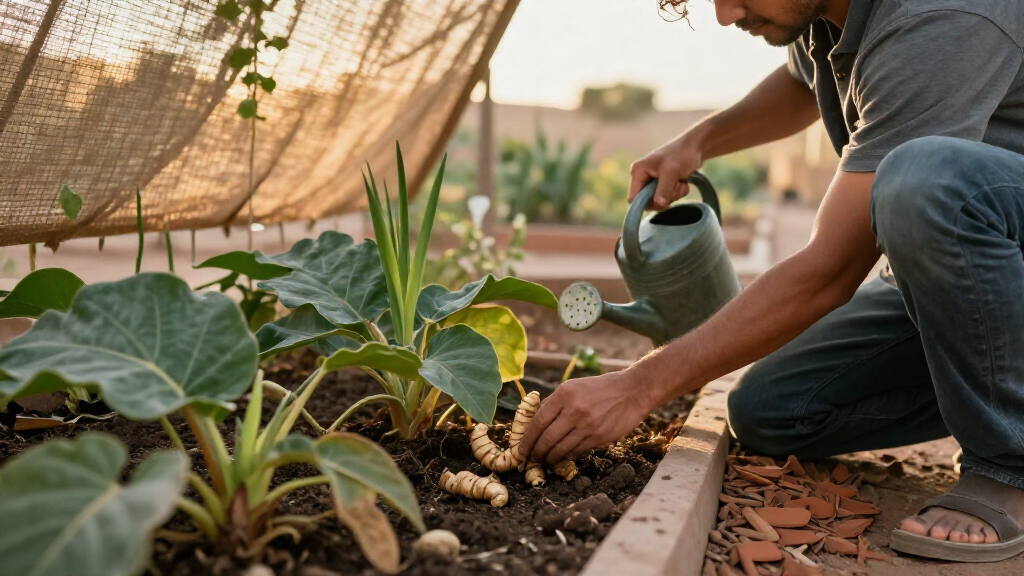
Growing ginger and turmeric in desert shade beds works best in bright, filtered light with protection from harsh afternoon sun. Shade helps their broad leaves avoid scorching and slows moisture loss, while deep shade can leave them short on the light they need for steady growth. Aim for a spot under shade cloth or an open-canopy tree, where light still reaches the bed.
Watch what happens between late morning and evening. If the leaves droop or develop dry brown edges on the side facing a sunlit wall, the bed may be getting too much reflected heat. A plant beneath a leafy tree may look comfortable at noon, then get blasted by western sun at four o’clock as the shadow shifts. Move a container or add afternoon shade if that pattern repeats.
Desert shade is not the same as a cool, damp forest floor. Wind and low humidity can pull water from leaves and soil even when the sun is blocked. Check the bed with your fingers; if the top few inches dry out quickly after watering, shade has lowered stress but has not solved moisture loss.
Use the foliage as a guide. Healthy plants should keep their leaves rather than showing worsening scorch or a limp look through the day. Adjust the shade gradually, since moving a pot from deep shade to a brighter spot all at once can add stress. For example, a gardener with a patio that bakes in afternoon sun can set a roomy pot behind a lattice screen, where it catches morning brightness but avoids the hottest rays. That simple shift changes the bed from a solar oven into a sheltered nook.
Popular right now

Breville Barista Pro Espresso Machine with Grinder, Brushed Stainless Steel

Samsung 42-Inch Class OLED S90F 4K Smart TV (2025)

Dyson Ball Animal Total Clean Upright Vacuum
As an affiliate, we earn on qualifying purchases.
Build Loose Soil That Holds Moisture Without Staying Soggy
Ginger and turmeric need soil that stays evenly moist while letting excess water drain away. Loose, fertile soil rich in compost gives rhizomes room to spread and helps buffer quick drying. Waterlogged soil creates a different problem: rhizomes can rot when water sits around them.
Start by checking the bed after a deep watering. If water puddles for a long time or the ground stays heavy and sticky, use a raised bed or a large container with drainage holes. If your soil drains very fast and feels sandy, blend in compost so it holds water more steadily. The goal is a wrung-out sponge, not a bucket and not a dust pile.
A thick layer of organic mulch can soften soil temperature and slow evaporation during hot spells. Keep the mulch around the plant, but do not press it tightly against the stems. For instance, a gardener planting along a paved path may find that reflected heat dries the bed by midafternoon; mulch can buffer the soil, while a more sheltered spot or shade cloth helps with the heat itself.
Containers give you control over the growing mix and make winter protection easier, but they can heat up and dry faster than in-ground beds. Choose a roomy pot because rhizomes spread horizontally, and make sure extra water can escape. A saucer holding standing water defeats that drainage. If you grow turmeric in desert conditions on a balcony, check both the potting mix and the drainage holes after watering; a damp surface can hide a dry root zone, while a blocked hole can keep the bottom too wet.
Plant Budded Rhizomes After the Soil Warms
Plant ginger and turmeric after the soil has warmed and frost danger has passed. Both crops start slowly and need a long, warm growing season, so planting into cold soil can stall them. Choose plump, healthy rhizomes with visible buds, often called eyes; cooking stock may have been treated to prevent sprouting.
Set pieces shallowly with buds pointing upward and cover them with a few inches of loose soil. A cut piece should carry at least one healthy bud, and the cut surface should dry briefly before planting. If you live in a cold desert area with a shorter warm season, starting rhizomes indoors can give them a head start, but wait until outdoor soil is warm before moving them into the bed.
Try this simple sequence when you prepare your planting spot:
- Check the forecast and soil. Wait until frost risk has passed and the bed feels warm, not chilly, to the touch.
- Loosen and amend the soil. Work in compost and clear away compacted clumps so new growth can spread.
- Set the rhizomes shallowly. Point visible buds upward and cover with a few inches of loose soil.
- Water gently and label the spot. Keep the soil moist as growth gets underway without leaving it saturated.
For a real-world example, if your neighbor’s sunny bed warms early but sits in afternoon glare, use its warm soil only if you can also provide filtered shade. Warmth starts the crop; shade protects it once leaves appear. Results vary with local climate, variety, and season length, so avoid counting on a particular harvest date or size.
Keep the Root Zone Moist Without Following a Rigid Schedule
Water ginger and turmeric when the root zone is beginning to dry, then let excess water drain. There is no dependable number of days between waterings for every desert bed: heat, wind, soil, and container size all change how quickly moisture disappears. Your fingers and the plant’s condition tell you more than a calendar.
Push a finger into the soil near the plant. If it is dry below the surface, water deeply enough to reach the root zone; if it still feels damp, check again later. Keep active-growth soil consistently moist, not swampy. A drip line can make watering more even, especially across a raised bed, but it does not replace occasional checks for clogged emitters or poor drainage.
Imagine a week of dry wind after several hot afternoons. A large in-ground bed beneath a tree may stay moist, while a pot on a sunny patio can dry by the next morning. If you water both on the same fixed schedule, the bed may become soggy and the pot may still be thirsty. A quick moisture check before watering helps prevent both mistakes.
Mulch can reduce evaporation, but do not assume it makes the bed self-watering. Pull it back to inspect the soil beneath, then replace it loosely. Yellowing or brown leaves can point to several causes, including seasonal dieback, direct sun, dry soil, waterlogged roots, or cold damage. Check the soil and the season before changing your routine; adding water to already soggy soil can deepen a rot problem.
Choose a Bed or Pot That Fits Your Desert Microclimate
A shade bed suits you if its soil drains well and stays moist; a container suits you if you need more control over soil or winter protection. Neither option automatically solves desert heat. Beds can dry quickly near paving or walls, while pots can heat up and lose water faster because their soil sits aboveground.
Use this comparison to match the setup to your yard:
| Setup | Good fit when | Watch for |
|---|---|---|
| Raised bed | Native soil is compacted or drains poorly | Fast drying in wind or strong reflected heat |
| In-ground shade bed | You have a sheltered spot with workable soil | Slow drainage or hot afternoon exposure |
| Large container | You want movable plants and controlled mix | Quick drying, heat buildup, and blocked drainage |
Picture a gardener whose only shaded area is a balcony. A roomy pot with drainage holes can work well there, especially if it sits out of afternoon sun and gets frequent moisture checks. Another gardener with dense native clay might have better luck in a raised bed filled with loose, compost-rich soil.
Reflected heat deserves its own check. A pot beside a pale wall may receive less direct sun but still bake in radiant heat. Shift it farther away, use a screen, or choose a spot with more open shade if leaves or potting mix heat up rapidly. Growing ginger and turmeric in desert conditions is a matter of matching the setup to what your site actually does at the hottest time of day.
Read Yellow Leaves Before You Dig for Rhizomes
Yellowing leaves can mark natural dormancy, but they can also signal stress, so check the plant and soil before deciding to harvest. As weather cools, foliage commonly yellows and dies back as ginger and turmeric enter dormancy. Earlier in the growing season, the same change may come from harsh sun, dry soil, waterlogged roots, or cold damage.
Look at the pattern. If the whole plant begins to fade as cooler weather settles in, dormancy may be underway. If just the afternoon-facing leaf edges turn brown during a heat spell, sun or reflected heat may be the more likely culprit. If the soil stays wet for days, check drainage before adding more water.
Some gardeners harvest young rhizomes earlier once plants are established, while mature rhizomes generally need a longer warm growing period. Waiting for dieback is a common harvest cue, but the timing depends on your season and the plant’s progress. For example, a gardener in a warm low desert might get a longer growth window than someone in a colder high desert, where early cold cuts the season short.
When you harvest, loosen the soil carefully rather than stabbing through it. If you want the plant to keep growing, take only part of the rhizome and leave healthy sections with buds in place. Do not promise yourself a full pantry from a small patch; yield changes with cultivar, planting date, and growing conditions. The useful reward is fresh rhizome you can use while learning how your own bed performs.
Protect Your Rhizomes Before Desert Winter Turns Cold
Protect ginger and turmeric from frost, because both crops are frost-sensitive. In frost-prone areas, a pot you can move indoors gives you options, while in-ground rhizomes may need lifting and storage in a cool, dry, frost-free place. Leaving them in soil only makes sense where winter stays warm enough and the ground does not turn cold and wet.
As the season cools, pay attention to the forecast and the soil, not just the calendar. If you have a container, move it before a cold night reaches the plant. If your crop sits in a bed where frost is likely, lift the rhizomes before freezing conditions arrive and store them somewhere protected from both frost and excess moisture.
A gardener in a cold desert town might grow turmeric in a large pot all summer beneath a shade structure, then move it to a protected indoor spot when nights begin to threaten frost. A gardener with a warm, sheltered courtyard may be able to leave plants in the ground, but should still watch for winter rain and cold, wet soil. The right choice depends on local winter conditions.
Do not confuse dormancy with a dead crop. Yellow leaves and dieback can be part of the seasonal cycle; the rhizome may still be alive underground. Mark where you planted before foliage disappears, and handle stored rhizomes gently. This winter plan is part of the growing setup, just like shade and drainage: the crop cannot reward a warm-season effort if cold destroys the planting stock.
Frequently Asked Questions
Can ginger and turmeric grow in full desert sun?
They may survive, but intense sun can scorch their leaves and dry the soil quickly. Bright filtered light or afternoon shade is usually easier to manage, especially near paving or reflective walls.
How often should I water ginger and turmeric?
There is no reliable fixed schedule because heat, wind, soil, and container size change drying speed. Check the root zone and water when it is beginning to dry, keeping it moist but not waterlogged.
Can I grow ginger and turmeric in pots?
Yes. Use a roomy container with drainage holes and fertile, loose potting mix, then keep it out of harsh afternoon sun. Check moisture often because container soil can dry and heat up quickly.
Why are my ginger or turmeric leaves turning yellow or brown?
Possible causes include natural seasonal dieback, too much direct sun, dry soil, waterlogged roots, or cold damage. Check the season and soil condition before changing your watering, since extra water can worsen soggy roots.
When should I harvest ginger and turmeric?
You can harvest some young rhizomes once the plant is established, while mature rhizomes need a longer warm growing period. Yellowing and dieback as cooler weather arrives are common signs of dormancy and a usual harvest time.
Can I leave the rhizomes in the ground over winter?
Only where winters stay warm enough and the soil does not become cold and wet. In frost-prone desert areas, grow in movable pots or lift the rhizomes and store them in a cool, dry, frost-free place.
Conclusion
Give ginger and turmeric the desert version of a cool, sheltered corner: warm soil, bright shade, steady moisture, and clean drainage. Check the root zone before watering, and make a winter plan before the first frost threatens your rhizomes.
With those habits, a patch of shade can become a small tropical pocket in your yard—green leaves aboveground and fragrant, golden rhizomes waiting below.