TL;DR

Get garden gear delivered free with Prime
- Fast, free delivery on millions of items
- Prime Video, Amazon Music and more included
- Member-only deals all year
Fast vines for pergola shade can cope with reflected heat when their species suits your climate and you protect the roots with deep, well-drained soil, mulch, and consistent water during establishment. Grapes, wisteria, trumpet vine, bougainvillea, star jasmine, and passionflower each bring different trade-offs in cold tolerance, weight, spread, and upkeep, so check local guidance and the pergola’s capacity before planting.
A patio can stay hot long after sunset because the wall beside it keeps giving the day’s heat back. That changes the job for a pergola vine: the leaves need room to grow into sunlight, while the roots need a cool, moist foothold near surfaces that may bake through the afternoon.
This guide helps you choose a fast-growing vine for pergola shade in a hot, dry garden, with attention to local winter lows, reflected heat, water, and the strength of your structure. You’ll see what grapes, wisteria, trumpet vine, bougainvillea, star jasmine, and passionflower can offer, where each can cause trouble, and how to give a new plant a fair start. There is no dependable universal winner; your site decides which vine earns its place.
Check the pergola’s orientation, reflected heat, airflow, winter lows, and planting method before choosing a vine.
Protect hot-side roots with a deep, well-drained planting area, mulch kept off the stem, and consistent establishment watering.
Choose grapes for seasonal shade and winter light only if you can prune them and the pergola can carry mature growth.
Plan for maintenance: wisteria gets heavy, trumpet vine can spread, bougainvillea has thorns and frost limits, and passionflower needs training.
Judge coverage by establishment and trained growth, not by a universal timeline or a fast-growth promise.
Garden field guide · Microclimate & shade
Fast Vines for Pergola Shade That Handle Reflected Heat
A hot wall or sun-baked patio can keep stressing a vine after the afternoon sun fades. Choose for your local climate, give roots a cooler foothold, and make sure the pergola can carry mature growth.
01 / Read the site
Reflected heat changes the growing conditions
Walls, paving, and gravel absorb sun, then radiate warmth back toward the vine. A sheltered corner may stay hot after sunset, even when daytime shade looks adequate.
Heat tolerance ≠ drought tolerance
A vine may tolerate hot air but struggle when its root zone dries beside sun-baked paving. Walk the site during the hottest part of the day. Note orientation, hard surfaces, airflow, night temperatures, and whether the plant will grow in ground or a container.
02 / Follow the heat
Why a fast vine can still struggle
The canopy needs useful light; the roots need cool, moist soil. Reflected heat and dry soil can leave a young plant spending energy recovering instead of climbing.
Leaves may need sunlight to build shade, but roots do not benefit from baking soil. Do not wait for visible wilting before checking moisture: recovery can cost the plant time and energy.
03 / Compare the candidates
Six vines, six different trade-offs
Use these as starting points, not a universal ranking. Species, cultivar, winter lows, and local conditions all affect performance.
Grape (Vitis species)
Often handles sun and heat once established. Deciduous leaves can shade in summer and let winter light through.
Plan for: Sturdy supports, pruning, and fallen leaves or fruit.
Wisteria
Can form a dense seasonal canopy in a suitable climate.
Plan for: Heavy mature stems, disciplined pruning, and possible regional invasiveness.
Trumpet vine (Campsis radicans)
Tolerates heat and may grow rapidly in warm regions.
Plan for: Runners beyond the original spot; check local invasive-plant guidance.
Bougainvillea
Colorful bracts and strong performance where winters are mild.
Plan for: Frost limits, thorns, and training.
Star jasmine (Trachelospermum jasminoides)
Fragrant foliage suits warm, sheltered sites and offers year-round screening.
Plan for: Slower growth in cool conditions and protection from hard frost.
Passionflower (Passiflora species)
Some species establish quickly and bring flowers in warm areas.
Plan for: Species-specific cold tolerance and regular training.
| Vine | Shade & seasonal character | Structure & upkeep |
|---|---|---|
| Grape | Summer shade; winter light after leaf drop | Strong pergola, pruning, seasonal cleanup |
| Wisteria | Dense seasonal cover | Very strong support; disciplined pruning |
| Trumpet vine | Quick cover in warm regions | Contain runners; confirm regional status |
| Bougainvillea | Sunny cover in mild-winter climates | Train carefully; account for thorns and frost |
| Star jasmine | Evergreen screening and fragrance | Allow time to establish; protect from hard frost |
| Passionflower | Lush foliage and flowers | Choose species for local winters; train stems |
04 / Give roots relief
Build a cooler foothold near hot surfaces
A deep, well-drained planting area gives roots room to hold moisture between waterings without staying waterlogged. Keep the root zone shaded while guiding shoots toward brighter light.
Choose deep soil with drainage and enough volume for mature roots. Containers heat and dry faster.
Use mulch to buffer temperature and slow evaporation. Leave a few inches clear around the stem.
Keep water available through establishment. Wet the root area instead of giving the surface a quick splash.
Give shoots a path into useful light while the base stays protected from baking paving.
What shapes growth?
Relative planning priorities, not measured plant-growth scores. Local site conditions determine how each factor matters.
Site checklist
Review these before choosing a species. Mature woody growth and a dense canopy can add weight and wind resistance.
05 / Make a durable choice
Plan for coverage, weight, and upkeep
“Fast-growing” depends on the site. Warmth alone cannot promise quick coverage: poor soil, deep shade, drought, or a small container can slow establishment.
Check orientation, reflected heat, airflow, winter lows, and planting method.
Protect hot-side roots with deep, well-drained soil, mulch, and steady establishment watering.
Choose grape for seasonal shade only if you can prune it and the pergola can carry mature growth.
Expect maintenance: wisteria gets heavy, trumpet vine spreads, bougainvillea is thorny, and passionflower needs training.
Judge coverage by establishment and trained growth, not by a universal timeline or speed promise.
Verify local hardiness and invasive-plant guidance before buying or planting.
Why reflected heat can slow a fast vine
Fast vines for pergola shade need more than hot-weather toughness: they need roots that stay hydrated and shoots that get useful light without being scorched. A south- or west-facing wall, concrete patio, and gravel strip can all warm up under the sun, then radiate heat back onto the vine. That heat adds to the load the plant already faces from warm air. It can raise leaf and root temperatures, increase water loss, and dry soil quickly, even when the air temperature seems manageable.
Think of your pergola as a small roof over a garden room. The paving is the room’s heated floor, the wall is a warm radiator, and the vine is trying to grow between them. The leaves may need sunlight to build the canopy, but the roots do not benefit from baking soil. If you tuck a young plant into a narrow strip against hot masonry and water it only when the leaves droop, the root zone may struggle before the canopy has a chance to climb. By the time wilting is visible, the plant may already have spent energy recovering instead of making stems.
Walk the site at the hottest part of the day before choosing a planting spot. For example, a patio that gets direct afternoon sun and has little airflow may need soil shade and deeper watering more than a pergola planted on an open, breezy edge. Record the pergola’s orientation, nearby hard surfaces, night temperatures, and whether the vine will grow in ground soil or a container; those details show how quickly the root zone will heat up and lose moisture. A sheltered corner can be hotter after sunset, so daytime shade alone does not tell the whole story.
Heat tolerance and drought tolerance are different traits. A vine may withstand hot air yet fail when its roots dry out beside sun-baked paving. Shade the soil with mulch, keep the mulch a few inches from the stem, and water deeply enough to wet the root area rather than giving the surface a quick splash. Mulch slows evaporation and buffers temperature swings, while a gap at the stem reduces the chance of keeping the crown constantly damp. As the vine grows upward, the canopy can reach brighter light while the roots remain in a protected pocket.
Popular right now

Bose QuietComfort Wireless Noise Cancelling Headphones, Sandstone

Shark Rocket Pet Plus Corded Stick Vacuum, Lightweight, Bordeaux, HV322

Samsung 85-Inch QN70H Neo QLED 4K Smart TV (2026)
As an affiliate, we earn on qualifying purchases.
Six vines that can cover a pergola, with honest trade-offs
Fast vines for pergola shade include several strong growers, but their speed, winter limits, and maintenance vary by species and local conditions. A grape can offer a seasonal canopy and winter light, while a trumpet vine can spread aggressively beyond its planting spot. The practical choice is a balance: a vine that fills the roof quickly may demand more pruning, carry more weight, or be harder to contain. Use this comparison as a starting point, then check local hardiness and invasive-plant guidance before you buy or plant.
| Vine | What it can offer | Trade-off to plan for |
|---|---|---|
| Grape (Vitis species) | Sun and heat tolerance once established; summer shade with winter light after leaf drop | Needs a sturdy pergola, pruning, and cleanup of fruit and leaves |
| Wisteria | Vigorous growth and a dense seasonal canopy in suitable climates | Mature stems can become very heavy; disciplined pruning matters, and some species are invasive in parts of North America |
| Trumpet vine (Campsis radicans) | Rapid growth in warm regions and tolerance of heat | Runners can spread well beyond the original planting spot; check regional invasive-plant guidance |
| Bougainvillea | Hot, sunny conditions and vivid bracts where winters are mild | Frost-sensitive in many climates, thorny, and needs training |
| Star jasmine (Trachelospermum jasminoides) | Evergreen foliage and fragrant flowers in warm, sheltered sites | Can grow slowly in cool conditions and may need frost protection; young plants can struggle in severe reflected heat |
| Passionflower (Passiflora species) | Lush foliage and flowers; some species establish quickly in warm areas | Cold tolerance varies widely, and vigorous stems need training |
Picture a small backyard pergola in a warm region, with a sunny patio and a light breeze. A grape may suit someone who wants summer shade and winter sun, provided the structure can carry a mature vine and the owner is willing to prune. Leaf drop makes that seasonal change useful, but it also means less privacy in winter and some cleanup. A container-grown star jasmine may fit a sheltered corner where fragrance and evergreen foliage matter more than quick, full coverage; its slower pace can be a reasonable exchange for a smaller, more controlled canopy.
Growth speed alone cannot pick your vine. A dense canopy can add weight and wind resistance, so quick coverage affects the structure as well as the gardener’s workload. Vigorous runners can turn one planting decision into a recurring containment task. Choose for climate and upkeep as much as speed; if your local garden guidance flags a vine as invasive, pick a different species suited to your area.
How to protect roots beside hot walls and paving
Fast vines for pergola shade handle reflected heat better when you give their roots a cool, well-drained place to grow and keep water available as they establish. Before planting, look for a deep bed where water can drain away, then plan a shaded root zone and a path for shoots to reach the pergola’s light. This balances two needs: the canopy must be able to grow toward useful light, while the root ball needs enough soil volume to hold moisture between waterings without staying waterlogged. A young vine planted right beside hot paving has less room for error than one with soil and airflow around its base.
- Check the planting spot at midday. Note how long the wall and paving stay in direct sun, and whether air moves through the space. A sheltered nook can hold heat late into the evening, increasing the plant’s water demand even after the sun has moved.
- Prepare a generous, well-drained planting area. Avoid trapping the root ball in a small pocket of compacted soil. If water pools after irrigation, improve drainage before planting; roots need moisture, but persistently wet soil can deprive them of air and make extra watering counterproductive.
- Shade the soil surface. Apply mulch around the root zone, but leave a gap around the stem. The goal is cooler soil and slower evaporation, not a damp collar against the vine.
- Water deeply and consistently during establishment. Adjust for rainfall, soil, and heat; check moisture in the soil rather than relying only on a dry-looking surface. A deep soak encourages water to reach the root area, while frequent shallow splashes may wet only the surface and leave deeper roots dry.
- Guide new stems onto suitable supports. Keep the roots protected while allowing the upper growth to reach the light its species prefers. Training early helps the plant use the pergola space instead of piling growth against the hottest wall.
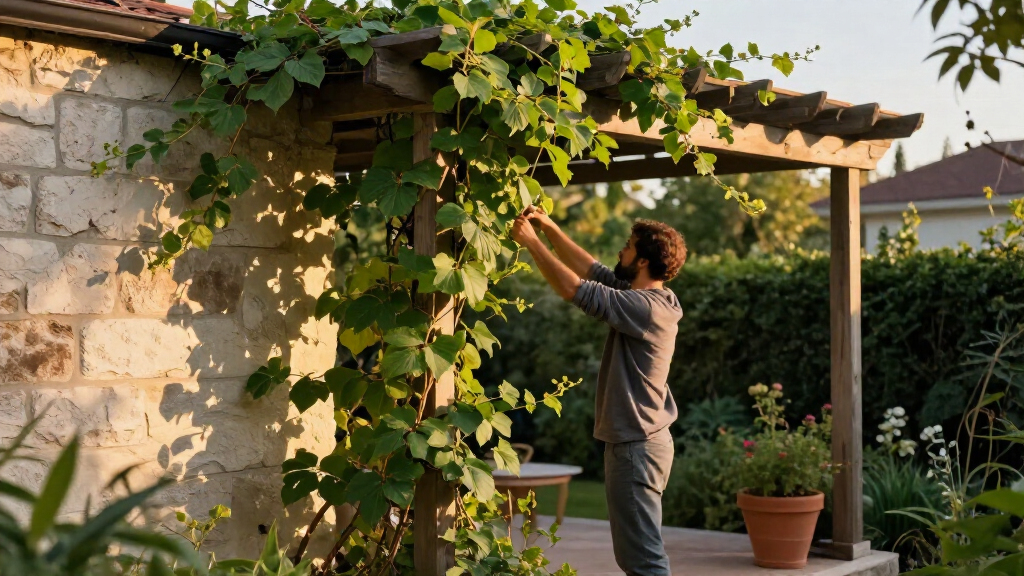
For example, if your planting bed sits next to a west-facing block wall, you could shade the soil with mulch and train the new growth across the pergola toward the brighter opening. That separates the vine’s needs: roots get relief from the hot ground, while the canopy can find the light. It also makes the planting spot less exposed to the heat reflected directly from the wall.
Containers can work, but a pot heats up and dries faster than garden soil because it has less soil volume and is exposed on its sides. Choose a large container with drainage, monitor it more often during hot spells, and pick a vine whose mature size you can manage. A bigger pot offers roots more buffering, though it still needs attention in extreme weather. Watering should respond to the soil and weather, not a fixed schedule copied from another garden.
How to estimate coverage without trusting a fast-growth promise
Fast vines for pergola shade do not follow a reliable calendar: a plant can establish quickly in warmth yet grow slowly in poor soil, deep shade, drought, or a cramped container. First-season growth is usually less predictable than the growth of a mature vine because the plant must first build roots that can support new stems. A promised number of weeks or a single annual growth rate cannot account for your pergola’s size, the plant’s starting size, or the heat around its roots.
Set expectations by thinking in stages. First, a new vine builds roots and adapts to its planting site; then it produces stems you can train; after that, it can begin filling the overhead space. Each stage depends on the one before it: shoots that race upward before roots are established may be more vulnerable to a dry spell, while careful training helps direct later growth across the roof. A small plant on a broad pergola has much farther to go than a larger nursery vine on a compact structure, even if both are the same species.
Imagine planting passionflower beside a pergola in late spring. In a warm, well-watered spot, it may send out promising stems, but those stems still need regular training to spread where you want shade. If the same vine is stuck in a hot pot and misses water during a heat wave, its visible growth can stall while it recovers. That delay is a useful signal about the site’s limits, not proof that the species can never work there.
Track what the vine actually does each month. Mark the end of a trained stem, note new shoots, and take a photo from the same spot. That simple record tells you whether growth is moving toward the roof and whether water, light, or training needs adjusting. If a stem extends but does not fill the overhead area, you may need to redirect it; if growth stalls during the hottest weeks, check root moisture and heat exposure. A record gives you a grounded way to compare seasons instead of judging the vine against a generic fast-growth claim.
How to match your vine to the pergola and the season
Fast vines for pergola shade work best when their mature size, seasonal foliage, and attachment habits suit the structure beneath them. Vines add weight as woody stems thicken, and a thick leafy canopy can catch wind. Those forces build over time, so a pergola that supports a small new plant may be unsuitable once the canopy fills in. Before planting wisteria or another vigorous climber, inspect the pergola’s posts, beams, and connections; a lightweight structure may not suit a large, woody vine.
Choose the kind of shade you want, too. A deciduous grape can give summer cover and let winter sunlight through after the leaves drop, a useful pattern beside a cool-season sitting area. The seasonal opening can make the space brighter and warmer when you want winter sun, but it will not provide year-round screening. An evergreen vine such as star jasmine can provide year-round screening in a suitable warm climate, but its leaves stay up through winter and can hold heat or add wind resistance.
Attachment matters as much as weight. Twining stems generally need trellis wires, crossbars, or another support to wrap around, while self-clinging growth can attach directly to surfaces. For instance, guide a young vine along wires fixed to the pergola rather than expecting it to bridge a wide gap by itself. That gives you a clear route for training and pruning, and keeps new growth from bunching in one place where it could become harder to manage.
Check local winter lows and regional plant guidance before choosing. Bougainvillea may thrive in a hot, mild-winter garden but suffer where hard frost reaches it. Trumpet vine may cope with heat but need containment because of runners. Winter limits determine whether the plant can return reliably, while regional guidance can reveal whether its vigor is likely to become a local problem. A pergola should be planned for the plant you will have at maturity, not only the small vine you bring home.
How pruning and training keep shade where you want it
Fast vines for pergola shade need regular training if you want an even canopy rather than a tangled knot at one corner. Decide where the main stems should run, tie or guide young growth along the support as it lengthens, and remove stems that head into gutters, walkways, or neighboring plants. The exact pruning needs depend on the species, but a little attention while stems are young is easier than untangling years of growth. Spreading stems across the roof also shares foliage more evenly, so one fast-growing shoot is less likely to leave the rest of the pergola bare.
A grape is a good example of shade with a seasonal rhythm: you can prune and train its framework, then enjoy a leafy roof in summer and more light after leaf fall. That seasonal change takes deliberate pruning and cleanup, but gives you more control over how much sun reaches the patio through the year. Wisteria can fill space vigorously, but its mature weight and strong growth call for firm pruning and a robust pergola. Trumpet vine may need frequent control of runners if you do not want shoots appearing beyond the structure.
Take a quick look at the pergola every few weeks during active growth. If one stem races across the roof while the other side stays bare, guide a younger shoot into the open section instead of letting the first stem monopolize the light. Remove dead or misplaced growth with clean tools, and follow species-specific pruning advice for timing. Regular checks catch misplaced stems while they are still flexible and easier to redirect.
Match the vine’s maintenance to your available time. A vigorous plant can provide coverage, but it can also mean more pruning, cleanup, and inspection. If you want a low-fuss vine, consider whether a slower, manageable plant fits better than a species that needs repeated containment. Keep any fallen fruit or plant debris picked up where children or pets use the patio; check species-specific toxicity information if they may chew leaves, flowers, or fruit.
What to do when a vine struggles in a hot spell
Fast vines for pergola shade can wilt or stall in extreme heat even when the species suits your climate, so look at the whole site before blaming the plant. Reflected heat, dry soil, poor drainage, a hot container, and still air can all stress a new vine. These causes call for different responses: adding water may help dry soil, but it will not fix poor drainage, and extra water in saturated soil can make root stress worse. A thirsty plant may droop during the hottest hours and recover later, but repeated stress can slow establishment and leave the pergola bare longer.
Start with a simple check: feel the soil several inches down, inspect the leaves in the morning and afternoon, and see whether the container or paving is radiating heat into the root zone. If the soil is dry, water deeply and reassess. If it is wet and the plant still looks poorly, check drainage and look for other signs of stress rather than adding more water automatically. A plant that recovers by morning may be responding to temporary midday heat; one that remains wilted then deserves closer attention to root conditions.
For instance, a bougainvillea in a sunlit pot beside a pale wall may be adapted to heat, but a small container can still dry quickly. Moving the pot to a larger, well-drained container and protecting the soil surface can help more than watering lightly several times a day. In-ground vines also need adjustment: a recently planted star jasmine may benefit from temporary afternoon protection while it establishes in a harsh reflected-heat pocket. These measures reduce stress while roots grow into the site; they do not remove the need to match the vine to local winter lows and long-term conditions.
Do not confuse hot-air tolerance with a license to neglect the root zone. Keep watering consistent during establishment, then adjust as the plant grows and local weather changes. If a vine repeatedly struggles, consider shifting its planting position or choosing a species better suited to the site’s winter lows, heat, and available water. Repeated stress points to a mismatch in the conditions or care, and changing the root-zone environment or plant choice can be more effective than continuing to compensate with frequent watering.
Frequently Asked Questions
Which vine grows fastest for pergola shade?
There is no universal fastest vine because warmth, soil, water, plant size, and pergola dimensions all affect coverage. Trumpet vine, wisteria, and grape can grow vigorously in suitable warm regions, but they differ in spread, weight, and pruning needs. Check regional invasive-plant guidance before planting trumpet vine or wisteria.
Which vines tolerate reflected heat from a wall or patio?
Start with species adapted to your local summer climate, then protect the root zone from hot soil and keep it watered while the vine establishes. A heat-tolerant vine can still struggle if paving radiates heat onto dry roots. Sun exposure and airflow matter alongside the species name.
How long will it take a vine to shade my pergola?
There is no dependable timeline: the vine’s starting size, climate, soil, water, and pergola dimensions all affect coverage. Expect a new plant to establish and produce trainable stems before it fills the overhead space. Track new growth each month so you can judge progress at your own site.
Can I grow a pergola vine in a container?
Yes, but containers heat up and dry out faster than garden soil, especially on a sunny patio. Choose a large container with drainage, monitor soil moisture during hot weather, and select a vine whose mature size you can manage. A small pot can limit growth even when the species tolerates heat.
Which pergola vines stay evergreen?
Star jasmine and bougainvillea can stay evergreen in suitable warm climates, but winter cold may damage foliage or cause leaf loss. Star jasmine suits sheltered warm sites and can be slower in cool conditions; bougainvillea needs mild winters and has thorns. Check local winter lows before planting.
Will a vine damage my pergola or spread into the yard?
Vines can strain a structure as stems thicken and leafy growth adds weight and wind resistance, so choose a pergola that can support the mature plant. Some vines spread through runners, while others need regular training and pruning. Check regional plant guidance for invasive status and plan how you’ll contain growth.
Conclusion
Choose your pergola vine by matching its mature weight, winter tolerance, and upkeep to your structure and climate. Then give its roots a cool, well-drained start and guide the shoots toward the light; that is the practical route to shade in a hot patio garden.
When the afternoon sun hits the paving and your vine’s leaves still stir overhead, you’ll know the garden room is finally working with the heat.