
TL;DR

Get garden gear delivered free with Prime
- Fast, free delivery on millions of items
- Prime Video, Amazon Music and more included
- Member-only deals all year
Aphids can weaken desert milkweed, but controlling them without harming monarchs is possible. Using natural predators and organic methods keeps the plants healthy while supporting butterfly populations.
Imagine walking through a desert garden, spotting bright yellow aphids clustered on a native milkweed. It’s tempting to grab the strongest insecticide, but that risks harming the very butterflies you want to protect. The key is learning how to keep aphids in check while supporting monarchs. This isn’t about eradication, but about balance.
In this guide, you’ll discover practical, water-wise ways to manage aphids on desert milkweed and keep your butterfly habitat thriving. We’ll cover natural pest control, how to recognize when intervention is needed, and ways to encourage beneficial insects. Let’s make your desert garden a safe haven for monarchs without resorting to harmful chemicals.
Moderate aphid populations on desert milkweed typically don’t threaten plant health or monarchs—early, gentle control is key.
Encourage natural predators like lady beetles and lacewings by planting native wildflowers around your milkweed.
Use organic methods such as insecticidal soap or neem oil carefully, avoiding flowering times to protect pollinators.
Regularly inspect your plants and act early if infestations become large—manual removal is effective and safe.
Creating resilient, diverse habitats helps keep pests in check and supports healthy monarch populations even amid climate challenges.
Aphids on Desert Milkweed: Protecting Monarchs While Managing Pests
Aphids can weaken desert milkweed, but controlling them without harming monarchs is possible. Natural predators and organic methods keep plants healthy while supporting butterfly populations. It isn’t about eradication — it’s about balance.
Why Aphids Show Up on Desert Milkweed
How they feed
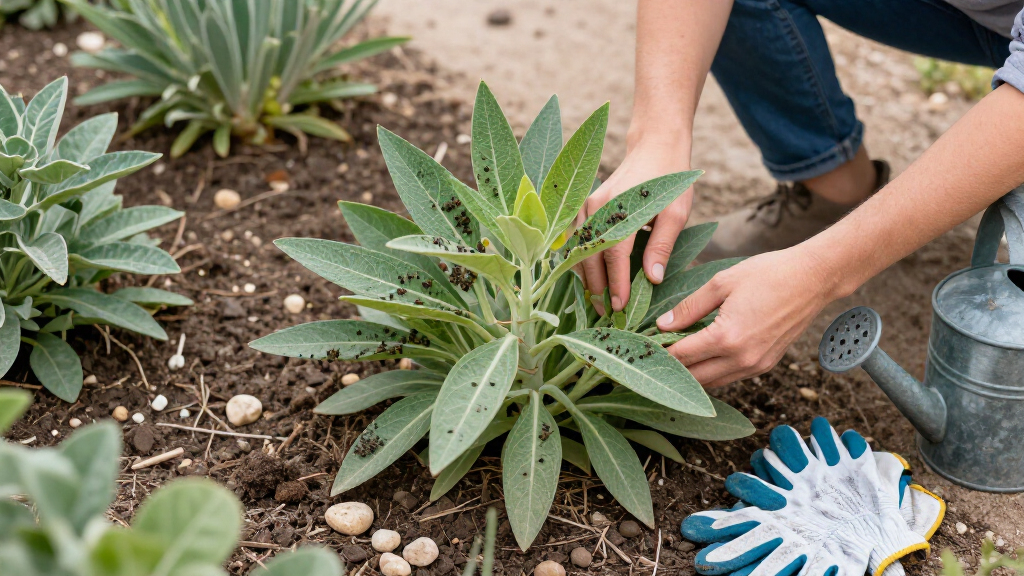
Tiny, soft-bodied insects cluster on new growth, sucking plant sap and leaving sticky honeydew behind — causing deformities, leaf curling, and stunted growth.
Why they thrive
Warm, dry desert seasons with lush native growth fuel rapid reproduction. Plant stress and a lack of natural predators make outbreaks worse.
What attracts them
Over-fertilization and overly lush growth draw aphids in. Maintaining plant vigor with proper, water-wise watering reduces attraction.
A Simple Weekly Routine
Inspect weekly
Check milkweed every week, especially in warm months when aphids are most active.
Assess the threshold
Under 10% of leaves affected and isolated clusters? Let natural predators work.
Remove manually
Wipe or spray aphids off with water — safe for monarchs at any stage.
Treat organically
Insecticidal soap or neem oil, applied early or late in the day, away from blooms.
Build habitat
Plant native wildflowers to sustain beneficial insects for season-long control.
Control Methods, Ranked by Monarch Safety
| Method | Effectiveness | Monarch Safety | Pollinator Risk | Best Practice |
|---|---|---|---|---|
| Water spray / hand removal | Moderate — small colonies | ✓ Safe | ✓ None | First response, any time of day |
| Insecticidal soap | High on contact | ✓ Safe if labeled for use | ~ Low | Early morning or late evening |
| Neem oil | High — disrupts growth | ~ Use with care | ~ Low–moderate | Avoid flowering parts during bloom |
| Natural predators | Sustained control | ✓ Safe | ✓ Beneficial | Plant yarrow, fennel, desert marigold |
| Broad-spectrum insecticide | High kill rate | ✗ Harmful | ✗ High | Avoid entirely near milkweed |
Aphid Pressure & When to Intervene
“Research shows that moderate aphid populations on desert milkweed do not significantly harm the plant or monarch caterpillars — the goal is balance, not eradication.”
Key insight · Integrated Pest Management researchThe Power of Beneficial Insects
Lady Beetles
Voracious aphid hunters that appeared naturally within weeks of adding native wildflower patches — no chemicals required.
Attract via: yarrow · clarkiaLacewing Larvae
Known as “aphid lions,” lacewing larvae devour far more aphids than adults, patrolling new growth where colonies form.
Attract via: fennel · nectar bedsParasitic Wasps
Tiny, stingless wasps lay eggs inside aphids, keeping populations balanced invisibly and sustainably all season.
Attract via: desert marigold · shelterProvide nectar, pollen, and shelter such as leaf litter and native shrubs. A diverse habitat supports these insects’ reproductive cycles — and keeps pest outbreaks rare even amid drought and climate stress.
What Are Aphids, and Why Do They Show Up on Desert Milkweed?
Aphids are tiny, soft-bodied insects that feed on plant sap. On desert milkweed, like Asclepias subulata, the oleander aphid (Aphis nerii) is common. They cluster on new growth, sucking out juices and leaving behind sticky honeydew. This feeding activity can cause deformities, leaf curling, and stunted growth, which may compromise the plant’s overall health and its ability to produce nectar for pollinators.
In desert environments, aphids thrive during warm, dry seasons when native plants are lush enough to support their rapid reproduction. Heavy infestations can weaken the plant, making it more susceptible to disease and less appealing to monarchs. However, small numbers of aphids often don’t cause lasting damage—especially if managed early, before they reach destructive levels.
Understanding why aphids appear—such as seasonal factors, plant stress, or lack of natural predators—helps gardeners implement targeted, sustainable controls. For example, maintaining plant vigor through proper watering and avoiding over-fertilization can reduce aphid attraction, since overly lush growth often draws them in. Hand-removing or encouraging natural enemies early on prevents the need for chemical interventions that could disrupt the delicate balance of the garden ecosystem.
organic insecticidal soap for aphids
As an affiliate, we earn on qualifying purchases.
As an affiliate, we earn on qualifying purchases.
How Aphids Affect Monarch Butterflies and Their Milkweed Hosts
Many gardeners worry that aphids will directly harm monarch caterpillars, but the primary concern is their indirect effect through plant health. Aphids damage the plant by extracting sap, which can weaken the leaves and stems, leading to leaf curling, deformities, and reduced nutritional quality. These changes can make the milkweed less attractive or less nutritious for monarch eggs and larvae, potentially decreasing their survival chances.
Healthy, vigorous milkweed provides the essential nutrients monarch caterpillars need to grow and develop successfully. When aphids feed excessively, the resulting plant stress can lead to fewer eggs laid and lower caterpillar survival. Moreover, the honeydew produced by aphids can promote mold growth, further degrading plant health and creating an environment less hospitable for monarch development.
In practice, a lightly infested milkweed may still support monarchs effectively, but heavy infestations can drastically reduce the plant’s ability to serve as a reliable breeding site. Therefore, early pest management not only preserves the plant’s vitality but also ensures that monarchs have a continuous, healthy habitat. Recognizing the signs of stress caused by aphids enables gardeners to act before the damage becomes severe, balancing pest control with conservation goals.
beneficial insects for pest control
As an affiliate, we earn on qualifying purchases.
As an affiliate, we earn on qualifying purchases.
Natural Ways to Keep Aphids in Check Without Harming Monarchs
The best approach? Use organic, targeted methods that protect beneficial insects and your milkweed. Here are some tactics:
- Manual removal: Gently wipe or spray aphids off with water. This method is effective for small colonies and avoids introducing any chemicals that could harm monarchs or other beneficial insects.
- Insecticidal soap: Spray on affected areas early in the morning or late in the day when bees and butterflies are less active. Properly applied, it suffocates aphids while leaving beneficial bugs unharmed. Always follow label instructions to prevent unintended impacts.
- Neem oil: A natural pesticide that disrupts aphid growth and feeding. Use cautiously, avoiding flowering parts during bloom times to prevent harming pollinators. Neem’s systemic properties can help manage larger infestations without broad ecological harm.
- Encourage natural predators: Plant native flowers like yarrow, fennel, and desert marigold to attract lady beetles, lacewings, and parasitic wasps. These predators can keep aphid populations in check naturally, reducing the need for manual or chemical controls.
Implementing these methods with care minimizes disruption to the ecosystem, supporting both the health of your milkweed and the butterflies that rely on it. Remember, patience and early intervention are key—often, nature’s own predators will do most of the work if given the right environment.
As an affiliate, we earn on qualifying purchases.
The Power of Beneficial Insects: Who Eats Aphids and How to Attract Them
Lady beetles, lacewing larvae, and parasitic wasps are natural enemies of aphids that can help keep their populations in balance. These beneficial insects are crucial allies in sustainable pest management because they reduce reliance on chemical controls, which can harm monarchs and pollinators alike.
Create a garden environment that attracts and sustains these helpful insects by planting a variety of native wildflowers such as desert marigold, fennel, and clarkia. These plants provide nectar and pollen, essential food sources that support the reproductive cycles of beneficial insects. Providing shelter—such as leaf litter or native shrubs—further encourages their presence.
Creating a habitat conducive to beneficial insects involves patience and diversity. For example, I added native wildflower patches near my milkweed, and within weeks, lady beetles appeared naturally, leading to a significant decline in aphid numbers. This approach emphasizes working with nature rather than against it, fostering a resilient ecosystem that supports monarchs and other pollinators in the long term.
native wildflower seeds for butterfly habitat
As an affiliate, we earn on qualifying purchases.
As an affiliate, we earn on qualifying purchases.
How to Recognize When You Need to Act and When Nature Can Handle It
Not every tiny cluster of aphids requires immediate action. Understanding the threshold at which intervention is necessary is key to maintaining ecological balance. Experts suggest that if less than 10% of the plant’s leaves are affected and the infestation is isolated, natural predators can usually manage the problem without human intervention. This approach minimizes chemical use and supports beneficial insect populations.
Signs that indicate pests are becoming problematic include sticky honeydew covering leaves, leaf curling, and deformities—these suggest that aphids are overwhelming the plant’s defenses. When these signs are present, early, targeted action—such as manual removal or organic sprays—is advisable to prevent further damage.
In my own experience, I once ignored a small aphid patch, and it resolved itself as lady beetles moved in and kept the population in check. Conversely, a larger outbreak on a young or stressed plant prompted me to apply insecticidal soap early, which prevented the problem from worsening. Recognizing these cues helps gardeners balance intervention with letting nature do its work, maintaining healthy, resilient ecosystems.
A Simple Step-by-Step Plan to Manage Aphids on Desert Milkweed
- Inspect regularly: Check your milkweed weekly, especially during warm months when aphids are most active. Early detection prevents large outbreaks and reduces the need for intervention.
- Remove early: Handpick visible colonies or spray with a gentle stream of water to dislodge aphids. This minimizes plant stress and keeps populations manageable.
- Encourage predators: Plant native wildflowers around your milkweed to attract lady beetles, lacewings, and parasitic wasps, which naturally control aphids over time.
- Use targeted sprays: Apply neem oil or insecticidal soap if infestations grow large or persist, always avoiding flowering times to protect pollinators. Follow product instructions carefully for safe and effective use.
- Monitor and repeat: Continue inspecting and treating as needed, focusing on early, gentle methods to maintain a balanced ecosystem and prevent chemical dependency.
This routine promotes effective aphid management while safeguarding monarchs and pollinators, fostering a healthy desert garden environment.
Comparison: Chemical vs. Organic Pest Control for Desert Milkweed
| Feature | Chemical Insecticides | Organic Methods |
|---|---|---|
| Impact on Beneficial Insects | High — kills all insects, including pollinators and predators, often disrupting the ecological balance and leading to potential pest rebounds. | Low — targets specific pests like aphids, while preserving beneficial insects that naturally control pests and support pollination. |
| Safety for Monarchs | Low — chemicals can harm monarch eggs, caterpillars, and adults if misused or applied during active breeding periods. | High — organic sprays like insecticidal soap and neem oil are less toxic and can be applied carefully to avoid harming monarchs and their habitat. |
| Environmental Effect | Potential pollution, soil and water contamination, and residual toxicity that can affect broader ecosystems. | Minimal — biodegradable, less persistent, and less likely to harm non-target organisms, promoting a healthier environment. |
| Ease of Use | Quick to apply but risky for non-target species and long-term health of the ecosystem. Overuse can lead to resistance in pests. | Requires patience, careful application, and monitoring, but supports sustainable, long-term pest management and ecosystem health. |
In desert environments, organic methods foster a balanced, resilient ecosystem that protects pollinators, including monarchs, while effectively managing pest populations. The tradeoffs favor patience and ecological understanding over quick fixes that can have lasting negative impacts.
Climate Change and Its Role in Aphid Outbreaks and Milkweed Health
Warmth and drought stress significantly influence aphid outbreaks and milkweed vitality. Higher temperatures accelerate aphid reproduction cycles, often resulting in rapid population explosions that can overwhelm plants before natural predators catch up. Simultaneously, drought weakens milkweed by reducing water availability, making it less vigorous and more susceptible to pest infestations, as stressed plants produce more attractive, tender growth that aphids favor.
This combination creates a feedback loop: stressed plants attract more pests, which further weaken the plant, reducing its capacity to support monarchs. In desert zones, unpredictable weather patterns—such as heatwaves or prolonged droughts—exacerbate these issues, challenging gardeners to create resilient habitats. Strategies like mulching, native planting, and water conservation help buffer these effects, promoting plant health and ecological balance.
For instance, during a particularly dry year, I observed a surge in aphid populations on my milkweed, which was already stressed. Diversifying plantings and applying organic mulches helped retain soil moisture and keep the plants healthier, reducing their attractiveness to pests and supporting monarch breeding despite climate challenges.
Frequently Asked Questions
Are aphids dangerous to monarch caterpillars?
Not directly. Aphids mainly damage the plant, but heavy infestations can weaken milkweed, making it less nutritious and less supportive for caterpillars. Keeping aphids in check helps keep the plant healthy for monarch development.How can I control aphids without harming monarchs?
Use organic methods like spraying with insecticidal soap or neem oil, manually removing aphids, and planting native wildflowers to attract beneficial insects. Avoid broad-spectrum insecticides that can kill monarch eggs, caterpillars, and pollinators.When should I remove infested plants?
If an infestation is severe—covering more than 50% of the plant—consider removing or treating the plant. For minor or moderate infestations, gentle removal and encouraging natural predators usually suffice.What attract beneficial insects to my desert garden?
Plant native wildflowers like desert marigold, fennel, or clarkia. These provide nectar and shelter, drawing lady beetles, lacewings, and parasitic wasps that naturally control aphids.Are chemical insecticides safe to use near desert milkweed?
Generally no. Chemical insecticides can harm monarchs and beneficial insects. Stick with organic, targeted treatments like insecticidal soap, and always follow label instructions for safety.Conclusion
Your desert milkweed is more than just a pretty plant; it’s a monarch’s breeding ground. Managing aphids without harming these butterflies is all about balance—using natural predators, organic sprays, and regular care.
Think of your garden as a living web. When you support beneficial insects and avoid harsh chemicals, you keep that web strong, healthy, and full of life. Protecting monarchs isn’t just about the plant—it’s about nurturing a thriving desert ecosystem.
Halloween Picks
halloween
As an affiliate, we earn on qualifying purchases.