
TL;DR

Get garden gear delivered free with Prime
- Fast, free delivery on millions of items
- Prime Video, Amazon Music and more included
- Member-only deals all year
Installing owl boxes and hawk perches attracts raptors that hunt rodents naturally, cutting down pest numbers without chemicals. Proper placement and habitat management are key for success.
Ever notice how certain areas seem to stay free of pests without much effort? That’s often the work of raptors—owls and hawks—doing what they do best: hunting rodents. Instead of relying solely on traps or poisons, smart property owners are turning to nature. By installing owl boxes and hawk perches, you invite these predators to patrol your land, keeping pests in check naturally.
This approach isn’t just eco-friendly; it’s cost-effective and downright satisfying to see birds of prey doing your pest control for you. If you’re tired of chemical pesticides or just want a more balanced, wildlife-friendly yard, this guide will show you how to recruit raptors effectively.
Proper placement of owl boxes (10-30 feet high, in quiet areas) dramatically increases occupancy.
Maintaining open, undisturbed habitats encourages raptor presence and hunting success.
Installing durable, well-designed boxes and perches attracts more raptors and extends lifespan.
Raptors can reduce rodent populations by over 50%, cutting your pests naturally.
Always check local laws before installing nesting sites—respect protected species and regulations.
Owl Boxes and Hawk Perches: Recruiting Raptors for Rodent Control
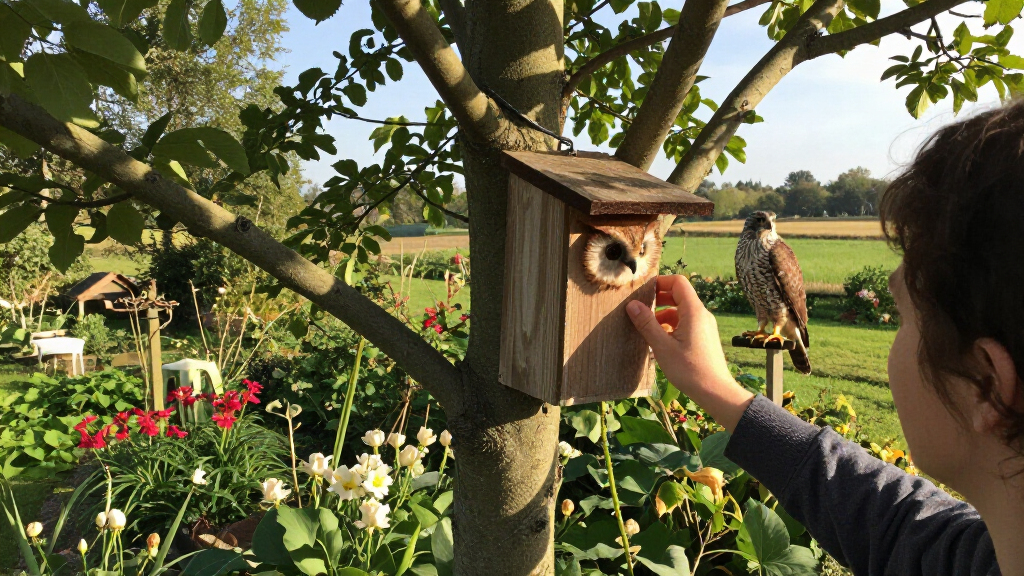
Instead of relying on traps or poisons, install owl boxes and hawk perches to invite birds of prey onto your land. Raptors hunt rodents naturally—cutting pest numbers by more than half in some settings—without chemicals, without resistance, and without repeated cost.
Why Raptor Pest Control Beats Chemicals
Owls and hawks are built for pest hunting. Their strategies are highly specialized, targeting rodents efficiently with minimal collateral impact—unlike rodenticides, which can harm non-target wildlife, pollute water sources, and pose health risks to humans. Because raptors patrol large territories, they respond dynamically to pest outbreaks, while chemical controls demand repeated application and breed resistance. A resident raptor pair is a self-sustaining, self-regulating solution.
Targeted & Selective
Raptors hunt by natural instinct—selective, sustainable predation that never creates resistance and never contaminates soil or water.
Cost-Effective Over Time
One well-built box or perch is a long-term investment. No repeat purchases of bait or poison, no trapping labor—just habitat maintenance.
Supports Biodiversity
Attracting raptors supports their populations and the wider ecosystem. Their presence is a marker of a healthy, balanced landscape.
From Empty Field to Hunting Ground
Recruiting raptors is a process. Follow this sequence to maximize occupancy and hunting success—install boxes before rodent populations peak so raptors establish territories early.
Survey the Site
Find quiet, undisturbed areas away from traffic and noise with open hunting grounds nearby.
Pick the Spot
Mount owl boxes 10–30 ft high, facing away from prevailing winds; set hawk perches in open, elevated locations.
Build It Right
Use untreated, weather-resistant wood, correct entrance sizes, and a sloped roof for rain runoff.
Manage Habitat
Maintain open fields and grassland edges that support prey; minimize human activity around the site.
Maintain & Monitor
Clean old nesting material, check for damage and pests, and track occupancy season after season.
Height & Visibility Decide Everything
Owl box height mimics natural nesting cavities and keeps predators like raccoons and larger birds away. Hawk perch height governs sightlines—the clearer the view over the hunting grounds, the higher the hunting efficiency. Placement is not a detail; it is the single biggest factor in whether a box or perch is adopted or ignored.
Designing Structures Raptors Actually Use
Owl boxes should mimic natural cavities; hawk perches must be sturdy and unobstructed. Species-specific dimensions prevent larger predators from entering and safeguard the young.
| Feature | Owl Box | Hawk Perch | Why It Matters |
|---|---|---|---|
| Size | 12–24 in tall interior | Tall pole, 6–12 ft above ground | Mimics natural cavity; perch height drives visibility |
| Entrance hole | 4–6 in small owls / 8–12 in Barn Owls | — | Blocks larger predators from entering |
| Material | ✓ Untreated, weather-resistant wood | ✓ Steel or treated wood | Durability with zero chemical exposure |
| Roof | ✓ Sloped for rain runoff | — | Prevents mold and water damage to nesting material |
| Obstructions | ~ Avoid overhanging branches | ✗ No thick brush or blocked sightlines | Clear line of sight is essential for hunting |
| Maintenance | ✓ Clean old nesting material | ✓ Check stability & anchoring | Ensures continued occupancy and safety |
| Legal check | ~ Verify local regulations first | ~ Protected species apply | Comply with laws like the Migratory Bird Treaty Act |
Raptor Impact vs. Chemical Rodenticide
Research-backed comparison of outcomes across key pest-control criteria. Raptors win on sustainability and safety; chemicals trade short-term speed for long-term costs.
Five Rules for Successful Recruitment
Proper placement of owl boxes (10–30 feet high, in quiet areas) dramatically increases occupancy.
Maintain open, undisturbed habitats to encourage raptor presence and hunting success.
Install durable, well-designed boxes and perches—they attract more raptors and extend lifespan.
Raptors can reduce rodent populations by over 50%, cutting your pests naturally.
Always check local laws before installing nesting sites—respect protected species and regulations.
The tradeoff, honestly: attracting a stable raptor population requires habitat management, patience, and ongoing maintenance. You won’t get instant results—but you get a resilient, chemical-free, self-sustaining pest control system that improves year after year.
Why Raptor Pest Control Works Better Than Chemicals
Raptors like owls and hawks are built for pest hunting. Their hunting strategies are highly specialized, allowing them to target rodents efficiently and with minimal collateral impact. Unlike chemical pesticides, which can harm other wildlife, pollute water sources, and pose health risks to humans, raptors hunt using natural instincts that are selective and sustainable. When you attract these predators, they help regulate pest populations in a way that aligns with ecological balance.
Their ability to hunt across large areas means they can respond dynamically to pest outbreaks, reducing the need for chemical interventions that often require repeated application and can lead to pest resistance. This natural predation helps maintain a balanced ecosystem, preventing overpopulation of rodents and reducing crop damage or property issues. However, it’s important to recognize that raptor effectiveness depends on habitat quality, prey availability, and proper nesting sites, highlighting the need for thoughtful placement and habitat management.
Implementing raptor-based pest control can thus be seen as a long-term investment in ecological health and pest management stability, with tradeoffs including initial setup effort and ongoing habitat maintenance, but with the benefit of a self-sustaining, chemical-free solution.
Understanding why raptors are more sustainable than chemicals involves recognizing their role in the natural food chain. Unlike pesticides, which can create resistance and harm non-target species, raptors provide a targeted, self-regulating solution. Their presence indicates a healthy ecosystem, and their hunting helps keep pest populations in check without disrupting other wildlife or risking environmental contamination. Yet, the tradeoff is that attracting and maintaining a stable raptor population requires habitat management, patience, and ongoing effort, which might not provide instant results but offers a resilient, eco-friendly pest control system over time.
As an affiliate, we earn on qualifying purchases.
How to Pick the Perfect Spot for Owl Boxes and Hawk Perches
- Choose quiet, undisturbed areas away from heavy traffic or loud noise. Raptors prefer peaceful settings where they won’t be disturbed during nesting or resting.
- Place owl boxes 10-30 feet high on sturdy poles or trees, facing away from prevailing winds. This height mimics their natural nesting sites and keeps predators away. Proper height and orientation are crucial because they influence nesting success and safety from predators such as raccoons or larger birds.
- Set hawk perches in open, elevated locations—like the top of a tall pole or tree—where hawks can spot prey from a distance. Visibility is key; the perch should provide a clear line of sight over the hunting grounds, which enhances hunting efficiency.
- Ensure good visibility and access to hunting grounds. Raptors need to see their prey clearly, so avoid placing perches in thick brush or close to obstructions that could hinder their line of sight or make hunting more difficult.
- Keep the area clean and free of excessive human activity that might scare away the birds. Maintaining a quiet, natural environment encourages raptor occupancy and sustains their hunting routines.
For example, strategic placement of owl boxes on tall oak trees near open fields can significantly increase occupancy rates by providing safe nesting sites away from disturbance. Proper site selection improves the likelihood of attracting and retaining raptors, which in turn enhances pest control effectiveness.
Choosing the right location is vital because it directly impacts the likelihood that raptors will settle and stay. A poorly placed box or perch might be ignored or become a target for predators, reducing your investment’s effectiveness. Conversely, thoughtful placement in suitable habitats enhances occupancy rates and ensures the birds can hunt efficiently, thus maximizing pest control benefits. Consider local raptor species’ preferences, such as nesting height, shelter needs, and hunting territory, to tailor your placement for optimal results. This strategic approach balances habitat suitability with accessibility, increasing the chances of long-term success.
As an affiliate, we earn on qualifying purchases.
Designing Owl Boxes and Hawk Perches That Raptors Love
Owl boxes should mimic natural cavities—roughly 12-24 inches tall, with a 4-6 inch entrance hole for smaller owls or 8-12 inches for larger species like Barn Owls. Using untreated, weather-resistant wood ensures durability while minimizing chemical exposure. Including features like a sloped roof facilitates rain runoff, preventing water accumulation that could harm nesting materials or promote mold. The interior should provide enough space for nesting and roosting, with smooth surfaces to prevent injury.
Hawk perches need to be sturdy and tall, made from durable materials like steel or treated wood. They should be free of obstructions, with a clear line of sight to hunting areas. Proper height and stability are essential, as unstable perches can deter usage or cause accidents. Positioning perches in locations with open sightlines increases hunting success and discourages predators from approaching.
Keep in mind: Proper size and placement are key. A box that’s too small or in the wrong spot can discourage use. Regular inspection and maintenance—such as cleaning old nesting material and checking for pests or damage—are critical for ensuring continued occupancy and safety for the raptors.
Research indicates that well-designed nesting boxes positioned in optimal locations attract more raptors and support healthy populations, which directly correlates with improved pest control. When designing or selecting these structures, consider the species-specific needs and local environmental conditions to maximize effectiveness.
Designing structures with the specific needs of raptors in mind ensures they are functional and attractive. For example, a box with the correct entrance size and interior dimensions can prevent larger predators from entering, safeguarding the young. Proper placement, such as avoiding overhanging branches or areas prone to flooding, further increases occupancy rates. Regular maintenance, including cleaning and inspections, helps prevent disease and pest infestations, ensuring the structures remain safe and appealing for years to come. When structures are thoughtfully designed with these factors in mind, they become effective tools for supporting raptor populations and, by extension, natural pest control.
As an affiliate, we earn on qualifying purchases.
How to Encourage Raptors to Make Your Property Their Home
Creating a welcoming habitat is about more than just boxes and perches. Raptors need prey—like rodents, insects, and small birds—so maintaining open fields, grasslands, or edges helps. Minimizing pesticide use that could poison their food supply is essential, as chemical residues can diminish prey populations or harm the predators themselves. Providing diverse habitats with native plants increases prey abundance and nesting opportunities.
Plant native shrubs and trees that provide cover for prey and nesting sites for some raptor species. These plants also contribute to habitat complexity, which supports a variety of prey species and offers shelter for the predators. Keep the ground clear of excessive clutter, which can hide rodents but also make hunting difficult for predators, thus balancing prey visibility and cover.
Offering water sources nearby—like a small pond or birdbath—can attract prey and provide hydration for the raptors. Maintaining a quiet, undisturbed environment, especially during breeding season, encourages raptor settlement and breeding success.
Ecological studies suggest that combining habitat features such as nesting sites, prey abundance, and minimal disturbance significantly increases the likelihood of raptor residency. Creating such environments transforms your property into a natural pest control zone, reducing reliance on chemical methods and supporting local wildlife populations.
It’s important to understand that habitat quality directly influences raptor success. A well-structured environment with ample prey, shelter, and water sources fosters a stable population, which in turn provides ongoing pest control. Conversely, poorly managed habitats can lead to low occupancy and ineffective pest suppression. Balancing prey abundance with minimal human disturbance creates a sustainable environment that benefits both raptors and your property’s ecosystem.
As an affiliate, we earn on qualifying purchases.
Latest Tech and Trends in Raptor Recruitment
Recently, new materials like weatherproof composites improve the durability of owl boxes, making maintenance easier and longevity longer. Cameras and motion sensors let you monitor activity remotely, so you see when birds move in. These technological advancements help property owners better understand raptor behaviors, optimize placement, and ensure structures are used effectively, ultimately increasing success rates.
Community programs and local conservation efforts are encouraging property owners to install nesting sites. This collective approach can lead to a significant drop in pest populations across neighborhoods, creating broader ecological benefits. Collaborations with wildlife agencies can also provide resources and guidance to maximize impact.
According to Gardener AZ, studies show that properly placed owl boxes can cut rodent activity by over 50% within the first year. Technology makes managing these natural pest controllers even more practical, allowing for real-time monitoring and data collection that inform adaptive management strategies.
For example, installing a small camera on an owl box can provide insights into nesting success and predator interactions. Such tools not only enhance understanding but also increase engagement and awareness of the ecological role these birds play in pest management.
Legal and Ethical Considerations When Using Raptors
Many raptor species are protected by law, including the Migratory Bird Treaty Act. Installing nesting boxes or encouraging natural habitat is legal when done in accordance with local regulations, but disturbing nesting sites or capturing birds without permits is illegal and can result in hefty fines. Ethical practices involve respecting the natural behaviors and habitats of these birds, ensuring that human interventions do not cause undue stress or harm.
Always check with local wildlife agencies before placing boxes or perches. They can provide guidance on appropriate locations, designs, and timing to avoid disturbing breeding activities. Avoid using pesticides or chemicals that could harm raptors or their prey, as this can undermine conservation efforts and threaten local biodiversity.
Providing habitat is a way to support raptor populations ethically. Never attempt to feed or trap wild raptors; instead, focus on creating suitable nesting and hunting environments. Respect their space, especially during nesting season, to promote healthy populations and ecological balance.
Legal compliance and ethical practices are essential to ensure that efforts to attract raptors contribute positively to local conservation goals, avoiding conflicts with wildlife laws and fostering coexistence with native species.
Neglecting legal and ethical considerations can lead to unintended harm, including stressing or displacing birds, which diminishes the overall effectiveness of your efforts. Ethical practices also foster goodwill with local communities and conservation organizations, increasing the likelihood of long-term success and support for your raptor recruitment initiatives.
Frequently Asked Questions
How effective are owl boxes and hawk perches in controlling rodents?
When properly placed and maintained, owl boxes and hawk perches can significantly reduce rodent populations—often by over half within the first year—making them a reliable, natural pest control method.What species of raptors should I target for rodent control?
Barn Owls are especially effective in agricultural areas, while kestrels and certain hawks also hunt rodents. The choice depends on your regional habitat and the specific prey species available, so selecting the right raptor species enhances control success.Where’s the best spot to install owl boxes and perches?
Place owl boxes 10-30 feet high in quiet, sheltered areas away from human activity, ensuring they are protected from predators and environmental extremes. Hawk perches should be in open, elevated spots with unobstructed sightlines for hunting efficiency.Do I need permits or legal approval to attract raptors?
Yes. Many raptor species are protected by law, including the Migratory Bird Treaty Act. It’s essential to consult with local wildlife authorities before installing nesting sites or encouraging their presence to ensure compliance and avoid legal issues.Can I supplement habitat with food or nesting materials?
Providing suitable nesting sites and maintaining healthy prey populations is beneficial, but supplemental feeding is generally discouraged because it can alter natural hunting behaviors and create dependency. Focus on habitat quality and availability of natural prey to support raptor populations.Conclusion
Setting up owl boxes and hawk perches isn’t just about pest control—it’s about creating a thriving, balanced ecosystem on your property. When you give these birds a safe place to nest and hunt, you harness nature’s most efficient pest controllers.
Imagine a yard alive with the silent glide of owls and the sharp watchfulness of hawks. That’s the power of recruiting raptors—an eco-friendly, cost-effective way to keep rodents in check and your landscape healthy. Are you ready to invite these feathered allies into your outdoor space?
Fall yard work Picks
leaf blowers
As an affiliate, we earn on qualifying purchases.