
TL;DR

Get garden gear delivered free — and shop member deals
- Fast, free delivery on millions of items
- Access to Prime Big Deal Days deals on October 6–7
- Prime Video, Amazon Music and more included
In Phoenix, trees need less water in winter and more during our scorching summer months. Deep, infrequent watering—adjusted monthly—keeps trees thriving in the desert heat. Monitoring signs of stress guides your watering routine, and modern drip systems make it easy.
Watering trees in Phoenix isn’t just about pouring a little water now and then. It’s about timing, depth, and knowing your trees’ needs as the seasons shift. In a desert city where summer temps can soar past 110°F, your trees depend on your careful attention to their watering schedule.
Get it right, and your trees will flourish. Get it wrong, and they’ll struggle against the relentless heat and quick-draining soil. This guide breaks down how often to water your trees each month—so you can keep them healthy, strong, and standing tall in the Arizona sun.
Deep, infrequent watering encourages strong roots and drought resilience.
Adjust your watering schedule based on the season—less in winter, more in summer.
Signs of stress—wilting, yellowing, or brittle leaves—are clues to over- or underwatering.
Water early in the morning for maximum absorption and efficiency.
Use smart irrigation tools to optimize water use and keep trees healthy.
Why Phoenix Trees Need Special Watering Care All Year
Phoenix’s desert climate means trees face intense heat, low humidity, and rapid soil drainage. Native desert trees like palo verde or mesquite are built tough and need less water, but non-native species—like fruit trees or shade trees—need extra attention.
In the summer, a tree’s roots can dry out in just days without enough water. Meanwhile, winter’s chill reduces water demand, but even then, some trees still need occasional watering, especially if they’re newly planted or sensitive species.
Understanding these seasonal shifts helps you avoid common mistakes—overwatering in winter or underwatering in summer—that can weaken or kill your trees.
As an affiliate, we earn on qualifying purchases.
How Watering Needs Change Each Month in Phoenix
Here’s a straightforward look at what your trees really need, month by month. Remember: these are guidelines; always watch your trees for signs of stress.
| Month | Watering Frequency | Notes |
|---|---|---|
| January | Once every 4-6 weeks | For newly planted or sensitive trees. Mostly rain in winter. |
| February | Every 4-6 weeks | Minimal watering; focus on drought-sensitive species. |
| March | Every 3-4 weeks | Temperatures rise; start deeper watering. |
| April | Every 3 weeks | Spring growth begins; prepare for hot months. |
| May | Weekly | Temperatures climb; deep watering helps roots grow. |
| June | Once a week or more during heatwaves | High heat; water twice weekly during extreme temps. |
| July | Twice a week | Peak summer; roots need moisture to survive. |
| August | Twice a week | Stay ahead of heat stress; keep soil moist. |
| September | Every 2-3 weeks | Cooling down; reduce watering gradually. |
| October | Every 3 weeks | Autumn; soil stays warm, roots still active. |
| November | Once a month | Winds down; focus on drought-tolerant trees. |
| December | Once a month | Minimal watering; mainly for newly planted or sensitive trees. |
As an affiliate, we earn on qualifying purchases.
How to Tell if Your Trees Get Too Much or Too Little Water
Signs your tree is overwatered include yellowing leaves, a soft or mushy trunk, and a foul smell from roots. Underwatering shows as wilting, dry leaves, or dieback in the canopy.
For example, if your palo verde’s leaves suddenly turn yellow and drop, it might be overwatered. Conversely, if a young mesquite’s leaves turn brittle and brown, it’s probably thirsty.
Regularly check soil moisture—stick a trowel 12-18 inches down. If it’s bone dry, water more. If it’s soggy, cut back.
As an affiliate, we earn on qualifying purchases.
Best Time of Day to Water in Phoenix? Early Morning Wins
Water in the early morning hours—before the sun rises high—so moisture soaks into the soil and roots. Afternoon heat causes water to evaporate fast, wasting your effort.
Imagine watering at dawn: the cool air helps water penetrate deep, and your trees start the scorching day with a moisture boost. Plus, watering in the evening can invite fungal issues due to lingering dampness.
So set your timer for before sunrise, especially during the blazing summer months.
As an affiliate, we earn on qualifying purchases.
Deep Watering: How to Do It Right
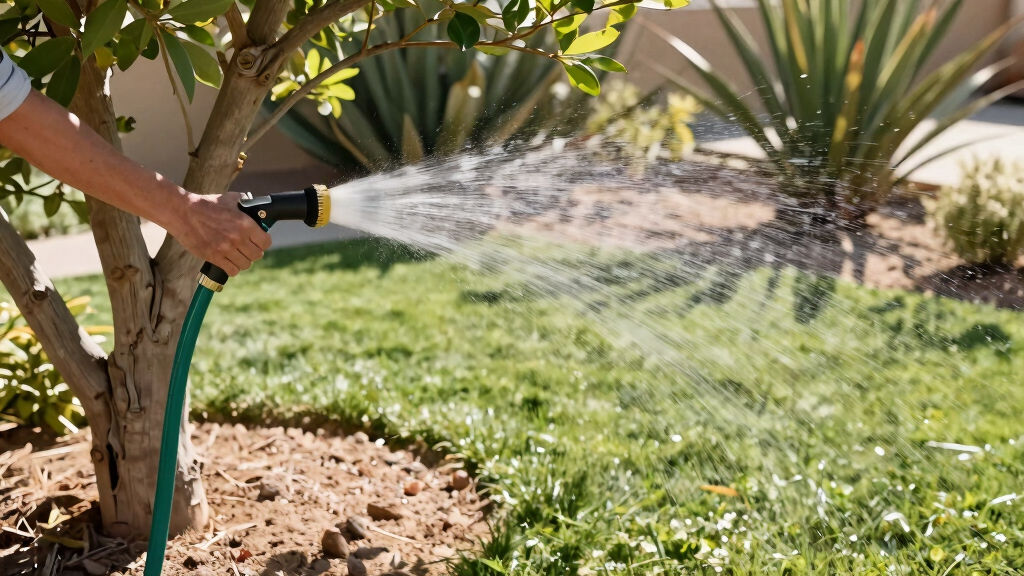
Deep watering involves saturating the soil to a depth of 12-18 inches, mimicking natural desert rain. This depth is critical because it encourages roots to grow downward, anchoring the tree and accessing moisture stored deep underground. Shallow watering, by contrast, can cause roots to remain near the surface, making them vulnerable to drought and temperature swings, which can weaken the tree and increase stress.
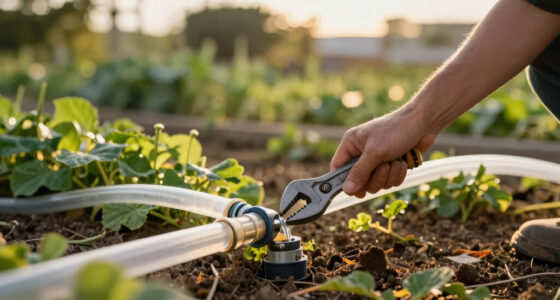
Choosing the correct watering method—such as drip emitters or soaker hoses—ensures water slowly penetrates deep into the soil, giving roots the moisture they need without runoff or waste. For example, a mature oak may require about 30 gallons per session to reach those deep roots. Regularly testing soil moisture with a probe or screwdriver helps confirm if the watering has achieved the desired depth. If it resists penetration, extend your watering time to ensure the moisture reaches 12-18 inches.
Watering New Trees? Do This for Best Results
Newly planted trees are especially vulnerable in the desert climate. They need consistent moisture to establish strong roots, which is why watering about once a week during their first year is recommended. This frequency prevents the soil from drying out completely, which can stunt growth or cause transplant shock. Overwatering, however, can drown roots and promote disease, so balance is key.
For example, a young fruit tree in your backyard should get a slow, deep soak once a week, especially during July’s heat. Mulching around the base helps retain moisture and suppress weeds, further supporting healthy growth. Keep an eye out for signs of drought stress—like wilting leaves—or overwatering, such as root rot or soggy soil, and adjust your routine accordingly.
Modern Tools That Make Watering Easier & Smarter
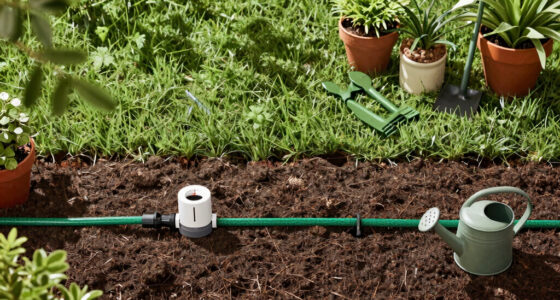
Smart controllers, moisture sensors, and drip irrigation systems turn watering into a science—saving water and boosting health. For instance, a moisture sensor can tell you exactly when your soil needs water, preventing guesswork and overwatering. These tools can be programmed to water at optimal times and durations, adjusting automatically based on weather conditions.
Many local garden centers offer easy-to-install drip kits with timers, which deliver water slowly and evenly, mimicking natural rainfall. Using these tools reduces water waste, ensures consistent moisture levels, and takes the guesswork out of watering—especially useful during Arizona’s unpredictable monsoon season or prolonged dry spells.
Think of it as giving your trees a gentle, consistent drink, promoting healthier growth and conserving precious water resources.
Frequently Asked Questions
How do I know if I am watering my trees too much or too little?
Signs like yellowing leaves, root rot, or soggy soil indicate overwatering. Wilting, brittle leaves, or leaf scorch suggest underwatering. Use a soil probe or stick a screwdriver 12-18 inches into the ground to check moisture levels—adjust watering accordingly.
What is the best time of day to water trees in Phoenix?
Early morning, before sunrise, is best. It minimizes evaporation and allows roots to soak up moisture during the cool hours. Avoid watering in the evening to prevent fungal issues caused by lingering dampness.
How deep should I water my trees?
Water should penetrate at least 12-18 inches into the soil—deep enough to reach the roots. Use drip emitters or soaker hoses that deliver slow, steady flow, and check soil depth regularly to confirm proper saturation.
Are there specific watering guidelines for newly planted trees?
Yes, newly planted trees need about once a week watering during their first year, especially in summer. Keep the soil evenly moist, mulch around the base, and watch for signs of drought stress or overwatering.
Can I use rainwater for watering trees?
Absolutely. Rainwater is free, natural, and excellent for trees, especially during the rainy season. Just ensure collection methods are clean and avoid overwatering during wet months.
Conclusion
In Phoenix, watering trees is a game of timing, depth, and observation. Think of it as giving your trees a carefully measured sip—deep and infrequent, especially during our scorching summers.
Keep a close eye on how your trees respond, and adjust as needed. With the right approach, your trees will thrive year-round—standing tall against the desert sun.
Fall yard work Picks
leaf blowers
As an affiliate, we earn on qualifying purchases.