TL;DR

Get garden gear delivered free with Prime
- Fast, free delivery on millions of items
- Prime Video, Amazon Music and more included
- Member-only deals all year
In Phoenix, dew point gives you a steadier clue to moisture in the air than relative humidity, but it cannot set your watering schedule or promise rain. Haboobs can damage plants and make outdoor cleanup unsafe, while heat advisories are a cue to postpone strenuous work and protect yourself. Check root-zone soil moisture, secure loose garden items before storms, and use current National Weather Service Phoenix alerts to plan.
A Phoenix forecast can call for a manageable-sounding temperature while your new citrus tree wilts in dry wind and the patio pavers radiate heat through your shoes. The temperature is only one part of the story. Dew point, haboob warnings, and heat advisories help you see what the weather could mean for your plants and for you.
Once you know how to read those signals, you can make better calls: whether to check the soil before watering, when to tie down a shade sail, and when to leave the pruning for another day. You’ll learn what each forecast detail tells you, what it can’t tell you, and how to turn it into practical garden choices in the Valley’s heat.
Dew point reflects moisture in the air more directly than relative humidity, but it cannot tell you whether your root zone needs water.
Check soil near the roots before changing irrigation, especially after a brief or uneven monsoon shower.
Secure pots, plant supports, and shade cloth before forecast gusts; wait until wind and lightning hazards pass before inspecting damage.
Treat a heat advisory as a reason to postpone strenuous work, take breaks, and plan around both daytime heat and warm nights.
Use current National Weather Service Phoenix alerts for local conditions because storm timing and alert criteria can change.
Read the forecast like a gardener
Dew point, haboob warnings, and heat advisories help you plan for plant stress and personal safety. Use them as cues to check local conditions, not as automatic instructions.
Three signals, three decisions
Each forecast detail points to a different garden check.
Dew point
Shows moisture in the air more directly than relative humidity. Check soil near the roots before changing irrigation.
Haboob
Strong gusts can tip pots, snap branches, and damage shade cloth. Secure loose items before storms arrive.
Advisory
Treat the alert as a cue to postpone strenuous work and protect yourself from heat.
Use air moisture as context
Dew point describes the air; it cannot tell you how much water is available to a plant.
Feel soil near the roots, including below a container’s dry surface crust.
Account for age, sun, wind, soil, and root depth before watering.
A brief or uneven shower may not reach the roots where water is needed.
Prepare for dust and gusts
Haboobs can arrive quickly, and their timing and path are uncertain.
- Secure pots, plant supports, and shade cloth.
- Bring lightweight furniture and equipment into shelter.
- Wait until wind and lightning hazards have passed.
- Check plants and irrigation equipment; rinse dusty foliage when needed.
Plan work around heat
Local alert names and criteria can change, so check current Phoenix-area guidance.
| Forecast cue | Garden response |
|---|---|
| Heat advisory | Postpone strenuous tasks or move them to a cooler time. |
| Hot nights | Plan for limited overnight recovery for people and plants. |
| Cloud or brief rain | Do not assume conditions are safe for strenuous work. |
Use dew point to understand dry air, not to set a watering timer
Reading a Phoenix forecast starts with knowing that dew point is the temperature at which air becomes saturated with water vapor. It gives you a steadier clue to how much moisture is in the air than relative humidity, which rises or falls as air temperature changes. On a hot Phoenix afternoon, relative humidity can look very low partly because the air is hot; dew point more directly describes the air’s moisture load.
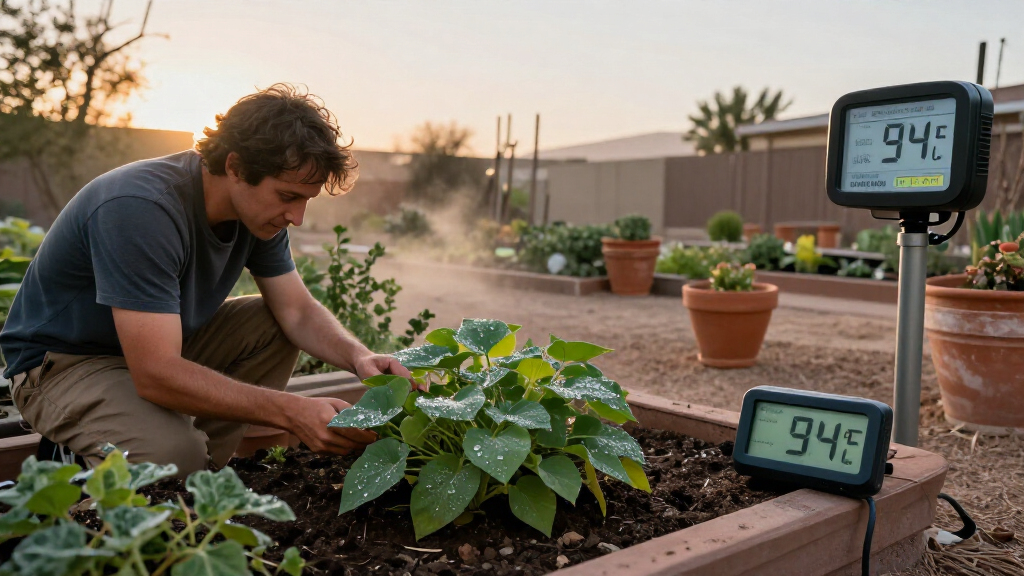
That makes dew point useful context for gardeners, especially during hot, dry, windy weather. When the air holds little moisture, leaves can lose water quickly. A newly planted tree, a bed of summer vegetables, or a container on a west-facing patio may show stress sooner than a mature desert-adapted shrub with deep roots. Think of dew point like the dryness of a towel on a breezy clothesline: it tells you about the air, but it doesn’t tell you how wet the soil is underneath.
Do not turn dew point into an irrigation schedule. Sun exposure, wind, soil texture, plant type, root depth, and establishment all affect how quickly a particular bed dries. Before you add water, check moisture at the root zone. A young tree in sandy soil may need a different response than a mature tree in a mulched basin, even under the same forecast.
A higher dew point often arrives with monsoon moisture and can make a Phoenix night feel sticky. It does not mean rain will reach your yard. Storms need more than moisture, and a cell can drench one part of the Valley while your block stays dusty. If the forecast shows a higher dew point but your garden remains dry, check the soil instead of counting on the clouds.
Popular right now

Dyson W1 PencilWash Wet and Dry Cleaner with Dok Cordless Wet Floor Cleaner

iRobot Roomba 105 Robot Vacuum with LiDAR Navigation

KitchenAid Artisan 5-Qt Tilt-Head Stand Mixer – Dried Rose (KSM150PS)
As an affiliate, we earn on qualifying purchases.
Check the root zone before you change your watering
A Phoenix forecast is more useful when you pair its dew point and wind clues with a hands-on soil check. Dew point describes moisture in the air; it does not measure the water available to your plants. Before changing irrigation, check the soil near the roots and account for the plant’s age, location, and water needs.
Try the check where it matters. For a new tree, feel the soil several inches down within its watering basin; for a container, check below the dry surface crust. If the root zone still feels damp, another long soak may waste water or leave roots sitting in overly wet soil. If it is dry and crumbly, and the plant is young or showing stress, you have a stronger reason to water than a low dew point alone provides.
For example, a newly planted tomato beside a sun-baked south wall faces a different day from a mature aloe in bright shade. The tomato’s shallow roots and reflected heat can push it toward stress quickly, while the aloe stores water in its leaves. A single Valley forecast cannot account for that yard-level contrast. Let the forecast raise a question; let the root zone guide your answer.
Rain deserves the same caution. A passing monsoon shower may wet the patio and barely reach the roots beneath a tree, or it may soak one part of the yard more than another. After rain, check the soil before skipping the next irrigation. When read as a prompt to inspect conditions, dew point and rainfall are useful clues—not automatic instructions.
Get your pots and plants ready before a haboob hits
A haboob is a wall of dust pushed ahead of a thunderstorm’s outflow. In the Phoenix area, these fast-moving dust storms are most associated with the summer monsoon, though strong winds can also kick dust up at other times. They can cut visibility quickly on roads and bring damaging gusts to your yard before you have much time to react.
For a gardener, the risk is physical as well as messy. Wind can snap brittle branches, tip a tall container, tear shade cloth, or scatter light tools across the patio. Dust coats leaves and may interfere with their surfaces, but the immediate priority is to stay clear of strong wind and lightning. A dust-coated garden can wait. Do not step outside to rescue a pot while the storm is active.
Before monsoon season, look at the garden as if a strong gust will test every loose edge. Secure containers, check plant supports and shade-cloth ties, and bring lightweight furniture or equipment into shelter. If a forecast or warning points to blowing dust, move vulnerable pots and finish any planned outdoor work before conditions turn. Storm timing and paths are uncertain, so a warning can affect one part of the Valley while another sees little more than clouds.
After the wind and lightning have passed, inspect plants and irrigation equipment safely. Look for broken branches, shifted pots, damaged emitters, and dust on broad leaves. If foliage needs a rinse, do it once conditions settle, preferably during a cooler part of the day. Picture a young pomegranate that has leaned against its support: steady it after the gusts pass, then check whether the soil or irrigation line also needs attention.
Treat a heat advisory as a cue to rethink yard work
A heat advisory is a safety signal that forecast heat meets locally set National Weather Service criteria. The alert name and threshold can change, and the criteria depend on location and current guidance. Check the active Phoenix-area alert rather than relying on a temperature number you remember from a previous summer.
The forecast temperature is measured under standardized conditions, while your yard can add direct sun, hot walls, dark pavement, and physical effort. Carrying a bag of mulch across a gravel path is harder than standing in shade, even if both happen during the same hour. A brief monsoon shower or cloudy patch does not automatically make strenuous work safe, either.
An advisory should make you reconsider pruning, planting, digging, and other demanding jobs. Move work to a cooler part of the day when conditions allow, take breaks in shade or air conditioning, drink water, and stop if you feel unwell. If the task can wait, let it wait. Keep essential watering separate from optional yard work: you may need to check irrigation, but you do not need to prune a hedge during dangerous heat.
Nights matter, too. When temperatures stay high after sunset, people get less chance to recover, and plants continue to face heat stress. A gardener who finished a tiring job at dawn may still need to scale back if the overnight low stayed warm and the body feels worn down. Plan around both the afternoon high and the recovery the night did—or did not—offer.
Put the forecast to work with a simple garden routine
Read the forecast in this order: check official alerts, note wind and storm risk, then use dew point and recent rain as context for a soil check. This routine gives you a practical way to decide what can wait and what needs attention today. It works better than reacting to one temperature or moisture number on its own.
- Check current Phoenix alerts. Look for heat advisories, dust warnings, and storm notices before planning outside work.
- Scan for wind and thunderstorm risk. Secure pots and shade cloth ahead of gusts; stay indoors during lightning or blowing dust.
- Use dew point as context. Low dew point with hot wind suggests dry air, but it does not tell you the root zone is dry.
- Check the soil where the plant roots are. Inspect a new tree’s basin, a vegetable bed, or a container rather than guessing from the forecast.
- Choose the lightest safe task. Do essential irrigation checks, and postpone digging, planting, or pruning if heat makes the work unsafe.
Say the forecast shows low dew point, high afternoon temperatures, and no storm warning. You might check the new tree’s basin before watering, then leave the afternoon pruning for another day. If a dust warning appears instead, bring in the loose pots and wait to inspect leaves until the wind has passed. That’s how to turn a forecast like a list of numbers into a garden plan.
Know what forecast numbers can’t tell you about your yard
A forecast describes expected conditions across an area; your yard supplies the local details. Phoenix weather can vary across the Valley, and summer storms are especially difficult to pinpoint at neighborhood scale. A forecast may call for monsoon moisture while your street stays dry, or a gust front may hit one side of town harder than another.
That uncertainty matters because plant stress depends on more than the listed high. A container beside a west-facing wall can heat up faster than a shaded bed; a young tree may have roots too shallow to reach cooler soil; and dry wind can pull moisture from leaves. A mature native shrub in a sheltered spot may be doing fine under the same sky. The forecast gives you the broad signal, while your plants show how that signal lands on the ground.
Use official weather sources for current watches, warnings, and advisory details. The National Weather Service Phoenix office provides local forecasts and alerts; Arizona Cooperative Extension gardening guidance can help with plant care. Alert terminology and local criteria can change, and new observations can shift a forecast. If the question is whether rain reached your garden, check the soil. If the question is whether a storm is safe to work through, follow the official warning and get indoors.
Consider two neighbors during the same storm forecast: one sees dust roll across the street and secures a shade sail, while the other gets a brief shower but no strong wind. Neither forecast alone tells the whole story of those yards. Use the regional forecast for preparation, then verify conditions at home.
Frequently Asked Questions
What does dew point tell me that relative humidity does not?
Dew point is a steadier clue to moisture in the air, while relative humidity changes as air temperature changes. In a hot Phoenix afternoon, dew point can help you understand how dry the air is, but neither number measures the water in your garden soil.
Does a higher dew point mean rain is coming to my Phoenix yard?
No. A higher dew point signals more moisture in the air, which often comes with monsoon conditions, but thunderstorms need other ingredients too. Storms can also be highly localized, so check your own soil before changing irrigation.
Should I water more when the dew point is low?
Use low dew point as context, not an automatic watering order. Hot sun and wind can increase plant water loss, especially for new trees and containers, but check moisture near the roots before watering. Plant type, soil, and shade all matter.
What should I do in the garden before a haboob?
Secure loose items and protect vulnerable plants before strong winds arrive. Tie down shade cloth, steady supports, and move light containers if you have time. Stay indoors during blowing dust or lightning, then inspect plants and irrigation equipment after conditions settle.
Are Phoenix heat advisories based on one fixed temperature?
No. Heat alert names and criteria can change, and the relevant thresholds are local. Check the current National Weather Service Phoenix alert instead of relying on a number you remember from another year.
Can I garden early in the morning during a heat advisory?
Early morning is often cooler, but it does not guarantee safe conditions. Check the current weather, limit strenuous work, take breaks in shade or air conditioning, drink water, and stop if you feel unwell. Postpone jobs that can wait.
Conclusion
Read the Phoenix forecast as a prompt to check your garden and protect yourself. Let dew point describe the air, let official alerts guide storm and heat decisions, and let soil moisture tell you whether plants need water.
When the Valley turns white with dust or the patio still radiates heat after sunset, the best garden move may be to stay inside and wait. Your plants—and your body—will be there when the air settles.