TL;DR

Get garden gear delivered free with Prime
- Fast, free delivery on millions of items
- Prime Video, Amazon Music and more included
- Member-only deals all year
A surprise March frost can damage early-planted tender crops, but immediate panic-pruning often causes more harm than good. Cover vulnerable plants with breathable fabric before sunset, water dry soil earlier in the day, and wait several days after thawing to assess damage before pruning or replanting.
You planted your tomatoes three weeks ago because the February sun felt like summer. Now, the forecast shows a March cold snap dipping into the low 30s. Your heart sinks. You look out at your garden, seeing tender green leaves trembling in the evening breeze, and wonder if you just lost your entire spring harvest.
This scenario plays out in desert gardens every year. A warm spell encourages early planting, luring us into a false sense of security. Then, a sudden shift in pressure brings a surprise March frost. The key to saving your garden isn’t frantic last-minute scrambling. It is understanding the difference between frost and freeze, knowing which plants are actually at risk, and avoiding rushed treatments that do more harm than good.
This guide walks you through exactly what to do when a March cold snap threatens your early plantings. You will learn how to protect your crops tonight, how to assess the damage tomorrow, and when to give up on a plant versus when to nurse it back to health.
Do not prune or handle plants while they are frozen; wait until they thaw completely to avoid shattering cell walls.
Cover plants with breathable fabric before sunset, securing edges to the ground to trap soil heat, and remove covers by morning.
Water dry soil in the morning before a predicted freeze to increase thermal mass, but avoid overwatering stressed plants.
Assess damage over several days; wait for new growth to emerge before deciding whether to prune back to healthy wood or pull the plant.
Use a minimum-maximum thermometer at plant height in your garden, as local microclimates can be significantly colder than regional forecasts.
Why Your Garden Feels Colder Than the Forecast
A surprise March frost often catches gardeners off guard because local microclimates differ significantly from regional weather reports. The forecast might say 34°F, but your exposed backyard could hit 28°F. This happens because cold air is dense and sinks, pooling in low spots while warmer air rises. If your garden sits in a dip or near a cold north-facing wall, you are in a frost pocket.
Clear, calm nights are the biggest culprits. Without cloud cover to act as a blanket, heat radiates from the soil into the atmosphere rapidly. This process, called radiative cooling, chills surfaces below the air temperature. So, while the thermometer six feet up reads 33°F, your tomato leaves touching the ground might be frosting over. Wind is your friend here; it mixes the air layers, preventing that cold pool from forming. But if the wind dies down after sunset, the risk spikes.
Don’t trust the app alone. An inexpensive minimum–maximum thermometer placed at plant height in your actual garden bed gives you the truth. For instance, a gardener in Tucson might see a forecast for 35°F, but their thermometer near the ground reads 31°F due to a lack of wind and clear skies. That four-degree difference is the line between a light frost and a damaging freeze.
Popular right now

LG 55-Inch OLED evo G2 Series 4K Smart TV (OLED55G2PUA, 2022)

Dreame L40 Ultra Gen 2 Robot Vacuum and Mop with 25,000 Pa Suction

Samsung 65 The Frame QLED 4K TV (2026) QN65LS03HEFXZA Bundle
As an affiliate, we earn on qualifying purchases.
Frost vs. Freeze: Know the Threat Level
Not all cold events are created equal. A frost occurs when surfaces cool enough for water vapor to freeze, even if the air temperature is slightly above 32°F. You see white crystals on leaves, but the plant tissue might survive if the exposure is brief. A freeze, however, happens when the air temperature itself drops below 32°F. This is more dangerous because the cold penetrates the plant cells, causing ice crystals to form inside the tissue and rupture cell walls.
Duration matters more than the lowest number. A dip to 29°F for 30 minutes might only scorch the tips of a pepper plant. A sustained freeze at 28°F for four hours will likely kill it. Tender seedlings, newly emerged shoots, blossoms, and developing fruit are highly vulnerable. Dormant, cold-hardy plants like established roses or citrus trees (depending on variety) can often tolerate a light frost without lasting damage.
Consider your specific plants. If you planted lettuce, it can handle a light frost and might even taste sweeter. But if you have basil, squash, or young tomatoes, they are essentially tropical plants in a freezer. They lack the antifreeze proteins that hardy plants develop. Knowing this distinction helps you prioritize. You might ignore a frost warning for your rosemary but scramble to cover your basil.
4 Steps to Protect Plants Before Sunset
When a March cold snap is forecast, action starts before dark. Once the sun sets, the temperature plummets, and it is too late to effectively warm the soil. Here is your pre-sunset checklist to save your early plantings.
- Water dry soil earlier in the day. Moist soil holds more heat than dry soil. If your beds are bone-dry, give them a deep soak in the morning. The water acts as a thermal battery, releasing heat slowly overnight. Do not water at night, as this can chill the roots further.
- Bring movable containers inside. Potted plants cool faster than ground-planted ones because they lack the insulating mass of the earth. Move pots to a garage, porch, or against a south-facing wall. Grouping them together also helps them share warmth.
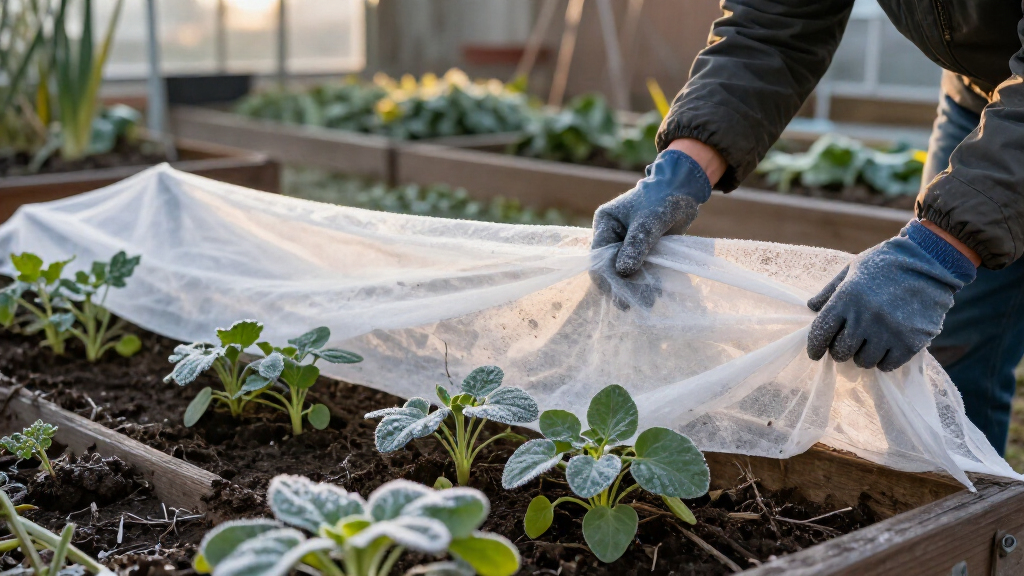
- Cover vulnerable plants with breathable fabric. Use frost cloth, old bedsheets, or towels. Avoid plastic touching the leaves, as it conducts cold directly into the tissue. If you must use plastic, prop it up with stakes so it doesn’t crush foliage. Secure the edges to the ground with rocks or bricks to trap heat rising from the soil.
- Remove covers at sunrise. Don’t let the covers bake the plants in the morning sun. Ventilate or remove them as soon as the frost melts to prevent overheating and fungal issues.
What to Do the Morning After the Frost
The sun is up, and your garden looks like a crime scene. Leaves are limp, blackened, or covered in icy crystals. Your instinct is to rush out with pruners and cut away the damage. Stop. Handling frozen plants is the fastest way to kill them. When plant cells are frozen, they are brittle. Touching or pruning them shatters the cell walls, turning a recoverable plant into a dead one.
Wait until the plant has completely thawed and dried. This might take a full day or two. Once thawed, observe carefully. Some damage is superficial. A brown, crispy leaf edge on a kale plant is cosmetic. The center of the plant might still be green and vigorous. For tomatoes, check the stem. If it is still green and firm under the skin, the plant may survive. If the stem is mushy, water-soaked, and brown all the way down, the plant is likely dead.
Do not fertilize. A common mistake is dumping nitrogen on stressed plants to “help” them. This pushes tender new growth that is even more susceptible to the next cold snap. Let the plant rest. Water normally, but don’t overwater. The plant’s transpiration is reduced due to damaged leaves, so it needs less moisture than usual.
Assessing Damage: Prune Now or Wait?
Deciding when to prune is tricky. The general rule for handling a surprise March frost is to wait until the risk of further frost has passed and new growth begins. Damaged tissue often protects the living tissue beneath it. Those brown, ugly leaves on your agave or rose bush are acting as a thermal blanket for the crown. If you cut them off too early, you expose the heart of the plant to the next cold night.
For herbaceous plants like basil or squash, if the stems are black and mushy, they are dead. Pull them up and compost them (if your compost gets hot enough to kill pathogens) or discard them. For woody plants like citrus or roses, wait for spring. Look for green tissue under the bark. Scratch a small branch with your fingernail. If it’s green and moist, it’s alive. If it’s brown and dry, it’s dead. Prune back to the first sign of healthy wood.
Here is a quick guide to assessing common desert garden plants:
| Plant Type | Damage Sign | Action |
|---|---|---|
| Tomatoes/Peppers | Mushy, black stems | Pull and replace |
| Tomatoes/Peppers | Green stems, brown leaves | Wait 1 week, then prune dead leaves |
| Citrus | Brown leaves, green branches | Wait until spring to prune |
| Agave/Aloe | Soft, rotting centers | Cut out rot with sterile knife |
| Lettuce/Kale | Wilted, dark leaves | Harvest outer leaves; center may recover |
When to Replant vs. When to Wait
If your seedlings are wiped out, the question is: do you replant now or wait? In desert climates, March is a transition month. It can still get cold in late March, especially in higher elevations like Flagstaff or the White Mountains. If you replant tender crops immediately, you risk losing them again to another cold front.
Check your local last frost date. For Phoenix, it is often mid-February, but freak freezes happen. For Tucson, it is similar. If you are in a frost-prone area, wait until the forecast shows a consistent stretch of nights above 40°F before replanting tomatoes or peppers. You can use this time to start seeds indoors or in a protected greenhouse.
For hardy crops like carrots, beets, and broccoli, you can replant immediately. They thrive in cool weather. If you lost your lettuce, throw in a new row. It will grow quickly in the warming soil. But for fruit trees or berry bushes that were blooming, the flowers are likely dead. Don’t replant the tree. Just accept that you will miss this year’s fruit. The tree itself is likely fine and will bloom again next year.
Remember, a March cold snap is a setback, not a disaster. Gardening is about resilience. You lose some plants, you save others, and you learn for next year. Keep your records. Note which varieties survived and which didn’t. That data is worth more than any seed packet.
Frequently Asked Questions
What is the difference between frost and freeze?
Frost forms when surfaces cool enough for water vapor to freeze, even if air temperature is above 32°F. A freeze occurs when air temperatures drop below 32°F. Freezes are generally more damaging to plant tissue because the cold penetrates the cells.Should I cover my plants with plastic?
Avoid letting plastic touch the leaves, as it conducts cold directly into the plant tissue. If you use plastic as an outer layer, prop it up with stakes so it doesn’t crush foliage, and remove it promptly in the morning.Will one night below 32°F kill my seedlings?
Not necessarily. It depends on the plant species, duration of the cold, and wind exposure. Tender seedlings are more vulnerable, while hardy plants may survive a brief dip. Assess damage after thawing before deciding to replace them.Should I water my plants before a frost?
Yes, if the soil is dry, water it earlier in the day. Moist soil retains and releases more heat than dry soil, helping to moderate temperature drops. Do not water at night, as this can chill the roots.When is it safe to prune frost-damaged branches?
Wait until the risk of further frost has passed and new growth begins. Damaged tissue often protects living tissue beneath it. Pruning too early can expose the plant to subsequent cold snaps.Conclusion
A surprise March frost is a rite of passage for desert gardeners. It stings, but it doesn’t have to ruin your season. By covering your tender crops before sunset and resisting the urge to prune immediately, you give your plants the best chance to recover. Patience is your best tool. Wait for the thaw, watch for new green shoots, and act only when the danger has passed.
Next time the forecast hints at a cold snap, check your garden’s microclimate. Keep your frost cloth ready. And remember: a few brown leaves are a small price to pay for an early start on a bountiful harvest.