TL;DR

Get garden gear delivered free with Prime
- Fast, free delivery on millions of items
- Prime Video, Amazon Music and more included
- Member-only deals all year
Placing boulders in irregular clusters, choosing weathered, locally sourced stones, and integrating native plants creates a realistic Sonoran desert look. Proper placement enhances beauty and supports local wildlife.
Imagine a landscape that feels like it’s been there for hundreds of years—rocky, rugged, and perfectly in tune with the desert around you. That’s what a natural Sonoran look is all about. It’s more than just tossing some rocks in the yard; it’s about creating a landscape that mimics the desert’s own art—the random, weathered beauty of its boulders.
If you want your xeriscape to look like a piece of the Sonoran Desert, knowing how to place and choose your boulders makes all the difference. This guide breaks down the hows and whys of boulder placement—so your yard can look like it’s belonged there for centuries, not just a few weeks.
Choose weathered, rounded boulders that match local geology for authenticity.
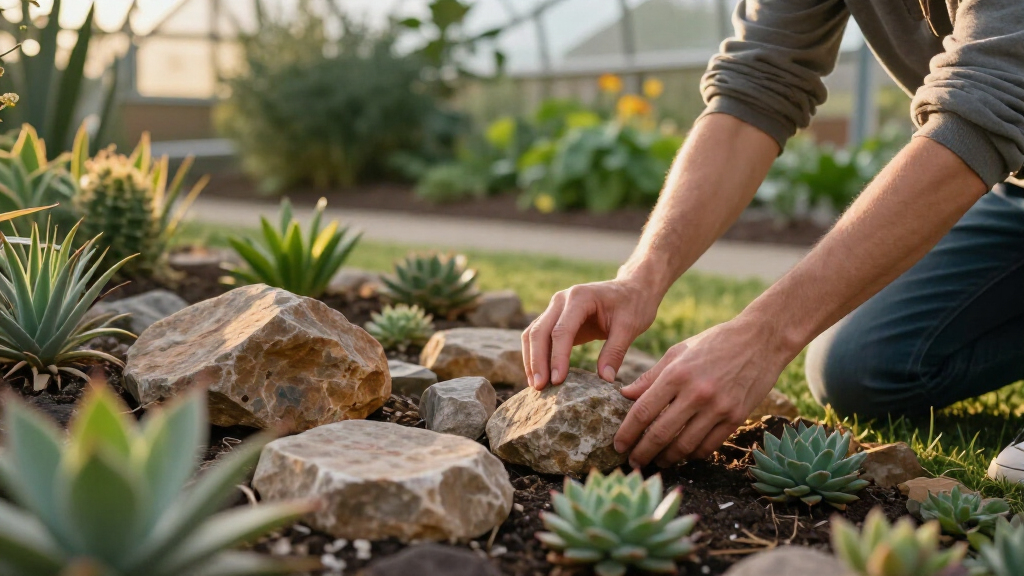
Arrange boulders in irregular clusters, embedding part of each into the ground for stability.
Use a mix of large, medium, and small stones to mimic natural deposits.
Blend boulders with native plants like prickly pear and agave for organic integration.
Regularly check and adjust boulder placements to maintain a natural, aged look.
Boulder Placement for a Natural Sonoran Look
Irregular clusters, weathered local stone, and native plants create a landscape that looks like it has belonged to the desert for centuries—not just a few weeks. Rocky, rugged, and perfectly in tune with the terrain around you.
“Nature doesn’t do neat rows—irregular clusters are what make a yard read as desert.”
— Key InsightWhy the Right Placement Turns a Fake Yard into a Real Desert Scene
The secret is irregularity. The desert deposits rocks in scattered clusters, rounded by wind and water, layered for depth—your yard should do the same.
Mimic Natural Deposits
Cluster, Don’t Align
Think canyon walks: rocks of many sizes in seemingly random groups. Large boulders anchor the scene while smaller stones scatter around them for authenticity.
Create Focal Points
Frame, Don’t Stage
Use clusters of large rocks to frame a native agave or saguaro. Boulders can also block views or form natural barriers that invite the eye to wander.
Support Wildlife
Ecology Bonus
Irregular clustering encourages habitat diversity, providing shelter for local wildlife and promoting ecological balance—beauty and function together.
5 Steps to Place Boulders Like a Desert Pro
Thoughtful placement and embedding ensure stability and a natural appearance that resists shifting during heavy rains and erosion.
Plan Your Layout
Sketch the area or use a 3D planning tool to visualize clusters. Think irregular, natural groupings—not perfect rows.
Pick Focal Points
Place the largest boulders first as anchors, positioned to draw the eye and frame plantings.
Cluster Irregularly
Arrange medium and small boulders around focal points in loose, natural clusters—avoid symmetry.
Embed Partially
Bury about one-third of each boulder to prevent shifting over time, especially on slopes.
Integrate Plants
Position native cacti, agave, or desert grasses so they grow between and around the rocks.
Boulder Sizes & Shapes That Look Natural
A mix of sizes mimics natural deposits—large boulders anchor, smaller stones add detail and layered, believable terrain.
| Size / Shape | Best For | Visual Effect |
|---|---|---|
| Large, rounded (3–5 ft) | Focal points, anchors | Commanding presence, stability |
| Medium, weathered (1–3 ft) | Clusters, transitional elements | Natural layering, depth |
| Small rocks & gravel | Filling gaps, ground cover | Organic texture, fill-in |
Choosing Boulders That Belong in the Sonoran Desert
Authentic stones show the warm, reddish hues of nearby mountains or gray-green desert rock—weathered, rounded, and textured by wind and water erosion.
Avoid shiny, jagged rocks—they look artificial. Weathered sandstone or granite with a soft, rounded shape works best. Stones should look like they’ve been sitting in the sun for decades.
Blending Boulders with Native Plants
Position plants so they seem to grow naturally out of the rocks—not stuck in the dirt. Native flora thrives among stones without perfect soil or water.
🌵 Structural Plants
- Saguaro cactus — frame with a cluster of large boulders for commanding presence
- Prickly pear — plant between two boulders, as if sprouted from the desert floor
- Agave — use as focal anchor surrounded by medium weathered stones
🌿 Softening Layers
- Desert marigold — seasonal color tucked into rock crevices
- Creosote bush — background texture that ties stone to soil
- Desert grasses — let them grow in cracks to soften hard edges
Why the Right Boulder Placement Turns a Fake Yard into a Real Desert Scene
The secret to a natural Sonoran look? Irregularity. Boulders that appear as if they’ve been part of the landscape for ages. Placement should mimic how the natural desert deposits rocks—scattered in clusters, rounded by wind and water, and layered to create depth.
Imagine walking through a canyon, where rocks of various sizes sit in seemingly random groups. Your yard should do the same. Clusters of large boulders with smaller stones scattered around create visual interest and authenticity. Don’t make everything symmetrical or perfectly aligned; nature doesn’t do neat rows.
Think about focal points—like a cluster of large rocks framing a native agave or a saguaro. Use boulders to block views or create natural barriers—these elements invite the eye to wander, giving your landscape a seamless, organic feel.
Why does this matter? Because natural irregularity not only mimics the authentic landscape but also creates a more inviting, less artificial environment. Symmetrical or overly orderly arrangements can look staged and detract from the natural feel. Additionally, irregular clustering encourages habitat diversity, providing shelter for local wildlife and promoting ecological balance. The tradeoff, however, is that these arrangements require more careful planning and an eye for randomness—overdoing it can lead to a chaotic look, so balance is key.
weathered native boulders for landscaping
As an affiliate, we earn on qualifying purchases.
As an affiliate, we earn on qualifying purchases.
How to Choose Boulders That Look Like They Belong in the Sonoran Desert
Start with locally sourced or similar-toned rocks. The Sonoran Desert’s boulders are typically weathered, rounded, and have a textured surface that shows signs of wind and water erosion.
Look for boulders that weigh enough to stay put but aren’t so heavy you need a crane for placement. Weathered sandstone or granite with a soft, rounded shape works best. Avoid shiny, jagged rocks; they look artificial.
For example, a yard with native terrain might feature boulders that match the warm, reddish hues of nearby mountains or the gray-green of desert rocks. Matching the color palette helps your landscape look like it’s part of the natural landscape, not an add-on.
Adding weathered texture—like pits, grooves, or a matte finish—enhances realism. Always choose stones that look aged and natural, as if they’ve been sitting in the sun for decades.
Why does this choice matter? Because selecting the right stones directly influences the overall authenticity of your landscape. Using rocks that don’t match the local geology or look artificially new can break the illusion of a natural desert scene. The tradeoff is that sourcing authentic stones may limit your options or increase costs, but the payoff is a landscape that truly feels like part of the Sonoran environment, fostering a sense of place and ecological harmony.
As an affiliate, we earn on qualifying purchases.
5 Step-by-Step Tips for Placing Boulders Like a Desert Pro
- Plan your layout: Sketch the area or use a digital tool to visualize clusters. Think irregular, natural groupings, not perfect rows.
- Pick focal points: Place the largest boulders first, creating anchors for the landscape. These should be positioned to draw the eye and frame plantings.
- Cluster irregularly: Arrange medium and smaller boulders around the focal points in loose, natural clusters, avoiding symmetry.
- Embed partially into ground: Bury about one-third of each boulder for stability. This prevents shifting over time, especially on slopes or in heavy rains.
- Integrate with plants: Position native cacti, agave, or desert grasses so they grow between and around the rocks—adding to the organic look.
Why does this process matter? Because thoughtful placement and embedding of boulders ensure stability and natural appearance. Properly embedded boulders resist shifting over time, especially during heavy rains or erosion, maintaining the landscape’s integrity. Clustering in an irregular manner mimics natural deposits, avoiding a staged or artificial look. Integrating plants not only enhances aesthetics but also promotes habitat and soil stabilization. The tradeoff is that this process requires patience and precision, but the result is a landscape that looks timeless and organically assembled.
native stone boulders for xeriscape
As an affiliate, we earn on qualifying purchases.
As an affiliate, we earn on qualifying purchases.
Comparison: Boulder Sizes and Shapes That Look Natural in the Sonoran Desert
| Size/Shape | Best For | Visual Effect |
|---|---|---|
| Large, rounded boulders (3-5 feet) | Focal points, anchors | Commanding presence, stability |
| Medium-sized, weathered stones (1-3 feet) | Clusters, transitional elements | Natural layering, depth |
| Small rocks and gravel | Filling gaps, ground cover | Organic texture, fill-in |
Choosing a mix of sizes helps mimic natural deposits—where larger boulders anchor the scene, and smaller stones add detail. Weathered, round shapes are key to achieving a realistic look. It’s important to consider the scale and proportion of each size relative to your landscape to avoid a jarring or unnatural appearance. Larger boulders provide visual weight and serve as focal points, while smaller stones fill in gaps, creating a layered, believable terrain. The tradeoff involves sourcing a diverse mix of stones, which might require extra effort or expense, but doing so results in a more convincing and harmonious desert scene that invites exploration and appreciation.
large decorative landscape boulders
As an affiliate, we earn on qualifying purchases.
As an affiliate, we earn on qualifying purchases.
How to Blend Boulders with Native Plants for a Truly Authentic Look
Combine your boulders with native plants like prickly pear, agave, desert marigold, and creosote bushes. Position plants so they seem to grow naturally out of the rocks, not just stuck in the dirt.
For example, plant a cluster of prickly pear between two large boulders, as if it’s sprouted from the desert floor. Let desert grasses grow in the cracks and crevices, softening the hard edges.
This mix creates a layered, organic feel—like the landscape has evolved over centuries. Remember, native plants are adapted to thrive among rocks; they don’t need perfect soil or water.
Why does this matter? Because thoughtful integration of native flora with boulders enhances the realism and ecological function of the landscape. Plants that appear to grow naturally from the rocks reinforce the illusion of a wild, untouched desert environment. The tradeoff is that it requires patience to select and position plants correctly, but the payoff is a landscape that feels timeless and sustainable, supporting local ecosystems and minimizing maintenance.
Tips to Keep Your Boulder Placement Looking Great for Years
Once in place, your boulders need minimal fuss but regular checks. Every so often, walk the yard and see if any stones have shifted or settled differently.
In heavy rains, inspect for erosion around the base—re-embed or add soil if needed. Keep an eye out for invasive weeds or unwanted plants that disrupt the natural flow.
Use a garden fork or small shovel to gently reposition or stabilize rocks if they start to wobble. Remember, your goal is to keep the look organic, not perfect.
For example, after a monsoon, you might find a large boulder has shifted slightly downhill. A quick reset and some gravel behind it will keep things looking natural and stable.
Frequently Asked Questions
Can I place large boulders myself, or should I hire a professional?
Small to medium boulders can often be placed by a homeowner with some effort and proper tools. For larger, heavier stones or complex arrangements, hiring a professional ensures safety and a natural look without accidental damage or misplacement.
How do I prevent boulders from shifting over time?
Embed about one-third of each boulder into the ground, especially on slopes or in areas prone to erosion. Using gravel or soil behind and around the base helps secure them in place.
What native plants work best with boulders in the Sonoran Desert?
Prickly pear, agave, desert marigold, creosote bushes, and saguaro seedlings grow naturally among rocks. These plants are adapted to the rocky, arid environment and help create an authentic look.
Are there environmental concerns when sourcing boulders?
Yes, always source local or recycled rocks to reduce environmental impact. Avoid disturbing remote or protected areas, and consider the ecological footprint of heavy equipment used during installation.
Conclusion
Mastering the art of boulder placement transforms a simple yard into a genuine slice of the Sonoran Desert. Think irregular, weathered, and layered—like nature itself designed it.
Remember, it’s about harmony—rocks and plants working together to tell a story of time and resilience. With patience and a keen eye, your landscape will look like it’s belonged there for decades, not just planted yesterday.
Halloween Picks
halloween
As an affiliate, we earn on qualifying purchases.