TL;DR
Listen free for 30 days with Audible
Thousands of audiobooks and originals — cancel anytime.
Start your free trialAs an affiliate, we earn on qualifying purchases.
Landscape fabric under rock in the desert might seem like a weed solution, but it usually causes more problems over time. Dust, organic debris, and roots accumulate, making weeds harder to manage. Sustainable strategies focus on routine maintenance and smarter plant choices instead.
Ever seen a rock garden that seemed perfect—no weeds, low fuss—only to find weeds sprouting through cracks and seams months later? That’s the reality with landscape fabric beneath rock in the desert. It promises a weed-free paradise but often turns into a maintenance nightmare.
In this guide, you’ll learn why fabric often backfires, what actually causes weeds to flourish, and how to build a resilient, water-wise landscape that stays manageable without relying on a plastic barrier that rots and traps debris.
Landscape fabric under rock in the desert often traps organic debris, creating ideal conditions for weeds to sprout above the fabric.
Roots and seeds find their way through tears, seams, and damaged spots, making long-term weed suppression unrealistic.
Fabric deteriorates quickly under intense desert sun and heat, leading to increased maintenance costs and plant stress.
Clogged or broken fabric can disrupt water infiltration, causing uneven watering and stress for desert plants.
A combination of early weed removal, proper irrigation, native groundcovers, and organic mulch offers a more sustainable, long-term weed control strategy.
Why Weed Fabric Under Rock Backfires in the Desert
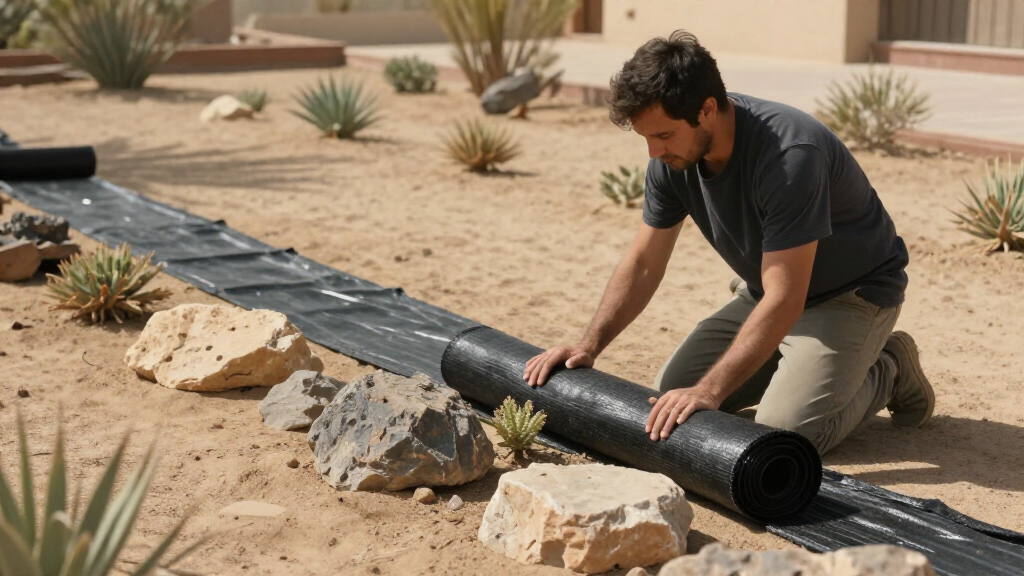
Landscape fabric under rock promises a weed-free paradise — but in desert climates it usually becomes a maintenance nightmare. Dust, debris, and roots accumulate above and through it, making weeds harder to manage while the barrier itself rots. Sustainable strategies focus on routine maintenance and smarter plant choices instead.
of weed germination in desert landscapes occurs above the soil surface — often in debris that accumulates between rocks, rendering landscape fabric ineffective long-term.
Six Ways the Fabric Fails
Windblown Soil Forms Above It
Dust, leaves, and organic matter settle between stones and decompose into a thin soil layer — a perfect seedbed sitting directly on top of the fabric.
Roots Find Every Weak Point
Roots sneak through pores, seams, planting holes, and torn patches. Some weeds even spread sideways along the fabric–soil interface.
Desert Sun Destroys It Fast
Heat, UV exposure at edges, and foot traffic make lightweight fabric brittle and fragmented within a few years — long before the weeds give up.
Clogged Pools and Reroutes Water
Fine sediment blocks pores. Water moves sideways, pools in low spots, or never reaches roots — causing root rot in one spot, drought stress in another.
Soil Life Declines Below
Fabric blocks the natural mixing by insects, roots, and organisms. Soil compacts, loses oxygen, and becomes nearly impossible to amend with compost.
Rock Reradiates Heat
Rock absorbs and reradiates solar energy. Fabric does little to reduce it — and hot beds stress young or poorly adapted plants even further.
The Backfire Timeline — From Promise to Problem
Installation Day
Fabric laid, rock spread. Beds look clean, flat, and weed-free. The promise feels delivered.
Debris Arrives
Wind deposits dust, sand, leaves, and seeds between stones. A thin layer builds month by month.
Soil Forms on Top
Decomposition turns debris into growing medium. After rain or irrigation, seeds germinate above the barrier.
Fabric Degrades
UV, heat, and traffic tear and embrittle the fabric. Roots push through gaps and spread along seams.
Costly Removal
Rock must be moved or screened to extract tangled, crumbling fabric — an expensive, disruptive job.
Where Desert Weeds Actually Come From
Fabric addresses only part of the initial problem — and none of the continuing seed supply above it. Illustrative share of common weed-pressure sources in desert rock beds:
Fabric vs. Sustainable Alternatives
| Criterion | Fabric Under Rock | Organic Mulch + Maintenance | Native Groundcovers |
|---|---|---|---|
| Blocks windblown seeds | ✗ Only until debris builds | ~ Suppresses most, needs topping up | ✓ Competes weeds out |
| Long-term durability | ✗ Brittle in 2–5 yrs | ✓ Renewed naturally | ✓ Self-sustaining |
| Water infiltration | ~ Clogs with sediment | ✓ Improves soil structure | ✓ Deep roots aid drainage |
| Soil health | ✗ Suffocates soil life | ✓ Feeds organisms | ✓ Builds living soil |
| Plant growth & renovation | ✗ Constricts stems & roots | ✓ Easy to move plants | ~ Needs spacing planning |
| Removal cost later | ✗ Rock must be screened | ✓ Simply rake in | ✓ Nothing to remove |
Build a Landscape That Works With the Desert
Skip the plastic barrier that rots and traps debris. A combination of early weed removal, proper irrigation, native groundcovers, and organic mulch offers long-term weed control — with less labor, lower cost, and healthier soil. Routine maintenance beats a false promise every time.
- 01Pull weeds early. Remove seedlings while young — before roots anchor into debris layers or through fabric seams.
- 02Fix irrigation leaks. Eliminate overspray and runoff that create moist weed zones in low spots and at borders.
- 03Choose native groundcovers. Adaptive plants outcompete weeds, shade soil, and reduce reradiated heat.
- 04Use organic mulch in planted beds. It feeds soil life, moderates temperature, and is easily renewed or raked aside.
Why Landscape Fabric Fails in Desert Rock Beds
Landscape fabric under rock seems like an easy fix—block weeds, keep soil clear, save water. But in desert climates, it quickly becomes a problem. Dust, leaves, and organic matter settle on top of the fabric, creating a perfect seedbed. When rain or irrigation hits, that debris turns into a thin layer of soil, where weeds germinate.
Roots find their way through tiny pores, and over time, the fabric deteriorates or tears, making weeds even harder to control. Organic debris gets trapped, decomposes, and feeds new weed seeds. The fabric’s initial promise of weed suppression fades fast, replaced by ongoing struggles to keep weeds at bay.
This matters because it reveals that the fabric’s short-term benefits are overshadowed by long-term maintenance issues. The more organic matter accumulates, the more weeds can thrive, and the more labor-intensive it becomes to keep your garden weed-free. The tradeoff is clear: what seems like a quick fix ends up requiring constant effort and cost, often making the landscape less sustainable over time.
native groundcover plants for desert landscaping
As an affiliate, we earn on qualifying purchases.
As an affiliate, we earn on qualifying purchases.
How Weeds Grow Through and Around the Fabric
Weeds are stubborn. Even when you lay down fabric, they find a way. Roots sneak through tiny holes, seams, or damaged spots. Wind carries dust and seed-laden debris above the fabric, which settles and germinates. Organic matter accumulates, turning into soil that plants love.
Imagine a small weed seed landing on a patch of dirt layered over fabric. With a little rain, it sprouts, roots extend downward, and before you know it, that weed is thriving—sometimes even spreading along the interface between fabric and soil.
Here’s why this matters: weeds exploiting fabric flaws is a sign that the fabric alone cannot serve as a foolproof barrier. Roots can penetrate tiny holes or damaged areas, and seeds can settle in debris accumulated on top. This means that even diligent installation doesn’t guarantee weed-free soil in the long run. The implication for gardeners is that relying solely on fabric creates a false sense of security, leading to neglect of other essential weed management practices. The tradeoff is that persistent weeds will require ongoing removal efforts, often more labor-intensive and less effective over time, especially as fabric degrades or becomes compromised.
organic mulch for weed control in desert gardens
As an affiliate, we earn on qualifying purchases.
As an affiliate, we earn on qualifying purchases.
Rock Traps Organic Debris, Making Weed Problems Worse
Decorative rock is beautiful but not maintenance-free. Leaves, dust, and organic debris blow in on the wind, settling in crevices and gaps between stones. Over time, this debris decomposes, creating a rich, organic layer right above the fabric—ideal for weed seeds to sprout.
Picture a small, dry leaf caught between two large rocks. With each rain, it decays and forms a tiny patch of soil, inviting weed seeds to settle and grow. Once established, weeds send roots into that organic layer, making them tough to pull and control.
This buildup of organic matter is particularly problematic because it transforms what should be a low-maintenance, weed-resistant surface into a seedbed that encourages weed proliferation. The organic debris acts like a fertilizer, providing nutrients that support weed growth, which can quickly overwhelm the intended aesthetic and functional benefits of the rock garden. The tradeoff here is that while rocks reduce visible weeds initially, they inadvertently create an environment where weeds can thrive from above, leading to increased labor and cost for removal and control over time.
water-wise desert landscape plants
As an affiliate, we earn on qualifying purchases.
As an affiliate, we earn on qualifying purchases.
Why Landscape Fabric Deteriorates Fast in the Desert
Desert sun and heat are relentless. Plastic and lightweight fabrics can become brittle, crack, or fragment within just a few years. Add foot traffic, landscaping tools, and plant roots, and you have a recipe for quick wear and tear.
Imagine peeling away a layer of old, brittle plastic from beneath a pile of rocks—crumbling, torn, and full of holes. Once fabric deteriorates, weeds find easy access through the gaps, and maintaining the area becomes a chore.
The consequence of this rapid deterioration is that the fabric’s protective barrier weakens prematurely, exposing the soil and roots to weeds and erosion. This means more frequent replacements, which increase costs and labor. The tradeoff is that the initial savings and convenience of fabric are short-lived, and neglecting timely replacement can lead to compounded weed problems and soil instability.
drip irrigation system for desert gardens
As an affiliate, we earn on qualifying purchases.
As an affiliate, we earn on qualifying purchases.
Water Movement Gets Messy When Fabric Clogs or Breaks
Landscape fabric is meant to allow water to pass through. But fine sediment and organic matter can clog its pores, causing water to reroute sideways or pool in low spots. Sometimes, the fabric acts more like a barrier than a conduit.
Imagine watering a rock bed and seeing water pool in one corner because the fabric is blocked. Over time, this uneven infiltration can drown some plants while starving others. In some cases, impermeable plastic prevents water from reaching roots at all, leading to drought stress.
This issue is critical because uneven watering can cause root rot or drought stress, both of which weaken plants and increase maintenance needs. The implication is that clogged fabric or plastic not only reduces water efficiency but can also cause localized over- or under-watering, ultimately undermining the goal of water-wise desert gardening. The tradeoff is that neglecting proper water management, due to clogged barriers, can lead to plant decline and higher long-term costs.
Soil Quality Deteriorates Under Fabric and Rock
Layering landscape fabric between soil and rock cuts off the natural exchanges that keep soil healthy. Soil organisms, insects, and roots all need movement and aeration. When fabric is buried beneath a thick rock layer, it can cause the soil below to become compacted and deprived of oxygen.
Think of it like putting a plastic bag over your soil—over time, it suffocates the earth below, making it harder to add compost or loosen it up for plant roots. This leads to poor plant growth and increased maintenance to fix soil problems.
The consequence is that soil health declines, reducing the garden’s resilience and making plants more susceptible to pests, diseases, and drought stress. The tradeoff is that ignoring soil vitality in favor of a quick fix with fabric and rock can result in long-term degradation, necessitating costly soil remediation.
Plant Growth and Renovation Become a Hassle
As plants grow, their roots expand, and new shoots emerge. Small openings in fabric can become constrictive, forcing you to enlarge them repeatedly. Moving or replanting becomes complicated when fabric is buried under rock, especially if roots get tangled or fabric tears.
Picture trying to reposition a shrub in a rock bed. The fabric has become a barrier, and pulling it back can damage roots or disturb surrounding plants. Repairing or replacing fabric later is a major disruption, often involving moving tons of rock.
This inflexibility hampers your ability to keep your landscape healthy and tidy over time, leading to increased labor and potential damage to plants during renovation efforts. The tradeoff is that initial convenience may come at the cost of significant difficulty during future landscape adjustments.
The Real Source of Weeds in Desert Rock Gardens
Weeds aren’t just a surface problem—they often come from dust, seeds, and organic debris blown in by the wind, collected in low spots, or creeping up along borders. Irrigation leaks and runoff also introduce weed seeds and roots.
For example, a tiny weed sprouting at the edge of a rock bed might have come from dust carried by a dust storm or a leak in the irrigation line. Once roots find that organic layer, they grow deep and stubborn.
This means that landscape fabric doesn’t stop the real sources—seed dispersal by wind, runoff, or existing roots—so weeds keep finding ways in. The implication is that addressing weeds requires managing these external factors rather than relying solely on fabric or barriers.
How Rock and Fabric Together Can Increase Heat Stress
Dark-colored rocks absorb sunlight and radiate heat, raising soil and air temperatures. Landscape fabric can trap that heat close to the soil surface, intensifying stress for plants, especially young or drought-sensitive ones.
Imagine a black basalt bed baking in the sun, with fabric underneath that prevents organic matter from absorbing heat and cooling the soil. The result? Hotter roots and more water loss, stressing your plants further.
This heat buildup can cause plants to wilt faster and require more watering—defeating the water-saving purpose of desert landscaping. The combination of dark rocks and fabric creates a microclimate that amplifies heat stress, making it more difficult for plants to survive and thrive, thereby increasing maintenance and watering needs.
Removing Old Fabric Is a Labor-Intensive Nightmare
Once fabric has been buried under layers of rock, it’s a big job to remove. You’ll need to lift rocks, loosen soil, cut fabric into manageable strips, and carefully extract it around roots and irrigation lines.
Imagine peeling away a layer of brittle plastic from a sprawling rock bed—torn, entangled, and full of debris. The process disrupts your landscape and can damage plants if not done carefully.
This difficulty often leads gardeners to leave old fabric in place, even when it’s no longer effective, which can worsen weed problems and soil health over time. The tradeoff is that removal is costly and labor-intensive, often outweighing the benefits of replacement.
Better Ways to Manage Weeds in Desert Rock Gardens
Instead of relying on fabric, focus on holistic, sustainable practices. Remove weeds early, fix irrigation leaks, and use native groundcovers that compete with weeds naturally. Keep debris cleared and avoid deep, permanent fabric layers.
For example, planting dense desert groundcovers like creeping juniper or ice plant reduces open space for weeds and minimizes maintenance. Use organic mulch in planting beds—this helps suppress weeds, improve soil, and break down naturally.
Creating accessible irrigation zones and limiting areas of exposed soil also makes routine weed control easier and more effective long-term. These strategies promote a resilient landscape that requires less intervention over time, aligning with water-wise principles and reducing reliance on non-biodegradable barriers.
Remember: weed control in desert landscapes is ongoing. A combination of good design, regular maintenance, and smart plant choices beats a plastic barrier every time.
When and Why to Remove Old Fabric
If fabric becomes torn, clogged, or is causing plant problems, it’s time to remove it. Signs include weeds sprouting through seams, fabric pulling away, or plant roots growing into damaged areas.
Removing fabric is labor-intensive but can improve plant health and water flow. Do it in small sections, loosen soil, and carefully lift pieces to avoid damaging roots or irrigation lines.
If fabric is buried and stable, with no signs of failure, leaving it in place might be better than creating chaos during removal.
Think of it like spring cleaning—sometimes a little effort keeps your landscape functioning smoothly.
Frequently Asked Questions
Does landscape fabric stop weeds permanently?
No. It can suppress existing weeds in the soil initially, but windblown seeds and debris will settle above it. Weeds will still find ways to germinate, especially in accumulated organic matter.
How long does weed fabric last under rock in the desert?
The lifespan varies widely—cheap fabrics may last only a few years, while higher-quality ones can endure 5–10 years if not damaged. But even then, organic debris buildup diminishes its effectiveness over time.
Should I use plastic sheeting instead of fabric?
Probably not. Solid plastic prevents water and gas movement, making it hard for roots to breathe and water to penetrate. It’s best reserved for specific construction or drainage uses, not as a weed barrier in planted desert beds.
Can weeds grow through professional-grade fabric?
Yes, especially if the fabric tears or has gaps. Roots can penetrate small pores, and weeds can root in debris that collects on top. No fabric is truly foolproof in the long run.
Will fabric save water in desert landscapes?
Not always. While it may slow surface evaporation, clogged fabric can block water infiltration, and the heat-radiating rocks may cause more water loss. Proper irrigation management is more effective overall.
Conclusion
Relying on landscape fabric beneath desert rock beds isn’t a fix—it’s a recipe for ongoing headaches. Dust, organic debris, and roots will find their way through, and fabric deterioration makes maintenance tougher over time.
The smarter move is to focus on routine upkeep, strategic planting, and organic mulches. Your desert landscape can stay manageable and beautiful without a plastic barrier that eventually backfires.
So next time you consider fabric, ask yourself: Will this truly save time and effort long-term? Often, the best solution is a little more work now for a landscape that stays healthy and weed-free with minimal fuss.
Summer Picks
summer essentials
As an affiliate, we earn on qualifying purchases.