
TL;DR
Open a free Amazon Business account
Business pricing, bulk buying and tax-exempt orders.
Create a free accountAs an affiliate, we earn on qualifying purchases.
Blossom end rot in desert tomatoes mainly results from irregular watering and high soil pH that limit calcium uptake. Consistent watering, soil pH management, and calcium supplementation can prevent this common disorder.
Consistent, deep watering with drip irrigation prevents calcium transport issues.
Mulching stabilizes soil moisture and temperature, reducing plant stress.
Test and adjust soil pH to stay within 6.0–6.8 for optimal calcium availability.
Use calcium supplements as a backup—foliar sprays help during fruiting when stress is high.
Avoid irregular watering and over-fertilizing to keep tomato skins healthy and blemish-free.
What Exactly Is Blossom End Rot and Why Does It Happen in Desert Tomatoes?
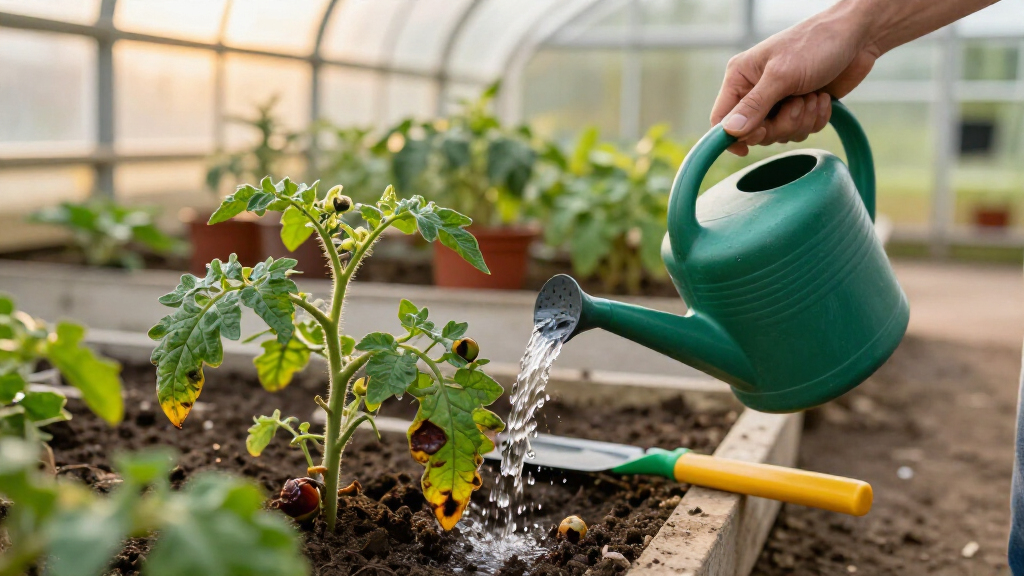
Blossom end rot (BER) is a physiological disorder that causes dark, sunken spots on the bottom of tomato fruits. It’s not a disease but a sign your plant isn’t getting enough calcium where it’s needed most. In desert climates, high daytime temperatures, intense sunlight, and dry air stress plants and disrupt calcium transport. When your tomato plant isn’t consistently watered, calcium can’t move through the plant’s tissues effectively, especially during rapid fruit growth. So, even if your soil has plenty of calcium, irregular watering can block its delivery, leading to BER.
Imagine a hot summer day—your plant’s thirst is insatiable. If you let the soil dry out between waterings, calcium in the roots doesn’t travel to the fruit fast enough, and the bottom of the tomato begins to rot. It’s a classic case of ‘not enough water, not enough calcium,’ even if the soil is rich.
drip irrigation system for tomatoes
As an affiliate, we earn on qualifying purchases.
As an affiliate, we earn on qualifying purchases.
Why Is Blossom End Rot So Common in Desert Tomato Gardens?
In desert settings, the combination of intense heat, high pH soils, and irregular watering makes BER a frequent visitor. High temperatures cause plants to transpire more, trying to cool down, which can lead to inconsistent water uptake. When watering isn’t steady—say, a quick drip here and a long drought there—the calcium pathway gets interrupted. Also, many desert soils are naturally alkaline, with pH levels above 7, which reduces calcium availability. That means your plant might have enough calcium in the soil, but it’s just not accessible to the roots.
Take a gardener in Phoenix who waters deeply once a week. During hottest months, her tomatoes often show BER on the bottom. She learns that just watering once a week isn’t enough—steady moisture is key.
Understanding these environmental stresses helps you see why BER is so prevalent. The combination of high heat and inconsistent watering creates a perfect storm where calcium can’t reach the developing fruit, regardless of soil calcium content. Recognizing this tradeoff emphasizes the importance of maintaining stable moisture levels and soil conditions to effectively prevent BER.
As an affiliate, we earn on qualifying purchases.
How Soil pH and Alkalinity Play a Role in Blossom End Rot
Soil pH is a measure of how acidic or alkaline your soil is. For tomatoes, a pH between 6.0 and 6.8 is ideal. Above that, in more alkaline soils, calcium becomes less soluble, meaning your plants struggle to absorb what’s available. In desert soils, high pH often results from natural mineral content or irrigation with alkaline water.
If your tomatoes develop BER, it might be time to test your soil pH. A simple home test kit or lab analysis can reveal if your soil is too alkaline. If it is, adding sulfur or organic acids can lower the pH, increasing calcium availability. Think of it like opening a locked door—lowering pH makes calcium easier to use.
Understanding the impact of soil pH on calcium availability highlights the importance of managing soil chemistry. A higher pH doesn’t just reduce calcium uptake; it can also affect other nutrient balances, leading to deficiencies that weaken overall plant health. Adjusting pH carefully ensures your plant’s root system can access essential nutrients, especially calcium, which is vital for preventing BER.
As an affiliate, we earn on qualifying purchases.
The Best Ways to Keep Water Consistent and Prevent Blossom End Rot
Watering is the #1 factor in preventing BER. In desert conditions, a steady drip irrigation system is your best friend. It supplies a slow, consistent flow of water, avoiding the peaks and valleys that cause calcium transport disruptions. Mulching with straw, wood chips, or even gravel helps retain soil moisture and keeps roots cool during the hottest days.
Here’s a simple watering plan:
- Install drip emitters that deliver about 1-2 inches of water per week.
- Check moisture levels frequently—your finger should feel moist a few inches down.
- Use mulch to stabilize soil temperature and moisture.
- Water early in the morning or late in the afternoon—avoid watering during peak heat to reduce evaporation.
Maintaining consistent moisture levels is crucial because fluctuations—whether too dry or too wet—disrupt the plant’s ability to transport calcium effectively. Think of your tomato plants like a delicate sponge—if they’re constantly being squeezed or left to dry out, calcium movement stalls, increasing BER risk. The tradeoff here is that overly frequent watering can lead to other issues like root rot, so balance and moderation are key.
As an affiliate, we earn on qualifying purchases.
How to Adjust Soil pH and Add Calcium Without Overdoing It
If your soil tests high in pH or calcium isn’t available to your plants, you can make adjustments. For high pH, adding sulfur or organic matter like peat moss can help lower alkalinity. For calcium, consider applying calcium nitrate or calcium chloride as a foliar spray or soil drench.
Here’s a quick step-by-step:
- Test your soil pH with a home kit or send a sample to a lab.
- If pH is above 6.8, mix in sulfur or composted pine needles to acidify the soil.
- Apply calcium nitrate at a rate of 1-2 pounds per 100 square feet during early fruiting stages.
- Spray calcium chloride solution (1 tablespoon per gallon of water) directly on developing fruits weekly during flowering.
It’s essential to be cautious with amendments—adding too much sulfur or calcium can cause nutrient imbalances or toxicity. Think of it like seasoning a dish: a little goes a long way. Proper testing and gradual adjustments help you avoid these tradeoffs and keep your soil chemistry balanced for optimal calcium uptake.
Frequently Asked Questions
Why do my tomatoes develop blossom end rot even after adding calcium?
Because calcium needs steady water flow to reach the fruit. If watering is inconsistent, calcium can’t be transported effectively, leading to BER despite soil calcium levels.Can I fix blossom end rot after it appears?
You can reduce further damage by improving watering routines and soil conditions, but existing spots usually won’t heal. Prevention is your best strategy.How does soil pH affect calcium absorption?
High soil pH (above 7) makes calcium less soluble and harder for plants to absorb. Lowering soil pH with sulfur or organic amendments improves calcium availability.Are some tomato varieties resistant to blossom end rot?
Some varieties are more tolerant, but environmental factors like watering and soil pH are usually more decisive than genetics in preventing BER.Is blossom end rot caused by poor soil or watering habits?
Primarily, it’s caused by irregular watering and environmental stress, though soil calcium levels and pH also influence its occurrence.Conclusion
Keeping your desert tomatoes free of blossom end rot comes down to steady watering, soil pH control, and smart calcium use. Think of it like giving your plants a gentle, consistent hand—no wild swings. With attention and patience, you’ll harvest juicy, blemish-free tomatoes that make all your effort worth it.College move-in / dorm season Picks
dorm essentials
As an affiliate, we earn on qualifying purchases.