
TL;DR

Get garden gear delivered free — and shop member deals
- Fast, free delivery on millions of items
- Access to Prime Big Deal Days deals on October 6–7
- Prime Video, Amazon Music and more included
Bermuda grass is tough to kill because it spreads through runners, rhizomes, and seeds. Effective eradication involves multiple treatments, careful site prep, and ongoing monitoring to prevent reinvasion before planting a water-wise landscape.
If you’re dreaming of a lush, low-water garden free of Bermuda grass, be prepared for a fight. This stubborn turf isn’t just a surface problem — it’s a resilient underground network of rhizomes and runners that can outlast even your best efforts. But with patience, planning, and the right approach, you can beat it for good.
This guide walks you through proven strategies, from timing treatments to installing barriers. You’ll learn how to make sure Bermuda doesn’t sneak back, so your xeriscape stays clean and thriving. Ready to get your yard back? Let’s dive into the practical steps that really work.
Timing your treatments during active growth maximizes herbicide effectiveness.
Multiple cycles of chemical or physical removal are necessary for lasting control.
Tilling spreads fragments; avoid it unless carefully managed with excavation.
Installing underground barriers and maintaining a vigilant inspection zone prevents reinvasion.
Patience is key — expect a year of consistent effort before your landscape is Bermuda-free.
Killing Bermuda Grass for Good Before a Xeriscape Conversion
Bermuda grass is not merely a surface lawn. It is a resilient network of seed, creeping stolons, and underground rhizomes. Lasting control comes from active-growth timing, repeated treatment, careful site preparation, and relentless follow-up.
Why Bermuda keeps returning
Most of the plant’s resilience is outside the visible lawn. Removing green blades without exhausting or killing the connected underground system leaves stored energy ready to produce fresh growth.
Stolons
Surface runners creep across soil, root at their nodes, cross edging, and enter planting zones. A runner that escapes detection can establish a new colony.
Rhizomes
Underground stems store energy and regenerate after the visible turf is removed. Cutting them into pieces can multiply the number of viable fragments.
Seed
Seed left in the soil may germinate when a new landscape is irrigated. A cleared surface is therefore a checkpoint, not proof of eradication.
Treat, reveal, repeat
The reliable sequence repeatedly draws hidden growth into the open. Healthy foliage absorbs systemic treatment better than dormant, dusty, drought-stressed, or freshly scalped grass.
Grow it green
Irrigate enough to produce vigorous foliage. Do not mow immediately before treatment.
Treat active growth
Use a systemic herbicide labeled for the exact site and follow every label direction.
Wait and assess
Allow time for movement into underground tissue. Look for browning after the required interval.
Trigger survivors
Remove dead material carefully, irrigate again, and expose missed rhizomes or seedlings.
Repeat to zero
Spot-treat regrowth and restart the test until irrigation produces no new shoots.
Application safety
Wear the protective equipment required by the product label. Protect desirable plants and follow labeled rates, weather limits, reentry periods, and planting intervals.
Local rules control
Product formulations differ, and local laws, property rules, or turf-removal rebates may restrict use. Never generalize a mixing rate from another product.
Plan one warm season
Start before the landscape installation deadline. Late spring through late summer is usually the strongest treatment window because Bermuda is actively moving resources through its tissues.
Prepare
Map boundaries, protect desirable plants, remove obstacles, and restore healthy green growth before beginning control.
First cycle
Apply the selected control method at peak growth. Preserve enough leaf area for systemic absorption.
Second cycle
Irrigate to expose survivors, inspect the entire zone, and treat every new shoot before reserves recover.
Prove zero
Run irrigation and monitor. Install the xeriscape only after repeated checks reveal no Bermuda regrowth.
What helps—and what fails
No single tactic fits every property. Large established stands, small precision areas, neighboring lawns, and occupied planting beds each require different combinations of control and monitoring.
| Method | Best role | Core limitation | Verdict |
|---|---|---|---|
| Repeated systemic treatment | Large, established stands in active growth | Usually needs multiple cycles; damages contacted green plants | ✓Primary option |
| Careful excavation | Small areas and precision work near structures | Labor-intensive; sod removal alone leaves rhizomes behind | ✓Useful when thorough |
| Underground barrier | Preventing reinvasion from adjoining turf | Runners can cross the top or exploit gaps | ✓Prevention layer |
| Cardboard or fabric alone | Temporary surface suppression | Does not reliably eliminate underground rhizomes | ~Not eradication |
| Rototilling live turf | No recommended eradication role | Fragments and redistributes viable stems | ×Avoid |
| Household vinegar or bleach | None for reliable Bermuda eradication | Leaf burn does not exhaust rhizomes; may harm soil or plants | ×Do not rely on it |
Design for early detection
“For good” does not mean Bermuda can never arrive again. It means the site makes every new shoot visible and removable before it rebuilds underground reserves.
6–12 inches
Use durable metal or high-density plastic edging below grade, with a small portion above grade to intercept surface runners.
Keep 6 inches clear
Leave a visible strip beside fences, lawns, alleys, and irrigation channels so emerging runners cannot hide.
Drip only where needed
Target irrigation to desired plants, maintain loose organic mulch, and avoid creating continuously moist corridors.
Why Bermuda Grass Won’t Give Up — Even When You Want It Gone
Bermuda grass is among the hardest lawn grasses to kill because it spreads through seed, aboveground runners called stolons, and underground stems called rhizomes. These roots can extend several feet deep in the soil, storing energy for quick regrowth.
Imagine pulling up a patch, only to find tiny fragments left behind that soon sprout again. It’s like trying to scoop water with a spoon — no matter how much you remove, tiny bits keep reappearing. That’s why one quick fix rarely works.
It’s not just the roots; Bermuda produces seed heads that can seed in the soil, creating new plants even after you’ve cleared the original patch. This resilience means you need a multi-layered approach to really get rid of it.
herbicide for Bermuda grass removal
As an affiliate, we earn on qualifying purchases.
As an affiliate, we earn on qualifying purchases.
Timing Is Everything: When to Strike for Lasting Results
The best time to attack Bermuda grass is during its active growing season — late spring through late summer, when it’s lush and green. During dormancy or drought stress, systemic herbicides work poorly because the plant isn’t absorbing nutrients or chemicals.
For example, applying glyphosate in August, when Bermuda is thriving, allows the chemical to move through its tissues, reaching and killing underground rhizomes. Wait until the grass is actively growing for maximum effect.
Plan treatments several months in advance. Expect to repeat applications — at least twice — with proper monitoring in between. Patience is key, because rushing the process often results in regrowth and frustration.
underground root barrier for Bermuda grass
As an affiliate, we earn on qualifying purchases.
As an affiliate, we earn on qualifying purchases.
Why Tilling and Ripping Might Do More Harm Than Good
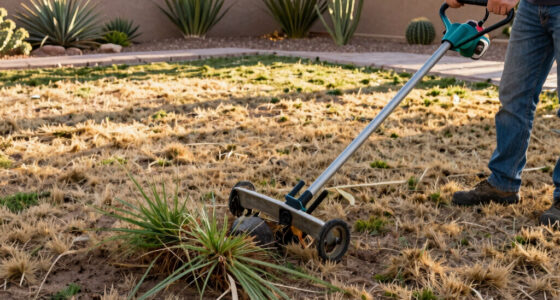
Thinking about rototilling Bermuda grass? Stop. Tilling cuts stolons and rhizomes into tiny pieces, which then spread to new spots. It’s like chopping a weed into dozens of pieces, each one capable of regrowing.
For example, a homeowner in Phoenix tried tilling a Bermuda patch, only to see it break into hundreds of fragments that sprouted later. Instead, focus on removing the turf carefully, or better yet, use chemical or physical methods to target the roots directly.
Physical removal, like excavating, is effective but labor-intensive. It’s best suited for small areas or around structures where precision matters most. Avoid disturbing the roots of nearby trees or plants.
garden tiller for soil preparation
As an affiliate, we earn on qualifying purchases.
As an affiliate, we earn on qualifying purchases.
How to Use Herbicides Effectively — Step-by-Step
- Allow Bermuda to grow lush and green before treatment. Water the area to encourage active growth.
- Apply a systemic herbicide like glyphosate, following the label instructions carefully. Wear protective gear: gloves, goggles, long sleeves.
- Wait at least 7-14 days, then assess the results. Look for browned or dead foliage.
- Remove dead plant material gently, avoiding fragments that might still be alive.
- Re-irrigate the area to stimulate any missed rhizomes or seedlings.
- Reapply herbicide to regrowth, and repeat until no new Bermuda appears after irrigation.
Remember, one application rarely does it. Patience and multiple cycles are your best allies.
weed control tools for stubborn grasses
As an affiliate, we earn on qualifying purchases.
As an affiliate, we earn on qualifying purchases.
Physical Barriers That Keep Bermuda Out — Do They Really Work?
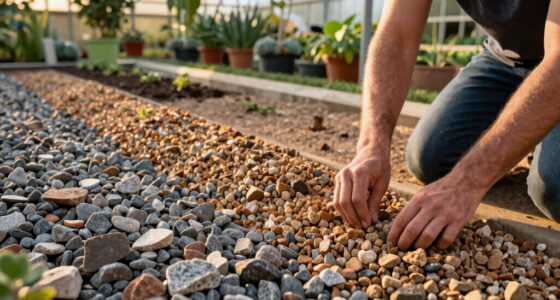
Installing a durable barrier is one of the most reliable ways to prevent Bermuda from creeping into your new landscape. Use a barrier that extends 6-12 inches below ground level and sits slightly above grade.
For example, a homeowner installed a metal or high-density plastic edging around their xeriscape zone. It stopped runners from crossing under, keeping the new plants safe.
Regular inspection is crucial because Bermuda stolons can creep over the top or find gaps. Combining barriers with ongoing monitoring keeps you one step ahead.
Design Your Xeriscape for Easy Watchfulness and Control
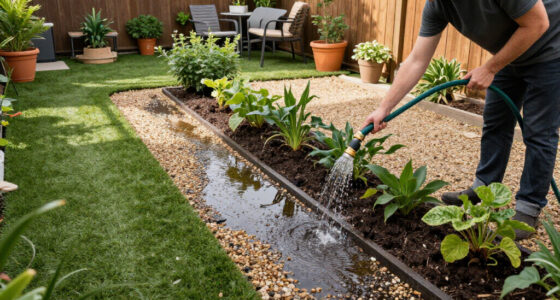
A smart xeriscape doesn’t just look good — it’s easy to keep Bermuda out. Use spacing that allows you to spot new shoots early, and install drip irrigation only where needed.
For example, leaving a 6-inch inspection strip along borders makes it simple to see and remove newcomers. Organic mulch around plants discourages Bermuda from sneaking through, especially if you keep it loose and well-maintained.
Choose drought-tolerant, low-water plants suited to your soil and sun. Avoid heavy mulching that traps moisture or creates a cozy environment for rhizomes to spread.
A Realistic Timeline for Killing Bermuda and Starting Fresh
Expect to spend at least one full growing season — from spring to fall — on eradication efforts. The process involves multiple herbicide applications, physical removal, and testing for regrowth.
For example, a homeowner in Tucson started in March, treated in June and August, then tested in October. Only after no new shoots appeared during irrigation did they plant their new xeriscape.
Patience and persistence are your best tools. Don’t rush into planting until you’re confident the Bermuda is truly gone.
Avoid These Common Mistakes That Keep Bermuda Alive
Many homeowners sabotage their efforts by rushing or using ineffective tricks. Don’t spray dormant Bermuda — it’s barely absorbing herbicides.
Never rototill before confirming death; fragments will only spread. And don’t rely solely on cardboard or landscape fabric — Bermuda can grow right through them.
Be wary of home remedies like vinegar or bleach; they won’t reach underground rhizomes and can harm desirable plants. Always follow label instructions for herbicides and tools.
Frequently Asked Questions
Can Bermuda grass be killed permanently?
While no method guarantees permanent elimination, persistent treatment and monitoring can eradicate Bermuda from a defined area. Regular inspections and follow-up treatments prevent reinvasion from seeds and fragments.How long should eradication take?
Expect several months of multiple treatments and testing. A full warm season is often needed for chemical or physical control, especially in heavy infestations.Is one glyphosate application enough?
Rarely. The first treatment usually damages the leaves but leaves underground rhizomes alive. Follow-up applications are necessary until no regrowth occurs after irrigation.Should I mow before spraying?
No, mowing immediately before herbicide application can reduce absorption. Follow the label instructions on timing for mowing and spraying for best results.Will vinegar kill Bermuda grass?
Household vinegar burns leaves but doesn’t reach rhizomes. Strong horticultural acetic acid can damage skin and eyes and still may not eradicate underground parts.Conclusion
Eradicating Bermuda grass isn’t quick or easy — it’s a test of patience and persistence. When done carefully, your new xeriscape can flourish free of that stubborn turf. Remember, every small effort adds up to a clean, water-wise yard that’s truly yours.
Don’t forget: a watchful eye and ongoing control are your best allies. Your dream landscape is just a few careful steps away — stay the course.
Fall yard work Picks
leaf blowers
As an affiliate, we earn on qualifying purchases.