
TL;DR

Get garden gear delivered free with Prime
- Fast, free delivery on millions of items
- Prime Video, Amazon Music and more included
- Member-only deals all year
Decomposed granite offers a natural, permeable surface ideal for pathways, while river rock provides a polished look and excellent drainage. Both are water-wise options perfect for desert landscaping, but your choice depends on aesthetics, budget, and maintenance.
When it comes to transforming a desert yard, gravel isn’t just filler — it’s the foundation of a low-water, low-maintenance landscape. But choosing the right type can feel overwhelming. You’ve probably seen both decomposed granite and river rock used in xeriscapes, but what makes one better than the other?
In this guide, you’ll learn exactly how these materials compare — from looks and cost to durability and environmental impact. Whether you want a pathway that feels natural or a decorative accent that lasts, understanding their differences helps you make smarter choices for your desert oasis.
Stabilized decomposed granite can last up to 10 years, making it a durable choice for pathways.
River rock offers vibrant, polished aesthetics with decades of longevity and excellent drainage.
Cost varies: DG is budget-friendly and widely available, while river rock can be pricier but more decorative.
Both materials promote water infiltration, vital for desert landscaping, especially if sourced locally.
Mixing DG and river rock can add visual interest and functional benefits, creating a balanced desert landscape.
Decomposed Granite vs River Rock
Choosing gravel is choosing the working surface of your desert yard. Decomposed granite creates compact, natural pathways; river rock delivers polished color and fast-moving drainage. Both conserve water—the right answer depends on use, style, budget, and upkeep.
Stabilized decomposed granite can resist erosion for years when its base, compaction, and drainage are properly designed.
Two materials, two moods
DG visually recedes into the landscape, while river rock behaves like an accent. Texture also determines comfort, stability, water movement, and how much the surface shifts.
Decomposed Granite
Coarse sand and tiny granite fragments form a dusty taupe surface that can be rustic or tightly smoothed. Once compacted, it feels nearly solid while retaining permeability.
River Rock
Smooth stones in red, gray, brown, and mixed tones create contrast around cacti and architectural plants. Rounded profiles disperse runoff and leave generous drainage voids.
Which gravel wins where?
Neither material wins every category. DG favors comfortable circulation and restrained cost; river rock favors drainage features, strong visual contrast, and long decorative life.
| Decision factor | Decomposed granite | River rock | Practical winner |
|---|---|---|---|
| Pathway comfort | ✓ Excellent when compacted | ~ Variable underfoot | DG |
| Rapid drainage | ✓ Highly permeable | ✓ Excellent void space | River rock |
| Upfront budget | ✓ Lower cost | ✗ Premium colors cost more | DG |
| Decorative impact | ~ Quiet and natural | ✓ Bold color and sheen | River rock |
| Surface stability | ✓ Firm when stabilized | ~ Can roll or migrate | DG |
| Routine upkeep | ~ Regrade and replenish | ✓ Minimal maintenance | River rock |
| Desert suitability | ✓ Water-wise | ✓ Water-wise | Draw |
Budget now—and later
Material pricing varies by location, stone color, size, delivery distance, site access, and installation depth. Local sourcing can reduce both transport cost and environmental impact.
Think beyond the first delivery
DG starts lower, making it attractive for broad pathways and patios, but erosion may require periodic top-offs. River rock costs more upfront, yet its long service life and lighter maintenance can improve long-term value.
Build the surface in layers
Good gravel fails when its foundation is ignored. Grade water away from structures, prepare a stable base, contain the material, and preserve pathways for infiltration.
Grade and prepare
Remove debris, establish drainage direction, and compact the underlying soil without creating low pockets.
Control weeds
Use a suitable permeable barrier where needed. Avoid impermeable layers that trap stormwater.
Spread and contain
Install several inches of DG or an even rock layer. Add edging to stop material migration.
Finish for use
Compact DG in lifts and consider stabilizer. Rake river rock evenly and inspect runoff paths.
Excessive force can reduce infiltration and contribute to cracking during desert temperature swings.
Rounded stones shift under traffic and can spill into planting beds or hardscape without containment.
Even permeable materials can wash out when concentrated monsoon flow is not safely directed.
Match material to function
A successful xeriscape often assigns each gravel a specific job. This reduces unnecessary cost and creates a more deliberate, layered desert composition.
For circulation
Use compacted or stabilized DG where people need a cohesive, natural-feeling surface.
- Garden paths and seating areas
- Low-traffic patios
- Broad, budget-conscious coverage
- Soft transitions into native terrain
For drainage
Use rounded rock where visible water movement, longevity, and ornamental contrast matter.
- Dry creek beds and swales
- Drainage zones and downspouts
- Planting-bed accents
- Decorative focal areas
For balance
Frame a stable DG path with river rock channels or accent bands for function and visual depth.
- DG for comfortable foot traffic
- River rock for runoff control
- Contrasting texture around plants
- Targeted spending on premium stone
From storm to desert oasis
Both materials support infiltration when installed over a permeable base. River rock slows and disperses visible runoff; DG lets water filter through fine pore spaces.
Choose DG for pathways
Its compactable texture, natural appearance, permeability, and lower price make it the stronger choice for comfortable pedestrian surfaces.
Choose river rock for impact
Its polished color, durable form, and open drainage structure make it ideal for accents, channels, and long-lived decorative zones.
What Do Decomposed Granite and River Rock Really Look Like?
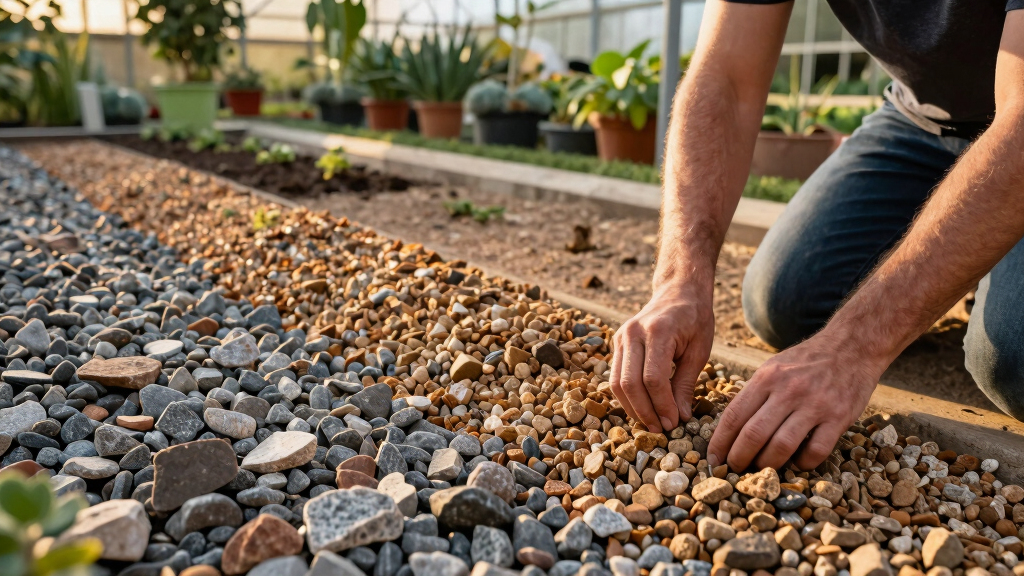
Decomposed granite (DG) is like coarse sand with tiny stone fragments — soft, earthy, and fine-textured. It’s the color of dry dirt or dusty taupe, blending seamlessly into desert landscapes. When compacted, it feels almost like a solid surface, yet it remains permeable. This permeability is crucial because it allows water to seep through, reducing runoff and helping maintain natural groundwater recharge — vital in arid environments where water conservation is key. Its natural appearance also makes it ideal for blending into the landscape without standing out, creating a cohesive look.
River rock comes in smooth, rounded stones that gleam with a polished sheen. Think of a river’s current smoothing pebbles over centuries — stones can range from half an inch to several inches across. Their bright colors — reds, grays, browns — pop against desert plants and cacti. The rounded shape not only adds a soft, organic aesthetic but also influences how water flows around them. Unlike jagged stones, rounded river rocks facilitate water movement and reduce erosion by dispersing runoff over a broader area. Their polished surface reflects sunlight, which can help in heat management by reducing heat absorption in certain applications, and their visual appeal can serve as a decorative focal point.
Imagine walking barefoot on a sun-warmed river rock trail — cool and smooth underfoot. Or running your hand through a bed of decomposed granite, feeling the gritty, granular texture. Their distinct looks set the tone for your yard’s style and mood. Choosing between them involves considering how their appearance and tactile qualities align with your landscape goals and the environmental conditions of your yard.
As an affiliate, we earn on qualifying purchases.
Drainage and Water Flow — Why It Matters in a Desert Yard
Both decomposed granite and river rock excel at letting water soak in quickly, which is gold in dry climates. DG’s fine particles create tiny pores, letting water pass through without pooling. This characteristic helps prevent erosion and washouts, especially on pathways and slopes, ensuring your landscape remains stable after storms. Proper drainage reduces standing water, which can lead to root rot or attract pests, and facilitates groundwater recharge — an essential process in arid regions where water conservation is critical. The permeability also minimizes runoff, protecting your yard from erosion and preserving the integrity of your landscape features.
River rock’s larger, rounded stones act like natural sponges, creating voids that channel water away efficiently. This makes river rock ideal for drainage areas or around plants that hate sitting in soggy soil. Their shape and size allow water to flow freely, reducing surface runoff and preventing pooling that can cause erosion or damage to plant roots. Additionally, because water moves quickly through and around river rocks, they help prevent standing water, which can be a breeding ground for pests and diseases. Their ability to disperse water over a broad area also helps protect delicate slopes and prevent washouts during heavy rains.
Picture a heavy monsoon or a rare desert thunderstorm. Both materials help water infiltrate rather than run off, protecting your yard from erosion and reducing the need for constant watering. Proper drainage is crucial in desert landscapes because it prevents water from pooling and causing erosion, which can destabilize your landscape and damage plant roots. Understanding their drainage properties helps you select the right material based on your yard’s slope, soil type, and plant needs. For instance, DG’s permeability makes it suitable for pathways that won’t wash out, while river rock’s ability to create voids ensures excess water is quickly diverted away from delicate plant roots, minimizing erosion and waterlogging.
As an affiliate, we earn on qualifying purchases.
Cost, Availability, and What Fits Your Budget?
Decomposed granite usually costs between $20-$40 per ton and is widely available in many regions. Its popularity means you’ll find it at most landscape supply yards, often in bags or bulk. It’s budget-friendly and easy to source locally.
River rock varies more — smaller stones cost less, but larger, colorful pieces can run up to $80-$150 per ton. Availability depends on your location; coastal areas often have better access to river rock, especially in vibrant hues. The choice often hinges on your design vision and budget constraints. DG offers a cost-effective solution for large areas or pathways, providing a natural look without breaking the bank. River rock, with its vibrant colors and polished appearance, can be more expensive but adds a decorative element that elevates the overall aesthetic. Keep in mind that initial costs are just part of the story; consider maintenance and longevity. DG may need reapplication over time, which can add to ongoing expenses, whereas river rock’s durability might offset higher upfront costs through reduced maintenance.
Think about your project’s size and your wallet. For a large pathway, DG might save you money. For accents or decorative touches, river rock’s visual punch might be worth the extra cost. Additionally, consider the long-term costs: while DG is cheaper initially, it may require reapplication or stabilization over time, which adds to maintenance expenses. River rock, although more costly upfront, tends to be more durable with less ongoing maintenance, potentially offering better value over the years. Your choice should balance initial investment with projected longevity and maintenance needs.
As an affiliate, we earn on qualifying purchases.
Installation and Maintenance — Easy Steps and Common Pitfalls
Installing decomposed granite is straightforward. Lay down a weed barrier, spread a few inches of DG, then compact it with a tamper. For longevity, add a stabilizer — a polymer binder that keeps it firm and dust-free. Expect to top it off every few years due to erosion or displacement. Proper installation ensures the DG remains stable, reduces weed growth, and maintains permeability. Avoid over-compacting, which can hinder drainage and cause cracking, especially in fluctuating desert temperatures. Regular re-leveling and replenishing top layers help preserve its appearance and functionality.
River rock installation involves edging to keep stones in place, then spreading the rocks evenly. It’s low-maintenance — just occasional raking or repositioning. Over time, some stones may shift, especially in high-traffic zones. Edging is critical to prevent migration and maintain a clean look. Using a stabilized base or a fabric underneath can also help prevent displacement. Proper prep, including a well-compacted sub-base, ensures your river rock stays put and performs effectively. Regular maintenance involves removing debris, re-leveling stones, and replenishing or replacing displaced rocks. Proper edging and sub-base preparation are critical to prevent shifting, especially in windy or high-traffic areas. Understanding these nuances ensures your landscape remains functional and attractive for years to come.
As an affiliate, we earn on qualifying purchases.
Durability and How Long They Last in Your Desert Yard
Decomposed granite, especially when stabilized, can last 8-10 years with minimal erosion. Without stabilization, it might need replenishing every 3-5 years. Its longevity depends heavily on climate, foot traffic, and whether stabilization techniques are used. Properly stabilized DG is less prone to erosion, making it a reliable choice for pathways and patios that see regular use. The ability to re-stabilize and reapply DG extends its useful lifespan, but it requires periodic attention to maintain appearance and function. In high-traffic or heavy rain scenarios, stabilization becomes even more critical, as it significantly reduces maintenance needs over time.
River rock is incredibly durable. Stones don’t break down or wash away easily. Expect it to last decades if maintained and edged properly. It resists weathering and foot traffic, making it ideal for high-use areas like driveways or heavily trafficked walkways. The main concern is displacement over time, which can be managed with good edging and occasional repositioning. Its longevity means less frequent reapplication, but maintenance to keep stones in place is essential for sustained appearance and function. In addition, choosing high-quality, well-rounded stones reduces the likelihood of breakage and displacement, further extending its lifespan. The natural durability of river rocks makes them a long-term investment for desert landscapes where minimal intervention is desired.
Imagine a drought year — DG will stay put if stabilized, but loose DG might require reapplication. River rocks stay solid, standing up to desert storms and foot traffic. Choosing between them involves considering how much effort you want to put into ongoing maintenance versus initial durability.
Environmental Impact — Which Material Is Greener?
Both materials are natural and promote water infiltration, reducing runoff. Sourcing DG locally minimizes transportation emissions, especially if you’re in a desert region with access to nearby quarries. It’s often made from locally decomposed rock, reducing environmental footprint.
River rock’s environmental impact depends on its source. Transport from distant rivers or quarries adds emissions, but using local stones minimizes this. Both options support eco-friendly xeriscaping when sourced responsibly.
Choosing local materials helps your yard blend seamlessly into the environment while supporting sustainable practices. Consider the energy footprint of extraction and transportation when selecting your material; sourcing locally reduces carbon emissions and supports regional economies. Additionally, both materials, by facilitating water infiltration, reduce the need for supplemental watering, conserving water resources vital in desert environments.
Which Material Works Best for Your Desert Landscape?
If you want a natural, earthy look with easy installation, decomposed granite is your friend. It’s perfect for paths, patios, and areas where a soft, permeable surface matters.
River rock shines when you need a decorative element, good drainage, and durability. It’s ideal for accent beds, around cacti, or as a mulch alternative that reflects sunlight and keeps weeds down.
Picture your yard: a winding DG path bordered by vibrant river rock accents — that’s the harmony of combining both materials for function and beauty.
How to Mix and Match Gravel for a Cohesive Look
Using both decomposed granite and river rock in your yard can create a balanced, layered landscape. Start with DG for pathways or large open areas. Then add river rock as borders, mulch replacement, or decorative accents.
Ensure your edging is sturdy — metal, concrete, or stabilized gravel borders keep stones in place. Use color contrasts intentionally — dark DG with bright red river rock makes a striking visual statement.
Think of it like a desert mosaic — textures and colors working together to create a yard that’s both functional and eye-catching.
Frequently Asked Questions
Can I use decomposed granite or river rock for my driveway?
Yes, but with caveats. Decomposed granite can be stabilized for light vehicles, lasting about 8-10 years. River rock is more durable for driveways, especially larger, heavier stones, but requires solid edging to prevent shifting. Both can work if installed properly and maintained.
How do I keep weeds from growing through decomposed granite?
Lay down a sturdy weed barrier fabric before installing DG. This prevents weeds from poking through while allowing water to drain. Regular maintenance and adding a fresh layer of DG every few years help keep the surface clean.
Is river rock better for low-maintenance landscaping?
Generally, yes. River rock lasts decades without reapplication or replenishing, making it a low-maintenance choice. DG may need topping up or stabilization over time, especially in high-traffic areas.
Which material is more environmentally friendly?
Both are natural, but sourcing locally reduces environmental impact. DG often comes from nearby quarries, while river rock’s eco-friendliness depends on its source. Using local materials minimizes transportation emissions and supports sustainable landscaping.
Can I combine decomposed granite and river rock in my yard?
Absolutely. Using DG for pathways and river rock for borders or accents creates visual interest and functional zones. Just ensure proper edging so the stones stay in place and complement each other aesthetically.
Conclusion
Choosing the right gravel for your desert yard boils down to style, function, and your willingness to maintain. Both decomposed granite and river rock offer water-wise, durable options that thrive under the desert sun. The trick is matching their strengths to your landscape vision.
Remember, a well-chosen gravel not only looks good but also supports your low-water goals. So get your hands dirty, pick your favorite, and turn your yard into a desert paradise that’s both practical and beautiful.
Halloween Picks
halloween
As an affiliate, we earn on qualifying purchases.